
Literacy & pre-reading
From board books and rhymes to letter sounds, sight words and reading in two languages.
Reading is built long before the first letter — on rhymes, stories, conversation and the simple idea that print carries meaning. Rushing formal reading and writing too early can backfire; a child who loves books learns to read far more happily than one drilled on worksheets. The path runs from listening, to sounds, to letters, to words.
What it looks like, age by age
Where to focus on literacy & pre-reading at each stage. Tap your child's age above for a fuller picture.
Read one board book a day. Let your baby mouth it and point at pictures — exploring the book counts as reading at this age.
Chunky books with big pictures, named again and again. Rhymes and songs build the ear for sound that reading later needs.
Rhyme, clap syllables and enjoy the same story on repeat. Notice print on packets and signs — print is everywhere.
Play with letter sounds, especially the letters in their name. Keep writing playful; pencil control grows from cutting and play, not tracing sheets.
Real reading begins. Read together every day, take turns, and let your child choose books they love, including in your home language.
Reading to learn begins: non-fiction, indexes, finding an answer in a book. Keep reading aloud together even though they can read alone.
Reading for pleasure is the goal, and it is fragile now. Let them choose, swap books with friends, and see you reading too.
Try this at home
Free, DIY-first activities using what you already have.
Letter hunt
Pick one letter and hunt for it on packets, signboards and number plates through the day. Cheer every spot.
Rhyme and clap
Sing a rhyme and clap once for each beat or syllable. Let your child fill in the last rhyming word.
Read and swap
Take turns reading a page each from any book, and talk about what might happen next.
Make a picture book
Fold a few sheets, let your child draw a story, and write their words underneath as they dictate.
In-depth guides
👶 0–12 months

🚼 1–2 years

Early Literacy Activities for 1-2 Year Olds: 4 Book-Handling Skills with Household Items
Teach your 12-24 month old how books work with page-turning, label pointing and texture play. Four activities…

Pre-Reading Activities for 1–2 Year Olds: 5 Household Activities for Print Awareness
Build print awareness at home before formal reading. Five simple activities using household items—food packet…
🗣️ 2–3 years

🎨 3–5 years

Pre-Reading Skills for 3-5 Year Olds: Book Handling and Print Awareness at Home
Five simple pre reading activities 3 5 years you can start today using things already at home. Build book lov…

6 Pre-Writing Activities for 3-5 Year Olds at Home: Build Pencil Control Before Worksheets
Fine motor skills before formal writing. 6 hands-on activities using household items to build grip strength, …
📚 5–8 years
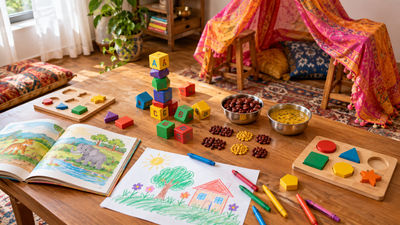
How to Teach a 5-Year-Old to Read at Home in India: Phonics Practice Without Pressure
Simple phonics activities using household items: sound hunts, spoon-tapping word segments, letter circles in …

Phonics vs Whole Language: Why Indian Schools Use Both for Grade 1–2 Readers
Indian schools blend phonics and whole language to teach reading. Learn which approach suits Devanagari and T…
Learning at 5-8: Reading, Maths and Confidence
Between five and eight, formal reading and maths begin, at school or at home. Here is how to support them and…
When to check with someone
📚 Reviewed against
This guide was checked against the sources below. It is general parenting guidance, not medical advice — for any concern about your child's development, talk to your paediatrician.
- National Education Policy 2020, Ministry of Education — India's official framework: a play-based Foundational Stage for ages 3–8
- National Curriculum Framework for the Foundational Stage (NCF-FS) 2022, NCERT — Play-based learning outcomes and pedagogy for ages 0–8