
Social-emotional
Naming feelings, sharing, tantrums and self-control — learned through you.
Long before ABCs, children are learning the hardest skills of all: naming feelings, waiting, sharing and recovering from upset. They learn these mostly through you — how you stay calm, name emotions and repair after a hard moment. This is the quiet foundation that makes every other kind of learning possible.
What it looks like, age by age
Where to focus on social-emotional at each stage. Tap your child's age above for a fuller picture.
Warm, responsive comfort teaches your baby that the world is safe. Faces, cuddles and quick responses to crying build the security that learning rests on.
Big feelings, few words. Name emotions out loud (you are frustrated), stay calm, and offer simple choices to ease the storm.
Tantrums peak as feelings outrun words. Coach through them — name the feeling, hold the limit kindly — rather than punishing the emotion.
Turn-taking, empathy and managing small frustrations grow through play. Talk about feelings in stories and in your own day.
Friendships, fairness and self-control deepen. Let your child solve small disagreements with support, and talk through worries.
Fairness, friendship groups and a stronger sense of self. Name feelings out loud, and let them solve small conflicts with support.
Friendships matter enormously and moods swing. Stay available without prying; a weekly walk with no agenda opens more than a sit-down talk.
Try this at home
Free, DIY-first activities using what you already have.
Name the feeling
Put words to feelings as they happen — yours and theirs. A feeling that has a name is far easier to handle than one that does not.
Feelings weather
Ask if today feels sunny, cloudy or stormy. It gives feelings words without putting your child on the spot.
Put toys to bed
Make a gentle game of settling each toy into its basket at the end of play — a soothing close to the day.
Gratitude at dinner
Each person shares one good thing and one hard thing about the day. It builds language, empathy and connection.
In-depth guides
👶 0–12 months

🚼 1–2 years

Social Skills Activities for 1-2 Year Olds at Home: 4 Games That Build Sharing & Empathy
Turn-taking, empathy, and sharing don't happen by accident. These 4 at-home games use toys, katoris, and fami…
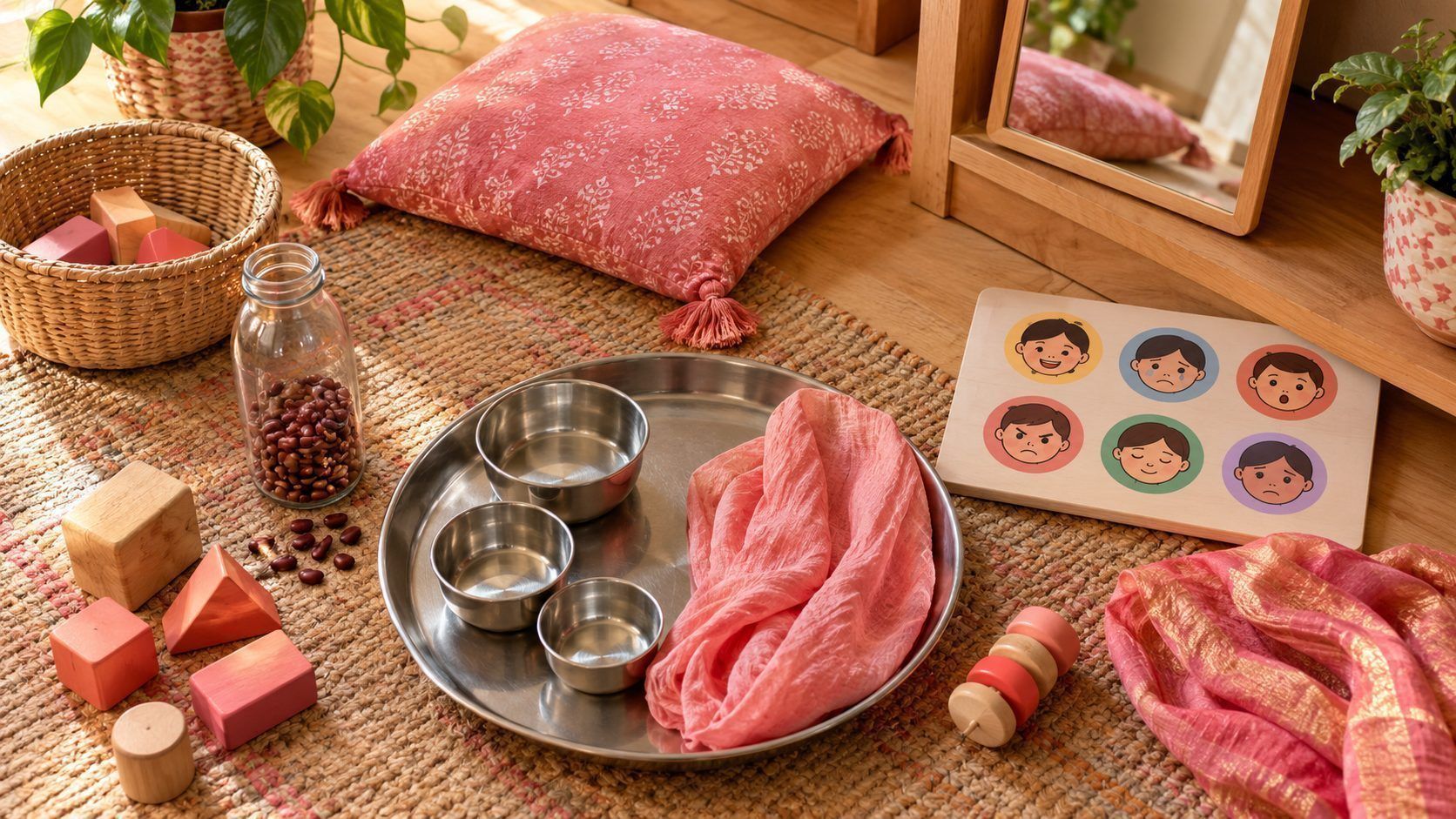
Social-Emotional Activities for 1-2 Year Olds: 4 At-Home Games That Build Name Recognition & Turn-Taking
4 zero-cost activities using mirrors, photos, and household objects to grow your toddler's name recognition, …
🗣️ 2–3 years

🎨 3–5 years

Turn-Taking Games for 3-Year-Olds: 5 Activities That Build Patience & Classroom Skills at Home
5 structured turn-taking games using household items—timer, cups, ball, spoon—that teach impulse control and …
Self-Regulation Activities for 3–5 Year Olds: Build a Calm-Down Corner at Home
Five simple self-regulation activities for 3–5 year olds using household items, plus how to set up a calm-dow…
When to check with someone
📚 Reviewed against
This guide was checked against the sources below. It is general parenting guidance, not medical advice — for any concern about your child's development, talk to your paediatrician.
- National Curriculum Framework for the Foundational Stage (NCF-FS) 2022, NCERT — Play-based learning outcomes and pedagogy for ages 0–8
- Indian Academy of Pediatrics — Guidance on screen time and healthy child development
- WHO Guidelines on physical activity, sedentary behaviour and sleep for under-5s (2019) — Movement and screen-time guidance for children under 5