
Curiosity, science & nature
Balcony gardens, kitchen experiments and the questions that keep wonder alive.
Every why is a mind reaching out. Curiosity, close observation and the habit of asking questions are the engine of science and of learning itself. You do not need a lab — a balcony garden, a bucket of water and a kitchen full of everyday reactions are more than enough.
What it looks like, age by age
Where to focus on curiosity, science & nature at each stage. Tap your child's age above for a fuller picture.
Peek-a-boo teaches that things still exist when hidden. Safe objects to mouth, bang and drop are a baby's first experiments.
Cause and effect is everything: pouring, dropping, filling and emptying. Let the mess happen — it is real science.
Sink or float, shadows and simple predictions. Answer why simply, and sometimes turn it back: what do you think?
Grow a bean, watch ants, mix and observe. Wonder out loud together and follow where their questions lead.
Fair-test thinking begins — change one thing and see what happens. Kitchen chemistry and nature walks feed real scientific reasoning.
Fair tests and simple records turn wondering into real science. Grow, measure, chart, and change one thing at a time.
Longer projects and deeper interests: build something, keep a log, read around it. Let a hobby run for months without steering it.
Try this at home
Free, DIY-first activities using what you already have.
Sink or float
Guess together whether a spoon, a leaf or a cup will sink or float, then test each one and talk about why.
Grow a dal
Soak a moong bean on wet cotton and check it together each day, talking about what a plant needs.
Kitchen chemistry
Mix a spoon of baking soda with a little lemon or vinegar, watch it fizz, and ask why they think it happened.
Shadow play
Stand a toy in sunlight and trace its shadow. Move it later and see how the shadow has changed.
In-depth guides
👶 0–12 months

5 Activities to Build Curiosity in Babies 0–12 Months: Household Items Only
How babies learn cause-and-effect and object permanence in the first year. Five simple activities using dupat…
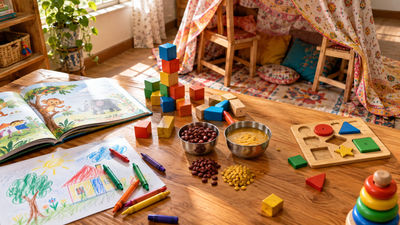
Sensory Activities for 6–9 Month Babies at Home: Texture Play With Kitchen Items
Five simple texture explorations using steel bowls, cotton duppatta, wooden spoons, and dal. Builds tactile d…
🚼 1–2 years
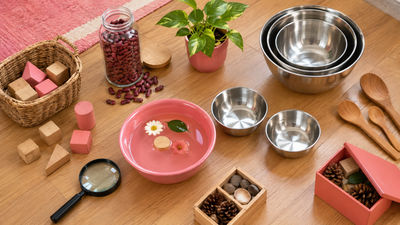
🎨 3–5 years

Science Activities for 3 to 5 Year Olds at Home: 5 Kitchen Experiments That Teach Cause & Effect
Five hands-on science experiments using kitchen items: ice races, dissolving sugars, floating fruit, oil laye…
5 Memory Games for 4-5 Year Olds: Build Focus at Home with Household Items
Five tested memory activities for 4–5 year olds using only household items. No apps, no toys to buy. Builds w…
📚 5–8 years

When to check with someone
📚 Reviewed against
This guide was checked against the sources below. It is general parenting guidance, not medical advice — for any concern about your child's development, talk to your paediatrician.
- National Education Policy 2020, Ministry of Education — India's official framework: a play-based Foundational Stage for ages 3–8
- National Curriculum Framework for the Foundational Stage (NCF-FS) 2022, NCERT — Play-based learning outcomes and pedagogy for ages 0–8