
Creativity & the arts
Drawing, music, dance and making things — without mess anxiety.
Drawing, music, dance and making things are not just fun — they build fine-motor control, planning, expression and confidence. The secret is to value the process over the product and to let go of mess anxiety: a child exploring colour and sound is learning, even when nothing recognisable appears on the page.
What it looks like, age by age
Where to focus on creativity & the arts at each stage. Tap your child's age above for a fuller picture.
Banging katoris and hearing different sounds is a baby's first music and first taste of cause and effect.
Squashing dough and making marks with a jumbo crayon. There is no picture to make yet — the doing is the point.
Stamping, tearing, sticking and singing. Offer open-ended materials and resist the urge to correct.
Drawing that starts to tell a story, plus dance, rhythm and dressing-up. Ask them to tell you about their picture rather than guessing.
Comics, crafts, songs and simple instruments. Creativity now weaves into writing, storytelling and problem-solving.
Comics, models, plays and songs with a plan and an ending. The ability to finish a piece of work is a skill in itself now.
Making things for an audience — a family newsletter, a short film on paper, a recipe book. Craft and effort matter more than talent.
Try this at home
Free, DIY-first activities using what you already have.
Kitchen orchestra
Let your child bang different vessels and hear how each makes a different sound. Tap a simple rhythm to copy.
Atta dough play
Knead a small ball of dough together and let them poke, roll and squash it. The squishing is the learning.
Katori stamp art
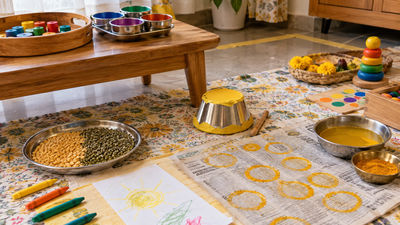
Dip the rim of a katori in a little haldi-water and stamp circles and patterns on old newspaper.
Make a comic
Fold a sheet into boxes and draw a short story, one action per box, with a line of writing under each.
In-depth guides
👶 0–12 months

🚼 1–2 years

🗣️ 2–3 years
Teaching Colours to 2-3 Year Olds: 5 Sorting Activities That Work at Home
Forget flashcards. Teach colour recognition through sorting dal, laundry, and household items. Five hands-on …
5 Creativity Activities for 2-3 Year Olds at Home (Open-Ended Art, No Setup)
Five no-mess, no-template art activities using things you already have at home. Water painting, paper tearing…
When to check with someone
📚 Reviewed against
This guide was checked against the sources below. It is general parenting guidance, not medical advice — for any concern about your child's development, talk to your paediatrician.
- National Education Policy 2020, Ministry of Education — India's official framework: a play-based Foundational Stage for ages 3–8
- National Curriculum Framework for the Foundational Stage (NCF-FS) 2022, NCERT — Play-based learning outcomes and pedagogy for ages 0–8