
Creative Activities for Babies 0-12 Months at Home: 4 Sensory Play Ideas (No Mess)

⚡ In a hurry? Our quick picks
Babies 0-12 months build creativity through sensory exploration of safe textures, water movement, light and shadow, and sound. Four simple activities use items already in your home: a fabric texture board from old dupattas, water-filled ziplock bags, shadow play with a torch, and sound shakers made from dal-filled steel boxes. None require buying anything.
If you're waiting for your baby to be "ready" for art and music, she's ready right now. From 6 weeks on, babies are absorbing textures, light, movement, and sound. From 4-5 months, they start reaching and grasping deliberately. Sensory creativity means giving your baby safe materials to explore with her hands, eyes, and ears—not colouring books or music lessons, but the raw experience of what things feel like, how they move, how they sound. The National Education Policy (NEP 2020) emphasizes that sensory exploration is foundational to cognitive development in infants, and paediatricians widely recognize that babies learn through play from birth.
🏆 Quick comparison: our top picks
| Product | Award | Rating | Price | |
|---|---|---|---|---|
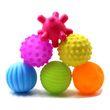
 Sassy Developmental Baby Sensory Balls (Pack of 6, Multi-Texture) Sassy Developmental Baby Sensory Balls (Pack of 6, Multi-Texture)
|
🏆 Editor's Choice | ★ 4.3 1,204 reviews |
₹349 | Check price → |
 Babymoov Baby-Safe Mirror with Safety Frame (18cm x 18cm) Babymoov Baby-Safe Mirror with Safety Frame (18cm x 18cm)
|
💰 Best Value | ★ 4.4 567 reviews |
₹279 | Check price → |
 Cra-Z-Art Washable Finger Paints Set (6 Colours, Non-Toxic) Cra-Z-Art Washable Finger Paints Set (6 Colours, Non-Toxic)
|
👑 Premium Pick | ★ 4.2 892 reviews |
₹578 | Check price → |
 Mastermind Toys Soft Sensory Balls (Set of 4, Crinkle & Rattle) Mastermind Toys Soft Sensory Balls (Set of 4, Crinkle & Rattle)
|
🪙 Budget Pick | ★ 4.1 423 reviews |
₹329 | Check price → |
🛒 Our Top Picks

Best-reviewed overall, 4.3★ across 1,204 ratings.
Sassy Developmental Baby Sensory Balls (Pack of 6, Multi-Texture)
- ✓ Why it fits: Portable, varied-texture balls that deepen tactile exploration and support grasping practice from 4-5 months onward
- ✓ Six different textures (bumpy, smooth, crinkly, spiky-soft); lightweight for small hands
- ✓ Latex-free, BPA-free; safe for mouthing
* We earn a small commission — at no extra cost to you.
Top rating for the price, 4.4★ at ₹279.
Babymoov Baby-Safe Mirror with Safety Frame (18cm x 18cm)
- ✓ Why it fits: Enables light reflection exploration and self-awareness during shadow play and sensory investigation
- ✓ Shatterproof acrylic mirror with soft foam edge frame; no glass or sharp edges
- ✓ Lightweight, wall-mountable or floor-safe; EN71 certified for infant play
* We earn a small commission — at no extra cost to you.
Top of the range, for parents who want the best features.
Cra-Z-Art Washable Finger Paints Set (6 Colours, Non-Toxic)
- ✓ Why it fits: Extends texture and sensory exploration into hand-print art for babies 6-8 months+, after tactile foundation is built
- ✓ Non-toxic, water-based formula; washable from skin and fabric
- ✓ BIS-certified for baby safety; no harmful chemicals or solvents
* We earn a small commission — at no extra cost to you.

Lowest price that still clears our 3.8★ / 100-review bar.
Mastermind Toys Soft Sensory Balls (Set of 4, Crinkle & Rattle)
- ✓ Why it fits: Combines texture, sound (soft rattle), and crinkle features to build multi-sensory awareness and cause-and-effect understanding
- ✓ Soft fabric shells with internal rattle; washable covers
- ✓ BIS-approved; no small parts or detachable pieces
* We earn a small commission — at no extra cost to you.
Daily baby tips, exclusive Amazon deals & real parent advice — free forever.
The best part? You don't need to buy anything. Every activity here uses items in a typical Indian kitchen or cupboard.
What's happening at this age
Between birth and 12 months, your baby's world expands from blurred shapes and loud sounds to precise textures, colours, and cause-and-effect. From 0-3 months, she's tracking light and reacting to loud noises. By 4-5 months, her grasp reflex becomes intentional—she can hold something and deliberately let go. By 6-8 months, she's using thumb and fingers to pick things up. By 10-12 months, she's exploring objects by banging, shaking, and mouthing them (safely, under supervision). The National Curriculum Framework for Foundational Stage (NCF-FS 2022) identifies sensory play as core to this phase: babies organize their understanding of the world through touch, sight, and sound.
Creativity at this stage isn't about producing art. It's about exploring how materials behave—what crinkles, what feels smooth or bumpy, what reflects light, what makes noise. These explorations build neural pathways for later learning, language, and problem-solving.
Try this at home
Fabric Texture Board (from old dupattas and cloth)
You need: Old dupattas, cotton cloth strips, muslin, rough-woven kitchen cloth, silk scrap or net dupatta, a large piece of cardboard or an old wooden tray, and safety pins or soft fabric tape.
How: Lay different fabric scraps flat on cardboard and secure each with safety pins (not visible to baby). Spread the board on a clean floor or low table where baby can reach. Let her touch, stroke, and mouth the fabrics (check pins are tucked safely underneath). Narrate: "Soft cotton... bumpy weave... smooth silk."
What it builds: Tactile discrimination, vocabulary, cause-and-effect (her hand = texture sensation).
Easier: Just drape different cloths over her body during tummy time. Harder: Add crinkly plastic dupatta, foam, or soft rope alongside the fabrics.
Water-Filled Ziplock Squish Art
You need: A large, food-safe ziplock bag (at least 15cm × 15cm), water, a few drops of edible food colouring or turmeric powder (optional), and a flat surface.
How: Fill the ziplock 3/4 full with water. Add one drop of food colouring if you want colour; turmeric gives a soft yellow. Seal it completely (test the seal twice). Place it flat on a clean floor or low table. Let baby press, squeeze, and watch the water move and shift. The water is contained, so zero mess.
What it builds: Cause-and-effect (pressure = movement), hand strength, visual tracking.
Easier: Make it a sensory bottle instead—use a plastic bottle filled with water and sealed. Harder: Freeze the ziplock for an hour, so baby explores frozen movement (supervised, and wrapped in a thin cloth so it's not too cold on her hands).
Shadow Play with Torch and Household Objects
You need: A torch or mobile phone light, household objects with interesting silhouettes (a wooden spoon, a steel katori, a dupatta, a plastic bottle, a wooden block), and a dark or dimly lit room with a white wall or white sheet.
How: Dim the lights. Hold the torch behind an object (or beside it, depending on the effect you want). Let the shadow appear on the wall or sheet. Move the object slowly and let baby watch. Try different objects. Narrate: "Look, a big katori shadow! Now it's smaller."
What it builds: Visual tracking, light-dark discrimination, early understanding of perspective.
Easier: Just shine the torch on the wall and let baby watch the light spot. Harder: Make shadows of your hands (bunny ears, bird wings) and move them slowly across the wall.
Sound Shakers from Steel Dabbas and Dal
You need: Small steel dabbas or steel boxes (the kind used for spice or lunch storage), dried moong dal or rice, and a cloth tape to seal the lid.
How: Pour a small handful of dal into a steel dabba (about 1/4 full). Seal the lid. Tape the lid closed securely with cloth tape so it cannot open. Let baby shake it, bang it gently on the floor, and listen to the sound. The metal and the rattle inside create a simple, clear sound.
What it builds: Cause-and-effect (shake = sound), rhythm awareness, grip strength.
Easier: Use a plastic bottle filled with dal instead (lighter, easier to grip). Harder: Make two shakers with different fillings (dal vs. rice) and let baby hear the difference in sound.
What 'getting it' looks like
You'll notice your baby is engaged with these activities when she reaches for textures intentionally, watches the shadow on the wall, stops what she's doing to listen to a shake, and repeats actions to make things happen again. By 8-10 months, she may bang a shaker deliberately and pause to listen. These aren't milestones to check off—they're signs that she's exploring and learning. If she mouths the fabrics, reaches for the water bag, or watches the light with focused attention, she's getting something from it.
When to move on, and when to ask
By 10-12 months, you might introduce slightly more complex sensory play—adding more textures, making shadow games faster or more dramatic, creating shakers with different sounds. If your baby shows little interest in reaching, touching, or reacting to sound by 8 months, or if you notice she seems to avoid certain textures or light, mention it at her next paediatrician visit. Early support for sensory processing can make a real difference.
If you're homeschooling
If you're following a home learning rhythm, rotate one sensory activity into your week: Monday = texture board, Wednesday = shadow play, Friday = shaker exploration. Keep it short (5-10 minutes) and follow your baby's interest. Don't force it if she's tired or not in the mood. The goal is play, not performance.
What helps at home (optional)
All four activities work with zero spending. But if you'd like to extend sensory exploration, a few optional items can deepen the experience: a set of non-toxic washable finger paints (for older babies 6-8 months+, if you want to try supervised hand-print play after you've built confidence with textures), a pack of soft sensory balls with varied textures and sounds, or a baby-safe mirror that lets her explore light reflection and see her own expressions while engaging with shadows and light. None of these are necessary—everything above is complete without them.
What Paediatricians Say
According to the Indian Academy of Pediatrics (IAP), sensory play in the first year supports brain development, language readiness, and emotional regulation. Babies who have varied tactile and auditory experiences show stronger attention spans and more curiosity-driven exploration by 12 months. No special equipment needed—everyday household objects are ideal.
📚 Reviewed against
This guide was checked against the sources below. It is general parenting guidance, not medical advice — for any concern about your child's development, talk to your paediatrician.
- National Education Policy (NEP) 2020 — Framework emphasizing sensory exploration as foundational to cognitive development in infants
- National Curriculum Framework for Foundational Stage (NCF-FS) 2022 — Identifies sensory play as core developmental area for 0-6 age group
- Indian Academy of Pediatrics (IAP) – Early Childhood Development — Guidelines on sensory play, brain development, and developmental milestones 0-12 months
- WHO Early Childhood Development — International evidence on sensory exploration and early learning
- BIS (Bureau of Indian Standards) – Toy Safety Requirements — IS 9873 and EN71 standards referenced for baby toy safety certification
Last reviewed 30 Sep 2026
Frequently Asked Questions
What are some creative activities for babies between 0 and 12 months old?
What is the 5-3-3 rule for babies?
What are some fun activities I can do with my baby at home?
When should I start sensory play with my newborn?
Are fabric textures safe for babies to mouth?
How long should sensory play sessions last for babies 0-12 months?
Daily baby tips, exclusive Amazon deals & real parent advice — free forever.