
Learning at 5-8: Reading, Maths and Confidence
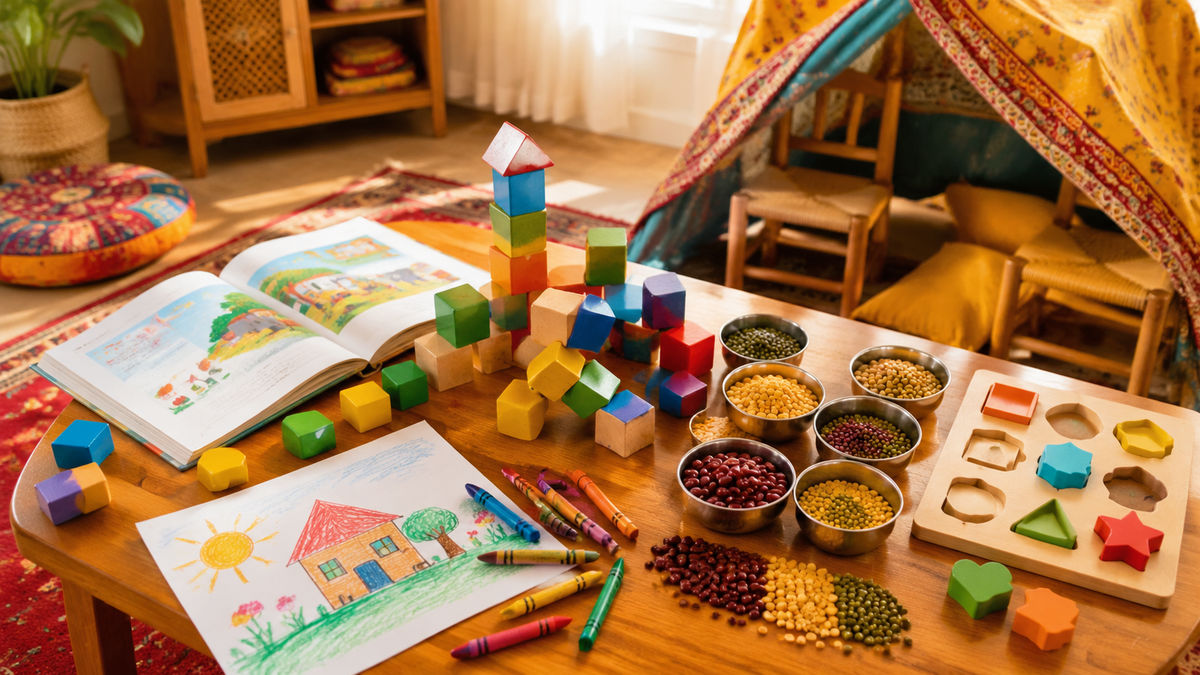
From five to eight, children begin real reading and maths. The best home support is reading together every day, using real-life maths like shopping and cooking, and protecting time for play and curiosity, not extra worksheets.
⚡ In a hurry? Our quick picks


By five to eight, most Indian children are in Grades 1 and 2, and formal literacy and numeracy have begun. This is NEP 2020's Foundational Stage completing its arc: the goal is that every child can read with understanding and do basic maths by Grade 3. Whether your child is at school or learning at home, your role shifts from pure play towards gently supporting these skills, while fiercely protecting the play, reading-for-pleasure and curiosity that keep a child a willing learner.
🏆 Quick comparison: our top picks
| Product | Award | Rating | Price | |
|---|---|---|---|---|
|
Moral Storybooks For Kids (Illustrated) With Colorful Pictures - Phonic Stories - Bedtime Stories - 3 Years To 6 Years Old - Read Aloud To Infants, Toddlers (Set Of 10 Books)
|
🏆 Editor's Choice | ★ 4.4 1,200 reviews |
₹199 | Check price → |
|
Educational Phonics Words English 60 Flashcards for Kids Ages (3-8) Ideal for Homeschooling, Montessori & Classroom Activities
|
💰 Best Value | ★ 4.2 95 reviews |
₹399 | Check price → |
🛒 Our Top Picks
Best-reviewed overall, 4.4★ across 1,200 ratings.
Moral Storybooks For Kids (Illustrated) With Colorful Pictures - Phonic Stories - Bedtime Stories - 3 Years To 6 Years Old - Read Aloud To Infants, Toddlers (Set Of 10 Books)
- ✓ Why it fits: Culturally relevant chapter books for building reading confidence in 6-8 year olds
* We earn a small commission — at no extra cost to you.
Top rating for the price, 4.2★ at ₹399.
Educational Phonics Words English 60 Flashcards for Kids Ages (3-8) Ideal for Homeschooling, Montessori & Classroom Activities
- ✓ Why it fits: Builds letter-sound recognition foundation for Read and Swap activity
* We earn a small commission — at no extra cost to you.
Daily baby tips, exclusive Amazon deals & real parent advice — free forever.
What's happening at this age
Children this age move from sounding out words to reading sentences, from counting to adding and subtracting, and from parallel play to cooperative games with rules. They can concentrate for longer, explain their thinking, and take pride in getting things right. The risk at this age is not too little academics but too much pressure too soon, which can turn a curious child off learning. Reading together and real-life maths beat extra tuition sheets almost every time.
Try this at home
Read and swap
You need: any book your child can nearly read.
How: take turns reading a page each, and talk about what might happen next.
What it builds: reading fluency, comprehension and a love of stories.
Shopkeeper game
You need: household items and paper coins.
How: set up a little shop, price the items, and practise adding up and giving change.
What it builds: money maths, addition and subtraction with meaning.
Kitchen chemistry
You need: baking soda and a little lemon or vinegar.
How: mix a spoon of baking soda with lemon juice and watch it fizz, then ask "why do you think that happened?".
What it builds: curiosity, observation and scientific thinking.
Make a comic
You need: paper and a pencil.
How: fold a sheet into six boxes and draw a short story, one action per box, with a line of writing under each.
What it builds: writing, sequencing and creativity.
What "getting it" looks like
You will see your child read simple books more smoothly, add and subtract small numbers, write short sentences, follow multi-step instructions, and stick with a task for fifteen or twenty minutes. Just as important, a child who still asks questions and enjoys books is learning in the way that lasts.
When to move on, and when to ask
Children reach reading and maths fluency at different times, and comparison causes more harm than good. Our learning milestone checklist lists the behaviours to look for. Talk to your child's teacher or paediatrician if reading or writing is a persistent, distressing struggle well beyond peers, as early support for difficulties like dyslexia makes a real difference.
If you're homeschooling
This age suits a light daily structure: two or three short focused blocks, reading together, real-life or hands-on maths, and a project, wrapped around plenty of play, outdoor time and reading for pleasure. Our homeschooling guide covers rhythm, socialisation and NIOS in detail.
📚 Reviewed against
This guide was checked against the sources below. It is general parenting guidance, not medical advice — for any concern about your child's development, talk to your paediatrician.
- National Education Policy 2020, Ministry of Education — Foundational literacy and numeracy by Grade 3
- National Curriculum Framework for the Foundational Stage (NCF-FS) 2022, NCERT — Learning outcomes for Grades 1-2
- Indian Academy of Pediatrics — Guidance on screen time and healthy child development
Last reviewed 03 Sep 2026
Frequently Asked Questions
How can I help my child read at home?
Does my 6-year-old need extra tuition?
How much screen time is right for a 5-8 year old?
My child finds reading hard. Should I worry?
Is homework important at this age?
How do I keep my child curious once school starts?
Daily baby tips, exclusive Amazon deals & real parent advice — free forever.