
Rhyme Activities for Babies 0-12 Months: Building Sound Patterns Without Toys
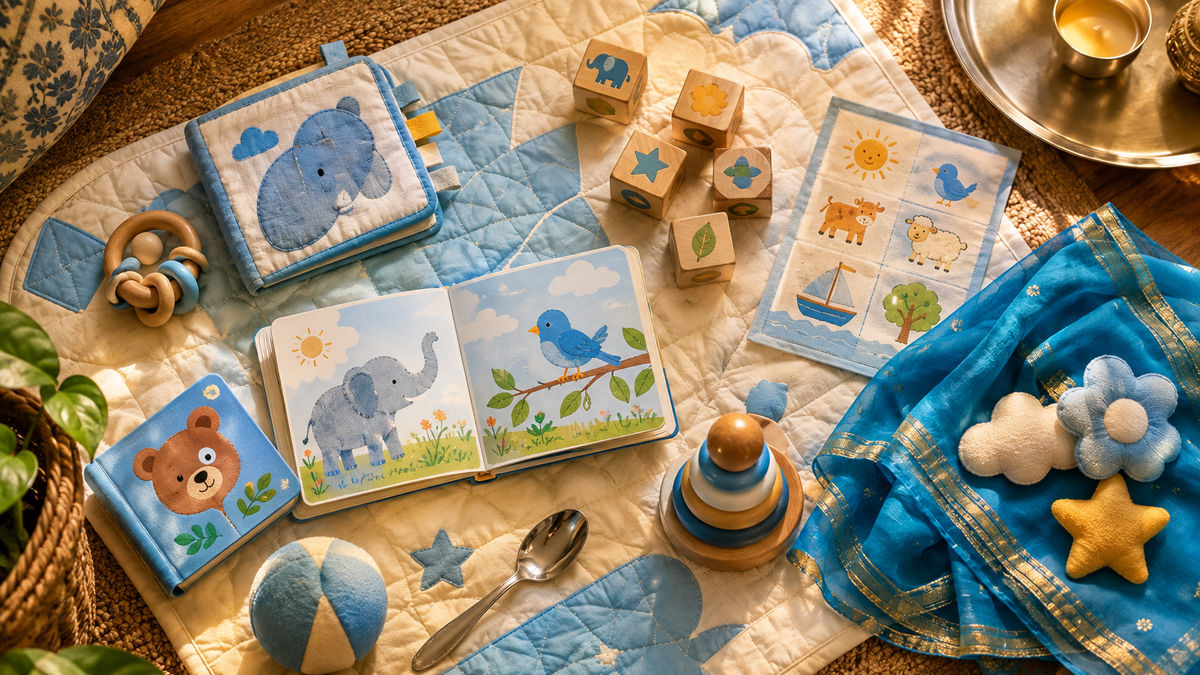
Babies learn to read by first recognising sound patterns. Simple rhyme activities—clapping along to Hindi nursery rhymes, tapping spoons to beats, humming the same lullaby daily, and echoing baby sounds back—build the brain's auditory foundation before words appear. Start from birth; no toys needed.
Most Indian parents focus on words when they think about early language. But paediatricians and child development experts say the real literacy journey starts much earlier—with rhythm and rhyme. Before a baby can say their first word, their brain is already mapping sound patterns. This is phonological awareness: the ability to recognise, identify, and work with sounds in spoken language. It's not about learning music. It's about wiring the neural pathways that will, years later, let your child decode written letters and words.
Daily baby tips, exclusive Amazon deals & real parent advice — free forever.
The best news? You don't need apps, flashcards, or expensive toys. You need your voice, your hands, and everyday items already in your kitchen. Let's walk through what's happening in your baby's brain at each stage, and four activities you can start today.
What's Happening at This Age
Babies' auditory systems are fully developed at birth, but their ability to process and respond to sound develops in stages. From 0-4 months, your baby is listening. They're not yet trying to copy you; they're building a mental library of the sounds in their world. Around 5-8 months, they begin to respond—turning toward your voice, babbling in response to speech, experimenting with their own sounds. By 9-12 months, they start attempting to mimic. They'll try to clap when you clap, hum along with a familiar tune, and echo sounds back to you. According to India's National Education Policy (NEP 2020) framework for early learning, oral language and sound play are foundational to literacy—more important at this age than printed letters. The Indian Academy of Pediatrics (IAP) similarly emphasises that responsive, rhythmic interaction with caregivers is one of the strongest predictors of language and cognitive development in infants.
Try This at Home
Activity 1: Clap-and-Chant Hindi Nursery Rhymes
You need: Your voice, your hands, and your baby on your lap or in front of you. No materials to buy.
How: Sit facing your baby. Say or sing a simple, familiar Hindi or regional nursery rhyme—"Aloo Kachaloo," "Chanda Mama," or "Doodh ka Katori." Clap your hands in a steady, exaggerated rhythm as you chant. Pause after each line and let your baby take in the pattern. Repeat the same rhyme every day for a week so your baby begins to anticipate the rhythm and sounds.
What it builds: Phonological awareness and rhythm recognition. Your baby's brain begins to predict what sound comes next—a foundational pre-reading skill. The clapping also connects sound to movement, strengthening the link between hearing and motor response.
Easier / harder: For younger babies (0-4 months), slow the clap and speak in a gentle, sing-song voice. For older babies (9-12 months), try to get them to clap with you by gently guiding their hands or clapping when they naturally bring their hands together.
Activity 2: Tap Spoons on Steel Plates to Nursery Rhyme Beats
You need: Two steel spoons (or one spoon and a steel plate/katori), a steel plate or any steel utensil from your kitchen. Every Indian kitchen has these.
How: Place a steel plate in front of your baby or hold it within arm's reach. Tap a steady, simple beat on the plate with a spoon—once per word as you recite a nursery rhyme: "Chanda mama duur ke" (tap-tap-tap-tap). Keep the rhythm consistent. Once your baby is watching and seems engaged, tap a few times and pause. Let them watch, listen, and gradually they may try to tap along. Even if they bang randomly at first, they're building auditory attention and cause-and-effect understanding.
What it builds: Auditory patterning and listening focus. The metallic sound is sharp and distinct, making rhythm patterns very clear to developing ears. This activity also introduces the concept that actions produce sounds—a cognitive step.
Easier / harder: For younger babies, use a softer tap and just let them listen. For older babies, encourage them to hold a spoon and tap alongside you, even if the timing is off.
Activity 3: Hum the Same Lullaby Daily
You need: Your voice. That's all.
How: Choose one lullaby or aarti that resonates with you—perhaps one from your family's tradition or a simple Hindi lullaby. Hum or sing it at the same time every day: during bedtime, after a feed, or during a calm moment. Don't worry about pitch or perfection. Just use the same melody, the same words (if you sing words), and the same gentle tone every single day for weeks. Your baby will begin to anticipate this sound and the calming experience that follows.
What it builds: Predictability and memory. Repetition wires the melody into your baby's brain, creating a familiar auditory landmark. This is the foundation of recognising patterns—a cornerstone of pre-reading skills. The predictability also builds emotional trust and security.
Easier / harder: For any age 0-12 months, just hum. As your baby gets older, you'll notice they start to quieten or focus when they hear the familiar tune beginning—they're remembering and anticipating.
Activity 4: Echo Sounds Back—Turn-Taking with Baby Coos
You need: Your voice and your baby in a calm, face-to-face setting.
How: When your baby coos or babbles—"aaa," "ooh," "da"—pause and repeat the sound back exactly as they made it, with the same tone and length. Wait for them to respond. They may repeat it, try a new sound, or stay quiet. That's all fine. Repeat your echo sound and give them another turn. You're creating a conversation where you're both taking turns making sounds. Do this in short bursts—five minutes is plenty. Your baby will gradually begin to intentionally repeat sounds to engage with you in this game.
What it builds: Turn-taking and the root of conversational language. This back-and-forth is how dialogue develops. Your baby learns that sounds are a way to interact with you. Neuroscientifically, this is where the brain begins to link their own vocalisations to social response—essential for language and, eventually, reading comprehension, which requires understanding dialogue and meaning.
Easier / harder: For younger babies (0-6 months), even if they don't respond every time, keep echoing. For older babies, try making new sounds first and see if they echo you.
What "Getting It" Looks Like
Around 6-8 months, you'll notice your baby starts to turn toward the sound of your voice more deliberately. By 9-10 months, they may attempt to clap along with you—the timing may be off, but the intention is clear. They'll babble in more complex patterns, sometimes sounding like they're "talking" in rhythm. A 12-month-old might sway or bounce to a familiar tune, try to hum along, or repeat simple sounds repeatedly—showing they're experimenting with control over their own voice. These aren't milestones you need to tick off; they're signs that rhythm and sound patterns are building in their brain.
When to Move On, and When to Ask
Between 6-12 months, babies naturally shift from listening to participating. If your 10-month-old shows no interest in sounds or your voice, or if they don't turn toward loud noises, talk to your paediatrician—this could indicate a hearing concern that benefits from early intervention. Otherwise, keep the rhythm activities light and joyful. There's no "passing" or "failing" at rhyme. You're simply creating an environment where sound and pattern are celebrated every day. If your baby seems overwhelmed or overstimulated by loud or complex sounds, soften your approach and hum more gently.
If You're Homeschooling
Weave these rhyme activities into your weekly rhythm: a clap-and-chant session three times a week, your daily lullaby at the same time each day, and echo sounds during natural moments—before a feed, after a nappy change, when your baby is alert and engaged. They require no prep, no screen time, and no cost. They fit into real life.
What Paediatricians Say
Responsive, rhythmic interaction between caregiver and infant is one of the strongest predictors of language and cognitive development. According to IAP guidelines, babies who experience daily back-and-forth sound play develop stronger auditory processing skills and show earlier language milestones. The brain's sound-processing regions are most plastic (changeable) in the first 12 months—meaning the investment you make in rhyme and rhythm now creates neural foundations that will support reading, writing, and learning for years to come.
📚 Reviewed against
This guide was checked against the sources below. It is general parenting guidance, not medical advice — for any concern about your child's development, talk to your paediatrician.
- National Education Policy (NEP) 2020 — Early Learning Standards — Framework emphasising oral language and sound play as foundational to literacy in ages 0-6.
- Indian Academy of Pediatrics (IAP) — Developmental Milestones & Language — Guidelines on responsive interaction and auditory development in infants 0-12 months.
- WHO Early Childhood Development: A Powerful Equaliser — Evidence on the role of early auditory and verbal interaction in brain development.
- National Curriculum Framework for Foundation Stage (NCF-FS) 2022 — Indian framework for early language and sound awareness in foundation stage (ages 3-6, but builds on 0-3 foundations).
- Zero to Three: Brain Development Research & Infant Language — Peer-reviewed research on phonological awareness and literacy precursors in infants.
Last reviewed 21 Sep 2026
Frequently Asked Questions
Why is rhythm more important than words at this age?
What if my baby doesn't respond to clapping or rhymes?
Can I use nursery rhymes in English instead of Hindi?
How long should each activity be?
Will screen time rhymes or music apps work instead of me doing this?
At what age can I expect my baby to actually sing or clap on rhythm?
Daily baby tips, exclusive Amazon deals & real parent advice — free forever.