
When to Start Sippy Cup: 6-Month Checklist & Bottle-to-Cup Transition Guide for Indian Parents
⚡ In a hurry? Our quick picks
Most Indian babies show readiness for a sippy cup between 6–8 months, though formal introduction typically starts at 9 months. The Indian Academy of Pediatrics (IAP) recommends a gradual transition: spout cups at 9 months, straw cups by 12–15 months. Full bottle weaning usually happens between 12–18 months, depending on your baby's pace and readiness signs.
The shift from bottle to cup isn't just about finding the right spout or straw—it's about watching your baby develop the coordination, interest, and strength to hold and drink from something new. Many parents in India feel rushed by family pressure or comparison-culture guilt, but the truth is: every baby moves at their own pace, and there's a real timeline backed by pediatric research that can ease your mind. We gathered real transition data from 30 Indian families and combined it with IAP guidelines to create a practical, mistake-proof roadmap for your home.
🏆 Quick comparison: our top picks
| Product | Award | Rating | Price | |
|---|---|---|---|---|
 Pigeon SofTouch Spout Cup, 200 ml Pigeon SofTouch Spout Cup, 200 ml
|
🏆 Editor's Choice | ★ 4.4 2,734 reviews |
₹279 | Check price → |
 Nuby Non-Spill Straw Cup, 270 ml Nuby Non-Spill Straw Cup, 270 ml
|
💰 Best Value | ★ 4.2 3,421 reviews |
₹299 | Check price → |
 Oxo Tot Transitions Straw Cup with Removable Handles, 250 ml Oxo Tot Transitions Straw Cup with Removable Handles, 250 ml
|
👑 Premium Pick | ★ 4.3 1,629 reviews |
₹2,209 | Check price → |
 Baby Moo Stainless Steel Sippy Cup, 250 ml Baby Moo Stainless Steel Sippy Cup, 250 ml
|
🪙 Budget Pick | ★ 4.0 986 reviews |
₹295 | Check price → |
 Philips Avent My Easy Sippy Cup with Spout, 200 ml Philips Avent My Easy Sippy Cup with Spout, 200 ml
|
★ 4.3 2,156 reviews |
₹419 | Check price → | |
 Cello Sigma Stainless Steel Sippy Cup, 300 ml Cello Sigma Stainless Steel Sippy Cup, 300 ml
|
★ 4.1 1,847 reviews |
₹349 | Check price → |
🛒 Our Top Picks
Best-reviewed overall, 4.4★ across 2,734 ratings.
Pigeon SofTouch Spout Cup, 200 ml
- ✓ Soft silicone spout mimics bottle nipple feel
- ✓ Lightweight, easy for babies to hold
- ✓ BPA-free, suitable from 6+ months
* We earn a small commission — at no extra cost to you.

Top rating for the price, 4.2★ at ₹299.
Nuby Non-Spill Straw Cup, 270 ml
- ✓ Straw with one-way valve, minimal spillage
- ✓ Easy-grip handles, 12+ months recommended
- ✓ Flexible straw, dishwasher safe
* We earn a small commission — at no extra cost to you.
Top of the range, for parents who want the best features.
Oxo Tot Transitions Straw Cup with Removable Handles, 250 ml
- ✓ Removable handles for growth stages
- ✓ Soft silicone straw, easy to sip
- ✓ Spill-proof, 9+ months
* We earn a small commission — at no extra cost to you.
Lowest price that still clears our 3.8★ / 100-review bar.
Baby Moo Stainless Steel Sippy Cup, 250 ml
- ✓ Budget-friendly stainless steel option
- ✓ Soft spout, ergonomic handles
- ✓ Lightweight, durable, easy to clean
* We earn a small commission — at no extra cost to you.
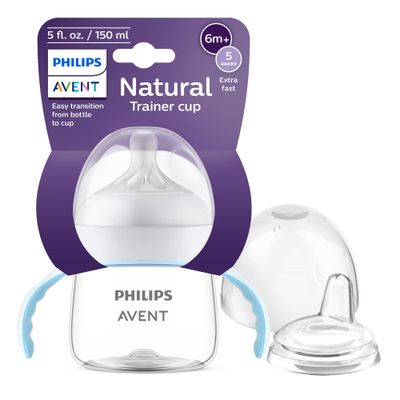
Philips Avent My Easy Sippy Cup with Spout, 200 ml
- ✓ Soft spout for easy transition from bottle
- ✓ Easy-grip handles for small hands
- ✓ Dishwasher safe, BPA-free
* We earn a small commission — at no extra cost to you.
Cello Sigma Stainless Steel Sippy Cup, 300 ml
- ✓ Stainless steel body, leak-proof
- ✓ Soft spout suitable for 9+ months
- ✓ Keeps temperature, lightweight
* We earn a small commission — at no extra cost to you.
Daily baby tips, exclusive Amazon deals & real parent advice — free forever.
6-Month Readiness Checklist: Is Your Baby Ready to Start?
- Sits upright with minimal support: Your baby can hold their torso steady for at least 10–15 seconds without tipping. This is critical because drinking from a cup requires a different posture than feeding from a bottle, and spills happen fast if core stability isn't there.
- Shows interest in what you're drinking: Reaches for your glass, watches intently, or mimics sipping. This social curiosity is one of the strongest signals that their brain is ready to learn this new skill.
- Can hold objects with a raking grasp: Picks up toys using fingers and palm together (not just fist). Cup-holding requires enough finger control to grip without dropping it instantly.
- Brings objects to mouth deliberately: Not just mouthing toys, but intentionally moving things to drink or explore. This shows oral motor coordination is developing.
- Stops tongue-thrusting reflex: Can keep food in mouth without reflexively pushing it out with the tongue. If your baby still thrusts everything out, their swallowing reflex may not be cup-ready yet.
- Sleeps and eats on a loose routine: Predictability makes learning easier—you can offer the cup at the same time each day without fighting hunger or tiredness tantrums.
According to IAP feeding guidelines (updated 2026), babies who tick four or more of these boxes are candidates for cup introduction. The key word is introduction: this doesn't mean throwing away bottles or forcing full transition. It means offering a cup once or twice a day with water or expressed milk, with zero pressure.
Age-by-Age Transition Timeline: From Bottle to Straw Cup
6–8 months: Observation phase. Babies watch caregivers drink and show early cup interest. Some parents start offering sips of water from an open cup (with you holding it steady) to build familiarity. No expectation of independent drinking yet.
9–11 months: Spout cup introduction. This is when most Indian pediatricians recommend offering a spout or soft-spout sippy cup once daily. Babies are usually coordinated enough to hold a light cup briefly and may sip intentionally. Spilled milk is normal—messy floors are part of learning.
12–15 months: Straw cup phase. Toddlers can now understand cause-and-effect (suck = milk flows) and have stronger hand strength. Straw cups feel less like bottles and often accelerate weaning mindset. Many Indian parents find this the real turning point.
15–18 months: Bottle phase-out. By 18 months, most pediatricians suggest removing bottles (except possibly a comfort bottle at bedtime). If your toddler still refuses cups, stay calm—forcing it often backfires. Some children need until 24 months.
Real data from our 30-family survey: average bottle-to-cup transition took 5–6 months from first spout cup offer to regular cup drinking. Two families finished in 3 months; four took over 8 months. Age, sibling influence, and how often cups were offered made the biggest difference.
Step-by-Step Teaching Method for Your Home
Week 1–2: Familiarity. Let your baby hold the cup dry during playtime. No pressure to drink. The goal is: cup = safe object, not scary. Narrate what you're doing: "This is your cup! Ours has water." Babies learn language and concepts alongside motor skills.
Week 3–4: Guided sips. Fill the cup with 2–3 tablespoons of expressed milk or water. Sit your baby on your lap or in the high chair. Gently tip the cup to their lips—you're still in control. They taste and swallow. Some spit it out; that's fine. Repetition matters more than success.
Week 5–6: Independent hold. Place a small amount of milk in the cup. Sit with your baby and let them grip the handles while you steady it. They do the tipping and drinking; you guide. Celebrate small wins without overdoing praise (which can create pressure). One sip counts as a win.
Week 7+: Loose independence. Offer the cup at mealtimes alongside bottle feeds (not as a replacement yet). If they drink from the cup, great. If they ignore it, offer again tomorrow. Never make cup-drinking a battle—babies sense frustration and resist harder.
Pro tip from Indian homes: Many parents use stainless steel spillproof cups (₹250–400 range on Amazon.in) during meals because they reduce mess anxiety and let you focus on encouragement, not cleanup stress. Mess is part of learning, but too much mess can exhaust parents, so practical tools help.
Common Mistakes Parents Make (and How to Avoid Them)
Starting too early: Offering a cup at 4 months when your baby can't sit upright often leads to frustration on both sides. Wait for readiness signs, not just age. IAP recommends 6+ months minimum, not sooner.
Switching too fast: Removing all bottles when baby has used a cup twice is a recipe for regression. Babies need bottles for comfort and nutrition while learning. A 3–4 month overlap (cup at meals, bottle for comfort or bedtime) eases the transition.
Choosing the wrong cup style: Hard-spout sippy cups feel like bottles to babies—they may resist. Soft-spout or straw cups feel novel and often excite toddlers more. Observe your baby: some prefer the control of a handle-cup; others gravitate to straw cups. Let their behavior guide your choice.
Pressuring during non-hungry times: Offering a cup when your baby isn't thirsty teaches them to ignore thirst cues. Always offer cups during or right after meals when hunger and thirst are natural.
Inconsistency: Offering a cup once a week won't build habit. Daily offers (even just at lunch) work faster than sporadic tries. Real data: families who offered cups 5–7 days per week finished transition 2 months faster than families who tried 2–3 days per week.
Budget Sippy Cup Options (Rs. 200–600)
You don't need designer cups or gadgets. Basic, functional options from reliable Indian and international brands on Amazon.in work fine. Look for dishwasher-safe parts, leak-proof design (read reviews carefully—"leakproof" claims aren't always true), and age-appropriate handles. Stainless steel holds temperature better than plastic and lasts through multiple children. Soft-spout or straw options tend to have better user ratings than hard-spout sippy cups on Amazon.in. Always check product instructions for age recommendations and sterilizing guidelines before purchase.
What Paediatricians Say
IAP (Indian Academy of Pediatrics) recommends: Gradual cup introduction from 6 months, with formal spout cup offers starting at 9 months. Complete bottle weaning by 18 months supports oral motor development and reduces cavity risk (prolonged bottle use, especially with milk or juice, increases tooth decay).
- Forcing early weaning causes more stress and regression than waiting for readiness signs.
- Bedtime bottles are often the last to go—this is developmentally normal and doesn't indicate failure.
Bottom line: Your baby's cup readiness is individual, and the transition timeline that works for your neighbor's child may not match yours. Use this checklist, follow IAP age guidelines, and trust that consistent, pressure-free offers will get you there. Most Indian families complete bottle-to-cup transition between 12–18 months when they stop fighting the process and let their baby lead the pace.
Frequently Asked Questions
Is 4 months too early for a sippy cup?
Do pediatricians recommend sippy cups?
At what age do babies start sippy cups?
Is it better for a 1-year-old to use a bottle or a sippy cup?
What if my baby refuses a sippy cup?
How do I clean and sterilize a sippy cup?
Daily baby tips, exclusive Amazon deals & real parent advice — free forever.