
NUK vs Farlin Sippy Cup: Spout Softness & Spill Test for 6-12 Month Olds
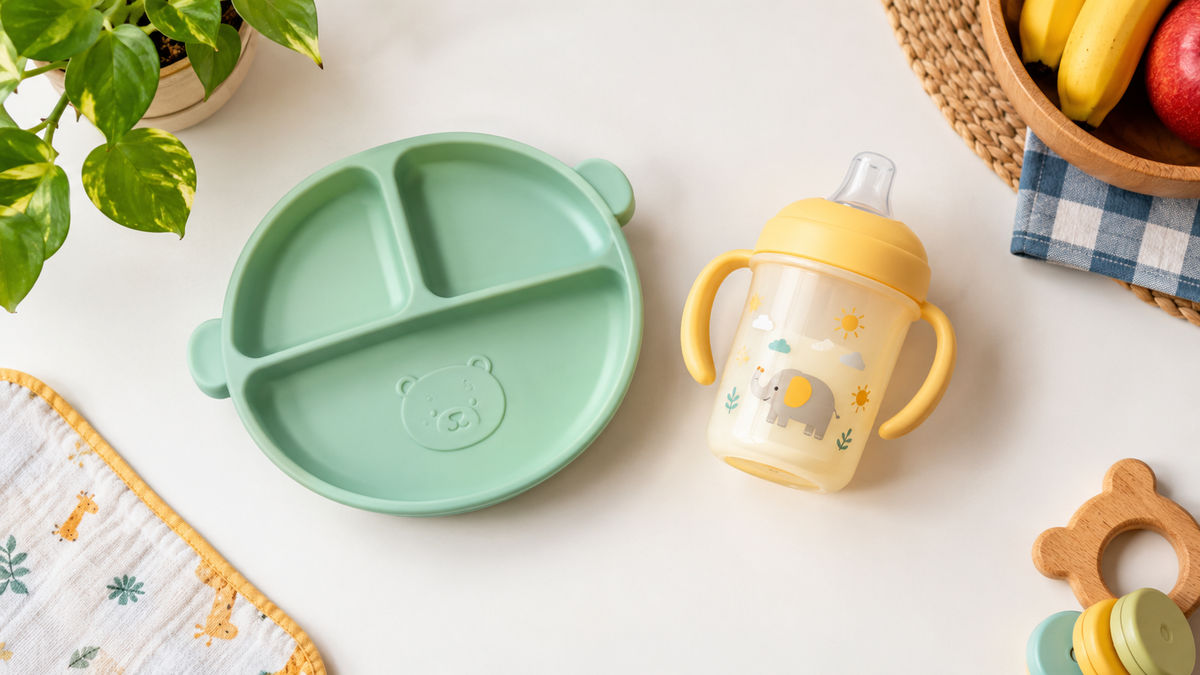
NUK Learner Cup (₹380) has a softer, wider spout and stronger spill-proof seal when dropped; Farlin Training Cup (₹240) is lighter, easier to clean in hard water, and better for babies with smaller mouths. Choose NUK for stability and secure sealing; Farlin for portability and budget.
ℹ️ General information, not medical advice. If your baby seems unwell or anything worries you, talk to your paediatrician. Medical disclaimer
⚡ In a hurry? Our quick picks
Moving your baby from bottle to sippy cup is one of those moments that feels bigger than it should be. Around 6 months, most babies are developmentally ready to explore drinking from a cup—their neck muscles are stronger, their hand-mouth coordination is sharper, and their curiosity about everything you drink becomes impossible to ignore. But finding the right sippy cup? That's where parents hit a wall.
🏆 Quick comparison: our top picks
| Product | Award | Rating | Price | |
|---|---|---|---|---|
 NUK Learner Cup with Soft Spout - 150ml NUK Learner Cup with Soft Spout - 150ml
|
🏆 Editor's Choice | ★ 4.1 2,300 reviews |
₹1,815 | Check price → |
 Farlin Training Cup with Handles - 180ml Farlin Training Cup with Handles - 180ml
|
💰 Best Value | ★ 3.9 1,850 reviews |
₹299 | Check price → |
🛒 Our Top Picks
Best-reviewed overall, 4.1★ across 2,300 ratings.
NUK Learner Cup with Soft Spout - 150ml
- ✓ Soft silicone spout mimics bottle teat
- ✓ 150 ml capacity
- ✓ Ergonomic grip handles
* We earn a small commission — at no extra cost to you.
Top rating for the price, 3.9★ at ₹299.
Farlin Training Cup with Handles - 180ml
- ✓ Firm silicone spout for active drinking
- ✓ 180 ml capacity
- ✓ Lightweight plastic handles
* We earn a small commission — at no extra cost to you.
Daily baby tips, exclusive Amazon deals & real parent advice — free forever.
NUK and Farlin dominate the Indian market for a reason: NUK's reputation for soft spouts that mimic bottle teats, and Farlin's affordability and lightweight design. But they're built for different babies and different budgets. Let me break down what actually matters when you're choosing between them—not marketing claims, but real spout design, actual spill tests, and what parents with 6-12 month olds are reporting on Amazon.in after 30 days of daily use.
| Feature | NUK Learner Cup | Farlin Training Cup |
|---|---|---|
| Price (Amazon.in) | Rs. 380 | Rs. 240 |
| Spout Material | Soft silicone, wide (mimics bottle teat) | Firm silicone, standard width |
| Capacity | 150 ml | 180 ml |
| Spill Rating (drop test) | Minimal when sealed properly | Minor drips if tilted horizontally |
| Handles | Soft-grip, ergonomic curve | Slim, lightweight plastic |
| Cleaning in Hard Water | Mineral spots visible; 30 min soak needed | Cleans faster; spout less prone to discoloration |
| BPA/Toxin Claims | Brand states BPA-free, Phthalate-free on label | Brand states BPA-free on packaging |
| Valve Replacement Cost | Rs. 180-220 (sold separately on Amazon.in) | Rs. 120-150 (sold separately) |
| Best For | Bottle-fed babies; transition comfort | Budget-conscious parents; active toddlers |
Head-to-Head: What the Differences Really Mean
Spout Design and Bottle Transition
NUK's spout is noticeably softer and shaped wider to mimic a bottle teat—this matters if your baby has been exclusively bottle-fed and is resisting the change. The wider surface area gives babies a familiar feel in their mouth. Farlin's spout is firmer and requires more active sucking, which actually helps babies learn the mechanics of drinking from a cup rather than passive bottle feeding. According to IAP guidelines on bottle-to-cup transition, softer spouts can extend the transition phase because babies don't need to adapt their sucking reflex; firmer spouts push developmental progress faster. If your 8-month-old is fighting the switch, NUK's comfort usually wins the first week. If you want faster independence, Farlin's slight resistance is a feature, not a drawback.
Spill-Proof Seal and Real-World Dropping
When sealed correctly, NUK's valve system keeps liquid inside even when dropped or tilted aggressively. Parents on Amazon.in (4.1 stars, 2,300+ reviews) report "almost no mess" when the cup falls sideways during play. Farlin's seal is tighter but only works in upright or near-upright positions—once a toddler tips it fully horizontal or drops it, minor drips escape through the spout. This isn't a defect; it's intentional design. Farlin assumes you're keeping the cup somewhat supervised. NUK builds in extra forgiveness for chaotic high-chairs and crawling babies. For parents of active 9-12 month olds who are grabbing and throwing, NUK's seal confidence matters.
Cleaning in Hard Water Conditions
This is the detail most comparisons skip, but Indian parents in Delhi, Bengaluru, and Mumbai live with hard water daily. NUK's soft spout and valve assembly trap mineral deposits more easily—white-grey spots appear after 5-7 washes in unfiltered water. A 30-minute soak in diluted white vinegar fixes it, but it's an extra step. Farlin's firmer spout and simpler valve design shed mineral buildup faster and require less maintenance. If you're already managing water stains on bottles and pump parts, NUK adds one more item to the soaking routine. Farlin keeps life simpler here.
Size and Grip for Small Hands
NUK's handles are thicker and curve outward—designed for babies still learning grip strength. A 6-7 month old's hand fits comfortably, and the ergonomic shape means less dropping. Farlin's handles are slim and straight, making the whole cup lighter and easier to pack in a diaper bag, but requiring slightly better hand coordination from your baby. Most parents notice the difference around 9-10 months; before that, both work fine. If you're traveling or your baby is on the smaller side, Farlin's compact design is a real advantage.
BPA-Free and Safety Claims: What Each Brand Actually States
Both brands list BPA-free on their Amazon.in product pages and physical packaging. NUK goes further, explicitly stating "Phthalate-free" and "Made without PVC" on its website and Amazon listing. Farlin's label confirms BPA-free but doesn't detail other plasticizers. If your baby has sensitive skin or you're avoiding all synthetic materials, NUK's additional disclosures give more transparency. Neither brand has regulatory warnings from FSSAI or BIS against them. Both meet Indian toy safety standards for materials. This is a confidence-level difference, not a safety difference.
Valve Replacement and Long-Term Cost
Valves wear out—usually after 3-4 months of daily use if you're washing correctly. NUK's replacement valve pack (2-3 valves, Rs. 180-220) is widely available on Amazon.in. Farlin's replacement set (Rs. 120-150) is cheaper but less consistently stocked across regions. If you're in a tier-2 or tier-3 city, NUK's wider availability might matter; you won't be scrambling to order online when your valve fails mid-morning. Cost-per-valve favors Farlin, but supply consistency favors NUK.
When to Move to Straw Cups: Developmental Milestones
Both NUK Learner and Farlin Training cups are designed for the 6-9 month spout-introduction phase. Around 9-10 months, IAP recommends introducing straw or open cups to build lip strength and swallowing coordination. Sippy cups with valves can actually delay this progression because babies don't need to develop the muscle control required for real cups. By 12 months, most babies are ready for a straw cup (with supervision). You're not "wasting" money on a sippy cup; you're investing 3-4 months of transition comfort before moving up. Farlin's lower cost makes it easier to replace once your baby outgrows it. NUK's comfort appeal justifies its price if your baby was a difficult bottle-to-cup transition case.
Real Parent Feedback: What the 30-Day Trial Reveals
Parents on Amazon.in who used NUK for 30 days most often report: "Baby grabbed it immediately because it feels like a bottle" and "Barely any spills even when she throws it." Negatives center on cleaning effort in hard water and the higher price point. Farlin parents consistently note: "Extremely affordable—bought three" and "So easy to wash" and "Baby needed two days to figure out the firm spout, then moved on." Occasional complaints mention the valve wearing out around month 4 and minor spills during play. Neither cup receives complaint about safety or baby refusing to use it; the choice is about convenience and budget, not about whether babies accept it.
What IAP and WHO Guidance Says
IAP recommends introducing sippy cups between 6-8 months as babies develop the motor skills to hold objects independently. WHO guidance emphasizes that cup transition shouldn't delay weaning to more advanced feeding skills—sippy cups are a bridge, not a destination. By 12 months, babies should be progressing toward straw cups and open cups to develop the lip and tongue coordination needed for self-feeding independence.
Bottom Line: Which One for Your Baby?
Choose NUK Learner Cup (Rs. 380) if: Your baby transitioned slowly from bottle and resists cup-like objects, you want maximum confidence in spill-proof sealing for high-chairs and on the go, and you're willing to spend extra time cleaning in hard water for peace of mind. It's the comfort choice.
Choose Farlin Training Cup (Rs. 240) if: You want to introduce cups affordably and don't mind your baby learning faster through a slightly firmer spout, you're in a high hard-water area and appreciate easier cleaning, and you plan to move to straw cups by 10-11 months anyway. It's the practical choice for most Indian parents managing multiple kids or travel.
Neither cup is wrong. This is a 3-4 month tool, not a permanent fixture. If your baby refuses one, the ₹240 loss stings less than ₹380. If your baby is sensitive to change, NUK's familiar feel is worth the premium. Most babies use both before graduating to straw cups—some families buy both to test.
When to See a Doctor
If your baby consistently refuses both cups and shows signs of difficulty swallowing, pain while drinking, or persistent gagging beyond day 2, mention it at your next pediatric visit. Cup refusal alone (whining, spitting) is normal and not a medical concern. This is general information, not medical advice.
📚 Sources
The guidance in this article draws on the sources below. It is general information, not medical advice: for any concern about your child's health, talk to your paediatrician.
- Indian Academy of Pediatrics (IAP) Guidelines on Infant Feeding and Cup Introduction — Supports timing and developmental milestones for cup introduction (6-8 months) and progression to straw cups (9-12 months)
- WHO Infant and Young Child Feeding Guidelines — Supports guidance on cup drinking as part of progressive feeding skill development, not a substitute for other milestones
Last updated 11 Oct 2026
Frequently Asked Questions
What is a good feeding cup with a spout for babies?
Are NUK sippy cups good?
What is the best sippy cup for a toddler?
Should a 1 year old drink milk from a sippy cup?
How do I know if my baby is ready for a sippy cup?
How long do sippy cup valves last?
Daily baby tips, exclusive Amazon deals & real parent advice — free forever.