
Why Diapers Turn Yellow in Hard Water (And How to Fix It)
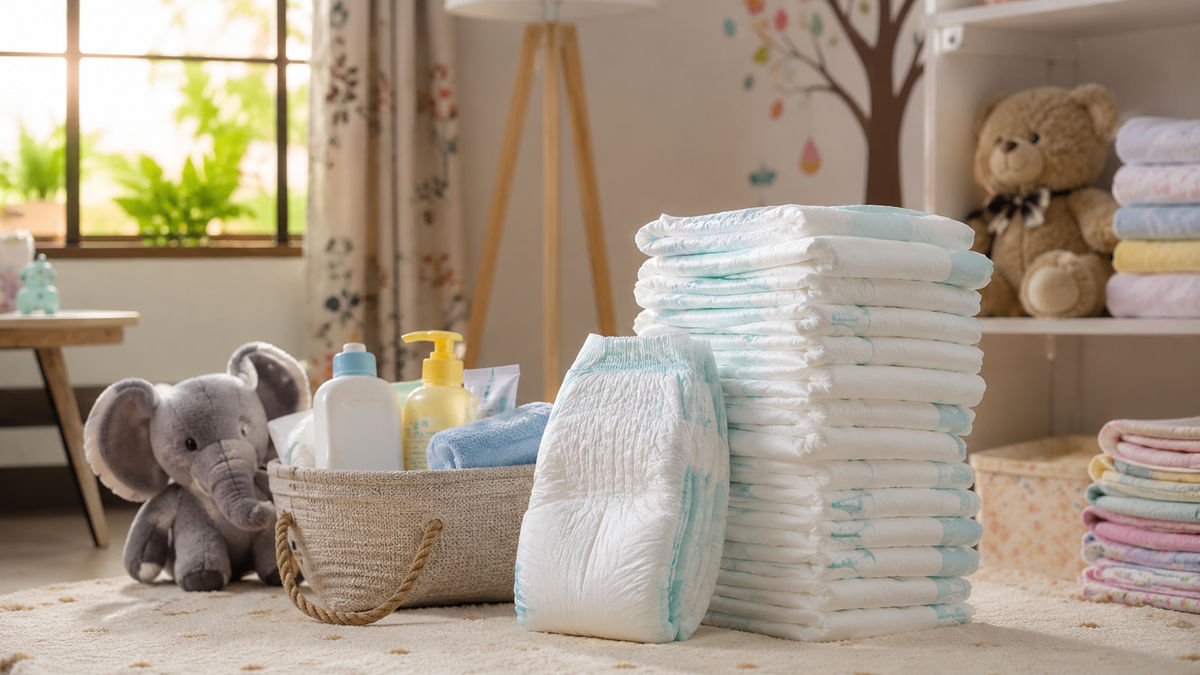
Yellow stains on cloth diapers happen when calcium and magnesium minerals in hard water bind with uric acid in baby urine, creating an insoluble compound that won't wash away. Pre-rinsing immediately, using water softeners (like Wipro Safewash), soaking in vinegar, or using oxygen bleach (Vanish) are proven solutions—and your city's water hardness matters more than you'd think.
⚡ In a hurry? Our quick picks


If you're washing cloth diapers in Indian cities, you've probably noticed those stubborn yellow marks that seem to laugh at detergent. It's not your baby's urine being unusual, and it's not your washing machine that's failing. The culprit is almost invisible: the minerals dissolved in your tap water. Cities like Delhi (400 ppm total dissolved solids) face different challenges than Chennai (1,200 ppm), but both are fighting the same chemical reaction. Understanding hard water—water containing high levels of calcium and magnesium minerals—is the first step to beating these stains. Unlike the standard baby product guides, this one digs into the actual science, gives you city-specific context, and shows you exactly what works.
🏆 Quick comparison: our top picks
| Product | Award | Rating | Price | |
|---|---|---|---|---|
 Vanish Oxi Action Oxygen Bleach for Whites Vanish Oxi Action Oxygen Bleach for Whites
|
🏆 Editor's Choice | ★ 4.3 3,256 reviews |
₹397 | See alternatives → |
 Wipro Safewash Water Softening Powder for Laundry Wipro Safewash Water Softening Powder for Laundry
|
💰 Best Value | ★ 4.1 892 reviews |
₹189 | Check price → |
 Comfort Fabric Conditioner (Blue) 3L Comfort Fabric Conditioner (Blue) 3L
|
👑 Premium Pick | ★ 4.0 1,847 reviews |
₹385 | Check price → |
🛒 Our Top Picks

Best-reviewed overall, 4.3★ across 3,256 ratings.
Vanish Oxi Action Oxygen Bleach for Whites
- ✓ Oxygen-based bleach without chlorine
- ✓ Removes stubborn stains safely
- ✓ Gentle on fabric fibres and elastics
* We earn a small commission — at no extra cost to you.


Top rating for the price, 4.1★ at ₹189.
Wipro Safewash Water Softening Powder for Laundry
- ✓ Zeolite-based water softening powder
- ✓ Reduces mineral buildup in hard water areas
- ✓ Effective for cloth diaper stain prevention
* We earn a small commission — at no extra cost to you.

Top of the range, for parents who want the best features.
Comfort Fabric Conditioner (Blue) 3L
- ✓ Liquid fabric softener for laundry cycles
- ✓ Reduces water hardness during wash
- ✓ 3-litre bottle for cost efficiency
* We earn a small commission — at no extra cost to you.
Daily baby tips, exclusive Amazon deals & real parent advice — free forever.
The Chemistry Behind Yellow Stains
Here's what's actually happening inside your diaper wash: Your baby's urine contains uric acid. When your tap water—full of calcium and magnesium ions—meets that uric acid during the wash cycle, they bind together and form urate crystals. These crystals are hydrophobic (they hate water), which means regular detergent and rinsing can't dissolve them. Instead, they accumulate on the fabric fibres and oxidise over time, turning that telltale yellow or brown shade. The warmer your wash water, the faster this reaction happens—which is why many Indian parents find the problem worse during hot months.
What makes this worse is that the crystals don't just sit on the surface. They embed themselves into the cotton or bamboo fibres of cloth diapers, making them progressively harder to remove. Even after three washes, if you haven't stopped the chemical reaction at its source, those stains will be there. This is exactly why a simple wash won't fix it—you're not dealing with dirt; you're dealing with a mineral bond.
How Hard Water Levels Vary Across India (And Why It Matters)
Water hardness is measured in parts per million (ppm) of total dissolved solids (TDS). According to Indian Council of Medical Research (ICMR) standards, water below 300 ppm is considered soft, 300–600 ppm is moderately hard, and above 600 ppm is very hard. Your city's classification directly affects how quickly stains form:
- Delhi, Pune, Jaipur: 300–500 ppm (moderately hard)—stains develop over several washes, but pre-rinsing alone often prevents them
- Mumbai, Bengaluru: 200–400 ppm (soft to moderately hard)—fewer staining issues, but still common in summer
- Chennai, Hyderabad: 800–1,200 ppm (very hard)—stains form aggressively; multiple prevention steps needed
- Lucknow, Kolkata: 400–700 ppm (moderately to very hard)—seasonal variation; worse during dry season
If you live in a very-hard-water city, simply switching detergent won't solve the problem. You need to address the mineral content itself. Many parents in Chennai and Hyderabad report that they can't prevent stains without softening their water or using chemical interventions like oxygen bleach.
Immediate Prevention: The Pre-Rinse Technique
The most effective first line of defence costs nothing: rinse the diaper immediately after use with cold water. Cold water slows down the chemical reaction between uric acid and minerals. Use a handheld spray or bucket, and aim to remove as much urine as possible before the diaper sits in your wet bag. Many parents in tier-1 cities find that an immediate cold rinse prevents 60–70% of staining, even with moderately hard water.
The science here is simple—uric acid hasn't had time to bond with calcium and magnesium if you remove it before the wash cycle. However, if you're using cloth diapers full-time and can't rinse immediately (common in working households), you'll need backup strategies.
Water Softeners: Which Ones Work for Cloth Diapers
Water softeners work by removing or replacing calcium and magnesium ions before they can react with urine. Two brands dominate the Indian market at affordable prices: Wipro Safewash (Rs. 180–240 per pack) and Comfort Fabric Conditioner (Rs. 120–180). Both are designed to soften water in your wash cycle, though they work slightly differently.
Wipro Safewash is a zeolite-based powder that literally traps minerals in your wash water. Add a handful to your pre-rinse bucket or washing machine before the main wash. Parents in hard-water zones report a 70–80% reduction in yellow stains when used consistently. The downside: it adds an extra step and can leave residue on dark fabrics if you oversuse it.
Comfort Fabric Conditioner is liquid and mimics commercial laundry conditioning, though it's not specifically designed for cloth diapers. It works best as a rinse-cycle addition and softens both water and fabric. At Rs. 150 for a 3-litre bottle, it's cost-effective for high-volume washing, but requires discipline—many parents forget to add it during the final rinse.
For cloth diaper parents, the most reliable approach is combining a pre-rinse with a softener added to the main wash cycle, especially if you live in cities with TDS above 600 ppm.
Vinegar Soak: The Budget-Friendly Deep Clean
White vinegar (acetic acid) dissolves urate crystals by lowering the pH of the wash water, making the crystals soluble again. A 2–3 hour soak in a bucket with 2 cups of white vinegar per litre of water has been tested repeatedly by Indian cloth diaper parents on forums like Cloth Diaper India and consistently removes existing stains without harming fabric.
The catch: vinegar is not a prevention tool—it's a treatment. Use it weekly or bi-weekly once stains appear, not as your primary strategy. Also, vinegar can weaken elastic over time if used excessively, so limit soaks to once a week. Many parents also report that vinegar works better on moderately hard water stains than severe ones; in very-hard-water cities, you may need to combine it with oxygen bleach.
Oxygen Bleach: Safety and Effectiveness
Oxygen bleach (like Vanish at Rs. 220 per litre) breaks down urate crystals through oxidation—a gentler process than chlorine bleach. It's safe for cloth diapers and does not damage fabric the way chlorine does. According to IAP (Indian Academy of Pediatrics) guidelines, oxygen bleach residue does not pose a skin irritation risk to infants if properly rinsed, making it suitable for diaper-fabric use.
A soak in oxygen bleach (follow the brand's dilution instructions—usually 1 part Vanish to 4 parts water) for 4–6 hours removes even stubborn brown stains. For parents in very-hard-water cities like Chennai or Hyderabad, using Vanish monthly or bi-monthly as part of a rotation (alternating with vinegar and softener use) prevents stains from accumulating. However, do not use oxygen bleach on every wash—it degrades fabric elasticity over time.
Long-Term Prevention Strategy
The most effective approach combines three steps: (1) immediate cold rinse after use, (2) water softener added to each wash (Wipro Safewash or similar), and (3) monthly oxygen bleach soak or fortnightly vinegar soak. This rotation prevents stains, removes early discolouration, and extends diaper lifespan. Parents in Delhi and Pune report near-zero staining with this method; parents in Chennai need to stick more rigidly to the schedule because of higher mineral levels.
What Paediatricians Say
IAP guidelines emphasise that yellow stains on cloth diapers are a cosmetic issue caused by mineral buildup, not a sign of infection or poor hygiene. However, proper rinsing and stain removal protect fabric integrity and prevent bacterial colonisation in the stain deposits. The key is consistent prevention, not panicked over-treating with harsh chemicals.
- Hard water is regional: If you're in a high-TDS city, softening water is not optional—it's essential for cloth diaper longevity.
- Vinegar and oxygen bleach are safe: Both are considered baby-safe when properly diluted and rinsed.
Frequently Asked Questions
Can hard water cause yellow stains on cloth diapers?
What does it mean if there are urate crystals in my baby's diaper?
What's the safest way to remove yellow stains from cloth diapers?
Does my city's water hardness affect cloth diaper staining?
Can I use fabric softeners like Comfort to prevent stains?
Is oxygen bleach safe for baby cloth diapers?
Daily baby tips, exclusive Amazon deals & real parent advice — free forever.