
Ghee, Amaranth and Other Traditional Superfoods for Your Baby's Bowl
Sponsored by Rorosaur · also contains affiliate links
ℹ️ General information, not medical advice. If your baby seems unwell or anything worries you, talk to your paediatrician. Medical disclaimer
Short answer: the "superfoods" being rediscovered today were staples in Indian baby kitchens for generations. Ghee, amaranth and millets are genuinely nourishing for babies when used simply and in the right amounts. There is nothing new about them, which is exactly why they are so trustworthy.
Why these ingredients became staples in the first place
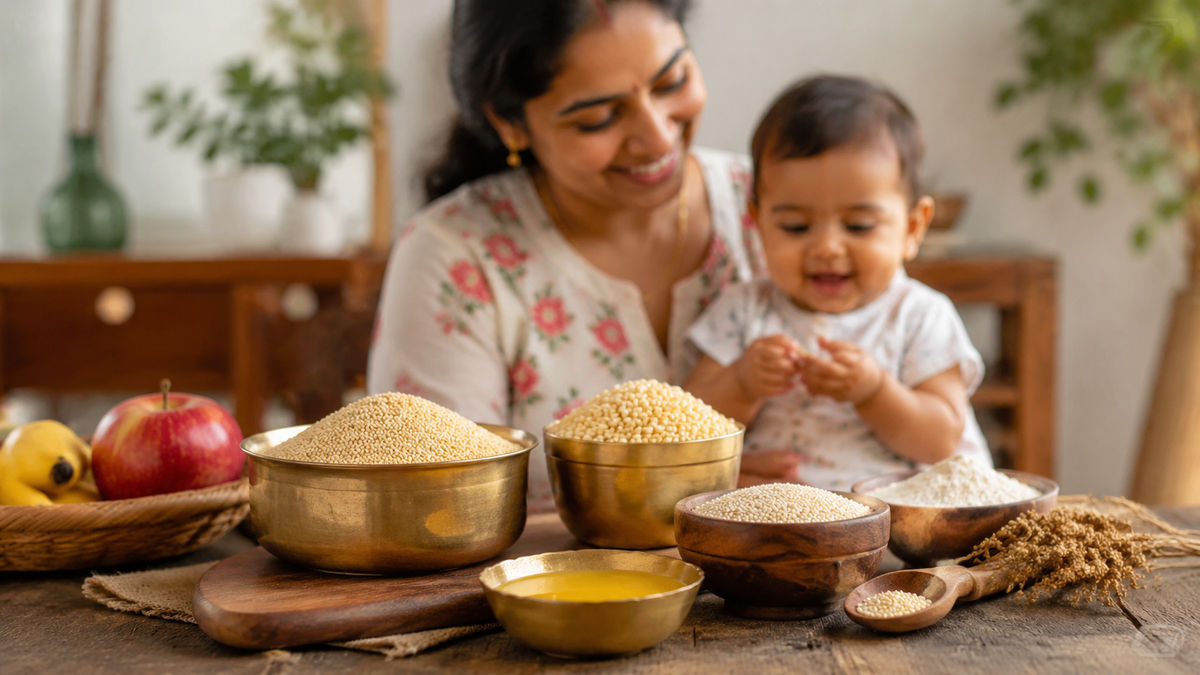
None of these ingredients earned their place in Indian kitchens by accident or trend. Ghee was, and still is, an accessible, shelf-stable fat in a country where refrigeration was not always available, and it added meaningful energy to a small baby's small stomach. Amaranth and millets grew reliably across varied Indian climates and soils where rice or wheat sometimes did not, making them a practical, dependable food source across regions. Their nutritional value was discovered the old-fashioned way, through generations of feeding babies and watching what worked, long before any of it had a scientific name. That track record is, in its own way, a form of evidence.
🛒 Rorosaur products in this guide
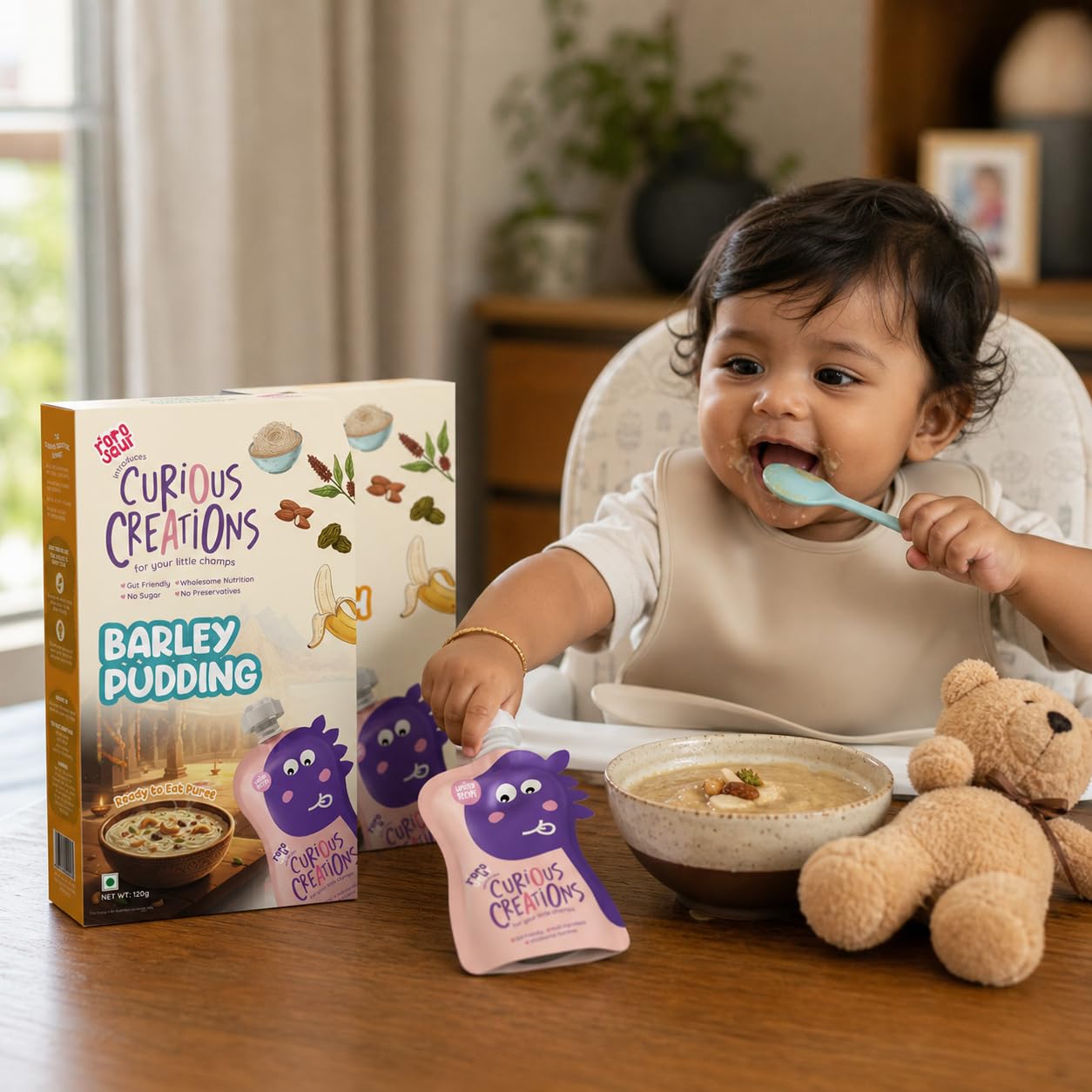
Rorosaur Curious Creations
- ✓ No added sugar, salt or preservatives
- ✓ Multiple ingredients, thoroughly cooked
- ✓ Retort-packed - long shelf life, no fridge
* We earn a small commission — at no extra cost to you.
Daily baby tips, exclusive Amazon deals & real parent advice — free forever.
Ghee, and why a little fat matters more than people think
A little ghee gives babies energy in a small spoonful, but its more interesting role is helping the body absorb certain vitamins. Vitamins A, D, E and K are fat-soluble, which means the body needs some dietary fat present to actually absorb them from food, rather than simply passing them through. A spoon of ghee stirred into a vegetable or grain-based porridge is not just flavour, it can help the body make better use of nutrients already in the bowl. Keep it modest, roughly a small spoon per serving is a reasonable amount for a baby's portion, rather than a generous pour, and you have added gentle, useful energy the way Indian families always have.
Amaranth (rajgira)
Amaranth is a tiny traditional grain packed with nutrition, including a notably good protein, iron and calcium content for a grain of its size. Technically it is what is sometimes called a pseudo-cereal, meaning it is used and cooked like a grain even though it is botanically a little different, and it is naturally free of gluten, which makes it a gentle option for many babies. It has long been used in Indian fasting foods, particularly around festivals like Navratri, which is one reason it has stayed a familiar, trusted ingredient across generations rather than fading out of use. Cooked soft, it is gentle for babies and blends easily into porridges. It is the kind of quiet, high-value ingredient that earns its place in the bowl without any fuss.
Millets and other quiet superfoods
Millets like ragi have fed Indian babies for generations, valued for their calcium content and slow-release energy. Cooked thoroughly and introduced one at a time, they are a nutritious, gentle base for first foods. This is the same simple thinking behind ranges like Rorosaur Curious Creations, which build on traditional grains, millets and ingredients like ghee and amaranth rather than chasing novelty. Good baby food, it turns out, often looks a lot like what our grandmothers already made.
| Ingredient | Key nutrients | Traditional role | Why it suits babies |
|---|---|---|---|
| Ghee | Energy, helps absorb fat-soluble vitamins A, D, E and K when eaten alongside them | Everyday cooking fat, added to first foods | A small amount adds energy and helps the body use certain nutrients better |
| Amaranth (rajgira) | Protein, iron, calcium | Fasting food, traditional grain substitute | Nutrient-dense in small servings, gentle when cooked soft, naturally gluten-free |
| Ragi and other millets | Calcium, fibre, slow-release energy | Traditional first grain across India | Thoroughly cooked, easy to blend into porridges |
A note of caution on quantity
More is not automatically better with any of these ingredients. Ghee is still a fat, and a generous amount at every meal adds unnecessary richness a baby's system does not need, a modest spoon serves the purpose well. Amaranth, like any new grain, should be introduced on its own initially, in a small amount, so you can watch for any reaction before making it a regular part of your baby's rotation. Traditional does not mean unlimited, it means used thoughtfully, in the small amounts these ingredients were always meant to be used in.
How to include them safely
Introduce any new ingredient one at a time, cook it soft, and start with a smooth texture that thickens as your baby grows. Keep quantities small, especially with ghee, and always avoid added sugar and salt. If your baby has allergies in the family, check with your pediatrician before starting something new. Used simply, these traditional foods are proof that thoughtful, everyday ingredients make some of the best baby food there is.
Frequently Asked Questions
Is ghee good for babies?
What is amaranth and is it safe for babies?
Are millets good first foods for babies?
Daily baby tips, exclusive Amazon deals & real parent advice — free forever.