
When Can Babies Start Eating Grains? A Simple 6-Month-Plus Guide
Sponsored by Rorosaur · also contains affiliate links
ℹ️ General information, not medical advice. If your baby seems unwell or anything worries you, talk to your paediatrician. Medical disclaimer
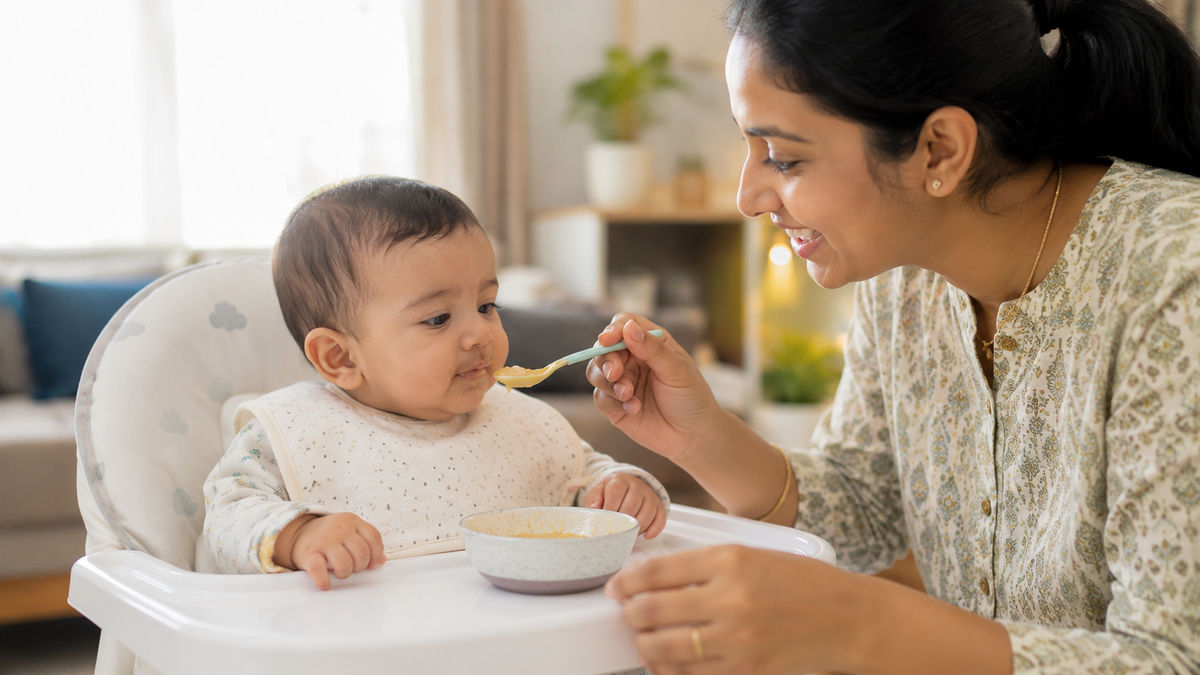
Short answer: most babies can begin soft, well-cooked grains at around six months, alongside breastmilk or formula, once they can sit with support and show interest in food. Start simple, go slow, and introduce one grain at a time. Grains are among the most comforting and traditional first foods there is, so this is a lovely stage to take gently.
Why six months, specifically
The six-month mark is not an arbitrary round number, it reflects several things coming together at roughly the same time in most babies' development. The gut lining becomes more mature and less permeable around this age, which matters for how new proteins and food particles are handled. The kidneys develop enough capacity to process the additional load that solid food brings, compared to the simpler demands of an all-milk diet. And the strong tongue-thrust reflex that pushes foreign objects, including a spoon, back out of a very young baby's mouth typically fades around this time, making actual feeding possible rather than a battle. All of these maturing roughly together is why six months, rather than four or eight, has become the widely recommended starting point, though individual babies do vary and your pediatrician's assessment always takes priority over any general guideline.
🛒 Rorosaur products in this guide

Rorosaur Millety Pumpkin
- ✓ No added sugar, salt or preservatives
- ✓ Multiple ingredients, thoroughly cooked
- ✓ Retort-packed - long shelf life, no fridge
* We earn a small commission — at no extra cost to you.

Rorosaur Wheaty Ragi
- ✓ No added sugar, salt or preservatives
- ✓ Multiple ingredients, thoroughly cooked
- ✓ Retort-packed - long shelf life, no fridge
* We earn a small commission — at no extra cost to you.
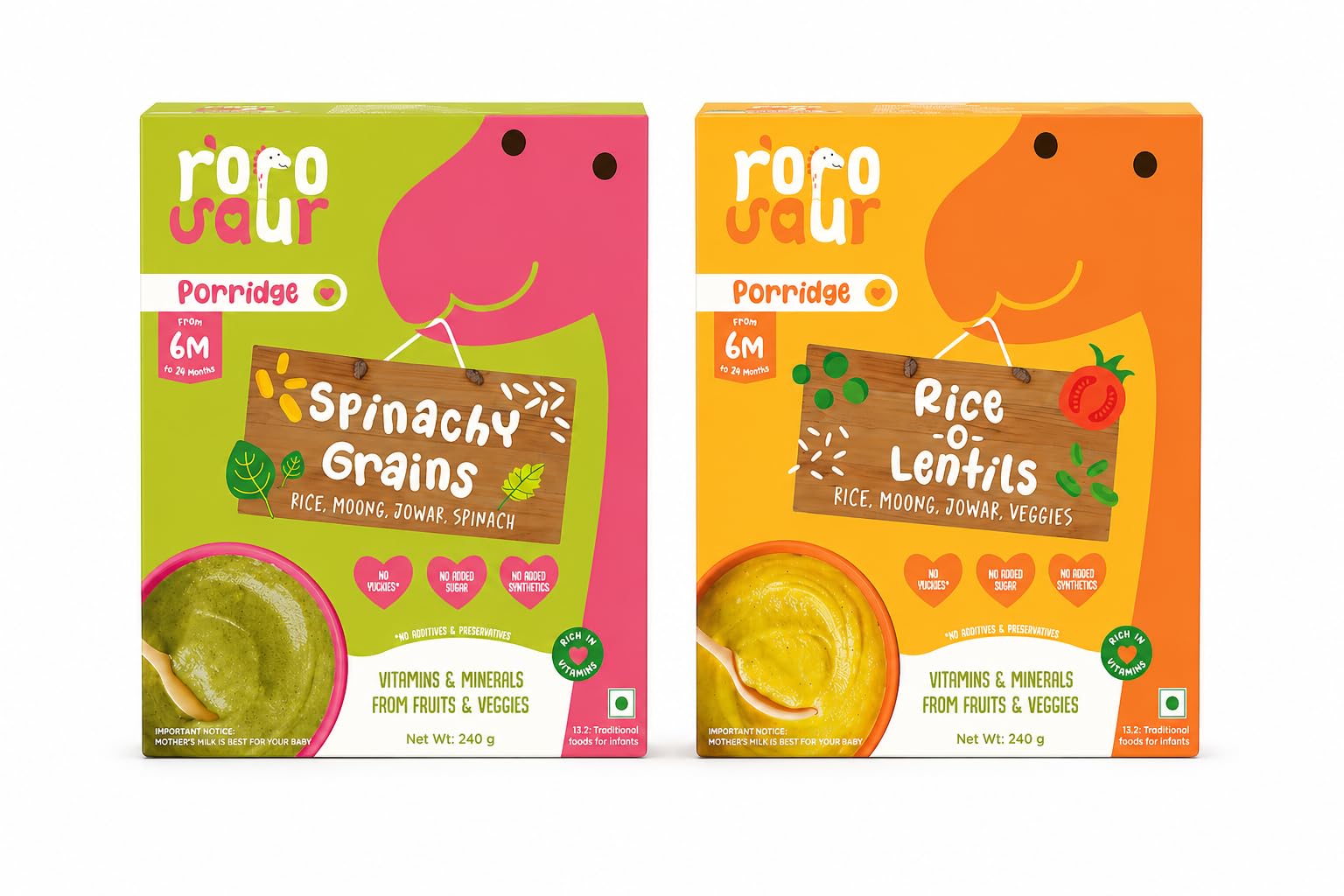
Rorosaur Rice o Lentil
- ✓ No added sugar, salt or preservatives
- ✓ Multiple ingredients, thoroughly cooked
- ✓ Retort-packed - long shelf life, no fridge
* We earn a small commission — at no extra cost to you.
Daily baby tips, exclusive Amazon deals & real parent advice — free forever.
Signs your baby is ready
- Around six months of age.
- Can hold their head steady and sit with support.
- Shows interest in food and has lost the reflex that pushes food out with the tongue.
- Can bring objects, including their own hands, toward their mouth with reasonable control.
- Seems hungrier than usual even with more frequent milk feeds.
The Indian Academy of Pediatrics recommends starting complementary foods at about six months while continuing to breastfeed. Your pediatrician can confirm the right time for your baby, especially if they were premature, in which case timing is often based on adjusted age rather than the date of birth.
What happens if you start too early or wait too long
Starting solids well before four months is generally discouraged, since a very young baby's gut and kidneys are not yet ready for the additional load, and the tongue-thrust reflex often makes feeding difficult regardless. Waiting significantly past six or seven months, on the other hand, can mean missing the window when babies are naturally most open to trying new textures and tastes, and can make the transition to solids more resistant later, along with a higher risk of the iron and other nutrient gaps that solids are partly meant to fill. Neither extreme is about a single missed day mattering, but the six-to-seven-month window is where readiness and openness tend to line up best for most babies.
Why one grain at a time, and why the order matters
Introducing a single grain and waiting a few days before the next one is not just caution for its own sake. If a baby has any reaction, whether a rash, loose stools or fussiness, offering one food at a time is the only way to know which food caused it. Waiting two to three days matters because that is roughly the window in which a food intolerance or sensitivity tends to show itself. Starting with a mild, simple grain like rice before moving to ragi or wheat also gives a baby's digestive system, and its still-developing enzyme supply, a gentler introduction before working up to grains that need slightly more digestive effort.
| Grain | Typical introduction order | Notes |
|---|---|---|
| Rice | Often first | Very mild, easy to cook smooth |
| Ragi | Early | Traditional first grain in many Indian homes, needs thorough cooking |
| Wheat and other millets | After rice and ragi are tolerated | Introduce one at a time |
| Combinations | Once single grains are tolerated | Build gradually for balance |
A simple order to introduce grains
Wait two to three days between each new food so you can spot anything that does not agree with your baby. Single-flavour options make this stage easy: Rorosaur Millety Pumpkin, Rorosaur Wheaty Ragi and Rorosaur Rice o Lentil let you offer one clean, thoroughly-cooked grain at a time before moving to blends.
A practical week-by-week rhythm
A simple way to approach the first few weeks: offer one grain once a day for two to three days, watching for any reaction, then introduce the next grain the same way, and only once your baby has comfortably tried three or four single grains, start layering in simple combinations. There is no need to rush this timeline, a baby who takes six weeks to work through their first handful of grains is not behind, they are simply proceeding carefully, which is exactly the point.
How much, and common mistakes to avoid
Begin with a few teaspoons once a day and build up slowly as your baby shows they want more. Keep textures smooth at first. The most common early mistakes are simple ones: adding sugar or salt (babies need neither), rushing to a thick texture too soon, and introducing several new foods at once so you cannot tell what caused a reaction. Avoid those, keep it plain and one-at-a-time, and speak to your pediatrician about any family history of allergies before you begin.
Frequently Asked Questions
Can a 6-month-old eat ragi and millet?
Which grain should I give my baby first?
How much grain food does a 6-month-old need?
Daily baby tips, exclusive Amazon deals & real parent advice — free forever.