
Your Baby's 6 to 12 Month Feeding Chart (With Ready-to-Eat Options)
Sponsored by Rorosaur · also contains affiliate links
⚡ In a hurry? Our quick picks
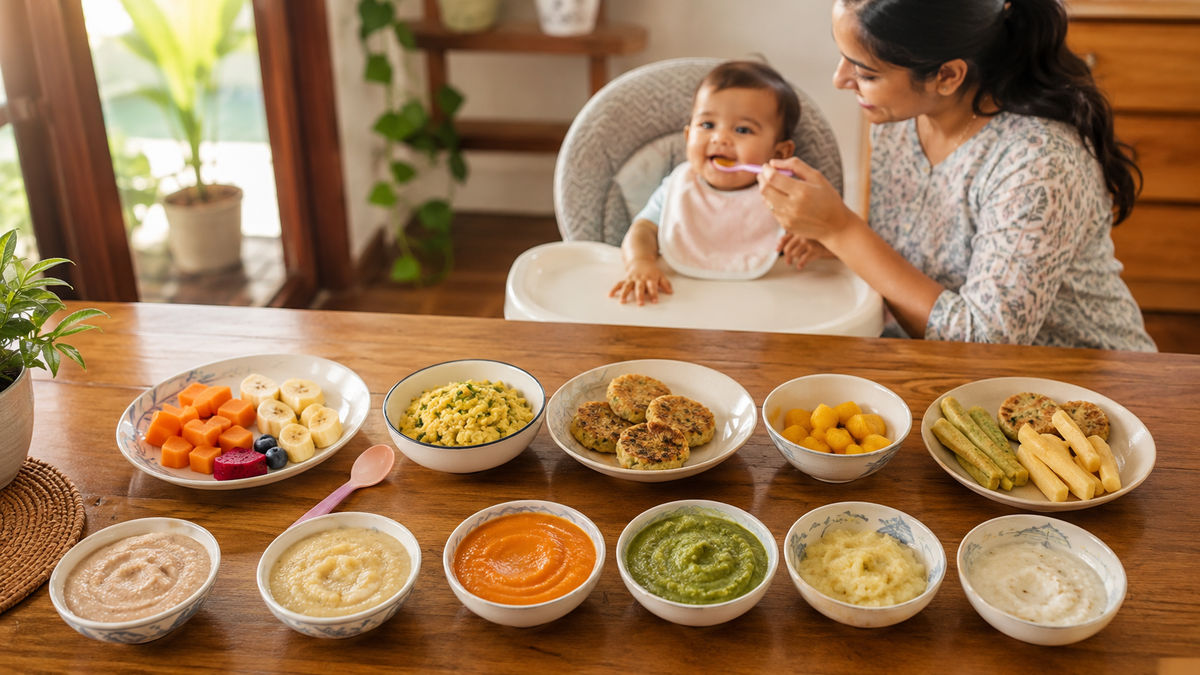
Short answer: from six to twelve months, food gradually goes from smooth purees to soft finger foods, while breastmilk or formula stays the main drink. Here is a simple stage-by-stage guide. Every baby is different, so treat it as a map, not a rulebook, and follow your pediatrician's advice.
Why the stages move in this particular order
The progression from smooth purees to lumpy textures to soft finger foods is not arbitrary, it follows how a baby's mouth and digestive system develop over these months. Early on, a baby is still learning to move food to the back of the mouth to swallow, so smooth textures match that stage. As the tongue and jaw get more coordinated, small soft lumps give a baby practice at an early form of chewing, without asking for more than their mouth can yet do. By ten to twelve months, most babies are ready for the bigger jump toward soft finger foods and a more varied, textured diet, which is also when a baby's digestive system, including its enzyme supply, has matured considerably compared to six months earlier. Moving through these stages in order, rather than skipping ahead, gives a baby's whole system, mouth and gut together, time to catch up with what is being asked of it.
🏆 Quick comparison: our top picks
| Product | Award | Rating | Price | |
|---|---|---|---|---|
 Rorosaur Grain Puree Combo Rorosaur Grain Puree Combo
|
🏆 Editor's Choice | ★ 0.0 | ₹479 | Check price → |
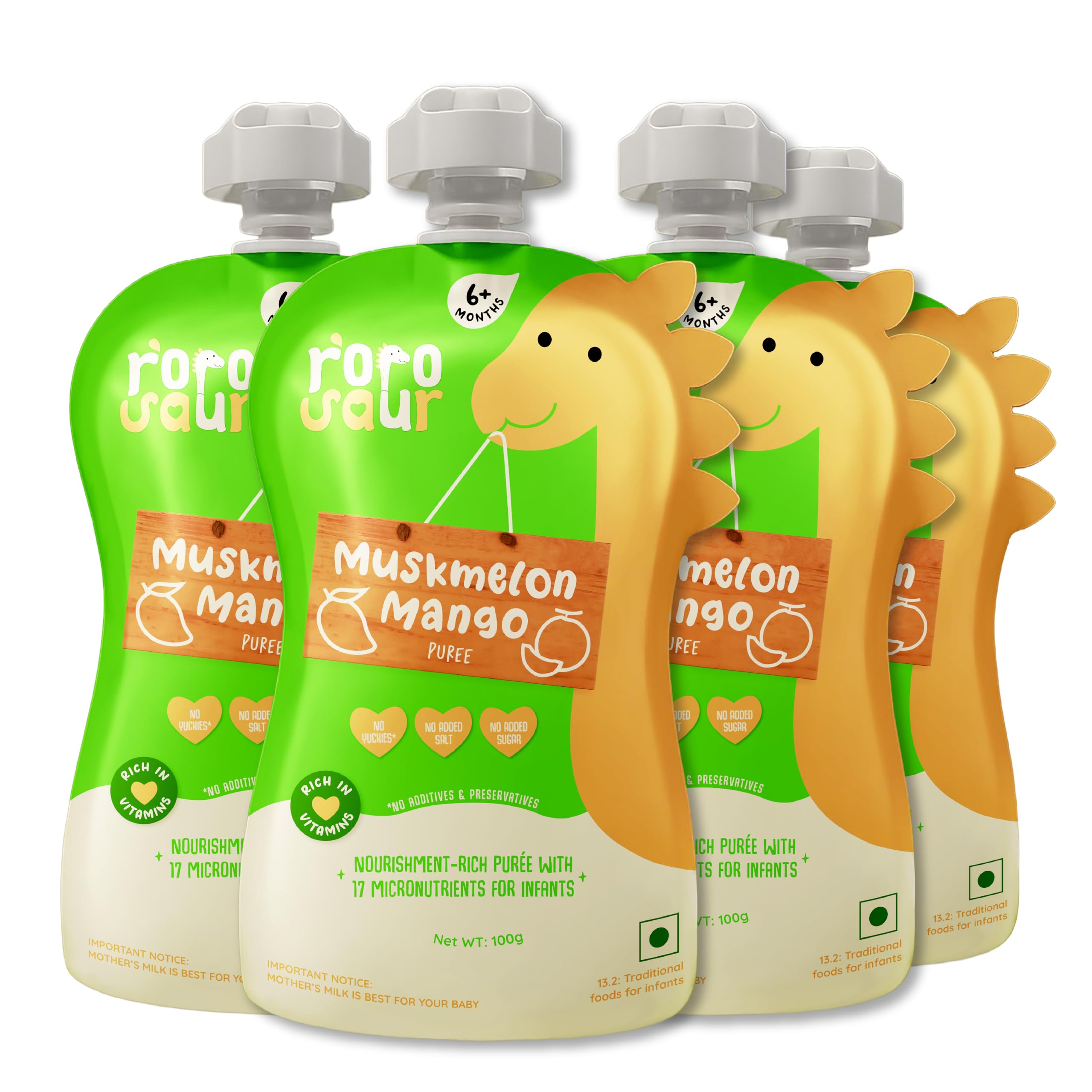 Rorosaur Muskmelon Mango Puree Rorosaur Muskmelon Mango Puree
|
👑 Premium Pick | ★ 0.0 | ₹537 | Check price → |
 Rorosaur Porridge Powders Rorosaur Porridge Powders
|
★ 0.0 | ₹0 | Check price → |
🛒 Our Top Picks
Best-reviewed overall, 0★ across 0 ratings.
Rorosaur Grain Puree Combo
- ✓ No added sugar, salt or preservatives
- ✓ Multiple ingredients, thoroughly cooked
- ✓ Retort-packed - long shelf life, no fridge
* We earn a small commission — at no extra cost to you.
Top of the range, for parents who want the best features.
Rorosaur Muskmelon Mango Puree
- ✓ Real fruit, no added sugar
- ✓ No artificial colours or preservatives
- ✓ Retort-packed - long shelf life
* We earn a small commission — at no extra cost to you.

Rorosaur Porridge Powders
- ✓ No added sugar, salt or preservatives
- ✓ Multiple ingredients, thoroughly cooked
- ✓ Retort-packed - long shelf life, no fridge
* We earn a small commission — at no extra cost to you.
Daily baby tips, exclusive Amazon deals & real parent advice — free forever.
| Age | Texture | Typical foods | Daily meals | Why this stage |
|---|---|---|---|---|
| 6 to 7 months | Smooth, runny purees | Single grains, soft fruits, gentle vegetables | 1 to 2 small meals, plus milk | Baby is learning to accept a spoon and new tastes |
| 8 to 9 months | Thicker purees, soft mashes | Grain-and-lentil porridges, more fruits and vegetables, a little ghee | 2 to 3 meals, plus milk | Building chewing skill and broader nutrition |
| 10 to 12 months | Soft mash, small finger foods | Multi-grain meals, soft khichdi, curd, well-cooked vegetables and fruits | 3 meals plus 1 to 2 snacks, plus milk | Moving toward family food and self-feeding |
How milk feeds change across these months
It is easy to focus entirely on solids and forget that milk feeds are shifting too, though more gradually than solids are increasing. At six months, breastmilk or formula is still doing the bulk of the nutritional work, with solids playing a supporting role. By nine to ten months, as solid meals increase to two or three a day, milk feeds typically reduce a little in frequency but remain an important part of the day, often continuing well past the first birthday. This is a gradual handover, not a sudden switch, and there is no need to rush weaning off milk feeds simply because solid meals are increasing, the two work alongside each other for most of this first year.
What "moving toward family food" actually looks like
The phrase can sound vague, so it helps to be concrete. By around ten to twelve months, many babies can manage small, soft pieces of food they pick up themselves, soft cooked vegetable pieces, small pieces of soft fruit, or a piece of soft roti, rather than everything needing to be pureed or mashed. This does not mean sharing the exact same plate as the rest of the family just yet, spices, salt levels and certain textures in typical family meals are often still too much for a one-year-old, but it does mean the gap between baby food and family food starts narrowing noticeably around this stage.
If your baby resists moving to the next stage
It is common, and not a cause for worry, if a baby seems to prefer staying at a smoother texture a little longer than this chart suggests, or is slower to accept lumps or finger foods. Babies vary meaningfully in how quickly they take to each stage, and gently continuing to offer the next texture every so often, without forcing it, usually works better than either rushing ahead or giving up on the attempt entirely. If you have ongoing concerns about your baby refusing textures well past the typical window, that is a good conversation to have with your pediatrician, who can rule out anything beyond normal variation.
Choking hazards to keep avoiding through this whole stage
Regardless of which texture stage your baby is at, certain foods remain choking hazards throughout the first year and beyond: whole nuts, whole grapes or cherry tomatoes unless quartered, hard raw vegetable pieces, and anything round, hard and bite-sized that could lodge in a small airway. As your baby moves toward finger foods, keeping pieces soft, small and appropriately shaped matters just as much as the broader texture stage they are in.
For busy days
You will not cook fresh every time, and that is okay. A ready-to-eat grain puree, a fruit puree, or a quick porridge from a clean-ingredient powder can fill a meal without added sugar or preservatives. Options like the Rorosaur Grain Puree Combo, Rorosaur Muskmelon Mango Puree and Rorosaur Porridge Powders make sensible backups alongside home cooking.
What to avoid through the first year
Avoid added sugar and salt through the first year, never give honey under one year, and always check with your pediatrician about your baby's individual needs. Every baby moves through these stages at their own pace, and that is completely normal.
Frequently Asked Questions
How many meals should a baby eat at 6 to 12 months?
What foods to avoid for babies under 1 year?
Is ready-to-eat food okay for babies?
Daily baby tips, exclusive Amazon deals & real parent advice — free forever.