
Vitamin C and Your Baby: How Fruit Purees Help the Body Absorb More Iron
Sponsored by Rorosaur · also contains affiliate links
ℹ️ General information, not medical advice. If your baby seems unwell or anything worries you, talk to your paediatrician. Medical disclaimer
Short answer: a small amount of vitamin C, from fruit, helps your baby's body absorb more of the iron in grains and lentils. So the trick is not just what you feed, but what you feed it with, and just as importantly, what you avoid feeding alongside it. This is one small habit that quietly pays off across the whole first year, and it costs you nothing extra.
Why iron matters more after six months
🛒 Rorosaur products in this guide
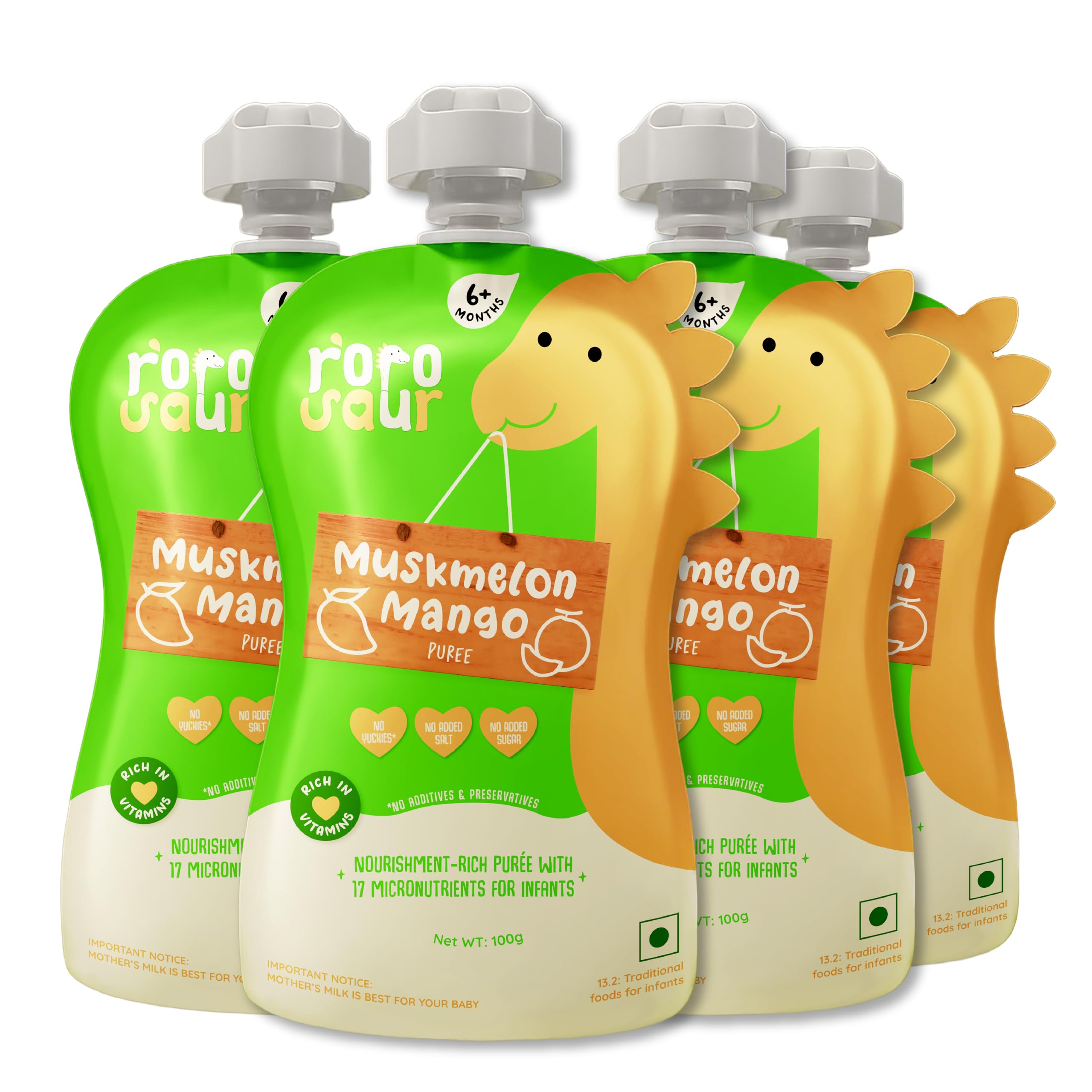
Rorosaur Muskmelon Mango Puree
- ✓ Real fruit, no added sugar
- ✓ No artificial colours or preservatives
- ✓ Retort-packed - long shelf life
* We earn a small commission — at no extra cost to you.

Rorosaur Grain Puree Combo
- ✓ No added sugar, salt or preservatives
- ✓ Multiple ingredients, thoroughly cooked
- ✓ Retort-packed - long shelf life, no fridge
* We earn a small commission — at no extra cost to you.
Daily baby tips, exclusive Amazon deals & real parent advice — free forever.
Babies are born with a store of iron built up during pregnancy, but by around six months that store starts to run low, which is one of the key reasons the Indian Academy of Pediatrics suggests starting solids at this age rather than later. Iron is essential for healthy growth, and it plays a direct role in the rapid brain development that happens during a baby's first two years, which is why paediatric nutrition guidance treats iron intake in this window as more than just a routine nutrient box to tick. The iron in your baby's food from six months onward genuinely matters, and for a largely vegetarian Indian diet, getting the most out of every source of iron becomes especially worthwhile.
The catch is that the iron in plant foods like grains and lentils, known as non-heme iron, is not absorbed as easily as the iron in meat, fish or eggs, called heme iron. For a vegetarian family raising a baby on grains, lentils and vegetables, this single fact is the reason a small, deliberate habit like pairing food with vitamin C is worth building early.
What is actually happening inside the gut
Non-heme iron exists mostly in a chemical form the body finds harder to absorb, technically called ferric iron. Vitamin C helps convert this into a form called ferrous iron, which the gut absorbs far more readily, right at the point of absorption in the small intestine. This is a well-established piece of nutrition science, not a special trick or a marketing claim, which is why pairing an iron source with a vitamin-C source at the same sitting matters more than eating the two separately across the day. The conversion needs to happen while both are together in the gut, so timing, in this case, is genuinely part of the nutrition, not just a nice-to-have habit.
| Meal | Iron source | Vitamin C paired? | What happens |
|---|---|---|---|
| Plain grain porridge | Non-heme iron from grain | No | Body absorbs only a small share of the iron present |
| Grain porridge with a fruit puree alongside | Non-heme iron from grain | Yes | More of that iron is converted into an absorbable form |
| Lentil-based meal alone | Non-heme iron from lentil | No | Similar limited absorption as grain alone |
| Lentil-based meal with a vitamin-C fruit | Non-heme iron from lentil | Yes | Same absorption boost as above |
The foods that quietly work against iron absorption
Just as some foods help iron absorption, a few common foods can work against it if served at the exact same meal, and it is worth knowing them so you are not accidentally undoing the benefit of a good vitamin-C pairing. Tannins, found in tea and to a lesser extent in some herbal infusions, can bind to non-heme iron in the gut and reduce how much is absorbed, which is one reason tea is not recommended for babies in any case. Very large amounts of calcium at the same sitting, such as a big serving of milk or curd eaten together with an iron-rich meal, can also compete with iron for absorption, though a normal serving of dairy at a different time of day is not a concern. Phytates, naturally present in unprocessed grains and legumes, can likewise reduce iron absorption somewhat, which is another reason thorough cooking matters, since cooking and processing reduce phytate levels compared to raw or undercooked grains. None of this means you need to track every meal with precision. It simply means that if you are making the effort to pair iron with vitamin C, it helps to keep that particular meal free of tea, which should not be given to babies regardless, and to space a large milk feed a little apart from a big iron-focused meal, rather than pouring both into the same sitting.
Vitamin-C-rich fruits that suit Indian first foods
You do not need an exotic ingredient list. Several fruits already common in Indian kitchens carry a useful amount of vitamin C for this purpose.
| Fruit | Vitamin C level | Good to pair with |
|---|---|---|
| Muskmelon | Good source | Grain or lentil porridges |
| Mango | Good source | Grain porridges, especially in summer |
| Papaya | Good source | Grain-based meals, also gentle on digestion |
| Citrus (orange, mosambi), introduced a little later | Very high | Small amounts alongside iron-rich meals once tolerated |
Easy ways to pair them at home
- Serve a grain or lentil meal with a fruit puree alongside, such as muskmelon, mango or papaya.
- Add a spoon of soft, mashed fruit to a plain grain bowl rather than serving it separately after the meal is over.
- Keep fruit purees real and simple, with no added sugar or colours, so your baby tastes the actual fruit and gets the full vitamin C content.
- If your baby has milk or curd as part of a meal, try to offer it at a slightly different time from your main iron-focused meal of the day, rather than mixing a large serving of both together.
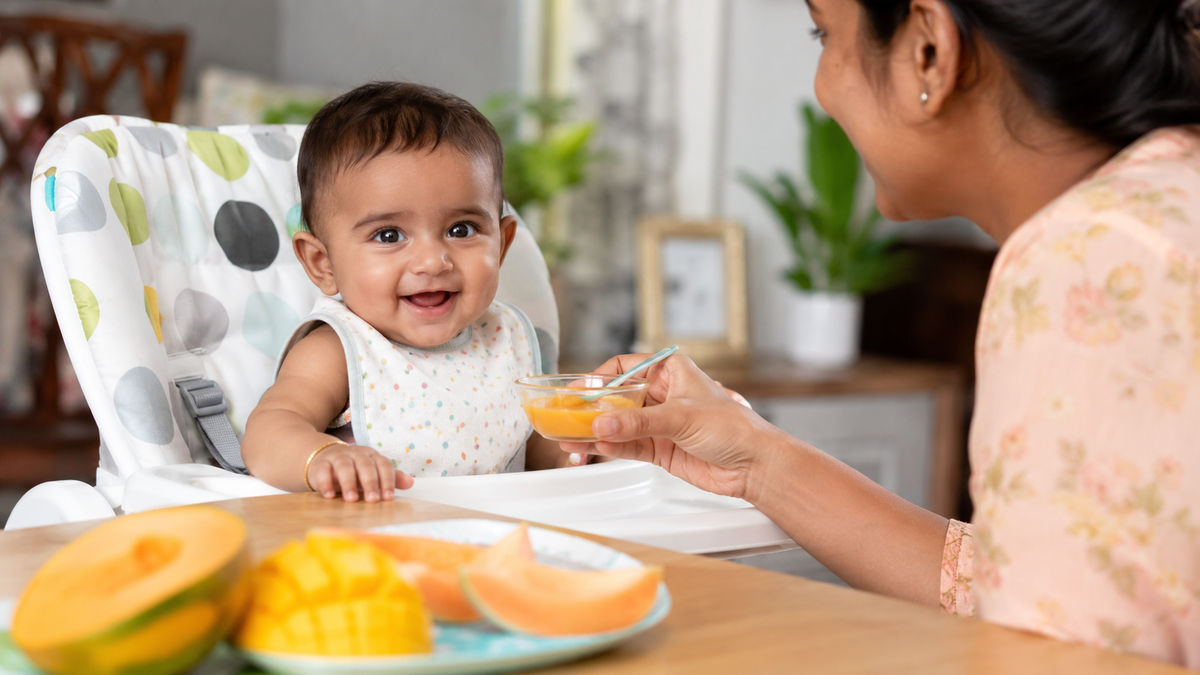
A ready-made fruit puree made from real fruit makes this effortless on busy days. Rorosaur Muskmelon Mango Puree is a good example: real fruit, no added sugar or preservatives, and convenient enough to spoon next to your baby's grain porridge without peeling and mashing every single time. Serve a little alongside and you have quietly helped their body get more from the meal, without adding a single extra step to your routine.
Why this small habit matters more in the first year than later
As babies grow past their first birthday, they eat a wider variety of foods across the day, so any single meal matters a little less on its own. In the six-to-twelve-month window, though, a baby's diet is narrower, meals are fewer, and the margin for missing out on absorbable iron is smaller. This is exactly why pediatric nutrition guidance leans so heavily on this one simple pairing during this specific stage, rather than treating it as optional. It costs nothing extra, takes no additional time, and simply asks you to serve two things you were likely already planning to give, at the same sitting instead of separately.
A gentle word of caution
Fruit is naturally sweet, so babies can start to prefer it over savoury food if it is always offered as the highlight of a meal. Offer it as part of a meal rather than a treat, and keep introducing plain grains, lentils and vegetables so your baby learns a range of tastes rather than leaning only toward sweetness. Introduce each new fruit on its own, wait a couple of days, and check with your pediatrician about timing and any allergy concerns, particularly before introducing citrus fruits. Done simply, this little pairing is one of the easiest, lowest-effort wins in early feeding, and one worth building into your routine from the very start of solids.
Frequently Asked Questions
Does vitamin C really help babies absorb iron?
Which fruits are good for babies?
Can I give my baby fruit puree every day?
Daily baby tips, exclusive Amazon deals & real parent advice — free forever.