
Attention Span Activities for 2-3 Year Olds at Home: 5 Household Games to Build Focus

A 2-year-old can focus on one thing for 5–10 minutes; by 3 years, this stretches to 10–15 minutes. Toddlers flit between activities because their brains are still building the circuits that control sustained focus. Simple, repetitive household tasks—pouring water, sorting socks, matching lids to pots—build this skill naturally and free.
⚡ In a hurry? Our quick picks
If your toddler abandons the puzzle after 30 seconds or leaves blocks scattered mid-tower, you're not doing anything wrong. This is exactly what a 2-3 year old's brain does. The attention span isn't broken; it's still being built. The good news: you don't need fancy toys or screen time. A steel bowl, some dal, and a spoon are enough to start training focus—and doing it together, at home, is when toddlers learn best.
🏆 Quick comparison: our top picks
| Product | Award | Price | |
|---|---|---|---|
 Beginner Jigsaw Puzzle (4-piece chunky) |
👑 Premium Pick | ₹669 | Check price → |
 Wooden Peg Puzzle (8-piece, large pegs) |
🪙 Budget Pick | ₹338 | Check price → |
 Funskool Stacking Rings |
See on Amazon | See alternatives → | |
 Steel Nesting Bowls Set (5-piece) |
₹606 | Check price → |
🛒 Our Top Picks

The highest-priced option in this guide.
Beginner Jigsaw Puzzle (4-piece chunky)
- ✓ Why it fits: Builds focus on a multi-step problem (find piece, position it, fit it in) and encourages return play as the child recognises the same puzzle across days
- ✓ 4 large, chunky puzzle pieces, each 5cm+ across
- ✓ Thick cardboard or plastic, no small parts
* We earn a small commission — at no extra cost to you.

The lowest-priced option in this guide.
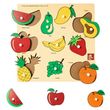
Wooden Peg Puzzle (8-piece, large pegs)
- ✓ Why it fits: Demands sustained visual focus, hand-eye coordination, and problem-solving—the child must match peg shape to hole, hold focus through placement, and complete a multi-step task
- ✓ 8 large wooden pegs, chunky handles safe for toddler hands
- ✓ Brightly painted animals or shapes to hold interest
* We earn a small commission — at no extra cost to you.

Funskool Stacking Rings
- ✓ Why it fits: Combines the dal-transfer focus task with a clear visual goal—stacking all rings on a pole—building sustained attention and hand-eye coordination
- ✓ 5 soft plastic rings in different colours and sizes
- ✓ Safe for ages 18+ months, BIS certified
* We earn a small commission — at no extra cost to you.

Steel Nesting Bowls Set (5-piece)
- ✓ Why it fits: Works for the pot-and-lid matching task and the dal-transfer activity, allowing repeated focus play with multiple size-matching challenges
- ✓ 5 stainless steel bowls in graduating sizes
- ✓ Durable, washable, food-safe for water play
* We earn a small commission — at no extra cost to you.
Daily baby tips, exclusive Amazon deals & real parent advice — free forever.
What's Happening at This Age
Between 2 and 3 years, your child's prefrontal cortex—the part of the brain that handles focus, planning, and impulse control—is wiring up fast. According to the National Curriculum Framework for Foundational Stage (NCF-FS) 2022, children in this band develop what's called "purposeful activity": they can now do a task for a reason, not just by accident. A 24-month-old might stack blocks and knock them over; a 30-month-old stacks them and shows you. By 36 months, they're planning the stack before they build it.
But here's the catch: this brain region gets exhausted fast. A toddler's ability to ignore distractions—the hum of the fridge, a bird outside—is still brand-new. They can focus, but only in short bursts, and only on something they find genuinely interesting. The flitting between toys isn't laziness or defiance. It's a developing nervous system saying, "My focus battery needs a rest."
Try This at Home
Steel Katori Dal Transfer
You need: Two steel bowls or katoris, a spoon (regular or slotted), and a small handful of dal (moong or toor). Spread old newspaper on a low table or the floor.
How: Sit with your child and scoop dal from one bowl into the other using the spoon. Go slowly. Narrate what you're doing: "Scoop, tip, watch it fall." After 2–3 scoops, hand the spoon to your child. Stay nearby but don't take over. If dal spills, just say "Oops, let's keep going" and move it back to the working area. Aim for 5–10 minutes of play.
What it builds: Hand-eye coordination, focus on a repetitive task, and the ability to track a small object (the dal grain) as it moves. This is the foundation of attention: following something with your eyes and hands at the same time.
Easier: Use two large bowls and a slotted spoon so dal doesn't scatter as much. Harder: Use two bowls placed farther apart, or switch to smaller seeds like mustard or cumin so the task requires more precision.
Sock Matching Basket
You need: A basket or low box, 8–10 pairs of socks (cotton, plain, non-slip sole preferred), and a clean floor or mat.
How: Dump all the socks into the basket, mix them up, and sit down together. Pull out one sock and say, "This is a blue sock. Let's find its friend." Hand your child socks one by one and ask, "Does this match?" After finding 3–4 pairs, you've completed the task—that's success. Don't insist on matching all 10; the goal is focus, not perfection.
What it builds: Visual discrimination (noticing colours and patterns), sustained focus on a sorting task, and the ability to hold a mental image (remembering what blue looks like while checking other socks). This also builds early logical thinking.
Easier: Use only 4 socks—2 pairs, in very different colours (bright red and white). Harder: Use 6–8 pairs in similar shades (navy, sky blue, light blue) so the matching challenge is harder.
Pot and Lid Hunt
You need: 3–4 pots, pans, or plastic containers with lids, all different sizes. Arrange them in a line on a low shelf or table that your child can safely reach.
How: Remove all the lids and place them in a pile nearby. Pick up one lid and say, "This lid belongs to the big pot. Can you find the big pot?" Wait for your child to pick a pot. If they choose the right one, celebrate. If they choose the wrong one, gently place the lid on it and say, "Does it fit?" They'll see it doesn't and try again. Work through 2–3 matches, then stop.
What it builds: Size discrimination, problem-solving (if the lid doesn't fit, try another), and the ability to stay focused on one pairing task until it's solved. This also begins to teach spatial reasoning.
Easier: Use only 2 pots, very different sizes (a tiny spice jar and a large cooking pot). Harder: Use 4–5 containers in similar sizes, or add a rule: "Find the pot AND put the lid on it yourself."
Water Pouring Tray
You need: A large, shallow tray or baking pan (any size), two cups or jugs (plastic or steel, no glass), and a jug of water. Do this outdoors or on a wipeable floor.
How: Place the tray in front of your child. Pour water into one cup so it's about half-full. "Watch me pour," you say, and slowly pour from one cup into the other over the tray. Then hand the cup to your child and let them pour. Water will spill onto the tray and that's fine. Let them pour back and forth for 8–10 minutes. No instructions, no corrections—just supervised pouring.
What it builds: Fine motor control in the hands and wrists, spatial awareness (predicting where the water will go), and the ability to focus on a sensory, self-directed task for an extended time. Toddlers find water deeply calming and focusing.
Easier: Use one large cup and one small jug; pour only into the tray, not between vessels. Harder: Place two different-sized containers inside the tray and ask your child to "fill the small cup first, then the big one."
Three-Step Kitchen Helper Task
You need: Three simple, safe items: a basket, a stack of clean rags or kitchen cloths, a shelf at your child's waist height.
How: Show your child the three steps: Step 1, pick up one rag. Step 2, fold it (loosely—it doesn't need to be perfect). Step 3, place it on the shelf. Do it together once, slowly. Then say, "Now you try." Let them do all three steps, slowly. The goal is one rag folded and placed. If they lose focus, that's fine—they've still done the task.
What it builds: Sequence memory (following a 3-step process), sustained attention on a multi-part task, and a sense of accomplishment. This is the beginning of executive function: planning and executing a task with more than one step.
Easier: Do just two steps: pick up and place (no folding). Harder: Add a fourth step, like "Put the folded rag in the basket, then the basket on the shelf."
What 'Getting It' Looks Like
Around 24 months, your child will start to focus on one activity for 5–8 minutes if they choose it. You'll notice them returning to the same toy or game over several days. By 30 months, they can follow a simple, two-part direction ("Pick up the cup and give it to me") and stick with it. By 36 months, they can sit through a short picture book, ask questions about it, and come back to the same book the next day. They're also starting to play alongside other children for short stretches, focused on their own activity but aware someone else is there.
When to Move On, and When to Ask
If your child is engaging with these activities for 5+ minutes by 30 months and showing interest in repetition, they're on track. If by 36 months they still can't sit for a 10-minute activity without constant redirection, or if they seem distressed by focus tasks (becoming very frustrated or aggressive), mention it at their next paediatrician visit. Talk to your paediatrician if your child shows no interest in any activity, doesn't respond to their name by 28 months, or seems unable to play alongside other children by 3 years. This is general information, not medical advice.
If You're Homeschooling
Weave one attention-building activity into your daily rhythm three times a week—say, the dal transfer on Monday, sock matching on Wednesday, and a pouring activity on Friday. Keep each session short: 10 minutes max. The repetition, not the length, is what builds neural pathways for focus. Homeschooled toddlers benefit most from activities that feel like play, not lessons.
What Helps at Home (Optional)
Every activity above works perfectly with things you already have in your kitchen and cupboard. No purchases needed. That said, a few simple items can make focusing easier for some toddlers: a set of stacking rings or cups (which combine the dal-transfer focus with a clear goal: "stack all the rings"), a simple wooden peg puzzle with large, chunky pegs (which combines hand-eye work with problem-solving), or a beginner jigsaw puzzle with just 4–6 large pieces (which demands sustained attention and planning before assembly). These are optional, not essential.
What IAP and WHO Guidance Says
• The Indian Academy of Pediatrics emphasises that 2–3 year olds learn best through play and direct manipulation of objects—not instruction. Hands-on, self-directed activities build neural pathways for focus faster than passive observation.
• WHO early child development guidelines note that sustained attention emerges gradually between 18 and 36 months, and that children need repeated exposure to the same focused task (not constant novelty) to build this skill durably.
FAQ
📚 Reviewed against
This guide was checked against the sources below. It is general parenting guidance, not medical advice — for any concern about your child's development, talk to your paediatrician.
- National Curriculum Framework for Foundational Stage (NCF-FS) 2022 — Defines developmental milestones for 2-3 year olds, including purposeful activity and focus building through repetitive play.
- WHO Early Child Development Fact Sheet 2023 — Describes neurological development of attention and focus in toddlerhood, and the role of repetition in building sustained focus.
- Indian Academy of Pediatrics — Play and Learning in Early Childhood — Emphasises hands-on, self-directed play as the primary vehicle for cognitive and attentional development in 2-3 year olds.
Last reviewed 16 Nov 2026
Frequently Asked Questions
What are some activities that can help my child improve their attention and concentration?
What is the 3-3-3 rule for children?
What are some fun activities for a two-year-old?
What are some fun games to play with a 3-year-old?
Why does my 2-year-old have such a short attention span?
How long should a 3-year-old be able to concentrate on one activity?
Daily baby tips, exclusive Amazon deals & real parent advice — free forever.