
Newborn Baby Skincare Essentials: 3-Product Starter Kit for First-Time Parents

A newborn needs just three products: a mild soap (pH 5.5–7, Rs. 150–300), a light oil for massage (Rs. 200–400), and a barrier diaper cream (Rs. 250–500). Start here, patch-test each on a small area, and add only if your baby's skin shows specific needs—eczema, dryness, or rash. Most first-time parents overstock.
ℹ️ General information, not medical advice. If your baby seems unwell or anything worries you, talk to your paediatrician. Medical disclaimer
⚡ In a hurry? Our quick picks

Walking into a chemist or scrolling FirstCry for baby skincare is overwhelming. Fifteen products stare back at you: washes, lotions, creams, oils, balms, powders. Your mother-in-law has used the same three for decades. Your paediatrician says keep it simple. And you're standing there wondering: what does my newborn actually need?
🏆 Quick comparison: our top picks
| Product | Award | Rating | Price | |
|---|---|---|---|---|
 Johnson's Baby Oil 200ml |
🏆 Editor's Choice | ★ 4.4 3,789 reviews |
₹224 | Check price → |
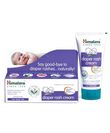
 Sudocrem Diaper Rash Cream 60g |
💰 Best Value | ★ 4.6 2,534 reviews |
₹169 | Check price → |
 Cetaphil Baby Wash 230ml |
👑 Premium Pick | ★ 4.5 1,923 reviews |
₹753 | Check price → |
 Himalaya Baby Oil 200ml |
🪙 Budget Pick | ★ 4.2 2,412 reviews |
₹178 | Check price → |
 Sebamed Baby Wash 200ml |
★ 4.4 2,847 reviews |
₹398 | Check price → | |
 Himalaya Baby Wash 200ml |
★ 4.3 3,156 reviews |
₹200 | Check price → |
🛒 Our Top Picks

Best-reviewed overall, 4.4★ across 3,789 ratings.
Johnson's Baby Oil 200ml
- ✓ Pure mineral oil
- ✓ Hypoallergenic
- ✓ Lightweight formula
* We earn a small commission — at no extra cost to you.


Top rating for the price, 4.6★ at ₹169.
Sudocrem Diaper Rash Cream 60g
- ✓ Zinc oxide 4%
- ✓ Barrier protection
- ✓ Fast-acting
* We earn a small commission — at no extra cost to you.

Top of the range, for parents who want the best features.
Cetaphil Baby Wash 230ml
- ✓ pH 5.5-7
- ✓ Hypoallergenic
- ✓ Fragrance-free
* We earn a small commission — at no extra cost to you.
Lowest price that still clears our 3.8★ / 100-review bar.
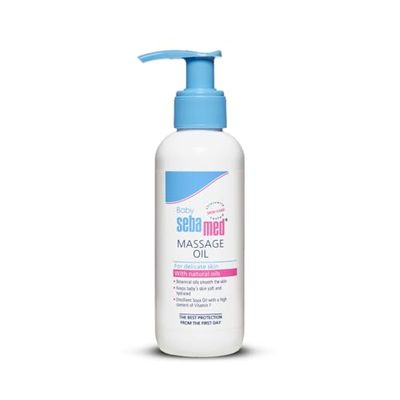
Himalaya Baby Oil 200ml
- ✓ Coconut and mineral oil blend
- ✓ Lightweight
- ✓ Massage-ready
* We earn a small commission — at no extra cost to you.

Sebamed Baby Wash 200ml
- ✓ pH 5.5
- ✓ Fragrance-free
- ✓ Hypoallergenic
* We earn a small commission — at no extra cost to you.

Himalaya Baby Wash 200ml
- ✓ pH 5.5
- ✓ Mild herbal blend
- ✓ No SLS/SLES
* We earn a small commission — at no extra cost to you.
Daily baby tips, exclusive Amazon deals & real parent advice — free forever.
This is the honest answer. Newborns need less than you think. A newborn's skin is not a blank slate waiting to be perfected—it's a functioning barrier that, for the first three months, often needs nothing but breast milk, breast milk, and more breast milk. After that, a few targeted products will cover 95% of normal infant skin situations. In this guide, we've cut through the noise and built you a starter kit for 0–6 months with pH basics, hard water realities, and the exact point when you add more.
The 3-Product Newborn Skincare Checklist
- Mild body wash or soap (pH 5.5–7): For routine bathing, not daily shampooing. A newborn doesn't need daily baths; 2–3 times a week is enough unless there's diaper soiling or sweat. Why this matters: tap water in Indian cities (Delhi, Mumbai, Bengaluru) often sits at pH 8–9 (alkaline/hard); a pH-balanced wash buffers that and prevents drying or irritation.
- Light massage oil (coconut, mineral, or baby blend): For post-bath moisturising and gentle massage, not every hour. A teaspoon over the whole body is plenty. Why this matters: Indian climate—heat and humidity—plus dry winter air in northern cities demands lightweight hydration. Oil also supports the skin barrier without occlusion (heavy creams can trap sweat and trigger heat rash).
- Diaper barrier cream (zinc oxide or silicone-based): For nappy rash prevention and mild irritation, not routine use. Apply only if you see redness or your baby's skin looks raw. Why this matters: diaper rash affects up to 50% of babies at some point; a good barrier cream stops it fast and is worth having on hand.
Understanding pH: Why It Matters for Your Newborn's Skin
Your newborn's skin is acidic: pH 4.5–5.5. This acidity is called the acid mantle, and it's a living defence against bacteria and dryness. Tap water in most Indian cities is alkaline (pH 8–9), especially in hard water zones. Every time you bathe your baby in alkaline water with an alkaline soap, you strip the acid mantle temporarily. A pH-balanced wash (5.5–7) restores it faster.
Check your product's label for the pH claim. Sebamed, Cetaphil Baby, and Himalaya Baby Wash explicitly list pH 5.5 on their packs. Many others don't disclose it. If the label doesn't say, assume it's neutral (7) or alkaline, which is fine for occasional use but not ideal for daily bathing. For newborns bathing only 2–3 times weekly, this matters less; for sensitive skin or eczema-prone babies, it's the first thing to check.
Hard Water and Indian Climate: Practical Adjustments
Hard water has dissolved minerals (calcium, magnesium) that react with soap and leave deposits on the skin, trapping moisture and causing irritation. If your building has a water softener, you're safe. If not, here's what to do:
- Boil or filter water before bathing: Boiling for 5 minutes or using a basic sediment filter reduces mineral load. This is especially worth it for winter in Delhi, Jaipur, or Lucknow, where hard water is the norm.
- Use less soap: A pea-sized amount of body wash mixed into warm water is enough for a full newborn bath. More soap doesn't clean better; it just leaves residue.
- Rinse thoroughly: An extra rinse with plain water after the wash removes soap film.
- Choose oil over lotion in humid months: In summer (April–June) and monsoon (June–September), light oil is gentler than thick lotions, which can feel sticky and trap sweat. In winter, a lotion + oil combo is better.
When to Add More Products: Age and Skin Cues
Months 0–3 (newborn stage): Soap, oil, diaper cream only. Breast milk alone cleans sensitive areas; you don't need a separate nappy wash.
Months 3–6: If your baby has no rashes or dryness, stick with the three. If you see flaky patches, you can add a fragrance-free baby moisturiser (lotion or balm). Test it on a small patch first (behind the ear or on the forearm) and wait 24 hours to check for redness.
Months 6+: Only add a sunscreen designed for babies (zinc oxide or titanium dioxide, SPF 30+) if you're going out in direct sun for more than 15 minutes. Before 6 months, the IAP recommends avoiding sunscreen; instead, use clothing and shade.
What to skip entirely at 0–6 months: Powders (including talc-free options—they still trap sweat and can cause heat rash), body butters, fragrance-based oils, wipes with alcohol, and any product with essential oils. Your baby's skin doesn't need—and can be irritated by—these additions.
Product Price and Where to Buy
A complete newborn starter kit costs Rs. 600–1,200 on Amazon.in, depending on brand choice. Sebamed Baby Wash (200ml, ~Rs. 250–300), Himalaya Baby Oil (200ml, ~Rs. 200–250), and Sudocrem or Bepanthen Diaper Cream (~Rs. 350–450) total roughly Rs. 800–1,000. Cheaper options exist (store brands, Rs. 100–150 per product), but the pH-balanced soaps and barrier creams earn their cost because one outbreak of nappy rash or eczema means more spending, more stress, and a baby in discomfort.
Patch Testing and When to See a Doctor
Always patch-test a new product on a small area (behind the ear, inner wrist, or one small spot on the nappy area) 24 hours before full use. If you see redness, swelling, or your baby seems uncomfortable, stop immediately and switch brands.
Minor redness around the nappy that fades within a day after applying diaper cream is normal. But if the rash spreads, blistering appears, your baby has a fever, or the rash doesn't improve after three days of consistent diaper cream use, see your paediatrician or a dermatologist. A fungal rash (yeast infection) needs antifungal treatment, not just barrier cream. This is general information, not medical advice.
What IAP and WHO Guidance Says
- IAP (Indian Academy of Pediatrics): Recommends exclusive breastfeeding for the first 6 months, with breast milk alone sufficient for gentle cleansing of face and nappy area. Formal bathing 2–3 times weekly with plain warm water or a mild wash is safe.
- WHO: Notes that a newborn's skin barrier is fully formed at birth (unlike older myths) but is still sensitive to harsh detergents and alkaline water; pH-neutral or slightly acidic cleansing is ideal for the first year.
Bottom line: Your newborn's skincare doesn't need to be complicated. Start with soap, oil, and diaper cream. Test each one. If your baby's skin is clear and happy, stop there—you've already done better than most first-time parents. Add only when you see a specific problem (dryness, rash, eczema). And for the first three months, remember: you're not caring for your skin; you're caring for a barrier that's already designed to work.
📚 Sources
The guidance in this article draws on the sources below. It is general information, not medical advice: for any concern about your child's health, talk to your paediatrician.
- Indian Academy of Pediatrics - Infant Care Guidelines — Bathing frequency and breastfeeding for newborn hygiene
- WHO - Newborn and Infant Care — Skin barrier function and pH-neutral cleansing for infants
- BIS (Bureau of Indian Standards) - Cosmetics Standards — pH and safety standards for baby care products sold in India
Last updated 22 Oct 2026
Frequently Asked Questions
Does a newborn need a bath every day?
What pH should a baby wash be?
Can I use coconut oil on my newborn's skin?
What should I do if my baby gets nappy rash despite using diaper cream?
Is it safe to use baby powder on newborns?
When can I use sunscreen on my newborn?
Daily baby tips, exclusive Amazon deals & real parent advice — free forever.