
How Modern Food Tech Brings Back the Grains Our Grandmothers Cooked
Sponsored by Rorosaur · also contains affiliate links
⚡ In a hurry? Our quick picks

Short answer: the slow-cooked millets, grains and ghee our grandmothers fed babies were excellent nutrition. What changed is not the food, it is that fewer families have the time to cook it that way every day. Modern methods now bring that same slow-cooked care to a packet, without losing the ingredients that made it good.
Why traditional methods developed the way they did
Indian weaning traditions were never arbitrary, they were shaped by necessity and generations of trial and observation. Soaking and sprouting grains overnight was a practical way to make tough, whole grains gentler without needing any special equipment, just time and water. Slow-cooking on a wood or coal fire naturally gave food long, gentle heat exposure, which happens to be reasonably close to what modern food science now understands about starch breakdown, even though nobody at the time was measuring it that way. These methods worked because they were the best available tools of their era, not because they were perfect, and understanding that distinction is useful, since it lets us appreciate what they got right while also being honest about where they fell short.
🛒 Our Top Picks
Best-reviewed overall, 0★ across 0 ratings.
Rorosaur Curious Creations
- ✓ No added sugar, salt or preservatives
- ✓ Multiple ingredients, thoroughly cooked
- ✓ Retort-packed - long shelf life, no fridge
* We earn a small commission — at no extra cost to you.

Rorosaur Porridge Powders
- ✓ No added sugar, salt or preservatives
- ✓ Multiple ingredients, thoroughly cooked
- ✓ Retort-packed - long shelf life, no fridge
* We earn a small commission — at no extra cost to you.
Daily baby tips, exclusive Amazon deals & real parent advice — free forever.
What the old kitchens got right, and where they stopped short
Traditional Indian weaning foods were built on smart ideas long before they had labels: soaking and sprouting grains to make them gentler, cooking millets slowly until soft, adding a little ghee for energy, and using ingredients like amaranth that pack real nutrition. Soaking and sprouting genuinely do useful work, they soften grains and activate some of the grain's own enzymes, easing what a baby's stomach has to do. But these traditional steps are a partial answer. The complete breakdown of starch into an easily digested form, what is technically called gelatinization, needs precise, controlled heat, something that is hard to reproduce exactly the same way every single time in a home kitchen.
How retort compares to other modern preservation methods
Retort is not the only modern way to preserve food, and it is worth knowing how it differs from the alternatives, since the differences matter for nutrition. Traditional canning, the kind used for many shelf-stable foods, typically involves longer exposure to high heat to achieve the same sterilizing effect, which can mean somewhat greater loss of heat-sensitive nutrients like vitamin C over that longer window. Freeze-drying preserves nutrients very well but changes the texture of the food entirely, requiring reconstitution with water and rarely producing the same smooth, ready consistency a baby's puree needs straight out of the pack. Retort processing sits in a useful middle ground: sealed inside its own pack and sterilized under pressure at a controlled temperature for a shorter, more precise window than older canning methods typically use, which is part of why it has become a preferred method for baby food specifically, where nutrient retention in a small daily portion matters more than it might for an adult's varied diet.
| Method | Nutrient retention | Consistency | Shelf life | Convenience |
|---|---|---|---|---|
| Home-cooked fresh | Good, if not overcooked | Varies by cook and day | Must eat fresh | Low on busy days |
| Soaking or sprouting only | Partial breakdown of starch | Depends on preparation | Short | Needs planning ahead |
| Modern retort processing | Consistent, controlled heat exposure | Same result every time | Long, no fridge needed until opened | High |
What modern methods add
The genuine improvement is convenience without compromise. A gentle heat-and-seal process (retort) cooks and packs food so it stays good on the shelf for months, with no need for artificial preservatives, colours or added sugar, while also reaching that fuller, more consistent level of starch breakdown that soaking and sprouting only start. That means a busy parent can serve a thoroughly-cooked, traditional-style grain meal in minutes, with an ingredient list as short and honest as a home kitchen's, and a level of digestibility that is harder to guarantee at home every time. This is the space Rorosaur works in, taking traditional grains and millets, cooking them thoroughly, and keeping them fresh through the process rather than through chemicals.
Is packaged food really "less good" than home-cooked, always?
This is a fair question many parents quietly worry about, and the honest answer is more nuanced than a simple yes or no. Home cooking, done with fresh ingredients and appropriate care, is genuinely excellent, and nothing about modern processing makes it obsolete. But packaged food is not automatically worse either, what actually matters is the same thing in both cases: real ingredients, appropriate cooking, and no unnecessary additives. A packaged food built on those principles can be just as nourishing as a home-cooked one, sometimes with more consistent digestibility than a rushed home preparation on a busy day. The right question is not home-cooked versus packaged as a blanket rule, it is whether a specific meal, whichever way it was made, meets those same basic standards.
Home-cooked or ready-to-eat: when to use each
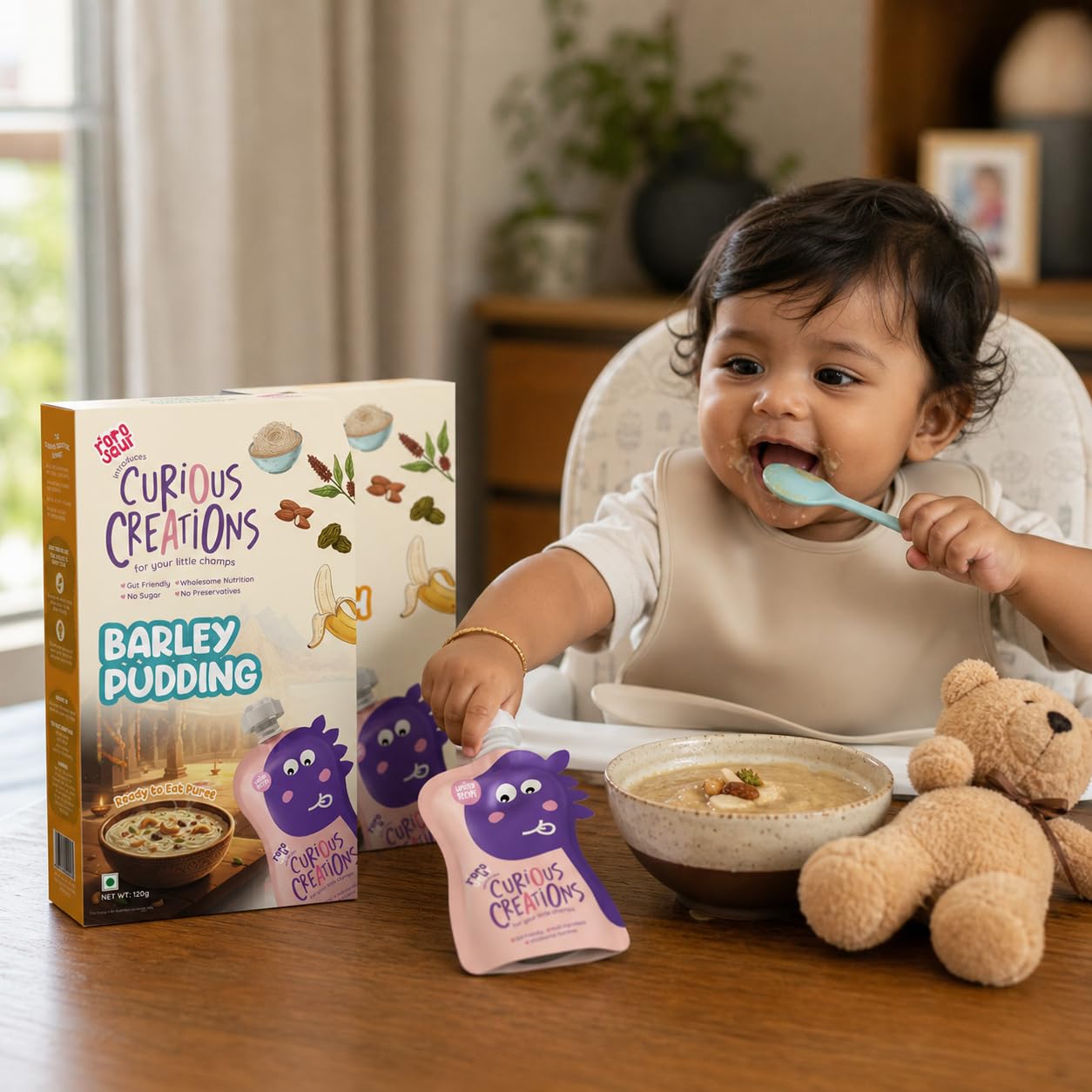
Home cooking is wonderful when you have the time, and nothing replaces it. But mornings are chaotic, travel happens, and some days simply run away from you. On those days a good ready-to-eat option means your baby still eats real, well-cooked food rather than whatever is convenient. Blends like Rorosaur Curious Creations and quick Rorosaur Porridge Powders are built for exactly that gap.
What to look for in a good ready-to-eat food
The test is simple: a short ingredient list you recognise, grains and millets you would use at home, no added sugar or salt, no artificial colours, and shelf life that comes from the process, not preservatives. If a packet passes that test, it is doing what a good baby food should, giving your baby the kind of nourishment your grandmother would recognise, just made practical and consistently digestible for a modern morning.
Frequently Asked Questions
Is packaged baby food as good as home-cooked?
What is retort technology in baby food?
Are millets good for babies?
Daily baby tips, exclusive Amazon deals & real parent advice — free forever.