
Grain Porridges for Babies: Why They Need a Little Extra Care
Sponsored by Rorosaur · also contains affiliate links
ℹ️ General information, not medical advice. If your baby seems unwell or anything worries you, talk to your paediatrician. Medical disclaimer
Short answer: grain porridges are one of the best first foods for Indian babies, but they only work well when the grains are cooked thoroughly, kept simple, and served at the right texture for your baby's age. Every family has its own first-porridge story, from ragi to rice, and the recipe matters less than getting a few basics right, consistently, meal after meal.
Where home porridges sometimes go wrong
- Grains not cooked enough, so a grain still firm in the middle is harder to digest.
🛒 Rorosaur products in this guide

Rorosaur Millety Pumpkin
- ✓ No added sugar, salt or preservatives
- ✓ Multiple ingredients, thoroughly cooked
- ✓ Retort-packed - long shelf life, no fridge
* We earn a small commission — at no extra cost to you.

Rorosaur Wheaty Ragi
- ✓ No added sugar, salt or preservatives
- ✓ Multiple ingredients, thoroughly cooked
- ✓ Retort-packed - long shelf life, no fridge
* We earn a small commission — at no extra cost to you.

Rorosaur Spinachy Grain
- ✓ No added sugar, salt or preservatives
- ✓ Multiple ingredients, thoroughly cooked
- ✓ Retort-packed - long shelf life, no fridge
* We earn a small commission — at no extra cost to you.
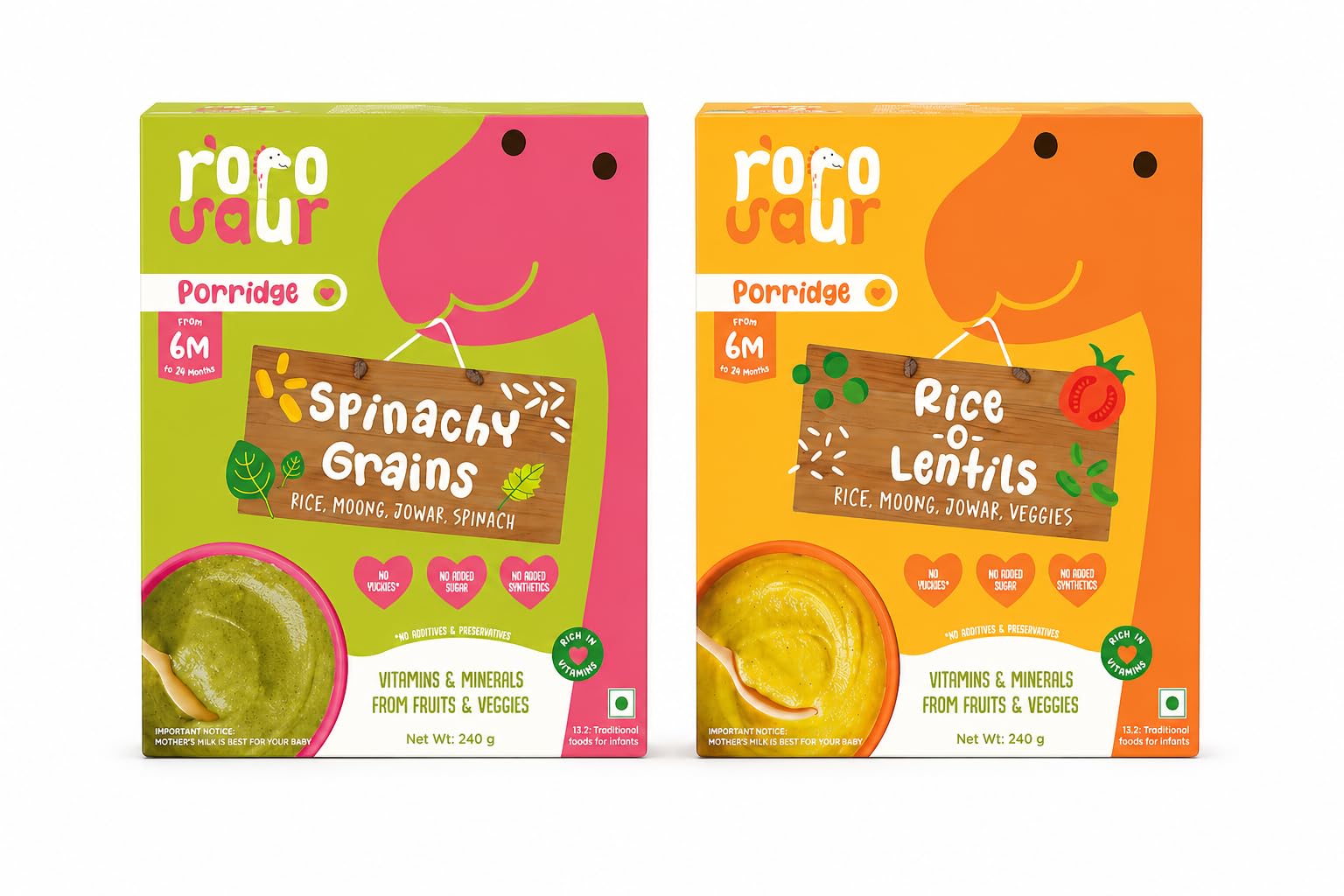
Rorosaur Rice o Lentil
- ✓ No added sugar, salt or preservatives
- ✓ Multiple ingredients, thoroughly cooked
- ✓ Retort-packed - long shelf life, no fridge
* We earn a small commission — at no extra cost to you.
Daily baby tips, exclusive Amazon deals & real parent advice — free forever.
None of these are hard to fix, they are just easy to miss when you are cooking in a hurry with a hungry baby on your hip.
Why texture is not just about taste
Texture stages exist for a reason beyond comfort. A very young baby is still using mostly a suck-and-swallow pattern, so a smooth, runny texture matches what their mouth can manage. As babies grow, moving to a slightly thicker texture with soft lumps encourages the tongue and jaw to start working together, which is part of how chewing skill develops. Moving too fast, before a baby's mouth is ready, can lead to gagging, while staying on smooth purees for too long can slow down a baby's progress toward chewing and accepting family food. The texture is quietly doing developmental work, not just filling a tummy.
The cooking sweet spot: neither too raw nor too soft for too long
There are two opposite mistakes worth understanding, not just one. Undercooked grain is hard on a baby's still-developing digestive enzymes and can cause discomfort. But grains cooked far longer than necessary, or reheated repeatedly, are not automatically better. Extended heat exposure can reduce some heat-sensitive nutrients, and a porridge that is always mashed into total uniformity, long after your baby is ready for soft lumps, does not give a baby's mouth the practice it needs to progress. The real goal at each stage is the minimum cooking needed to make the grain properly digestible, at the texture appropriate for that age, not the maximum cooking possible. This is a subtle distinction, but it is exactly what separates a porridge that helps a baby move forward from one that accidentally holds them back.
| Age | Texture | Why this texture |
|---|---|---|
| 6 to 7 months | Smooth, runny, almost pourable | Matches early oral skills, before a baby can move food side to side in the mouth |
| 8 to 9 months | Thicker, with soft lumps | Encourages the tongue and jaw to start managing texture, building chewing skill |
| 10 months and up | Soft mash | Supports the move toward finger foods and eventually family meals |
What a good grain porridge looks like
The best porridges are simple: a grain or two, cooked slowly until soft, sometimes with a gentle vegetable or a small spoon of ghee for energy. A blend of grains, rather than one alone, tends to be lighter on the tummy and covers more nutrition in a single bowl. Whatever you choose, the ingredient list should be short and honest, with real grains, no artificial colours, no preservatives and no added sugar.
On days when you cannot stand over a pot, a ready-to-eat porridge that is cooked thoroughly and packed without preservatives is a genuinely useful backup, and one advantage worth mentioning is consistency: a well-made packaged porridge gives your baby the same texture and quality every single time, which some home cooking, made in a hurry on different days, can struggle to match. Rorosaur's range works this way: single-flavour porridges like Rorosaur Spinachy Grain and Rorosaur Rice o Lentil for when you are introducing one at a time, and blends like Rorosaur Millety Pumpkin and Rorosaur Wheaty Ragi once your baby is comfortable with a few grains.
How much to serve, by stage
Portion sizes matter less than people think in the early months, since breastmilk or formula is still doing most of the nutritional work. As a general guide, two to three tablespoons once or twice a day suits the six-to-seven-month stage, moving to half a small bowl, two to three times a day, by nine to ten months, and closer to a full small bowl at three meals by the end of the first year. These are starting points, not targets. Some babies eat more, some eat less on a given day, and appetite naturally varies. Let your baby's own cues, turning away, closing their mouth, or leaning in for more, guide the exact amount more than any chart can.
Serving it safely
Serve porridge warm, never hot, and test the temperature on the inside of your wrist first. Introduce one grain at a time, watch for anything that does not suit your baby, and speak to your pediatrician if there are allergies in the family. A well-made porridge, home-cooked or ready-to-eat, is a lovely, gentle way to build your baby's first meals, and one that keeps working with your baby rather than against their stage of development. Getting the texture right at each stage is less about following a rulebook and more about giving your baby's mouth and tummy exactly what they are ready for, no more and no less.
Frequently Asked Questions
Which grain porridge is best for babies first?
Can I add sugar or salt to baby porridge?
How thick should baby porridge be?
Daily baby tips, exclusive Amazon deals & real parent advice — free forever.