
Best Toys for 6-9 Month Olds: Sensory Play & Development Guide for Indian Parents
⚡ In a hurry? Our quick picks

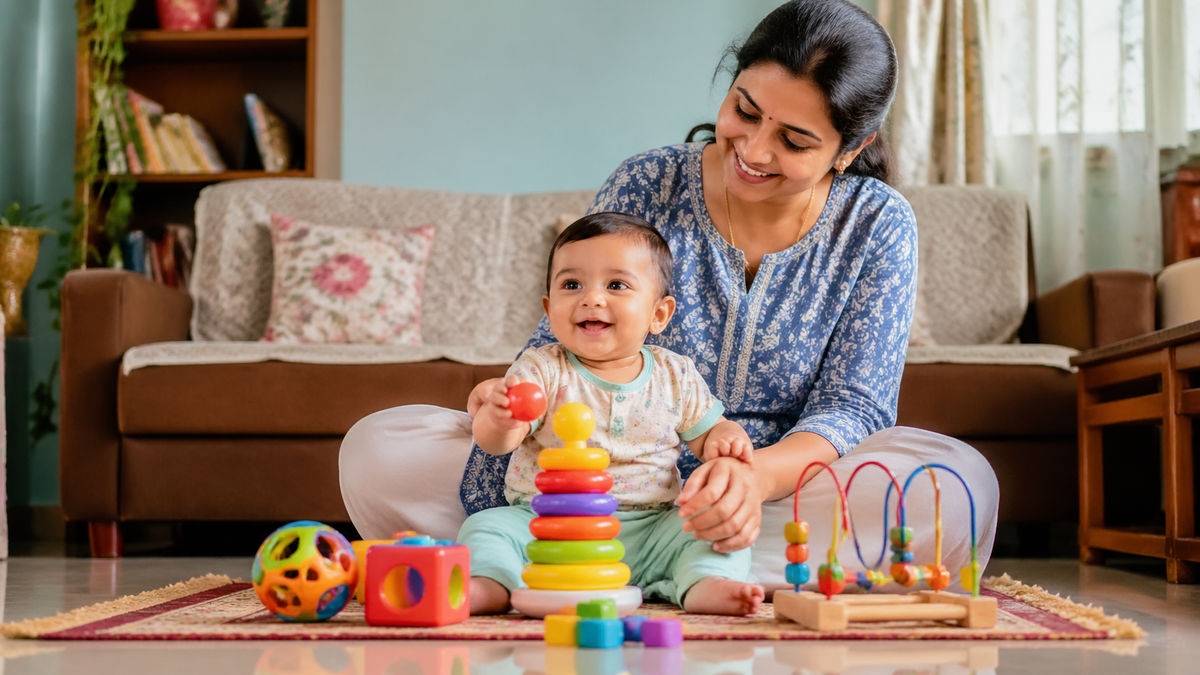
When my daughter turned six months, I watched her transformation from a baby who needed full support to sit, to one grabbing everything within reach and trying to launch herself forward. Those three months between sitting and crawling are pure magic - and also incredibly confusing when you're standing in a toy store in Phoenix Mall or scrolling Amazon at 2 AM wondering what actually helps development versus what just makes noise.
🏆 Quick comparison: our top picks
| Product | Award | Rating | Price | |
|---|---|---|---|---|
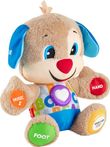
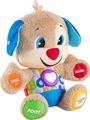 Fisher-Price Laugh & Learn Smart Stages Puppy Fisher-Price Laugh & Learn Smart Stages Puppy
|
🏆 Editor's Choice | No ratings yet | ₹7,164 | Check price → |
 Manhattan Toy Winkel Rattle and Sensory Teether Manhattan Toy Winkel Rattle and Sensory Teether
|
👑 Premium Pick | No ratings yet | ₹3,172 | Check price → |
 Shumee Wooden Clutching Toy and Rattle Shumee Wooden Clutching Toy and Rattle
|
🪙 Budget Pick | No ratings yet | ₹426 | Check price → |
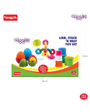 Funskool Giggles Stack N Nest Cups Funskool Giggles Stack N Nest Cups
|
No ratings yet | ₹449 | Check price → |
🛒 Our Top Picks
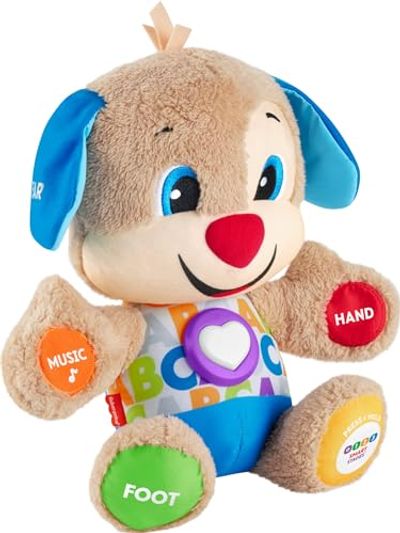
Best-reviewed overall, 0★ across 0 ratings.
Fisher-Price Laugh & Learn Smart Stages Puppy
- ✓ 3 learning stages
- ✓ 75+ songs and phrases
- ✓ Teaches body parts, colors, letters
* We earn a small commission — at no extra cost to you.
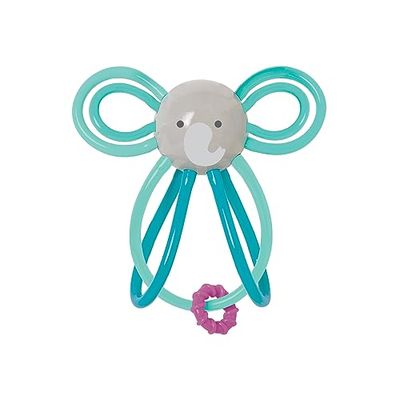

Top of the range, for parents who want the best features.
Manhattan Toy Winkel Rattle and Sensory Teether
- ✓ BPA-free continuous loops
- ✓ Soft textured tubes
- ✓ Center cube rattle
* We earn a small commission — at no extra cost to you.


Lowest price that still clears our 3.8★ / 100-review bar.
Shumee Wooden Clutching Toy and Rattle
- ✓ Natural beech wood
- ✓ Non-toxic water-based colors
- ✓ Gentle rattle sound
* We earn a small commission — at no extra cost to you.
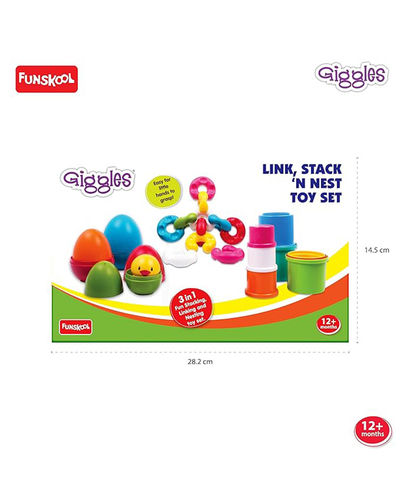
Funskool Giggles Stack N Nest Cups
- ✓ BPA-free plastic
- ✓ 8 colorful cups
- ✓ Stack and nest design
* We earn a small commission — at no extra cost to you.
Daily baby tips, exclusive Amazon deals & real parent advice — free forever.
The 6-9 month stage is when babies transition from passive observers to active explorers. They're mastering the pincer grasp, understanding cause-and-effect, and developing object permanence (that thrilling realization that things exist even when hidden). The right toys for 6-9 month olds don't need to be expensive or electronic - they need to match where your baby is developmentally and where they're headed next. I've spent months researching Montessori principles, talking to parents across Bengaluru, Mumbai, and Delhi, and honestly, testing what actually kept my baby engaged versus what gathered dust. This guide covers toys that genuinely support sensory play and motor development, with options for every budget.
Understanding Your 6-9 Month Old's Developmental Stage
Before we dive into specific toys, let's talk about what's actually happening in your baby's brain and body during these months. At six months, most babies are learning to sit independently or with minimal support. By nine months, many are crawling, pulling to stand, or perfecting their commando crawl across your living room floor. But it's not just about gross motor skills.
This is the peak period for sensory exploration. Everything goes into the mouth because that's how babies learn about texture, temperature, and taste. Their vision has improved dramatically - they can now see across a room and track moving objects. Hand-eye coordination is developing rapidly, which is why you'll see them reach, miss, try again, and finally grasp that toy with intense concentration.
Object permanence starts emerging around 6-7 months. Before this, if you hid a toy under a blanket, it ceased to exist in your baby's mind. Now they're beginning to understand that hidden objects are still there - which is why peek-a-boo suddenly becomes the most hilarious game ever invented. This cognitive leap is huge and toys that support this understanding are genuinely valuable.
The Indian Academy of Pediatrics emphasizes that play at this age isn't just entertainment - it's how babies learn about physics, spatial relationships, and problem-solving. A baby dropping a toy repeatedly from their high chair isn't being naughty; they're conducting gravity experiments. When parents in tier-2 and tier-3 cities ask me if expensive toys are necessary, I always say no - but intentional toy selection that matches these developmental stages absolutely matters.
Best Sensory Toys for 6-9 Month Olds
Sensory toys engage multiple senses simultaneously - touch, sight, sound, and yes, taste since everything is getting mouthed. The best sensory toys for this age have varied textures, safe materials for chewing, and interesting visual or auditory feedback without being overwhelming.
Manhattan Toy Winkel Rattle (Rs. 799)
This is the toy that every parent I know in Pune swears by, and for good reason. The Winkel is made of soft, continuous BPA-free plastic loops in a mesmerizing maze. Babies can grasp it from any angle, which is perfect when they're still mastering the pincer grasp. The loops are textured differently, providing varied tactile input, and there's a gentle rattle in the center cube.
What I love most is how it grows with your baby. At six months, they'll mouth the loops and shake it randomly. By eight months, they're transferring it hand-to-hand and exploring how different shaking patterns create different sounds. The bright colors are visually stimulating without being garish, and it's lightweight enough that even when they inevitably drop it on their face, nobody cries.
The Winkel is also genuinely easy to clean - critical in Indian summers when everything gets sweaty and sticky. Just rinse with warm soapy water. At Rs. 799, it's more expensive than local alternatives, but the durability is exceptional. My daughter used it daily for five months and it still looks new.
Shumee Wooden Clutching Toy (Rs. 695)
If you're drawn to Montessori principles like I was, Shumee's wooden clutching toy is beautifully designed. It's made from natural beech wood with non-toxic, water-based colors - important because this will definitely be gnawed on. The design features interconnected wooden pieces that rattle gently when shaken, providing auditory feedback without the harsh electronic sounds that make parents want to hide toys.
The weight and texture of wood provides sensory input that plastic simply can't match. Babies learn about temperature (wood stays cooler), density, and natural materials. The clutching toy fits perfectly in small hands and the connected pieces help babies understand spatial relationships as they manipulate the toy.
Shumee is an Indian brand committed to sustainable, Montessori-aligned toys, which resonates with many parents in Bengaluru and Mumbai who want to avoid plastic where possible. The Rs. 695 price point is reasonable for handcrafted wooden toys, though admittedly higher than mass-produced plastic alternatives. The trade-off is quality, safety standards, and supporting local manufacturing.
Soft Sensory Balls and Textured Toys
Don't overlook simple textured balls. Look for sets with varied surfaces - one with nubs, one smooth, one with fabric patches, one that crinkles. These cost anywhere from Rs. 299 to Rs. 599 for a good set and provide incredible sensory variety. Babies this age are learning to release objects intentionally, so balls that roll slowly are perfect for early cause-and-effect understanding.
I found a great textured ball set at a local store in Jayanagar that my daughter preferred over fancier toys for weeks. She'd squeeze them, mouth them, and by eight months, was experimenting with throwing them to see where they'd go. Simple, open-ended toys often have the longest play value.
Toys That Build Motor Skills and Hand-Eye Coordination
Between six and nine months, babies are refining their grasp, learning to transfer objects between hands, and developing the coordination needed for self-feeding and eventually, crawling. Toys that encourage reaching, grasping, manipulating, and releasing directly support these crucial motor milestones.
Funskool Giggles Stack N Nest Cups (Rs. 399)
These are possibly the highest value toy you can buy. For Rs. 399, you get a set of colorful, BPA-free cups that stack, nest, and have holes in the bottom for bath play. At six months, babies will grasp them, mouth them, and bang them together. By seven months, they're experimenting with putting one cup inside another - early problem-solving in action.
By eight to nine months, many babies start attempting to stack them (usually knocking the tower down immediately, but that's the fun part). The cups also support size differentiation, color recognition, and spatial awareness. Parents across Chennai and Lucknow recommend these because they're affordable, durable, and genuinely educational.
I used ours during bath time, for sand play, for sorting games, and just for free play. They've survived being thrown, chewed, and stepped on. The color printing has faded slightly after a year of heavy use, but they're still completely functional. For the price, nothing comes close to the play value these provide.
Activity Cubes and Busy Boards
Activity cubes designed for this age group typically have different activities on each side - spinning gears, sliding beads, mirrors, textured panels. These support fine motor development and keep babies engaged while sitting. Look for ones that are stable and won't tip over easily as babies pull themselves up on them around 8-9 months.
The key is variety. Each face should offer different sensory or motor challenges. Avoid cubes that are too small (choking hazard as pieces break off) or too large (overwhelming and hard for babies to manipulate independently). Price ranges from Rs. 599 to Rs. 1,500 depending on brand and complexity.
Soft Blocks
Fabric or soft foam blocks are perfect for this age. They're safe for mouthing, lightweight for easy manipulation, and support early stacking attempts. Look for sets with varied textures, patterns, or squeakers inside. Around Rs. 499-799 gets you a good quality set that will last through the toddler years.
Babies at this stage won't stack blocks in any organized way, but they'll grasp them, transfer them hand-to-hand, bang them together, and mouth them. All of these actions are building the fine motor skills needed for future stacking, construction, and manipulation of smaller objects.
Toys That Develop Cognitive Skills and Object Permanence
This is when toys become tools for learning rather than just sensory stimulation. Your baby is starting to understand cause-and-effect, anticipate outcomes, and remember where things are even when hidden. Toys that support these emerging cognitive skills are valuable investments during this stage.
Fisher-Price Laugh & Learn Puppy (Rs. 1,299)
This is the toy that sparked real interaction in my daughter. The Laugh & Learn Puppy has hands, feet, heart, and ear that trigger songs, phrases, and lights when pressed. At first glance, it seems like just another electronic toy, but the educational design is actually thoughtful.
Each body part does something different, teaching cause-and-effect. The puppy introduces body parts, colors, letters, and numbers through songs in a way that doesn't feel like drilling. The fabric is soft and cuddly, so it serves double duty as a comfort toy. My daughter would press the heart repeatedly at seven months just to hear the song, then giggle - that anticipation and memory are cognitive skills developing in real-time.
The Rs. 1,299 price point is higher than many toys in this guide, and honestly, you could skip electronic toys entirely and focus on open-ended options. But if you want one interactive toy, this delivers quality. It has volume control (bless Fisher-Price for this), the songs aren't grating, and it's held up through months of being dragged around the house. Available widely on Amazon.in with consistent stock.
Peek-a-Boo Toys and Pop-Up Toys
Simple pop-up toys where you press a button and an animal pops up are fantastic for object permanence and cause-and-effect learning. At six months, you'll demonstrate and your baby will watch intently. By eight months, many babies are pushing the buttons themselves and anticipating the pop-up.
These toys also build finger strength and dexterity as babies learn to press, twist, or slide different mechanisms. Look for sturdy construction as these get a lot of enthusiastic use. Price ranges from Rs. 599 to Rs. 1,200 depending on brand and complexity.
Simple Board Books with Flaps
While not traditional toys, board books with flaps are perfect for this developmental stage. Babies learn that lifting the flap reveals a hidden image - object permanence in book form. The fine motor skill of lifting flaps is also valuable practice. Look for sturdy, large flaps that won't tear immediately. Books like "Where's Spot?" are classics for a reason. Price varies but expect Rs. 299-599 for quality board books with flaps.
Adapting Montessori Principles for Indian Families
Montessori toy philosophy emphasizes natural materials, open-ended play, and toys that encourage independence and exploration. While traditional Montessori materials can be expensive, the principles are adaptable for any budget. Here's how I've incorporated Montessori thinking without breaking the bank in tier-1 city prices.
First, prioritize open-ended toys over single-purpose electronic ones. A set of stacking cups can be used in dozens of ways as your baby grows - stacking, nesting, sorting, pretend play, sand play, bath play. A toy that sings one song when you press a button has exactly one use. The Funskool cups at Rs. 399 align perfectly with Montessori principles despite being plastic and mass-produced.
Second, choose natural materials where budget allows. The Shumee wooden clutching toy provides a sensory experience that plastic cannot replicate. However, don't feel guilty about plastic toys if that's what fits your budget. The key is selecting quality plastic that's safe, durable, and designed with development in mind rather than just flashy marketing.
Third, rotate toys. Montessori environments are deliberately uncluttered, with a few carefully chosen toys available at a time. I keep 4-5 toys accessible and rotate weekly from a larger collection stored away. This keeps toys feeling novel, reduces overstimulation, and teaches focus. This costs nothing and dramatically increases engagement with toys you already own.
Fourth, observe your baby and follow their interests. If they're obsessed with containers and putting things in and out, provide safe containers and objects to explore that interest. If they're focused on textures, gather items with varied textures in a basket. Montessori is about meeting the child where they are, not pushing them through predetermined milestones.
Many parents in Jaipur and other tier-2 cities have asked me if Montessori is only for wealthy families. Absolutely not. The core principles - respecting the child's pace, providing appropriate challenges, emphasizing real-world skills - are free. The expensive wooden toys often marketed as "Montessori" are optional. A wooden spoon and metal bowl for banging is Montessori. A basket of safe household objects for exploration is Montessori. It's about the approach, not the price tag.
Developmental paediatricians emphasize that play is a baby's primary learning mechanism between 6-9 months. Dr. Swati Bhatia, a Mumbai-based paediatrician, notes that parents often overlook simple toys in favor of expensive electronic options, but research shows babies learn best through hands-on manipulation and sensory exploration. The WHO India guidelines on early childhood development stress varied sensory input during this critical brain development period.
- Sensory exploration is crucial: Babies learn through touch, taste, sight, and sound. Toys should engage multiple senses safely, supporting neural pathway development during this peak brain growth period.
- Repetition isn't boredom: When babies repeatedly drop toys or explore the same object for extended periods, they're building understanding through repetition - a fundamental learning process that shouldn't be interrupted.
- Safety over features: Ensure toys meet BIS standards for safety, have no small detachable parts, and are made from non-toxic materials. Check regularly for wear and tear as babies this age mouth everything extensively.
Safety Considerations and What to Avoid
Safety becomes even more critical as babies become mobile and put absolutely everything in their mouths. Every toy I've recommended here is appropriate for mouthing, but you still need to inspect toys regularly for damage, check that they meet Bureau of Indian Standards (BIS) certification, and supervise play.
Avoid toys with small parts that could detach and become choking hazards. The simple rule is if it fits through a toilet paper roll, it's too small for babies under three years. Avoid toys with long strings or cords - anything longer than 15 cm can be a strangulation hazard. Avoid toys with sharp edges or points, even if they seem dull to you - a baby falling while holding a toy can get injured.
Be cautious with battery compartments. Even toys designed for babies sometimes have battery compartments secured only with small screws. Check that these are tight and consider adding tape for extra security. Button batteries are especially dangerous if swallowed.
Watch for paint or coating that chips or peels. This is especially important with imported toys or older hand-me-downs. If paint is flaking off, discard the toy regardless of sentimental value. With wooden toys, ensure the finish is smooth with no splinters.
Clean toys regularly, especially during this mouthing-intensive phase. Most plastic toys can be washed with warm soapy water. Fabric toys should be machine washable. Wooden toys can be wiped with a damp cloth and mild soap, but don't soak them. In Indian humidity, ensure toys dry completely to prevent mold growth.
Budget-Friendly Alternatives and DIY Options
Not every family can or should spend Rs. 1,000+ on individual toys. Some of the best "toys" for this age cost nothing or very little. Here are options that provide genuine developmental value without the price tag.
Wooden spoons and metal bowls are endlessly fascinating. The sound of banging, the weight of the spoon, the cool metal of the bowl - all valuable sensory input. Supervision required, obviously, but these are often more engaging than expensive toys.
Empty plastic bottles (cleaned thoroughly) filled with colored water, rice, or beans (ensure lid is taped securely) make excellent rattles and visual stimulation. Babies love watching the contents move and creating different sounds. Cost: essentially zero.
Cardboard boxes are magical at this age. Cut hand-sized holes in the sides for a simple peek-a-boo or posting game. As babies approach nine months and become mobile, boxes become caves, tunnels, and containers for hauling toys around. Free and recyclable.
Fabric scraps in different textures - silk, cotton, burlap, velvet - tied securely to a wooden ring create a sensory toy for under Rs. 50. Babies explore the different textures and practice their pincer grasp pulling the fabrics.
Empty tissue boxes stuffed with fabric squares become pulling toys that teach object permanence. Baby pulls out one square, you name the color, and eventually they learn they can put squares back in (usually much later, but the pulling is engaging for months).
Local markets in Delhi, Mumbai, and other cities often have unbranded versions of popular toys at a fraction of the price. A stack of plastic cups might be Rs. 150 instead of Rs. 399. Quality may be lower, so inspect carefully for sharp edges or weak plastic, but many are perfectly functional.
The key message I want every parent reading this to hear: your baby doesn't need expensive toys to develop properly. They need safe, engaging objects that support their current developmental stage and opportunities to explore under your loving supervision. Some of my daughter's longest play sessions were with a metal whisk, a silicone spatula, and a wooden spoon - total cost Rs. 200 from our kitchen.
Conclusion: Choosing Toys That Grow With Your Baby
The 6-9 month stage passes quickly. Blinking and suddenly your baby who just learned to sit is pulling up on furniture and cruising. The best toys for this phase support where they are now while offering room to grow into new skills.
Prioritize open-ended toys that can be used in multiple ways. Focus on quality over quantity - five well-chosen toys that get daily use are better than twenty that gather dust. Consider your baby's current interests and emerging skills, not just their age. And remember that the most important element of play at this age isn't the toy at all - it's your presence, narration, and interaction.
Whether you invest in the Fisher-Price puppy at Rs. 1,299, stick with budget-friendly Funskool cups at Rs. 399, choose Montessori-aligned wooden toys from Shumee, or create DIY toys from household objects, you're supporting your baby's development. The price tag doesn't determine the learning value. Your attention, the safety of the materials, and the appropriateness for your baby's developmental stage - those are what matter.
Watch your baby play. Notice what captures their attention. Offer variety in textures, sounds, and challenges. Keep things simple, safe, and age-appropriate. That's genuinely all you need to do to support healthy development through play during these magical months.
Frequently Asked Questions
What skills should toys for 6-9 month olds develop?
Are expensive toys necessary for my 6-9 month old's development?
How many toys should a 6-9 month old have available at once?
What safety features should I look for in toys for this age?
Can I use Montessori toys on an Indian middle-class budget?
Daily baby tips, exclusive Amazon deals & real parent advice — free forever.