
9 Month Baby Toys Budget Kit Under ₹1000: Crawling, Grasp & Permanence Milestones
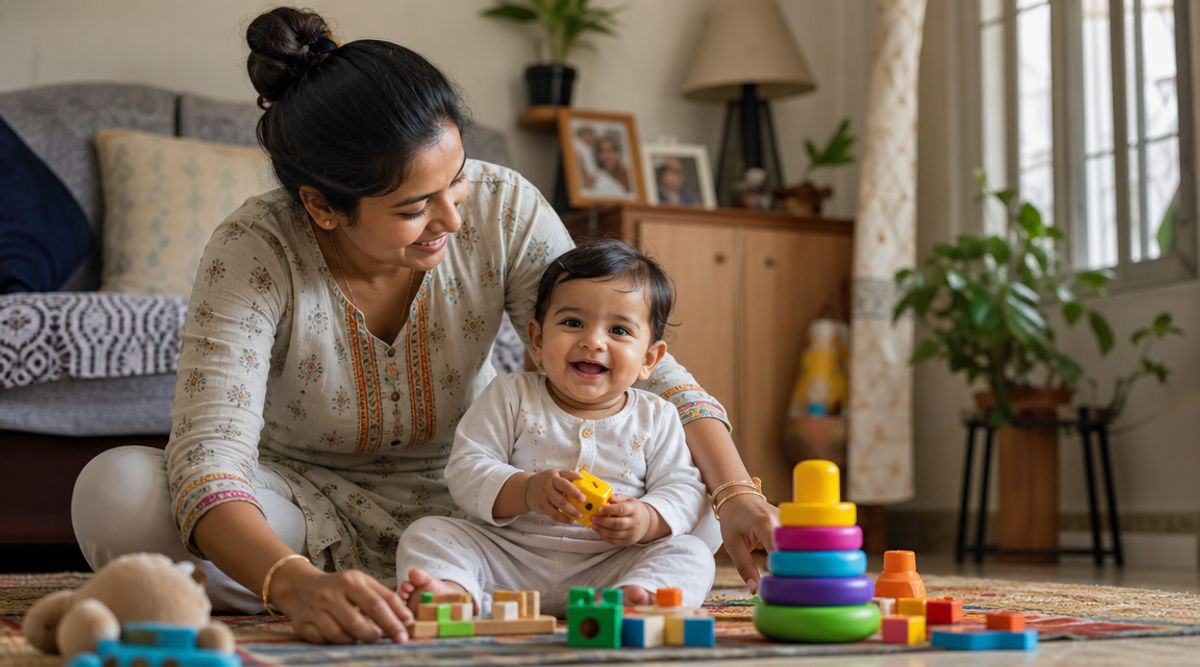
At 9 months, your baby needs toys that build crawling strength, thumb-and-finger pincer grasp, and object permanence. A ₹1000 starter kit includes stacking cups (coordination), wooden rattle (cause-and-effect), textured ball set (sensory), and board books (object understanding). All should carry BIS marks and pass the choking test: if it fits through a toilet paper tube, it's too small.
⚡ In a hurry? Our quick picks

By 9 months, your baby isn't just grabbing—they're planning their reach, hiding toys under cushions and watching where they go, and using thumb and fingers like tweezers. The toys that win at this stage aren't bright plastic overstimulators; they're tools that let crawlers experiment with cause, texture and disappearance. This budget kit, all under ₹1000, targets the three milestones parents miss: pincer grasp (thumb + fingers together), object permanence (understanding things still exist when hidden), and crawl-strength persistence. Each toy solves a real play gap without needing shelf space in your Mumbai or Delhi flat.
🏆 Quick comparison: our top picks
| Product | Award | Price | |
|---|---|---|---|
 Wonderkids Wooden Rattle - FSC Wood, Eco-Friendly Finish |
👑 Premium Pick | ₹332 | Check price → |
 Babyhug Textured Sensory Ball Set - 4 Balls, Multiple Textures |
🪙 Budget Pick | ₹198 | Check price → |
 Babyhug Stacking Cups Set - Non-Toxic Plastic, BIS Certified |
₹209 | Check price → | |
|
Pratham Books Thick Board Book - Simple Pictures, Sturdy Cardboard
|
See on Amazon | Check price → |
🛒 Our Top Picks

The highest-priced option in this guide.
Wonderkids Wooden Rattle - FSC Wood, Eco-Friendly Finish
- ✓ Solid wooden construction
- ✓ Food-grade stain finish
- ✓ FSC-certified wood
* We earn a small commission — at no extra cost to you.

The lowest-priced option in this guide.
Babyhug Textured Sensory Ball Set - 4 Balls, Multiple Textures
- ✓ 4 textured soft balls
- ✓ Bumpy, smooth, ridged surfaces
- ✓ BIS certified
* We earn a small commission — at no extra cost to you.


Babyhug Stacking Cups Set - Non-Toxic Plastic, BIS Certified
- ✓ 6 stacking cups
- ✓ Non-toxic BPA-free plastic
- ✓ BIS certified
* We earn a small commission — at no extra cost to you.
Pratham Books Thick Board Book - Simple Pictures, Sturdy Cardboard
- ✓ Thick cardboard pages
- ✓ Simple, colorful illustrations
- ✓ Durable for mouthing
* We earn a small commission — at no extra cost to you.
Daily baby tips, exclusive Amazon deals & real parent advice — free forever.
The Four Essential 9 Month Toys: Milestone Map
Here's what you're building with this kit: a stacking cups set for hand-eye coordination and spatial thinking; a wooden rattle for grasping and sound discovery; a textured ball set for tactile exploration and rolling pursuit; and thick board books for object permanence games (hiding and finding pictures). Each addresses a different neurodevelopment goal at this stage.
- Stacking Cups (~₹250): Strengthens thumb-and-finger opposition and teaches nesting order. Your 9-month-old won't stack neatly—they'll grab one inside another, pull it out, taste it, and repeat. This is exactly what develops pincer grasp. BIS-marked plastic cups are safe; check the label says "non-toxic" and "BPA-free." Why it matters: Pincer grasp is a milestone IAP tracks at 9-12 months; it's the foundation for feeding self, writing later, and fine motor control.
- Wooden Rattle (~₹300): A simple turned-wood rattle with internal pellets teaches cause-and-effect: shake hand, sound happens. Babies this age move from random hand flailing to purposeful motion. Wooden rattles are naturally splinter-free if sourced from reputable Indian makers; confirm BIS certification on the product page. The weight is gentle on teething gums. Why it matters: Cause-and-effect understanding is cognitive scaffolding for problem-solving. A baby who shakes and hears is a baby who'll soon understand "press button, toy moves."
- Textured Ball Set (~₹200): A set of 4-6 soft balls with different surfaces—bumpy, smooth, ridged—teaches tactile discrimination. Crawling babies push them, chase them, feel them. Look for BIS marks and ensure no loose buttons or paint. Fabric balls with crinkle insides work well too. Why it matters: Sensory play at this stage builds neural pathways for texture recognition. Plus, rolling balls encourage crawl-pursuit, which builds leg and core strength.
- Thick Board Book (~₹250): A sturdy cardboard book with simple pictures—animals, faces, objects—plays into object permanence. Nine-month-olds can point, lift flaps if present, and understand "where's the duck?" Hide the page with your hand; they'll pull it back to find the picture. Why it matters: Object permanence—knowing hidden things still exist—is a cognitive leap that happens around this age. Books turn play into learning without screens. Choose books with textured pages (raised dots, crinkle inserts) for dual sensory + cognitive input.
What Makes These Toys Safe: BIS Marks and the Choking Test
Every toy in this kit must carry a BIS (Bureau of Indian Standards) certification mark: a small oval stamp on the product or packaging. BIS testing ensures the item meets Indian safety standards for lead-free paint, non-toxic materials, and age-appropriate design. On Amazon.in, filter by "BIS certified" or check the product description—reputable sellers highlight this. For wooden items, ask the seller if the wood is sustainably sourced and finished with food-grade stain (not heavy paints). The toy rattle you buy should list "wood" + "BPA-free finish" in the specs.
The choking test is simple and non-negotiable at 9 months: if a toy or part fits inside a toilet paper tube (roughly 1.25 inches / 3.2 cm diameter), it's a choking risk. Your 9-month-old still mouths everything. Stacking cups pass this test by size. Rattles should be a single, undetachable piece—no small caps or removable pellet chambers. Ball sets work because each ball is larger than a toilet paper tube. Board books have no detachable parts. Before each play session, do a 10-second squeeze test: if a toy dents under thumb pressure, it may splinter or break into small pieces. Soft plastic should spring back; wood should be solid.
Toy Rotation Plan for Small Flats: One Kit, Four Zones
In a 2-3 bedroom flat in Delhi or Bangalore, you don't have room to display four toys at once. Rotation keeps your 9-month-old engaged without clutter and, surprisingly, makes each toy feel new every few weeks. Here's the plan:
| Week | Out for Play | Put Away | Why Rotate |
|---|---|---|---|
| 1-2 | Stacking cups + textured balls | Rattle, book | Cups and balls demand hand-eye work; babies focus longer |
| 3-4 | Wooden rattle + board book | Cups, balls | Sound + pictures hold attention differently; language cues kick in |
| 5-6 | Cups + rattle + one ball | Other balls, book | Mix textures; prevents boredom mid-rotation |
| 7-8 | All four (once baby shows renewed interest) | Nothing—fresh round begins | By week 8, the rested toys feel novel again |
Store the rotated toys in a plastic bin under your bed or in the flat's loft—clean, dry, out of sight. Wipe each toy with a damp cloth before rotation; this removes dust and keeps play fresh. Many parents report that after an 8-week rest, a baby rediscovers a toy as if new, buying weeks of re-engagement. This also prevents toy overwhelm, which is real in Indian homes where space is premium. A crawling baby with four toys out is a distracted baby; one baby with one rotated toy is a focused learner.
Which Brands to Buy: Indian BIS-Certified Options Under ₹1000
On Amazon.in, look for these reliable options: Babyhug stacking cups (₹250–350, BIS marked); Wonderkids wooden rattle (₹300–400, FSC-certified wood); Little Jamun or Babyhug textured ball sets (₹180–250); and Pratham Books or Tulika Publishers board books (₹200–300). Many score 4.2–4.5 stars on Amazon.in from 500+ parent reviews. The combined cost is typically ₹950–1100, leaving room for one or two more items if you adjust. Avoid generic "rainbow stacking toys" without clear BIS labels—you're not paying for colour variety; you're paying for certified safety and appropriate developmental design.
What IAP and WHO Guidance Says
IAP Milestones at 9 Months: The Indian Academy of Pediatrics notes that by 9 months, babies should show pincer grasp (thumb and index finger together), transfer objects hand-to-hand, and understand object permanence. Toys supporting these skills are developmentally aligned. WHO Guidance on Safe Play: WHO recommends toys with no small detachable parts, no paint with lead, and age-appropriate sizing to prevent choking—standards BIS certification ensures.
When to See a Doctor
If your baby shows no interest in reaching for toys, doesn't follow a hidden toy with eyes, or avoids textured objects (preferring only smooth items), mention it at your 9-month check-up. Delayed pincer grasp or object permanence can indicate developmental variations worth monitoring, though many babies catch up quickly with encouraged play. If your baby puts everything in their mouth indiscriminately and you're unsure whether they've swallowed a toy part, call your paediatrician or Poison Control. This is general information, not medical advice.
📚 Sources
The guidance in this article draws on the sources below. It is general information, not medical advice: for any concern about your child's health, talk to your paediatrician.
- Indian Academy of Pediatrics - Developmental Milestones — Supports 9-month pincer grasp, object permanence, and play-based learning guidance
- WHO Guidelines on Toy Safety — Confirms lead-free, non-toxic, choking-prevention standards that align with BIS
- Bureau of Indian Standards (BIS) - Toy Safety Certification — Defines BIS marks, material standards, and age-appropriate sizing for Indian baby products
Last updated 17 Nov 2026
Frequently Asked Questions
What toys help a 9-month-old baby develop pincer grasp?
How do I test if a toy is safe from choking?
What is object permanence and why do 9-month-olds need toys for it?
How often should I rotate toys in a small flat?
Are wooden baby toys safer than plastic?
What brands of 9-month toys are available on Amazon.in and under ₹1000?
Daily baby tips, exclusive Amazon deals & real parent advice — free forever.