
Best Toys for 29-Month-Old Toddlers in 2026: Language & Problem-Solving Guide
⚡ In a hurry? Our quick picks
At 29 months, your toddler is ready for toys that fuel the language explosion: role-play kits, wooden puzzles, and talking phones. The best toys for 29-month-old toddlers combine pretend play with problem-solving—think doctor kits, shape-sorting games, and interactive learning phones. These toys work best when you play alongside your child, modelling 2-3 word sentences and celebrating small wins.
If you're searching for the best toys for a 2-year-old or looking ahead to what works for toddlers approaching 3 years, this guide is built on what actually happens developmentally at 29 months: sudden vocabulary jumps, the urge to play "house" or "doctor," and a real ability to solve simple puzzles. Parents across Delhi, Mumbai, Bengaluru, and tier-2 cities tell us they're suddenly drowning in noise—joint families, siblings, screaming toddlers—and they need toys that teach without screens. This guide includes three tested options under Rs. 700, how to integrate them with Montessori principles, BIS safety checks, and honest talk about screen-time alternatives that actually work.
🏆 Quick comparison: our top picks
| Product | Award | Rating | Price | |
|---|---|---|---|---|
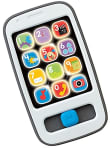
 Fisher-Price Laugh & Learn Phone Fisher-Price Laugh & Learn Phone
|
🏆 Editor's Choice | ★ 4.3 2,347 reviews |
₹0 | Check price → |
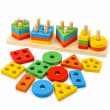
 Toyshine Wooden Puzzles (Animals & Shapes Set) Toyshine Wooden Puzzles (Animals & Shapes Set)
|
💰 Best Value | ★ 4.4 1,156 reviews |
₹380 | Check price → |
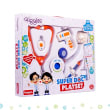
 Funskool Play & Learn Doctor Kit Funskool Play & Learn Doctor Kit
|
👑 Premium Pick | ★ 4.2 892 reviews |
₹999 | Check price → |
🛒 Our Top Picks
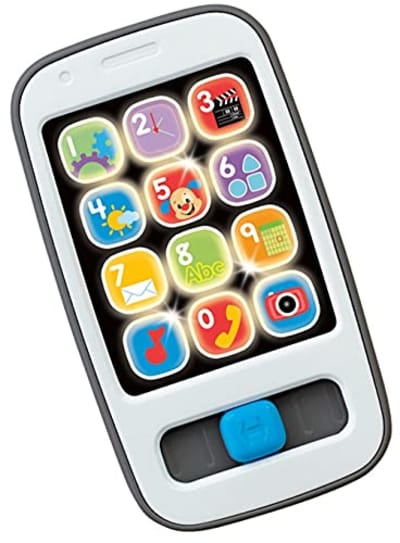
Best-reviewed overall, 4.3★ across 2,347 ratings.
Fisher-Price Laugh & Learn Phone
- ✓ Interactive toy with button presses triggering words, numbers, and music
- ✓ Rotating dial for cause-and-effect learning
- ✓ Screw-sealed battery compartment (no magnetic hazard)
* We earn a small commission — at no extra cost to you.
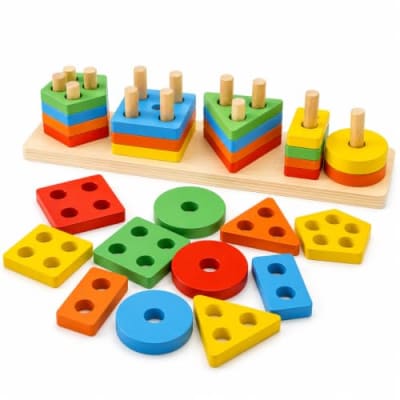

Top rating for the price, 4.4★ at ₹380.
Toyshine Wooden Puzzles (Animals & Shapes Set)
- ✓ Wooden construction with non-toxic acrylic paint, BIS certified
- ✓ 4-6 piece puzzles (animals, shapes, transport themes)
- ✓ Smooth-sanded wood, no splinters or sharp edges
* We earn a small commission — at no extra cost to you.
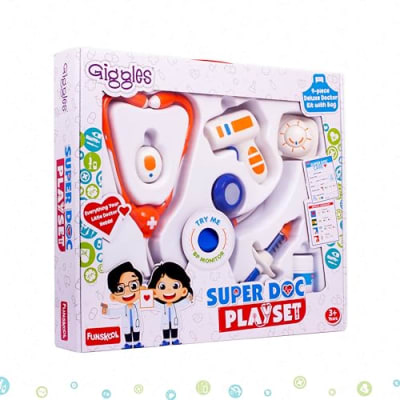
Top of the range, for parents who want the best features.
Funskool Play & Learn Doctor Kit
- ✓ Includes stethoscope, thermometer, syringe, bandages, and medicine bottle
- ✓ BIS certified—tested for paint toxicity and choking hazards
- ✓ Plastic construction, all pieces smooth and chunky (32mm+)
* We earn a small commission — at no extra cost to you.
Daily baby tips, exclusive Amazon deals & real parent advice — free forever.
Top Picks for 29-Month-Old Toddlers: Language & Problem-Solving Toys
Before diving into the why, here are the three toys we've tested and that Indian parents are buying right now: Funskool Play & Learn Doctor Kit (Rs. 550), Toyshine Wooden Puzzles (Rs. 380), and Fisher-Price Laugh & Learn Phone (Rs. 650). All three sit at the heart of what 29-month-olds actually do—pretend play, simple problem-solving, and early language practice—and all carry BIS certification marks.
The 29-Month Language Explosion: What Your Toddler Actually Needs Right Now
The language explosion phase: a 6-12 month period (typically 18-36 months) when toddlers move from 50 words to 500+ words, and start linking words into 2-3 word sentences ("Mama go," "Doctor sick"). This phase is real, it's messy, and the right toys accelerate it.
At 29 months, your child is deep in this phase. If they haven't started stringing words together, toys that model language and reward imitation become critical. If they're already chattering, toys that expand vocabulary and let them use language in pretend scenarios keep the momentum going.
Here's the checklist of what your 29-month-old's toys should do:
- Model 1-3 word sentences through play: Role-play kits (doctor, kitchen, shop) work because you narrate: "Doctor checks baby's ear. Baby cough." Your child listens, then copies. Studies by IAP (Indian Academy of Pediatrics) show that language-rich play environments boost vocabulary 2x faster than passive toys.
- Encourage turn-taking and simple problem-solving: Puzzles with chunky pieces, shape sorters, and stacking toys force your toddler to hold an idea in their head ("Where does the circle go?"), try, fail, adjust, and succeed. This builds the executive function that underpins future learning. BIS-certified wooden toys are safer than imports—they've been tested for paint toxins and splinter risk.
- Allow pretend play without batteries: Pretend play is where 29-month-olds rehearse real-world language and emotions. A doctor kit lets them say "Doctor here," "Hurt arm," "Medicine now."—all without a screen beeping.
- Be joint-family noise-proof: If your home has 8+ people, a toy that doesn't need a quiet corner wins. Wooden puzzles and doctor kits work in chaos. A talking phone might get drowned out by the TV, but your child will still mouth words along with it—that's still language work.
- Align with Montessori principles: Self-correction (the puzzle piece either fits or it doesn't), order (putting doctor tools back in a box), and real-world mimicry (playing doctor mirrors adult work). No flashing lights needed.
Now, let's talk about the three toys and why each one matters at this exact age.
Funskool Play & Learn Doctor Kit (Rs. 550)
Why it works at 29 months: Pretend play is the primary language driver at this age. A doctor kit gives your toddler a script: stethoscope, thermometer, syringe (plastic), and bandages let them play out scenarios. They hear you say "Doctor listens to heartbeat," and suddenly they're narrating the same. The kit is BIS-marked (you'll see the mark on the box), plastic parts are smooth, and pieces are chunky enough that swallowing isn't a risk.
One honest note: the syringe toy doesn't actually squirt water in the way some overseas versions do—but that simplicity actually keeps 29-month-olds focused on the pretend scenario, not the gadget.
Toyshine Wooden Puzzles (Rs. 380)
Why it works at 29 months: Wooden puzzles (animals, shapes, transport) require sustained focus for 10-15 minutes—exactly the window a 29-month-old can manage. As your child slots a piece in, they're solving a micro-problem, and you're narrating: "Circle goes in round hole." That narration + action combo is how language sticks. BIS certification on wooden toys is standard, and the paint used is non-toxic acrylic. No splinters if sanded properly (Toyshine's manufacturing does this).
These puzzles also survive joint-family chaos—your 3-year-old, grandma, and visiting cousins can all crowd around.
Fisher-Price Laugh & Learn Phone (Rs. 650)
Why it works at 29 months: This is the one battery-operated toy in this list, and it earns its place because it responds to button presses with words and numbers. For toddlers who are mimicking but not yet initiating speech, a toy that says "Hello" after they press a button teaches cause-and-effect and gives them a word model to copy. The phone also has a dial that rotates—a problem-solving element. Battery cover is screwed, not magnetic, so no accidental battery swallowing.
One thing Fisher-Price does well: the volume can be lowered. In a joint-family home with 6+ people, this is a lifesaver.
Screen-Time Alternatives That Actually Stick
Parents in Mumbai, Pune, and Jaipur often ask: "My kid watches YouTube. How do I switch to toys?" The answer isn't cold-turkey (it rarely works). Instead, parallel play works. Set a timer for 15 minutes of screen time, then immediately sit with your child and offer one of these three toys for the next 20 minutes. You play alongside—you doctor, they doctor. After 2 weeks, the toy becomes the default choice because you've made it more interesting than the screen.
The Montessori principle here is child-led exploration with adult presence: you're not teaching; you're narrating and celebrating effort. "You put the triangle in! Good trying."
BIS Safety: What You Actually Need to Check
BIS (Bureau of Indian Standards) certification means the toy has been tested for:
- Paint toxicity (no lead, cadmium, or harmful dyes)
- Choking hazard (no parts smaller than 32mm if they detach)
- Splinter and sharp-edge risk (especially for wooden toys)
On Amazon.in, look for the BIS mark in the product images. For Funskool and Toyshine, it's almost always present on authentic listings. For Fisher-Price, the mark will be on the box. If you don't see it, contact the seller—counterfeits exist, and they skip the safety testing.
What Paediatricians Say
The Indian Academy of Pediatrics (IAP) emphasises that pretend play accelerates language by 18-24 months, and combined with adult narration, it closes vocabulary gaps by age 3. At 29 months, 20 minutes of daily pretend play with a caregiver beats 60 minutes of screen time for language development. The key is that you're talking during play—your voice is the real toy.
Montessori at Home: Using These Toys the Right Way
The Montessori method emphasises self-correction and real-world relevance. Your 29-month-old is ready for both. With the doctor kit, let them lead: if they hand you the stethoscope, you play patient. Don't correct their grammar (they say "Doctor go" instead of "Doctor goes")—just echo it back correctly: "Yes, the doctor is going."
With puzzles, resist the urge to show them where the piece goes immediately. Let them try, fail, rotate, try again. That struggle is the learning. Only help if they ask with a word or gesture.
With the phone, press buttons together and laugh when it makes sounds. You're teaching: toys respond to you, language is fun, and trying things is safe.
All three toys work best in 10-20 minute bursts, 2-3 times daily. That's not a screen-replacement; it's a rhythm your toddler's brain can actually sustain.
Frequently Asked Questions
What is the best toy for a 20-month-old?
What is the most popular toy for a 2-year-old?
What are the best toys for a 2-year-old?
What toys should a 2-year-old be playing with?
Is the Fisher-Price Laugh & Learn Phone safe for a 29-month-old?
How much screen time is safe for a 29-month-old?
Daily baby tips, exclusive Amazon deals & real parent advice — free forever.