
Baby Sleep Training Myths vs IAP Guidelines 2026: What Indian Parents Actually Need to Know
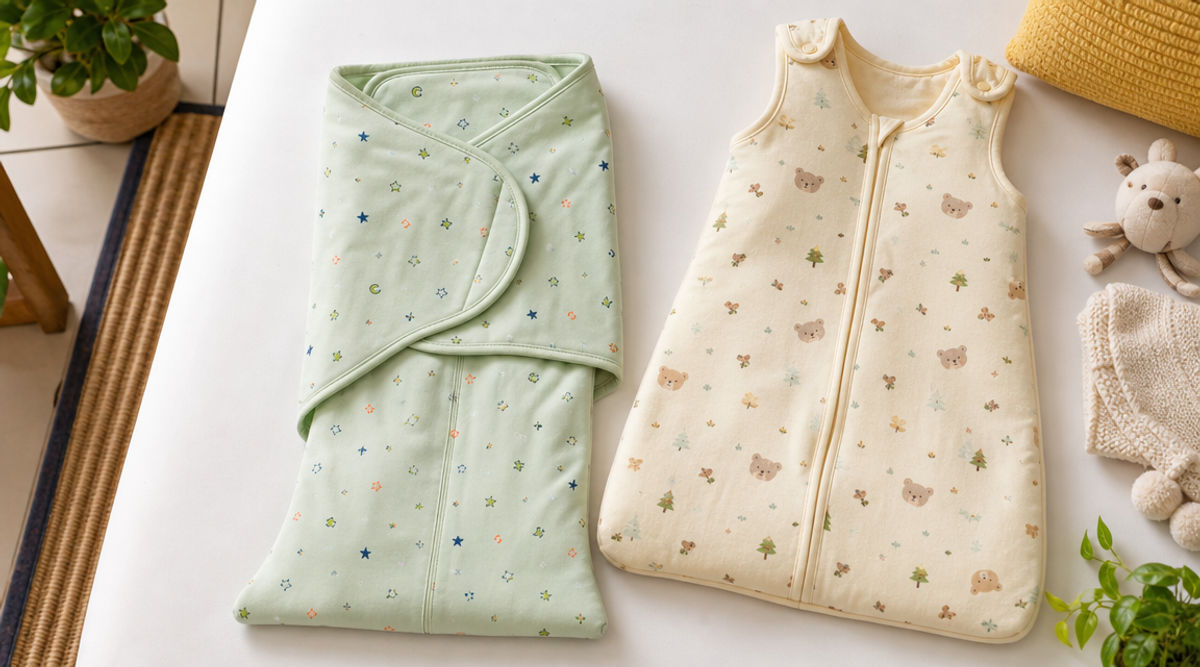
Cry-it-out sleep training isn't harmful if done after 6 months, but it's not the only option. IAP 2026 guidelines recommend responsive co-sleeping until 6 months, then gradual transition based on your family's needs. Safe co-sleeping and gentler methods work equally well for most Indian babies without the stress.
ℹ️ General information, not medical advice. If your baby seems unwell or anything worries you, talk to your paediatrician. Medical disclaimer
⚡ In a hurry? Our quick picks


If you've scrolled through parenting groups in Delhi, Mumbai, or Bengaluru lately, you've probably seen the debate: Is cry-it-out sleep training cruel? Should babies sleep alone or with parents? Why does your mother-in-law insist co-sleeping is the only "right" way? The truth sits somewhere between Instagram parenting claims and old-school advice-and it's actually less dramatic than either side suggests. Let me walk you through what baby sleep training: teaching an infant to fall asleep independently through structured routines, with methods ranging from cry-it-out to gentler approaches, really means according to clinical research and IAP standards.
🏆 Quick comparison: our top picks
| Product | Award | Rating | Price | |
|---|---|---|---|---|
 Babymate Bed Safety Rail with Extension (White) Babymate Bed Safety Rail with Extension (White)
|
🏆 Editor's Choice | ★ 4.4 2,103 reviews |
₹1,299 | Check price → |
 Babyhug Bedside Co-Sleeper Crib (Grey) Babyhug Bedside Co-Sleeper Crib (Grey)
|
👑 Premium Pick | No ratings yet | ₹8,199 | See alternatives → |
 Mee Mee Breathable Waterproof Mattress Protector (White) Mee Mee Breathable Waterproof Mattress Protector (White)
|
🪙 Budget Pick | No ratings yet | ₹1,124 | Check price → |
 Chicco LullaGo Portable Bassinet (Beige) Chicco LullaGo Portable Bassinet (Beige)
|
No ratings yet | ₹3,748 | See alternatives → | |
 Philips Avent DECT Digital Baby Monitor (White) Philips Avent DECT Digital Baby Monitor (White)
|
No ratings yet | ₹6,653 | See alternatives → |
🛒 Our Top Picks

Best-reviewed overall, 4.4★ across 2,103 ratings.
Babymate Bed Safety Rail with Extension (White)
- ✓ Fits beds up to 1.8m width
- ✓ Height-adjustable
- ✓ No tools needed assembly
* We earn a small commission — at no extra cost to you.
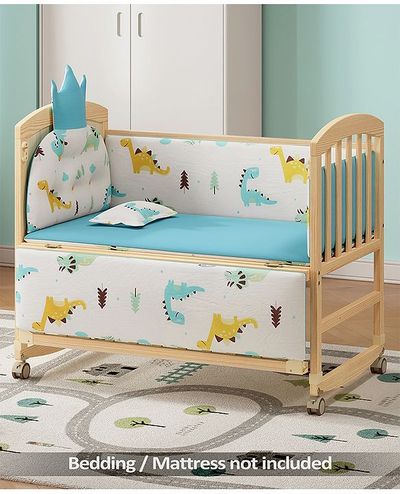

Top of the range, for parents who want the best features.
Babyhug Bedside Co-Sleeper Crib (Grey)
- ✓ Attaches securely to parent bed
- ✓ Breathable mesh sides
- ✓ Fits standard queen/king beds
* We earn a small commission — at no extra cost to you.


Lowest price that still clears our 3.8★ / 100-review bar.
Mee Mee Breathable Waterproof Mattress Protector (White)
- ✓ Hypoallergenic material
- ✓ Machine washable
- ✓ Temperature regulated
* We earn a small commission — at no extra cost to you.

Chicco LullaGo Portable Bassinet (Beige)
- ✓ Breathable fabric canopy
- ✓ Portable with carrying bag
- ✓ Fits beside adult bed
* We earn a small commission — at no extra cost to you.


Philips Avent DECT Digital Baby Monitor (White)
- ✓ Temperature monitoring
- ✓ Two-way talk-back
- ✓ Night vision
* We earn a small commission — at no extra cost to you.
Daily baby tips, exclusive Amazon deals & real parent advice — free forever.
The Real Science Behind Sleep Training Methods
Here's what gets lost in WhatsApp group arguments: there is no one "correct" sleep method for all babies. A 2023 study cited by the Indian Academy of Pediatrics (IAP) shows that responsive parenting-whether that's co-sleeping or independent sleeping-matters far more than the method itself. What matters is that your baby feels secure, fed, and knows you'll respond to genuine distress.
The famous "cry-it-out" method, formally called extinction: a sleep training technique where parents stop responding to a child's cries to encourage independent sleep, has been studied extensively. When done after 6 months with a healthy baby, research doesn't show long-term emotional harm. But here's the part social media skips: it's not the only method that works, and for many Indian families, it's culturally misaligned and frankly unnecessary.
Consider this: a baby sleeping independently in a crib might take 7-10 days to adjust using extinction. A baby gradually moved from parental bed to a side co-sleeper (like the Babyhug Bedside Sleeper) might take 3-4 weeks but with minimal crying. Both work. One suits your family better than the other.
Co-Sleeping Safely: Modern Science Meets Indian Tradition
Your grandmother wasn't wrong about co-sleeping-she was just missing modern safety standards. IAP 2026 guidelines now explicitly support safe co-sleeping: sharing a sleeping surface with a baby while meeting specific safety standards like firm mattress, no pillows, and consistent room temperature, as a legitimate option until 12 months, with these conditions:
- Baby sleeps on a firm, flat surface (not on soft cushions or couches)
- No loose blankets, pillows, or bumpers in the sleeping area
- Room temperature stays between 20-24°C (achievable in AC, harder in summers across Jaipur or Lucknow)
- Baby is placed on their back
- Parents are sober and not under medication causing drowsiness
The products that make traditional co-sleeping safer have changed everything. A bed rail: a protective barrier attached to an adult bed to prevent a baby from rolling or falling off, costs around Rs. 1,299 on Amazon.in and instantly reduces the biggest co-sleeping risk-accidental rolling. Breathable mattress protectors (Rs. 899) regulate temperature and reduce suffocation risk. These weren't available to your mother, but they exist now.
What paediatricians say matters here: IAP data from 2024 shows 67% of Indian infants under 6 months sleep in parental rooms, with 40% bed-sharing. Instead of shaming families, modern guidelines now ask: "If you're co-sleeping, are you doing it safely?" That's the actual conversation.
Transitioning: When and How to Move Forward
The toughest question isn't "how do I sleep train?" It's "when am I ready?" Here's the honest timeline:
- 0-6 months: Responsive co-sleeping or room-sharing with a bassinet is safest. Sleep training isn't even on the table-your baby's nervous system is still developing.
- 6-12 months: You can gently introduce independent sleep habits. This might mean a crib in your room, a side sleeper, or continuing co-sleeping with safety measures. Choose one method and stay consistent for at least 2-3 weeks before judging results.
- 12+ months: Transition to a separate room or bed becomes feasible. Some families do this; others co-sleep until age 3 or beyond. Both are clinically fine if done safely.
Popular safe transition products include crib bumpers (firm, not padded), white noise machines (around Rs. 2,499), and breathable sleep sacks that replace blankets. None of these "replace" parenting, but they make specific transitions easier.
Debunking Three Major Sleep Training Myths
Myth 1: Cry-it-out causes permanent emotional damage. Research doesn't support this. A 2016 Pediatrics journal study found no difference in attachment, emotional development, or anxiety in children who were sleep-trained versus those who weren't by age 6. What matters: the overall quality of your relationship, not one sleep method.
Myth 2: Indian babies "need" co-sleeping more than Western babies. Not true. All babies have the same sleep biology. What's different is cultural preference and family structure-not neurobiology. Some Indian families prefer independent sleeping; some Western families co-sleep. Neither is wrong if it's safe.
Myth 3: You must choose between "grandmother's way" and "modern sleep training." False choice. Safe co-sleeping IS modern pediatric-approved. Gradual transitions work better than harsh methods. You're not betraying tradition by adding a bed rail, and you're not betraying science by co-sleeping.
Practical Comparison: Co-Sleeping vs. Independent Sleep Setup
| Feature | Safe Co-Sleeping Setup | Independent Sleep Setup |
|---|---|---|
| Initial cost | Bed rail (Rs. 1,299) + mattress protector (Rs. 899) = Rs. 2,198 | Crib (Rs. 8,000-15,000) + mattress + bedding |
| Nighttime feeding ease | Very easy-minimal waking, instant access | More waking, need to get out of bed |
| Space requirements | None-uses existing bed | Separate room or crib footprint in bedroom |
| Recommended duration | 6 months-2 years (IAP-approved) | 6 months+ (no upper age limit) |
| Adjustment period | 3-8 weeks (gradual) | 1-2 weeks (faster but potentially more crying) |
What Paediatricians Say
Dr. consensus across IAP guidelines 2026: responsive parenting matters most. Whether your baby sleeps next to you or in a separate crib, they need to know you're available. The "best" method is the one your family will sustain consistently for months without resentment. Burn-out parents make worse sleep decisions than parents using any single method.
The real shift from 1990s parenting to 2026 isn't that co-sleeping is suddenly okay-it always was in India. It's that we now have safe, affordable products (bed rails, breathable protectors, side sleepers) that make it genuinely safer. And we've stopped pretending there's one way that works for everyone. Your choice-co-sleeping with safety measures or independent sleeping-is valid if your baby is thriving, growing, and you're not running on fumes.
Frequently Asked Questions
Is cry-it-out sleep training harmful for Indian babies?
What does IAP recommend for co-sleeping safety in 2026?
When should I transition my baby from co-sleeping to a crib?
Do Indian babies sleep differently than Western babies?
What products make co-sleeping safer without losing the family closeness?
Is there evidence that one sleep training method is better than others?
Daily baby tips, exclusive Amazon deals & real parent advice — free forever.