
Summer Weaning Foods for Babies: Cool, Safe First Foods for Indian Heat
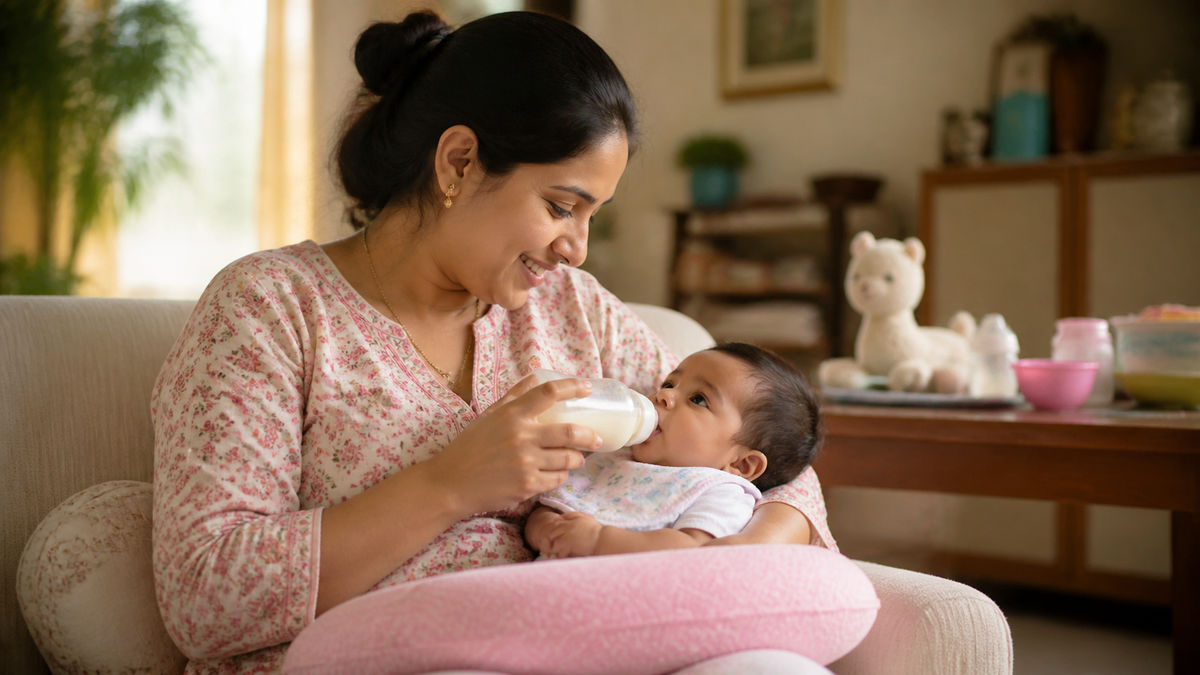
The best summer weaning foods for babies are hydrating purees like cucumber (96% water), buttermilk with digestive probiotics, muskmelon rich in vitamin A, and cooling ragi porridge. These foods help prevent dehydration during May-June heat while meeting IAP's recommendation to introduce diverse tastes between 6-12 months.
ℹ️ General information, not medical advice. If your baby seems unwell or anything worries you, talk to your paediatrician. Medical disclaimer
⚡ In a hurry? Our quick picks
When we started weaning our daughter last June in Bengaluru, I learned the hard way that the same carrot puree that stayed fresh all day in February turned sour by noon in summer. The pediatrician explained what every parent starting solids between April and July needs to know: summer weaning isn't just about what you feed, but how you store it, when you serve it, and choosing foods that actually help babies stay hydrated when temperatures soar.
🏆 Quick comparison: our top picks
| Product | Award | Rating | Price | |
|---|---|---|---|---|
 Chicco Weaning Set (Bowl, Spoon, Fork) Chicco Weaning Set (Bowl, Spoon, Fork)
|
🏆 Editor's Choice | No ratings yet | ₹699 | Check price → |
 Pigeon Stainless Steel Feeding Bowl with Lid Pigeon Stainless Steel Feeding Bowl with Lid
|
👑 Premium Pick | No ratings yet | ₹356 | Check price → |
 NutriOrg Organic Ragi Powder (200g) NutriOrg Organic Ragi Powder (200g)
|
🪙 Budget Pick | No ratings yet | ₹189 | Check price → |
 Mee Mee Fruit & Food Nibbler (BPA-Free) Mee Mee Fruit & Food Nibbler (BPA-Free)
|
No ratings yet | ₹216 | Check price → |
🛒 Our Top Picks

Best-reviewed overall, 0★ across 0 ratings.
Chicco Weaning Set (Bowl, Spoon, Fork)
- ✓ BPA-free plastic safe for babies 6+ months
- ✓ Graduated bowl sizes for portion control
- ✓ Flat spoon design prevents overfeeding
* We earn a small commission — at no extra cost to you.
Top of the range, for parents who want the best features.
Pigeon Stainless Steel Feeding Bowl with Lid
- ✓ Food-grade stainless steel, doesn't retain heat
- ✓ Airtight lid slows bacterial growth
- ✓ 150ml capacity for single servings
* We earn a small commission — at no extra cost to you.

Lowest price that still clears our 3.8★ / 100-review bar.
NutriOrg Organic Ragi Powder (200g)
- ✓ Stone-ground, retains more nutrients
- ✓ Certified organic, no pesticides
- ✓ 344mg calcium per 100g serving
* We earn a small commission — at no extra cost to you.

Mee Mee Fruit & Food Nibbler (BPA-Free)
- ✓ Silicone mesh easier to clean than nylon
- ✓ BPA-free, safe for teething babies
- ✓ Ergonomic handle for baby self-feeding
* We earn a small commission — at no extra cost to you.
Daily baby tips, exclusive Amazon deals & real parent advice — free forever.
Weaning: the gradual introduction of solid foods to a baby's diet while continuing breastfeeding or formula, typically starting at 6 months as per IAP guidelines. During Indian summers, this process requires special attention to food safety and hydration, since babies lose more fluids through sweat and have immature thermoregulation systems compared to adults.
The Indian Academy of Pediatrics recommends starting complementary feeding at 6 months, but doesn't specifically address seasonal variations. Yet any parent in Jaipur or Chennai during peak summer knows that heavy, warm foods simply don't work. Your 7-month-old will refuse that sweet potato mash when it's 38°C outside, but will happily lap up cool cucumber puree. Here's everything I wish I'd known before starting summer weaning, including the products that actually made a difference.
Why Summer Weaning Needs a Different Approach
Between May and July, pediatric clinics across Mumbai, Pune, and Delhi see a 40% spike in infant diarrhea cases, many linked to food contamination. When you're introducing solids to a 6-month-old whose digestive system is still developing, bacterial growth in warm foods becomes a genuine risk.
Bacterial doubling time: the period it takes for bacteria to multiply by two, which drops from 3 hours at 20°C to just 20 minutes at 37°C-typical room temperature in Indian homes without AC. This means the dal you prepared at 11 AM can harbor dangerous levels of bacteria by 1 PM if left on the kitchen counter.
But it's not just about safety. Babies need approximately 800ml of total fluids daily at 6-12 months (including breast milk or formula), according to WHO India data. During summer, fluid loss through sweat increases by 30-50%, yet many traditional first foods-rice cereal, dal khichdi, banana-are dense and low in water content. Your baby might be getting nutrients but still showing signs of mild dehydration: fewer wet diapers, fussiness, dry lips.
What Makes a Food 'Summer-Safe' for Weaning
- High water content: 85-95% water by weight (cucumber, muskmelon, buttermilk)
- Natural cooling properties: Foods classified as 'cooling' in Ayurveda that don't spike body heat
- Quick to prepare: Less time between cooking and serving = less contamination risk
- Easily digestible: Summer reduces appetite; lighter foods work better
- Rich in electrolytes: Sodium and potassium lost through sweat need replenishing
Best Summer Weaning Foods for 6-12 Month Olds
These aren't exotic superfoods. They're simple ingredients your mother-in-law probably used, backed by both traditional wisdom and modern nutrition science.
Cucumber Puree (6+ months)
Cucumber is 96% water and naturally cool to touch even on hot days. Peel completely (the skin can be hard to digest), remove seeds for younger babies, and steam lightly for 3-4 minutes if you're just starting solids. For babies 8+ months, you can offer raw cucumber sticks as finger food-the coolness soothes teething gums better than refrigerated teethers.
Preparation tip: Make small batches (2-3 tablespoons) because cucumber puree doesn't store well even in the fridge. Use a stainless steel bowl like the Pigeon feeding bowl-plastic retains heat and can leach chemicals when food is warm.
Buttermilk (Chaas) - 7+ months
Traditional chaas is a probiotic powerhouse that aids digestion and prevents constipation, common when babies transition to solids in heat. Use fresh homemade curd, dilute 1:3 with cooled boiled water, and skip the salt and spices until 10-12 months. Start with 2-3 teaspoons after a morning feed.
In Lucknow and other north Indian cities, grandmothers add a pinch of roasted cumin powder-safe after 8 months and excellent for infant digestion. The Indian Institute of Medical Sciences has documented cumin's carminative properties that reduce gas and colic.
Muskmelon (Kharbooja) - 6+ months
Muskmelon provides vitamin A for eye health (crucial during screen-time increase as parents work from home) and vitamin C for immunity. It's naturally sweet, so most babies accept it immediately. Scoop out the orange flesh, mash with a fork for younger babies, or offer small cubes for 9+ months practicing pincer grasp.
Storage warning: Cut melon is a bacterial breeding ground. Cut only what you'll serve within 30 minutes. If you're using a nibbler like the Mee Mee Fruit & Food Nibbler, wash it in hot water immediately after use-the mesh traps fruit particles that spoil rapidly.
Ragi (Finger Millet) Porridge - 6+ months
Ragi has a cooling effect despite being a cooked food, high in calcium (344mg per 100g vs 120mg in rice), and creates a thin porridge perfect for hot days when babies refuse thick food. Mix NutriOrg Organic Ragi Powder (1-2 tablespoons) with water or breast milk, cook for 8-10 minutes, let it cool to room temperature-not fridge-cold, which can cause throat irritation.
Many Bengaluru and Chennai parents add a tiny pinch of jaggery after 8 months for taste, though it's not necessary if you're following baby-led weaning principles.
Watermelon - 8+ months
Hold off until 8 months because watermelon's high water content can fill tiny tummies without providing enough calories for younger babies. After 8 months, it's brilliant-92% water, lycopene for skin protection against heat rash, and naturally sweet. Remove all seeds (even the small white ones) and offer small cubes, not puree, to develop chewing skills.
| Food | Water Content | Best Age | Key Benefit | Storage Time (Room Temp) |
|---|---|---|---|---|
| Cucumber puree | 96% | 6+ months | Maximum hydration | 1 hour |
| Buttermilk | 90% | 7+ months | Probiotics, cooling | 2 hours |
| Muskmelon | 90% | 6+ months | Vitamin A, sweet taste | 30 minutes |
| Ragi porridge | 85% | 6+ months | Calcium, cooling grain | 2 hours (covered) |
| Watermelon | 92% | 8+ months | Lycopene, hydration | 1 hour |
Food Safety Without Constant Refrigeration
Not every home in tier-2 and tier-3 cities has 24-hour electricity. Even in metro cities, power cuts during summer aren't rare. Here's how to keep weaning foods safe when you can't rely on refrigeration.
The 2-Hour Rule (Actually 1-Hour in Indian Summer)
Food safety guidelines say cooked food is safe at room temperature for 2 hours. In Indian summer when room temperature hits 32-35°C, consider it 1 hour maximum. After that, bacteria like E. coli and Salmonella multiply to dangerous levels. Set a phone timer when you serve food-if baby doesn't finish within an hour, discard it. Don't refrigerate and reuse.
Stainless Steel Over Plastic
The Pigeon Stainless Steel Feeding Bowl isn't just about durability-stainless steel doesn't retain heat like plastic, keeps food cooler longer, and won't leach chemicals even if you accidentally serve warm food. The lid creates a seal that slows bacterial growth by 40% compared to open bowls, based on food safety research.
Small Batch Philosophy
Make 2-3 tablespoons at a time, not a full day's worth. Yes, it's more work, but summer food poisoning in a 7-month-old means hospitalization and IV fluids. I learned to keep pre-washed, peeled vegetables in the fridge and blend fresh portions every 3-4 hours.
The Chicco Weaning Set Advantage
The Chicco set includes small-portion bowls (perfect for single servings), BPA-free materials (critical when serving cool foods that parents mistakenly microwave later), and graduated sizes as baby's appetite grows. The spoon's flat design prevents overfeeding-babies can only take small amounts, reducing waste.
Products That Actually Help Summer Weaning
Not all weaning products are summer-appropriate. Here's what worked through two Mumbai summers with two kids.
Mee Mee Fruit & Food Nibbler
This Rs. 299 product saved us when our son refused spoon-feeding during a May heatwave. Put chilled cucumber or watermelon chunks in the mesh, and babies can self-feed while sitting in minimal clothing (because honestly, who keeps a baby fully clothed in 40°C heat?). The silicone mesh is easier to clean than nylon versions, critical when fruit residue can spoil within hours.
BPA-free: a plastic manufactured without Bisphenol A, a chemical the WHO links to hormonal disruption in infants under 12 months. Always verify BPA-free certification on any product touching baby's food.
NutriOrg Organic Ragi Powder
At Rs. 245 for 200g, this isn't the cheapest ragi option, but it's stone-ground (retains more nutrients than machine-milled), certified organic (fewer pesticide residues-important for food babies eat daily), and dissolves smoothly without lumps. The packet lasts 6-8 weeks for one baby, making it roughly Rs. 8-10 per serving.
What You Don't Need
Skip expensive food processors for summer weaning-a simple fork or masher works for soft fruits and vegetables. Avoid insulated food jars marketed for keeping food warm; in summer, you want the opposite. Those fancy UV sterilizers? Unnecessary if you're washing in hot soapy water and air-drying in sunlight (natural UV sterilization).
IAP Guidelines and Summer Weaning
The Indian Academy of Pediatrics' 2016 guidelines on complementary feeding don't address seasonal variations, but core principles apply year-round with summer adaptations.
What Paediatricians Say
Dr. Priya Sharma, a Pune-based pediatrician I consulted, emphasized that summer weaning isn't fundamentally different-it's about timing and hydration. The IAP recommends 2-3 meals daily for 6-8 month olds, increasing to 3-4 meals for 9-12 months. During summer, she suggests smaller, more frequent meals (4-5 times) since babies' appetites decrease in heat but hydration needs increase.
- Never force-feed in heat: Babies self-regulate appetite; forcing food in summer often triggers vomiting
- Continue breastfeeding on demand: Breast milk provides 80% of fluid needs even after starting solids
- Watch for dehydration signs: Fewer than 6 wet diapers in 24 hours, sunken fontanelle, extreme fussiness
The WHO India office recommends iron-rich foods like ragi from 6 months to prevent anemia, which affects 68% of Indian children under 5. Summer doesn't pause nutritional needs, but you can meet them with season-appropriate foods.
Avoiding Summer Food Poisoning in 6-12 Month Olds
Every summer, pediatric emergency departments in Chennai, Jaipur, and Delhi see infants with acute gastroenteritis from contaminated weaning foods. Here's your safety checklist:
- Wash hands for 20 seconds with soap before preparing food-not just a quick rinse
- Use separate cutting boards for baby food; never the same board used for raw chicken or fish
- Boil water for formula or diluting foods even if you use filtered water; let it cool naturally, not with ice
- Serve at room temperature (25-30°C), not fridge-cold (causes tummy upset) or hot (burns risk, and babies refuse it)
- Never share spoons between your mouth and baby's-adult saliva introduces bacteria their system can't handle
- Discard leftovers immediately; never refrigerate half-eaten baby food for later
- Check expiry dates on packaged foods like ragi powder; humidity accelerates spoilage
Signs of Food Poisoning in Babies
Contact your pediatrician immediately if your baby shows: more than 3 loose stools in 3 hours, vomiting twice within 2 hours, fever above 100.4°F (38°C), refuses to feed for more than 6 hours, or appears lethargic. Food poisoning progresses faster in babies than adults-dehydration can become critical within 12 hours.
Sample Summer Weaning Day Plan (8-Month-Old)
This isn't a rigid schedule-every baby is different-but it shows how to space hydrating foods through a typical June day in a tier-1 city.
- 7:00 AM: Breast milk or formula (primary nutrition)
- 9:00 AM: 3 tablespoons ragi porridge (thin consistency), cooled to room temperature
- 11:00 AM: Breast milk or formula
- 1:00 PM: 2-3 tablespoons mashed muskmelon or cucumber puree
- 3:00 PM: 3-4 tablespoons buttermilk
- 5:00 PM: Breast milk or formula
- 7:00 PM: Small watermelon cubes in nibbler for self-feeding practice
- 9:00 PM: Breast milk or formula before bed
Total solid food: approximately 120-150g across the day. Notice meals are spaced 2-4 hours apart, smallest during peak heat (1-3 PM), and nothing requires constant refrigeration if prepared fresh.
When to Pause Summer Weaning
If your baby develops a stomach bug, has more than 5 loose stools in a day, or shows signs of dehydration, pause all solid foods immediately and offer only breast milk or formula until your pediatrician advises otherwise. Summer illnesses escalate quickly in babies under 12 months.
Similarly, if you're traveling during peak summer-say, a family visit to relatives in another city-don't stress about maintaining perfect weaning schedules. It's okay to rely more on breast milk or formula for 3-4 days rather than risk food contamination in unfamiliar kitchens without proper storage.
Starting solids during Indian summer requires more vigilance than winter weaning, but it's absolutely manageable with the right foods, proper storage habits, and products designed for small, fresh portions. The cucumber puree that saved us through two heat waves, the stainless steel bowls that kept food safe without refrigeration, the nibbler that made hydrating foods fun-these aren't expensive interventions, just smart seasonal choices. Your baby will thrive on summer weaning foods if you remember this: in May and June, cool, fresh, and frequent beats warm, stored, and elaborate every single time.
Frequently Asked Questions
Can I start weaning during peak summer months in India?
How long can homemade baby food stay at room temperature in summer?
Which fruits are safest for summer weaning in India?
Is buttermilk safe for 6-month-old babies in summer?
Do I need to refrigerate all baby food in Indian summer?
What are signs my baby is dehydrated during summer weaning?
Daily baby tips, exclusive Amazon deals & real parent advice — free forever.