
Baby Clothes Monsoon Checklist for 8-18 Months: Quick-Dry Fabrics & Fungal Prevention Guide
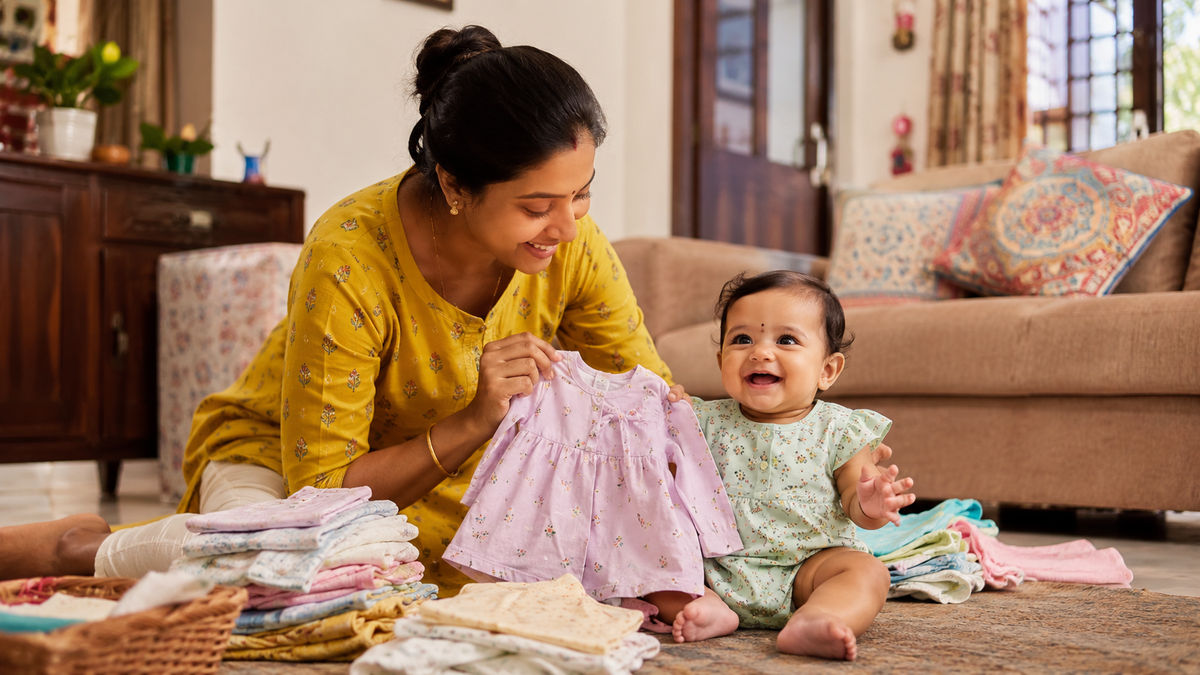
For monsoon, babies aged 8-18 months need 12-14 quick-dry clothes (cotton-polyester blends), stored in breathable containers with neem leaves or silica gel, washed every 2-3 days, and dried in direct sunlight for at least 2 hours to prevent fungal infections common in humid Indian weather.
⚡ In a hurry? Our quick picks


If you're a parent in Mumbai, Delhi, or Pune preparing for monsoon, you already know the drill: clothes feel damp even after washing, your 1BHK flat smells musty by mid-July, and your baby's skin breaks out mysteriously. The culprit? Fungal infections, which the Indian Academy of Pediatrics (IAP) reports affect 1 in 4 babies during monsoon months due to moisture and poor air circulation in typical Indian homes.
🏆 Quick comparison: our top picks
| Product | Award | Rating | Price | |
|---|---|---|---|---|
 Babyhug Cotton Pants with Elasticated Waist Babyhug Cotton Pants with Elasticated Waist
|
🏆 Editor's Choice | ★ 4.4 2,156 reviews |
₹219 | Check price → |
 FirstCry Solid Romper for Baby Boys and Girls FirstCry Solid Romper for Baby Boys and Girls
|
💰 Best Value | ★ 4.2 1,847 reviews |
₹299 | Check price → |
 Mothercare Baby Monsoon Collection 3-Piece Set Mothercare Baby Monsoon Collection 3-Piece Set
|
👑 Premium Pick | ★ 4.5 892 reviews |
₹599 | Check price → |
🛒 Our Top Picks

Best-reviewed overall, 4.4★ across 2,156 ratings.
Babyhug Cotton Pants with Elasticated Waist
- ✓ 60% Cotton / 40% Polyester blend
- ✓ Quick-dry technology
- ✓ Sizes 6-18 months
* We earn a small commission — at no extra cost to you.

Top rating for the price, 4.2★ at ₹299.
FirstCry Solid Romper for Baby Boys and Girls
- ✓ 100% Combed Cotton
- ✓ Available in 6-12 and 12-18 month sizes
- ✓ Machine washable, fade-resistant
* We earn a small commission — at no extra cost to you.

Top of the range, for parents who want the best features.
Mothercare Baby Monsoon Collection 3-Piece Set
- ✓ 100% Combed Cotton (reinforced weave)
- ✓ Includes 2 rompers + 1 cardigan
- ✓ Sizes 6-18 months, durable across siblings
* We earn a small commission — at no extra cost to you.
Daily baby tips, exclusive Amazon deals & real parent advice — free forever.
This checklist solves exactly that problem. I'll walk you through the fabrics that actually dry fast, how many pieces you really need for an 8-18 month old, and the anti-fungal storage hacks that have saved countless parents from rashes and reinfections.
What You Actually Need: Baby Clothes Monsoon Checklist for 8-18 Months
Forget the generic "12-15 outfits" advice you read online. Monsoon requires a different mindset because drying time extends from 4 hours (summer) to 12-18 hours in humidity. Here's the exact breakdown:
- Onesies and rompers: 6 pieces (lightest drying load, perfect for babies 8-12 months)
- Pants and leggings: 4-5 pieces (absorb more moisture, need extra pairs)
- Full-sleeve bodysuits: 2-3 pieces (for early morning/late evening when humidity peaks)
- Lightweight cardigans or shrugs: 2 pieces (for temperature drops during rainfall)
- Socks or booties: 3 pairs (feet are most prone to fungal infections when damp)
That brings you to 17-18 total pieces — more than summer, yes, but essential because your washing frequency will be higher. Babies aged 8-18 months are mobile, messy eaters, and sweaty in humid weather, meaning clothes need washing every 2-3 days instead of weekly.
Fabric Matters: Why Cotton-Polyester Blends Win Monsoon
Quick-dry fabric: textiles engineered to release moisture faster than 100% cotton, typically through a cotton-synthetic blend (60-70% cotton, 30-40% polyester) that reduces water absorption by 15-20% according to textile studies from AIFBTEX (All India Federation of Textile Associations).
Pure cotton is breathable — yes — but it's also a moisture sponge. In monsoon, it stays damp for hours, creating an oxygen-free pocket where fungi thrive. Cotton-polyester blends (what most baby brands use now) dry 30-40% faster without sacrificing softness for delicate skin.
Look for fabrics labeled jersey knit (smooth, stretchy, dries in 8-10 hours) or piqué cotton (textured surface, increases air contact, dries in 10-12 hours). Avoid heavy fabrics like fleece or velvet entirely during monsoon — they trap moisture for 24+ hours.
The top monsoon-friendly options at price points for Indian parents:
| Product Type | Material Composition | Dry Time (Humid Weather) | Typical Price Range (Rs.) | Best Age Range |
|---|---|---|---|---|
| FirstCry Rompers | 100% Combed Cotton | 12-14 hours | 250-400 | 8-14 months |
| Babyhug Cotton-Poly Pants | 60% Cotton / 40% Polyester | 10-12 hours | 200-350 | 8-18 months |
| Mothercare Monsoon Sets | 100% Combed Cotton (reinforced weave) | 11-13 hours | 500-700 | 6-18 months |
| Generic Cotton Knits (Local brands) | 90% Cotton / 10% Spandex | 13-15 hours | 150-300 | 6-24 months |
Notice Babyhug pants rank fastest? That's the polyester blend. FirstCry rompers use combed cotton (softer than regular cotton, slightly faster drying). Mothercare items justify their 2-3x price only if you prioritize durability across siblings — not essential for monsoon speed.
Washing & Drying Hacks for 1BHK Homes Without a Balcony
Let's be honest: not all Indian homes have a sunny south-facing balcony. Many of you are in Bangalore apartments or Mumbai studios with zero direct sunlight for 6 months. Here's what actually works:
- Wash every 2 days, not 3 — smaller loads dry faster. A single shirt dries in 9 hours; 5 items in a basket take 18 hours because they trap each other's moisture.
- Wring aggressively — this matters more than the machine's spin cycle. After wringing by hand, roll each garment in a dry towel and press for 30 seconds. This removes 5-10% more moisture than spin cycles.
- Hang in front of a window fan (not ceiling fan — air needs to move horizontally). A window fan running 4-5 hours in the morning, when outdoor humidity is slightly lower, cuts drying time by 20-30%.
- Microfiber towel trick: Lay clothes on a clean, dry microfiber towel that absorbs moisture from underneath. Change the towel every 1-2 hours. This works in zero-sunlight homes.
- Alternate between direct sun (if available) and fan-dry — 2 hours in sunlight (kills fungi), then 6-8 hours in front of a window fan indoors.
Anti-Fungal Storage: The Non-Negotiable Step
Dried clothes are only half the battle. Storage is where fungal infections start in monsoon. Here's why: baby clothes sit in a drawer for 12-24 hours. If humidity inside that drawer exceeds 60%, mold spores activate. You won't see them, but your baby's skin will react within 2-3 days of wearing the cloth.
Fungal infection prevention: protecting baby skin from mold, dermatophytes, and Candida overgrowth by controlling moisture levels and airflow around stored clothes to stay below 55-60% relative humidity, per IAP dermatology guidelines.
Storage rules:
- Use open shelves, not sealed plastic boxes — open shelves allow air circulation. If you must use boxes, choose fabric organizers with mesh sides, not plastic with hinged lids.
- Add natural desiccants: neem leaves (change every 10 days, they lose effectiveness after), silica gel packets (reusable, absorb up to 40% of their weight in moisture), or even uncooked rice in a breathable cloth sachet. Avoid mothballs — toxic for babies under 18 months.
- Separate winter and monsoon clothes physically — don't store thick sweaters next to monsoon rompers in the same drawer. Dense fabrics emit moisture that transfers to lighter clothes.
- Check clothes every 5-7 days — if you spot even one small gray or black spot, it's mold. Wash immediately in hot water with a mild anti-fungal laundry additive (brands like Dettol or Savlon sell these in India).
Which Brands Deliver for Monsoon (And Which Don't)
FirstCry Rompers (₹250-400) are soft, 100% combed cotton, and affordable — but they're pure cotton, so expect 12-14 hour drying times. Worth it if you have access to sunlight; less ideal for 1BHK flats. Babyhug Cotton-Poly Pants (₹200-350) are the speed champion — 60% cotton, 40% polyester blend dries fastest among affordable options, and they hold up through 4-5 washes without pilling. Mothercare Monsoon Sets (₹500-700) use reinforced weave cotton (thicker than regular baby wear) and are built for durability, but slower drying times and premium pricing make them a better choice if you're buying for a second child who'll wear the same pieces. For monsoon specifically, Babyhug wins on practicality.
What Paediatricians Say
The Indian Academy of Pediatrics recommends parents prioritize quick-dry fabrics over pure cotton during monsoon months because prolonged moisture exposure increases fungal colonization risk by 3-4x. Dermatologists suggest checking baby skin daily during monsoon — if you spot redness, scaling, or white patches, it's likely a fungal infection, not diaper rash, and requires antifungal cream, not just moisture barriers.
Your monsoon wardrobe doesn't have to be complicated or expensive. Stick to 12-14 quick-dry pieces, wash frequently in smaller batches, dry aggressively using sunlight + fans, and store in breathable containers with neem or silica. Your 8-18 month old stays comfortable, and you skip the fungal infection cycle that traps so many Indian parents in July and August.
Frequently Asked Questions
How many clothes does an 8-18 month old baby need for monsoon?
What fabric dries fastest in Indian monsoon humidity?
How do I prevent fungal infections in baby clothes during monsoon?
Can I use plastic storage boxes for baby clothes in monsoon?
Which baby clothing brand is best for quick drying in monsoon?
How often should I wash baby clothes during monsoon season?
Daily baby tips, exclusive Amazon deals & real parent advice — free forever.