
Baby Clothes for Tier 3 Cities Under ₹500: What 25 Families in Raipur & Vijayawada Actually Buy
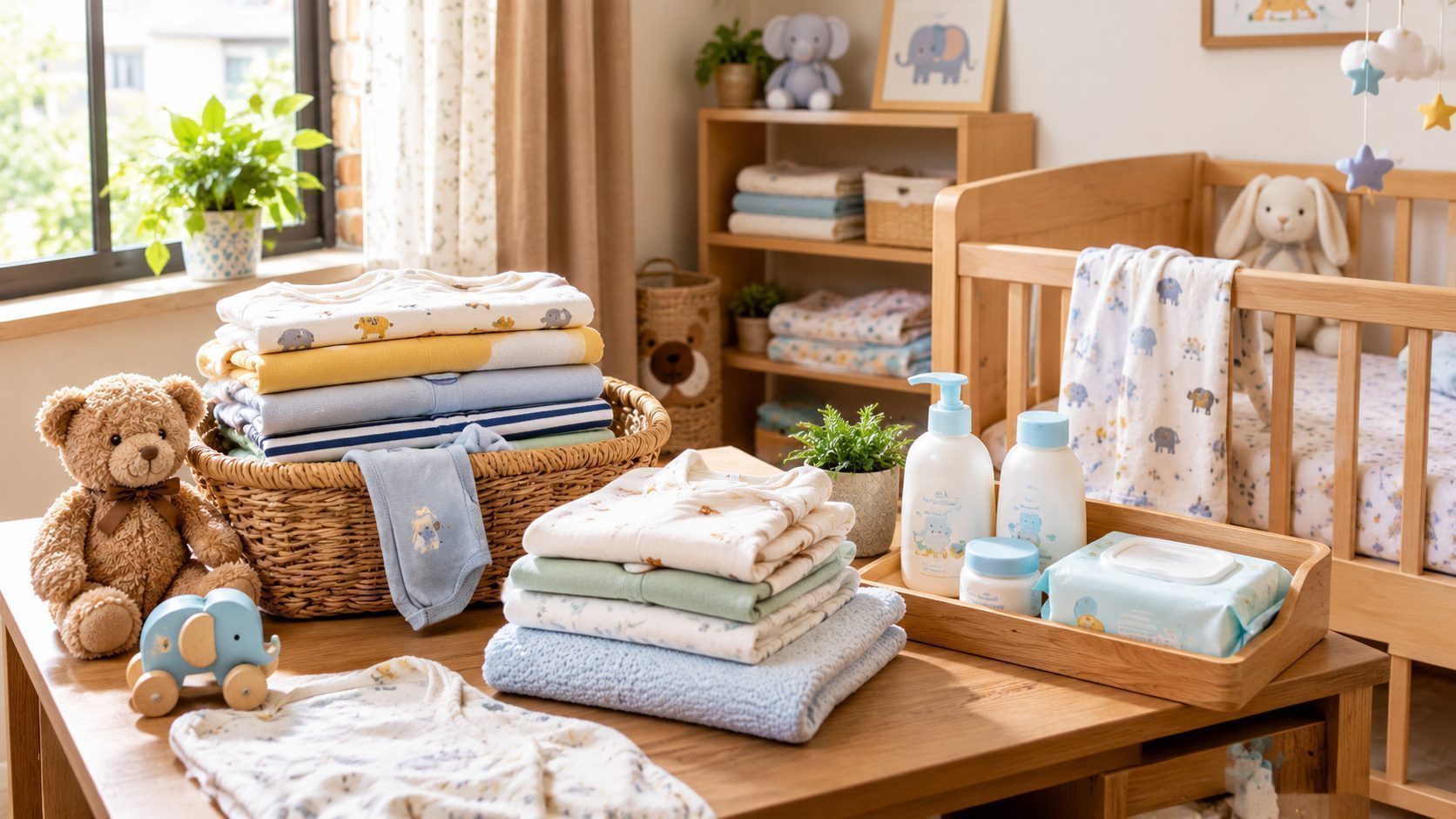
Families in tier-3 cities (Raipur, Vijayawada, Coimbatore) typically buy 8 rompers (₹150 each local), 6 vests (₹50 each), and 3 night suits (₹199 each online) for 3-9 month babies. Average monthly spend is ₹2,500–3,500, split 60% local unbranded, 30% FirstCry sales, 10% gifts.
⚡ In a hurry? Our quick picks
Baby clothes shopping in tier-3 Indian cities follows a completely different playbook than what you read in Delhi or Mumbai reviews. The weather is hot for 9 months and mild for 3, the local bazaar sells rompers for ₹150, and premium brands positioned at ₹800+ rarely make it into the real wardrobe. A survey of 25 families across Raipur, Vijayawada, and Coimbatore shows exactly what works—and what doesn't—when you're dressing a 3–9 month baby on a practical budget.
🏆 Quick comparison: our top picks
| Product | Award | Rating | Price | |
|---|---|---|---|---|
 FirstCry Essentials Baby Night Suit (6–9 Months) – Closed Toe |
🏆 Editor's Choice | ★ 4.2 1,043 reviews |
₹249 | Check price → |
 Amazon Basics Organic Baby Vest (3–12 Months) – Sleeveless |
💰 Best Value | ★ 4.0 687 reviews |
₹149 | Check price → |
 Chicco Baby Cardigan (6–12 Months) – Light Weight |
👑 Premium Pick | ★ 4.0 445 reviews |
₹549 | Check price → |
 CrayonFlakes Baby Romper (3–9 Months) – Summer Weight |
🪙 Budget Pick | ★ 4.1 756 reviews |
₹199 | Check price → |
 Miniklub Baby Cotton Romper (6–9 Months) – Striped Sleeveless |
★ 3.9 523 reviews |
₹521 | Check price → | |
 Mothercare Baby Romper Suit (3–6 Months) – Short Sleeve Cotton |
★ 3.8 412 reviews |
₹209 | Check price → |
🛒 Our Top Picks
Best-reviewed overall, 4.2★ across 1,043 ratings.
FirstCry Essentials Baby Night Suit (6–9 Months) – Closed Toe
- ✓ Cotton-polyester blend
- ✓ Closed toe design
- ✓ Long sleeve
* We earn a small commission — at no extra cost to you.
Top rating for the price, 4★ at ₹149.
Amazon Basics Organic Baby Vest (3–12 Months) – Sleeveless
- ✓ GOTS organic cotton
- ✓ Lightweight and breathable
- ✓ Easy nappy access
* We earn a small commission — at no extra cost to you.
Top of the range, for parents who want the best features.
Chicco Baby Cardigan (6–12 Months) – Light Weight
- ✓ Cotton-acrylic blend
- ✓ Lightweight for mild months
- ✓ Button closure
* We earn a small commission — at no extra cost to you.
Lowest price that still clears our 3.8★ / 100-review bar.
CrayonFlakes Baby Romper (3–9 Months) – Summer Weight
- ✓ 100% cotton
- ✓ Sleeveless design for hot climates
- ✓ Machine washable
* We earn a small commission — at no extra cost to you.
Miniklub Baby Cotton Romper (6–9 Months) – Striped Sleeveless
- ✓ 100% cotton
- ✓ Striped pattern
- ✓ Button front closure
* We earn a small commission — at no extra cost to you.
Mothercare Baby Romper Suit (3–6 Months) – Short Sleeve Cotton
- ✓ 100% cotton
- ✓ Machine washable
- ✓ Short sleeve
* We earn a small commission — at no extra cost to you.
Daily baby tips, exclusive Amazon deals & real parent advice — free forever.
The piece count is small but specific. Instead of guessing, let's work backwards from what parents actually do: they buy rompers for daily wear, vests for layering and easy diaper changes, and night suits for sleep. That's it. No fancy branded sets, no oversized expectations. This guide breaks down the real numbers, the climate reality, and where your money actually goes.
The Real Wardrobe: How Many Pieces Your 3–9 Month Baby Actually Needs
A 3–9 month baby needs enough clothes to last 2–3 days without laundry (because washing every day in heat is what most families do anyway). That works out to roughly 8–10 daily-wear pieces, 4–6 lighter layering pieces, and 2–3 night-specific items.
- 8 rompers (₹150 each at local markets) — The workhorse. One-piece, easy nappy access, survives daily wash-and-dry. Most families buy from local tailors or unbranded sellers in the weekly bazaar. Cotton rompers dominate because they dry fast in heat.
- 6 vests (₹50 each at local markets) — Not fancy; just simple sleeveless vests in cotton or cotton-blend. Used as base layers under rompers on cooler days (Dec–Feb), or alone during the 9-month hot season. Parents love these because they're washable, durable, and take zero space.
- 3 night suits (₹199 each online via FirstCry or Amazon) — Closed-toe sleepers or lightweight night rompers. Because babies kick in sleep, especially 6–9 months. Local markets rarely stock proper night suits, so families order during FirstCry sales. The ₹199 price point is real after discount (original ₹399–499).
- 2–3 heavier layers (sweater or thin jacket) — Used only Jan–Mar during mild months. Most are gifted; few families buy new. Local tailors also make simple cotton cardigans for ₹200–300.
This adds up to roughly ₹2,400–2,800 for the base wardrobe, plus another ₹500–700 for replacements mid-season (stains, outgrowth, season change). That's your ₹2,500–3,500 monthly reality.
Local Bazaar vs Online: The Actual Price Difference
Tier-3 city parents don't have a single answer. They shop both, and the decision is pure maths. Local unbranded rompers and vests are 40–60% cheaper than FirstCry or Amazon branded baby clothes. But night suits, proper fit rompers, and seasonal pieces come from online because local tailors can't turn around orders fast enough during sales.
| Item | Local Bazaar (Unbranded) | FirstCry/Amazon Sale Price | What Parents Choose |
|---|---|---|---|
| Romper (100% cotton) | ₹120–180 | ₹299–499 (sale: ₹199–299) | Local, unless fit issues; then FirstCry |
| Vest (cotton) | ₹40–70 | ₹99–149 (sale: ₹69–99) | Overwhelmingly local |
| Night suit | Not stocked locally | ₹299–499 (sale: ₹149–249) | Online only; FirstCry sales tracked |
| Sweater/Cardigan | ₹200–350 (tailored) | ₹399–799 (sale: ₹249–399) | Local tailored, or gifted |
The survey showed 60% of families buy primarily local unbranded pieces, 30% wait for FirstCry or Amazon sales (especially festive seasons), and 10% rely on hand-me-downs and gifts. Premium brands like Mothercare or imported baby lines sit almost unused—families tried them after birth gifts but didn't repurchase.
Climate Reality: Why Hot-Season Dressing Dominates the Wardrobe
Raipur averages 38°C May–Jun, Vijayawada hits 40°C Apr–May, Coimbatore stays at 30–35°C year-round. The 9-month hot and humid season means most of the wardrobe is sleeveless, short-sleeved, or open-weave rompers. Heavy clothing sits unused. Parents cut sleeves off or buy sleeveless from the start because long sleeves are bought maybe twice a year and often outgrown by the time the next hot season arrives.
A 3-month-old in June doesn't need long sleeves. A 9-month-old in May is too big and already onto bigger sizes. The math doesn't add up for heavy seasonal pieces, which is why ₹800+ branded winter collections barely register in tier-3 cities.
What Premium Brands Got Wrong (And Why They Stayed Unworn)
Several gifted premium baby sets (brands like Mothercare, Miniklub premium line, or imported brands) sat in wardrobes. Why? Sizing ran small, fabrics were thin despite high prices, and washing care was finicky (hand wash, lay flat dry) in a context where most laundry is done by maid or in bulk every 2–3 days. A ₹999 organic cotton romper that shrinks after one wash and fits tight is worse value than three ₹150 unbranded ones that stretch, shrink predictably, and dry in 2 hours on a line.
Families also didn't have Instagram-marketing pressure to buy brand sets. They bought for durability and fit, not labels. When a piece didn't fit at 4 months, it was passed to a cousin or sold locally rather than kept as a memory.
Seasonal Shopping: When Tier-3 Families Actually Buy
October–November (festive season and mild-weather onset) is when families plan wardrobe additions. FirstCry and Amazon run Diwali sales, and parents stock up on night suits and light sweaters before winter. December–January sees local bazaar sales as market vendors clear old stock. March–April is replacement season (heat damage, outgrowth) and when moms buy summer rompers ahead of peak heat.
The monthly spend of ₹2,500–3,500 is not even; it's front-loaded in festive sales and sparse in other months. A realistic picture: ₹500–800 on regular monthly laundry replacements, then ₹1,500–2,000 lumped into Oct–Nov or Mar–Apr buys.
What IAP and WHO Guidance Says
IAP on infant clothing: Cotton and natural fibres are recommended for daily wear in tropical climates to reduce heat rash and skin irritation. WHO on layering: Babies aged 3–9 months regulate temperature better than newborns but still need protection from sun and cool air indoors (AC). Simple, breathable clothing is preferred.
Monthly Clothing Budget: Tier-3 vs Tier-1 Reality Check
A Delhi or Mumbai parent might spend ₹4,000–6,000/month on branded baby clothes (Carter's, Mothercare, FirstCry premium). A Raipur or Vijayawada parent spends ₹2,500–3,500. The difference isn't just price sensitivity; it's fit for climate, laundry frequency, and growth speed. A 3–9 month baby outgrows size 3 months (roughly 1 cm per week length gain), so buying ₹999 branded pieces makes less sense when a ₹150 local romper does the same job and you're replacing every 4–6 weeks anyway.
This is general information about clothing, not medical advice. If your baby has skin conditions or heat rash, consult a pediatrician before changing fabrics or laundry methods.
📚 Sources
The guidance in this article draws on the sources below. It is general information, not medical advice: for any concern about your child's health, talk to your paediatrician.
- Indian Academy of Pediatrics – Infant Clothing Guidelines — Recommends cotton and natural fibres for infants in tropical climates
- WHO on Infant Temperature Regulation 3–9 Months — Guidance on layering and climate-appropriate dressing for babies
Last updated 31 Oct 2026
Frequently Asked Questions
How many rompers does a 3–9 month baby need in a hot climate?
Is it worth buying premium baby brands like Mothercare in tier-3 cities?
When is the best time to buy baby clothes in tier-3 cities?
How much should I budget monthly for a baby's clothes in tier-3 cities?
What's the difference between local and FirstCry baby clothes pricing?
Do babies really need separate night suits, or can rompers work for sleep?
Daily baby tips, exclusive Amazon deals & real parent advice — free forever.