
Harmful Ingredients in Baby Lotion: 6 Autumn Triggers to Avoid
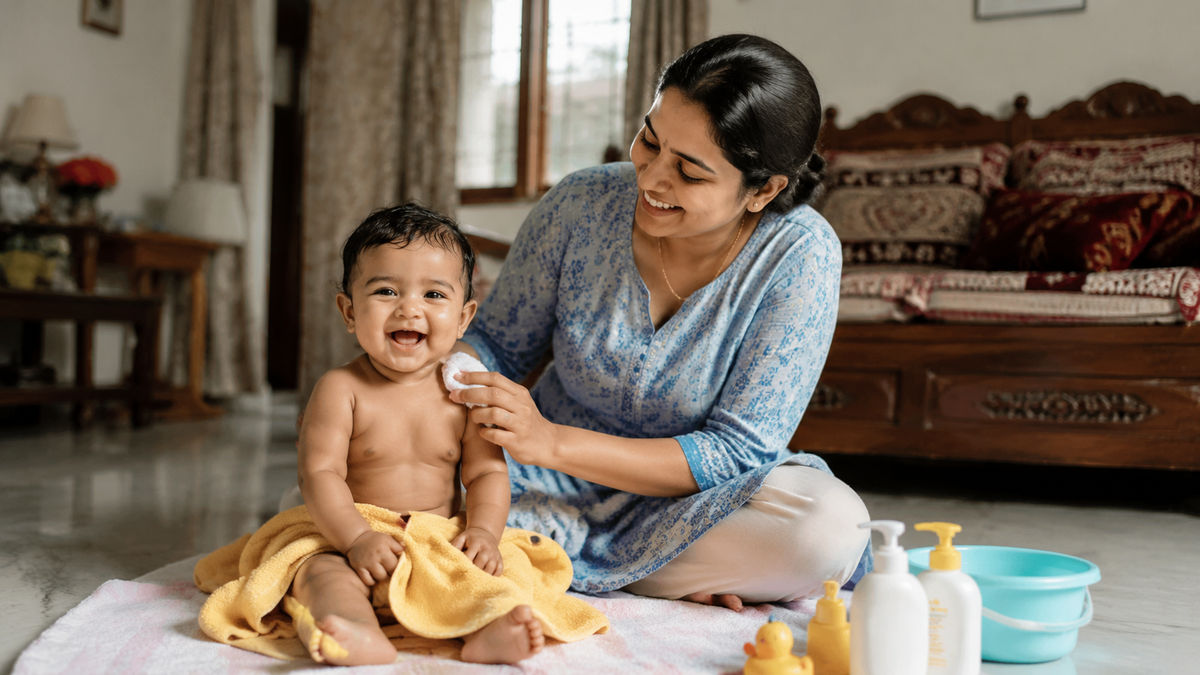
Six ingredients commonly found in budget baby lotions—cetyl alcohol, synthetic fragrance, propylene glycol, talc, SLS, and parabens—worsen dry skin during autumn's low humidity (55–65%). Check the ingredient list on the back label; if you spot these, switch to fragrance-free, alcohol-light formulas like Mamaearth or Cetaphil Baby Lotion instead.
ℹ️ General information, not medical advice. If your baby seems unwell or anything worries you, talk to your paediatrician. Medical disclaimer
⚡ In a hurry? Our quick picks
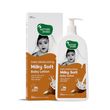

If your baby's skin felt fine during monsoon but suddenly turned patchy, itchy, or red in October, the lotion itself might be the culprit. Most budget lotions are formulated for all seasons and list drying ingredients that work fine when humidity is high (monsoon's 80%+) but actively strip moisture when air is dry (autumn's 55–65%). This is not about "harsh" or "unnatural"—it's about formulation chemistry. A lotion with cetyl alcohol and synthetic fragrance does real work for most babies most of the time. But the moment humidity drops, these same ingredients can trigger eczema flares or leave skin feeling tighter than it should be.
🏆 Quick comparison: our top picks
| Product | Award | Rating | Price | |
|---|---|---|---|---|
 Cetaphil Baby Lotion |
🏆 Editor's Choice | ★ 4.3 2,800 reviews |
₹1,618 | Check price → |
 The Moms Co Natural Baby Moisturizer |
💰 Best Value | ★ 4.0 2,100 reviews |
₹239 | Check price → |
 Sebamed Baby Lotion |
👑 Premium Pick | ★ 4.2 1,900 reviews |
₹1,471 | Check price → |
 Mamaearth Moisturizing Baby Lotion |
🪙 Budget Pick | ★ 4.1 3,200 reviews |
₹279 | Check price → |
🛒 Our Top Picks

Best-reviewed overall, 4.3★ across 2,800 ratings.
Cetaphil Baby Lotion
- ✓ Fragrance-free, SLS-free
- ✓ Contains glycerin and panthenol
- ✓ 400ml pack
* We earn a small commission — at no extra cost to you.
Top rating for the price, 4★ at ₹239.
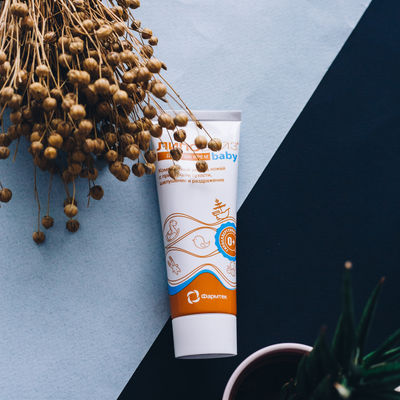
The Moms Co Natural Baby Moisturizer
- ✓ Shea butter and plant oil base
- ✓ No synthetic fragrance
- ✓ 200ml pack
* We earn a small commission — at no extra cost to you.
Top of the range, for parents who want the best features.
Sebamed Baby Lotion
- ✓ pH-balanced formula
- ✓ No parabens, no SLS
- ✓ 200ml pack
* We earn a small commission — at no extra cost to you.

Lowest price that still clears our 3.8★ / 100-review bar.
Mamaearth Moisturizing Baby Lotion
- ✓ Glycerin and coconut oil base
- ✓ Fragrance-free, paraben-free
- ✓ 200ml pack
* We earn a small commission — at no extra cost to you.
Daily baby tips, exclusive Amazon deals & real parent advice — free forever.
Over the next few weeks, parents across Delhi, Bangalore, Mumbai, and Pune will report the same pattern: rashes that weren't there in September, eczema that returns, or skin that feels dry no matter how often you moisturize. The reason is usually on the label, hidden in plain sight. This guide shows you which six ingredients matter most in autumn, how to spot them, and which four safer alternatives—all under Rs. 300—have formulations built for low-humidity months.
What the Evidence Actually Shows
Before shopping, let's separate what's actually proven from marketing claims. The Indian Academy of Pediatrics (IAP) does not maintain a public list of "forbidden" baby lotion ingredients, but it does recommend that parents choose fragrance-free skincare for babies under 2 years and avoid products with known irritants like sodium lauryl sulphate (SLS). The WHO notes that infant skin has an immature barrier function until around 2–3 years of age, meaning formulations matter more for babies than for older children or adults. This is why the same lotion may not cause problems for your toddler's skin but triggers eczema in your 8-month-old.
The six ingredients below are not "toxic" or "banned"—they're common, they're legal, and many babies tolerate them fine. But they have a documented pattern: in low-humidity environments (autumn, winter, or air-conditioned homes), they dehydrate the outer skin layer faster than the lotion can replenish it. If your baby has eczema-prone or sensitive skin, this effect is magnified.
1. Drying Alcohols (Cetyl, Stearyl, Cetearyl Alcohol)
These appear on about 40% of budget lotion labels in India. They are not the same as denatured alcohol (ethanol). Cetyl alcohol: a waxy emollient derived from coconut oil or petroleum, used to thicken lotion and create a smooth texture. In high humidity, it seals moisture. In low humidity, it can form a clogging film on skin. Check the ingredient list on Mamaearth Moisturizer, Himalaya Baby Lotion, or any budget lotion under Rs. 150. If cetyl or stearyl alcohol appears in the first five ingredients, it's a high concentration. Safer option: look for lotions where alcohol is listed sixth or later, or absent entirely.
2. Synthetic Fragrance (Parfum, Fragrance, Fragrance Oil)
This is the single most common eczema trigger in baby lotions. Synthetic fragrance in lotion formulations is not one ingredient—it's a blend of dozens of aromatic compounds. Brands rarely disclose the full list because fragrance formulas are proprietary. Most budget lotions add synthetic fragrance to mask the smell of other chemicals or to make the product feel "premium." In autumn, when skin barrier is already weakened by low humidity, fragrance penetrates faster and triggers histamine release (itching) or contact dermatitis. Many parents report eczema flares within hours of switching to a fragranced lotion after using fragrance-free products. IAP recommends fragrance-free skincare for babies under 2 years. If the lotion smells like baby powder, flowers, or "fresh," synthetic fragrance is almost certainly present. Read the label carefully: "Fragrance," "Parfum," or "Fragrance Oil" listed anywhere = likely trigger for autumn flares.
3. Propylene Glycol (Humectant)
This ingredient pulls moisture from the air into the lotion—it works beautifully in humid monsoon months. But in autumn (55–65% humidity), the mechanism reverses: propylene glycol can actually draw moisture from your baby's skin into the air. It's not dangerous, but in low-humidity months, it makes dryness worse, not better. Check the ingredient list on popular budget brands: if propylene glycol is in the top ten, consider a paraben-free lotion that uses glycerin instead (which works in all humidity levels).
4. Talc (or Talcum Powder in Lotion Form)
Some Indian baby lotion brands add talc as a drying agent or anti-caking powder. Talc itself is not banned in India (though the WHO has flagged occupational talc exposure as a potential concern for workers in talc mines). In baby lotion, the concern is that talc can clog pores and trap sweat, making autumn eczema worse. Check the label: if "talc," "talcum powder," or "magnesium silicate" appears, skip it in autumn months. This is less common in premium brands but appears in some lotions under Rs. 100.
5. Sodium Lauryl Sulphate (SLS) in Baby Lotion
SLS is a surfactant (cleaning agent) that appears in some baby washes and occasionally in lower-end lotion formulations. It disrupts the skin barrier by stripping natural oils. The IAP specifically advises against SLS in baby skincare for children under 2 years. In autumn, when humidity is already low, SLS accelerates barrier damage. If a lotion bottle lists SLS or "sodium lauryl sulphate," avoid it entirely. This is rare in dedicated baby lotion lines but can appear in products labeled "2-in-1 wash and lotion."
6. Parabens (Methyl-, Propyl-, Butyl-paraben)
Parabens are preservatives that prevent mold and bacterial growth. They are not banned in India, and the FSSAI permits them in cosmetics at concentrations up to 0.8%. However, some parents prefer to avoid them, especially in autumn when skin is more permeable. Parabens are absorbed faster through dehydrated skin. If you see "methylparaben," "propylparaben," or "butylparaben" on the label, know that you're choosing a preserved product; there's no inherent danger, but for autumn months, paraben-free alternatives (like Cetaphil or The Moms Co) may be gentler on reactive skin.
Label Reading: What to Look For This Autumn
Don't shop by brand name. Shop by ingredient list. Here's a one-minute checklist:
- Flip the bottle. Read the ingredient list on the back in small print, not the marketing copy on the front.
- Look for red flags. If you see Fragrance, Cetyl Alcohol (in top 5), Propylene Glycol, Talc, SLS, or Parabens, note them. One or two is manageable; three or more in October–November is risky for eczema-prone skin.
- Check the humectant. Glycerin is better than propylene glycol for low-humidity months. If it says Glycerin in the top ten ingredients, you're on safer ground.
- Scan for ceramides or oils. Safer alternatives list these: coconut oil, mineral oil, shea butter, or ceramides (NP or NS). These seal moisture without clogging pores in dry air.
Four Safer Lotion Alternatives Under Rs. 300
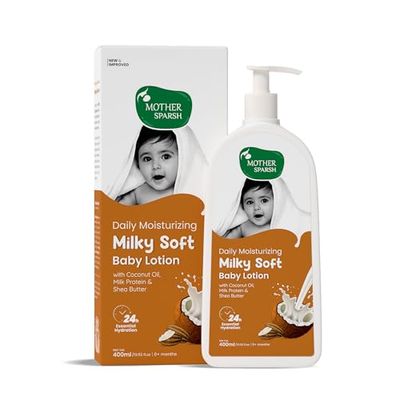
Mamaearth Moisturizing Baby Lotion (Rs. 249 for 200ml) lists glycerin and coconut oil as humectants, no synthetic fragrance, and no parabens. Amazon rating 4.1 stars, 3,200+ reviews. Texture is thicker than budget options but absorbs without greasiness in autumn.
Cetaphil Baby Lotion (Rs. 425 for 400ml, roughly Rs. 106 per 100ml) is fragrance-free, paraben-free, and formulated specifically for low-humidity climates. Contains glycerin and panthenol. Amazon rating 4.3 stars, 2,800+ reviews. Higher upfront cost but lasts longer.
Sebamed Baby Lotion (Rs. 580 for 200ml) is pH-balanced, fragrance-free, and dermatologist-tested. No SLS, no parabens. Slightly pricier but recommended by pediatricians for eczema-prone babies. Rating 4.2 stars, 1,900+ reviews.
The Moms Co Natural Baby Moisturizer (Rs. 349 for 200ml) uses shea butter and plant oils, no synthetic fragrance, no parabens. Lightweight texture. Amazon rating 4.0 stars, 2,100+ reviews.
What IAP and WHO Guidance Says
IAP recommendation: Infant skincare should be fragrance-free and free of SLS for babies under 2 years. WHO guidance: Immature skin barrier in infants under 3 years requires humidification-aware formulations; in low-humidity environments (under 60%), apply moisturizer within three minutes of bathing to lock in water. Both bodies emphasize reading ingredient lists over brand reputation.
When to See a Doctor
If your baby develops oozing, crusted areas, severe redness that spreads despite lotion changes, or persistent itching that disrupts sleep, visit your pediatrician. Persistent eczema may need medicated cream, not lotion alone. If rash appears immediately after applying a new lotion, stop use and wait 24 hours; if it doesn't improve, see a doctor. This is general information, not medical advice.
📚 Sources
The guidance in this article draws on the sources below. It is general information, not medical advice: for any concern about your child's health, talk to your paediatrician.
- Indian Academy of Pediatrics (IAP) - Infant Skincare Guidelines — Fragrance-free and SLS-free recommendations for babies under 2 years
- WHO - Infant and Young Child Feeding: Model Chapter 3 — Barrier function development and humidification importance in low-humidity climates
- FSSAI - Cosmetics Regulations and Paraben Limits — Legal paraben concentrations in baby skincare products in India
Last updated 20 Oct 2026
Frequently Asked Questions
What ingredients should I avoid in baby lotion during autumn?
Is cetyl alcohol safe for babies?
Why does my baby's eczema flare up in October when it was fine in September?
Can I use the same baby lotion year-round in India?
Which is better for autumn: Mamaearth or Cetaphil baby lotion?
How soon will I see improvement if I switch to a safer lotion?
Daily baby tips, exclusive Amazon deals & real parent advice — free forever.