
How to Dress Baby in Winter India: Month-by-Month Layers for Delhi, Lucknow & Chandigarh 2026
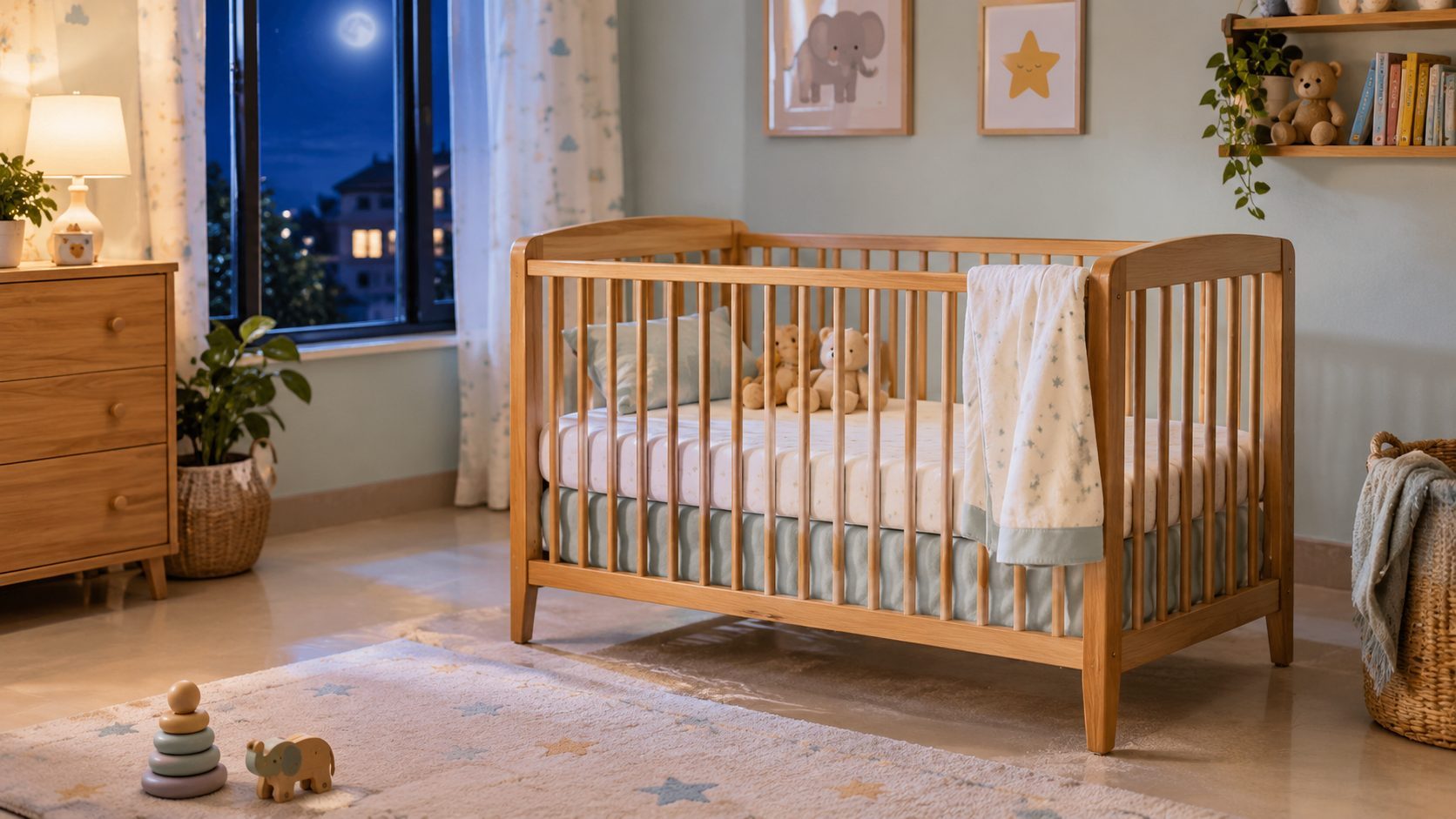
Dress your baby in layers: cotton vest, thermal set (Rs. 399–699), and woollen cap and socks for Delhi, Lucknow and Chandigarh winters. Start adding thermals from November; remove by February. Watch for shivering (too cold) or sweating, rash, or restlessness (too hot) — overheating poses more risk than mild cold.
⚡ In a hurry? Our quick picks
Winter dressing for babies isn't about wrapping them like parcels — it's about reading your baby's body temperature and adjusting in real time. Every parent in Delhi, Lucknow or Chandigarh knows that a December night at 8 °C feels very different from a January morning at 2–3 °C. Your baby cannot tell you she's cold or overheated, so you have to learn the signs and layer smart. This month-by-month timeline shows exactly what to put on your baby when, and the price range you should expect for thermals, caps and socks in 2026.
🏆 Quick comparison: our top picks
| Product | Award | Price | |
|---|---|---|---|
 Mothercare Baby Cotton Thermal Bodysuit (0-6 Months, Pack of 2) |
👑 Premium Pick | ₹629 | Check price → |
 Chicco Baby Woollen Cap with Tie (Newborn to 6 Months) |
🪙 Budget Pick | ₹215 | Check price → |
 Mothercare Unisex Baby Thermal Set Full Sleeves (0-3 Months, Pack of 2) |
₹300 | Check price → | |
 Little Champz Thermal Socks for Babies (Pack of 3, 0-12 Months) |
₹299 | Check price → |
🛒 Our Top Picks
The highest-priced option in this guide.
Mothercare Baby Cotton Thermal Bodysuit (0-6 Months, Pack of 2)
- ✓ 100% cotton with thermal fleece inside
- ✓ Full-sleeve design
- ✓ Easy snap closure
* We earn a small commission — at no extra cost to you.

The lowest-priced option in this guide.
Chicco Baby Woollen Cap with Tie (Newborn to 6 Months)
- ✓ 100% acrylic wool blend
- ✓ Soft tie closure to secure under chin
- ✓ Lightweight and breathable
* We earn a small commission — at no extra cost to you.
Mothercare Unisex Baby Thermal Set Full Sleeves (0-3 Months, Pack of 2)
- ✓ 100% cotton with thermal lining
- ✓ Full sleeves and full-length legs
- ✓ Machine washable at 30°C
* We earn a small commission — at no extra cost to you.

Little Champz Thermal Socks for Babies (Pack of 3, 0-12 Months)
- ✓ Cotton-wool blend for warmth without overheating
- ✓ Non-slip grip on sole
- ✓ Pack of 3 pairs
* We earn a small commission — at no extra cost to you.
Daily baby tips, exclusive Amazon deals & real parent advice — free forever.
The most trusted products parents buy for winter dressing in north India include Mothercare Cotton Vests, Mothercare Thermal Sets, Chicco Woollen Caps, and Little Champz Thermal Socks. These are available on Amazon.in with live pricing and sizes for newborns through 18 months.
November: Transition Month — When to Start Layering
November is the bridge between autumn and winter across Delhi, Lucknow and Chandigarh. Daytime temperatures hover around 20–25 °C; nights drop to 10–15 °C. Your baby does not need thermals yet during the day, but nighttime layering begins now.
What to wear (November): During the day, a single cotton full-sleeve bodysuit (not a thermal) is enough, plus a thin cotton cap if outdoors. At night, add a cotton thermal set under a cotton sleep suit — thermals are gentler on newborn skin than wool. A light cotton sock (not a heavy woollen one) keeps tiny feet warm without overheating. The thermal set price range in November is Rs. 399–550; buy now before January shortages push prices to Rs. 700+. Skip the woollen cap and thick socks in November; save those for December onwards.
December: Full Layering Season Begins — Temperature Bands by City
December is when real winter arrives across north India. Daytime temperatures drop to 15–20 °C; nights fall to 5–10 °C. This is the month parents panic about layering, but the system is simple once you know the temperature band your city sits in.
Delhi (December temps: 5–18 °C): Layer 1: cotton vest; Layer 2: cotton thermal set (Rs. 449–599); Layer 3: full-sleeve cotton sleep suit; Layer 4: woollen cap (Rs. 299–499) and woollen socks (Rs. 199–349) for outdoors and sleep. Indoors with heating on, skip the woollen cap but keep socks on.
Lucknow (December temps: 8–20 °C): Lucknow is slightly warmer than Delhi but humidity rises, so avoid over-layering. Use the same 3-layer system (cotton vest + thermal + sleep suit) but woollen caps are optional indoors; use only when stepping outside. Woollen socks are essential at night.
Chandigarh (December temps: 3–17 °C): Chandigarh is the coldest of the three. Add a woollen cardigan or jacket over your 3-layer base for outdoor time. Indoors with heating, the 3-layer system is enough. Woollen cap and socks are non-negotiable for sleep and stepping outside.
A typical thermal set costs Rs. 399–699 in December 2026. Brands like Mothercare and Chicco offer sizes for newborns (0–3 months), 3–6 months, 6–12 months, and up to 18 months. Check the Amazon.in product page for wash care — most thermal sets are machine-washable at 30 °C in cold water, which saves time during peak winter laundry.
January: Coldest Month — Watch for Overheating Too
January is the coldest month; nighttime temperatures can drop to 0–5 °C in Delhi and Chandigarh, and 3–8 °C in Lucknow. This is when most parents over-bundle their babies — and that is the real risk. Overheating in infants under 12 months raises the risk of heat rash, sweating (which wets clothes and makes baby colder), and sleep disruption. IAP (Indian Academy of Pediatrics) guidance emphasizes avoiding overheating as much as avoiding chilling.
Daytime (January, 10–15 °C): Cotton vest + cotton thermal set + full-sleeve cotton suit + woollen cap and socks if outdoors. Indoors (heated), remove the cap and socks; your baby should not feel hot to the touch on the chest or back.
Nighttime (January, 2–8 °C): Cotton vest + thermal set + cotton sleep suit (not a quilt or heavy blanket — room-sharing is safer for infants under 12 months anyway). Keep the woollen cap off at night (overheating risk while sleeping) and woollen socks on if feet feel cold. Room temperature should stay 18–22 °C; if your room dips below 18 °C, add a lightweight woollen blanket tucked in at the sides, not over the face.
How to know if your baby is too hot: Sweating on the scalp or neck, heat rash (small red bumps on skin), restlessness or frequent waking, rapid breathing, or damp clothing. If any of these appear, remove one layer immediately — usually the woollen cap or socks first, then the outer suit.
How to know if your baby is too cold: Shivering, pale lips or fingertips, low energy or sluggishness (not normal), reluctance to feed, or cold feet even through socks. If this happens, add a layer (woollen cardigan or thicker blanket) and check with your paediatrician if coldness persists.
February: Gradual Removal of Layers
February temperatures begin to rise — daytime reaches 15–22 °C; nights stay at 5–10 °C. This is when many parents still layer full winter gear and miss the window to lighten up. Your baby's skin is more resilient in February than in January, and over-layering now creates unnecessary sweat and rashes.
February dressing: Continue the 3-layer system (cotton vest + thermal + sleep suit) at night, but remove woollen socks and cap indoors. Use the cap and socks only for outdoor time. During the day, a single full-sleeve cotton suit is enough indoors; add the thermal only if stepping outside for more than 20 minutes.
Day versus Night Dressing: The Real Difference
Daytime (November–February): Dress for the current outdoor temperature, not a worst-case scenario. Check the weather app before stepping out. If it's 18 °C and sunny, a cotton full-sleeve suit with a light cap is enough; you do not need a thermal underneath. If it's 8 °C and cloudy, add the thermal and woollen cap. Layers are your friend — you can remove them if baby looks flushed or sweaty.
Nighttime (November–February): Room temperature matters more than outdoor temperature. If your bedroom is 20 °C (common with heating on), use cotton vest + thermal + sleep suit + socks. If your room is 16 °C or lower, add a woollen cardigan under the sleep suit or use a woollen blanket. Never put a woollen cap on a sleeping baby (suffocation risk).
What to Buy Now (Before January) and What to Wait On
Buy now (October–November): Thermal sets in sizes 0–3 months, 3–6 months, and 6–12 months. Prices are stable at Rs. 399–599; January prices spike to Rs. 699+. Woollen caps in newborn and 3–6-month sizes. Cotton vests in all sizes (essential year-round). Stock 3–4 thermal sets so you always have a clean one — washing thermal sets takes 2–3 hours to dry.
Wait until January: Heavy woollen sweaters or cardigans — only buy if your baby is 6+ months and you know her exact size. Newborn wool sweaters are hard to size accurately; wait until your baby is older. Thick quilted jackets are rarely needed in India; layer cotton instead.
Skip entirely: Thermal pants or leggings (unnecessary; keep legs bare under a thermal set or sleep suit). Woollen gloves for newborns (risk of choking or skin irritation). Heavy blankets or quilts (co-sleeping hazard).
What IAP and WHO Guidance Says
IAP guideline: Avoid overheating as a risk factor for sudden infant death in children under 12 months; keep room temperature between 18–22 °C and dress to avoid sweating. WHO guidance: Newborns lose body heat quickly and need close monitoring; dress one layer more than an adult in the same room, not two or three layers more.
When to See a Doctor
Contact your paediatrician if your baby shows persistent shivering for more than 10 minutes even after adding layers, or if she develops heat rash, fever, or lethargy that does not improve after adjusting clothing. If your baby is born prematurely (before 37 weeks), discuss winter dressing separately with your doctor — premature babies hold body heat differently. This is general information, not medical advice.
📚 Sources
The guidance in this article draws on the sources below. It is general information, not medical advice: for any concern about your child's health, talk to your paediatrician.
- Indian Academy of Pediatrics (IAP) Infant Care Guidelines — Supports guidance on avoiding overheating and maintaining room temperature 18–22 °C for infants under 12 months.
- WHO Standards on Infant Temperature Regulation — References safe layering and thermal comfort for infants in varying climates.
Last updated 12 Nov 2026
Frequently Asked Questions
At what temperature should I add thermals to my baby?
Can I use wool directly on a newborn's skin?
How do I know if my baby is too hot while sleeping?
Is a thermal set enough, or do I need a heavy jacket too?
What is the price range for baby thermal sets in 2026?
Should I dress my baby differently during the day and night?
Daily baby tips, exclusive Amazon deals & real parent advice — free forever.