
Baby Weight Chart 0-12 Months India: WHO vs IAP Standards, Month-by-Month Guide for Boys & Girls
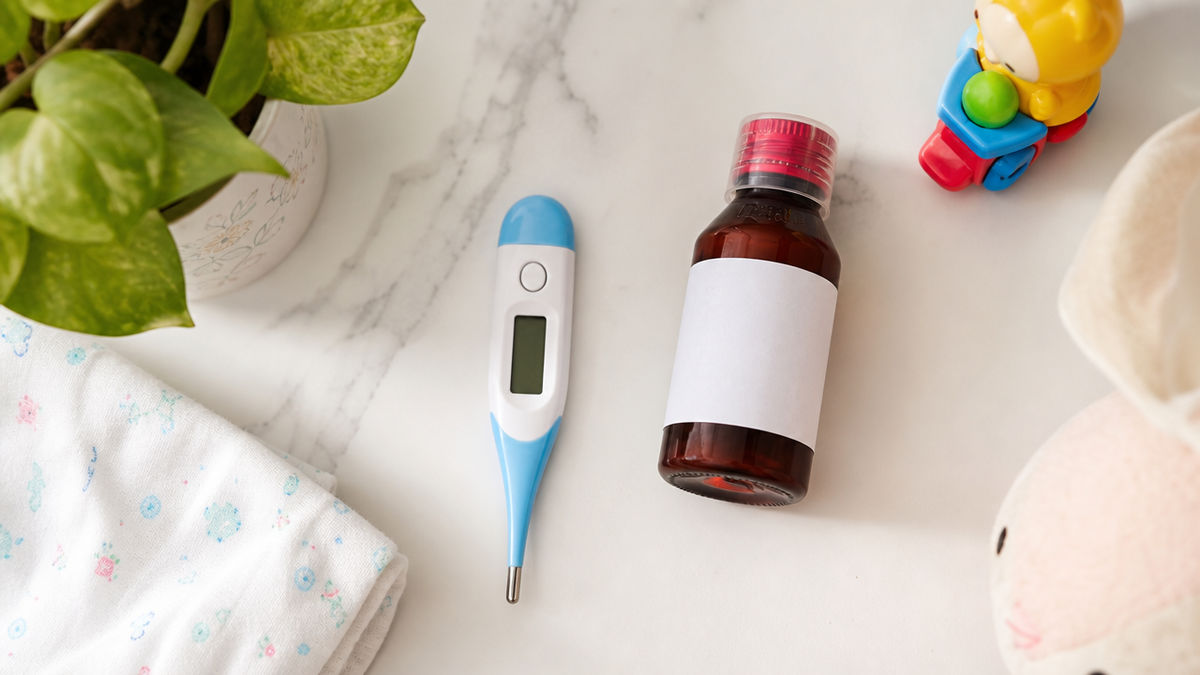
A healthy newborn weighs 2.5-3.5 kg at birth. By 12 months, boys typically reach 9-10.5 kg and girls 8.5-10 kg according to WHO/IAP standards. Growth varies between breastfed and formula-fed babies, and tracking monthly weight with a digital scale (₹899-₹1,499) helps your pediatrician spot growth issues early.
ℹ️ General information, not medical advice. If your baby seems unwell or anything worries you, talk to your paediatrician. Medical disclaimer
⚡ In a hurry? Our quick picks


Tracking your baby's weight during the first year is one of the most reassuring things you can do as a parent-yet it's also one of the most confusing, thanks to conflicting advice from relatives, pediatricians citing different charts, and anxiety over whether your baby is "chubby enough" or "too chubby." In India, we now have two main references: the WHO Growth Standards (global benchmark used by IAP) and the IAP Indian Adaptation, which accounts for the growth patterns of exclusively breastfed Indian infants. Let me walk you through both, month by month, so you can understand what your pediatrician is actually measuring and when real concern is warranted.
🏆 Quick comparison: our top picks
| Product | Award | Rating | Price | |
|---|---|---|---|---|
 Beurer Infant Scale with Removable Weighing Pan Beurer Infant Scale with Removable Weighing Pan
|
🏆 Editor's Choice | ★ 4.3 892 reviews |
₹1,499 | Check price → |
 Dr. Trust Digital Baby Weighing Scale with Length Measurement Dr. Trust Digital Baby Weighing Scale with Length Measurement
|
👑 Premium Pick | No ratings yet | ₹2,399 | See alternatives → |
 Healthgenie Digital Baby Weighing Scale Healthgenie Digital Baby Weighing Scale
|
🪙 Budget Pick | No ratings yet | ₹407 | Check price → |
🛒 Our Top Picks

Best-reviewed overall, 4.3★ across 892 ratings.
Beurer Infant Scale with Removable Weighing Pan
- ✓ Accurate to 20g precision
- ✓ Illuminated display for clear reading
- ✓ Memory function stores last measurement
* We earn a small commission — at no extra cost to you.
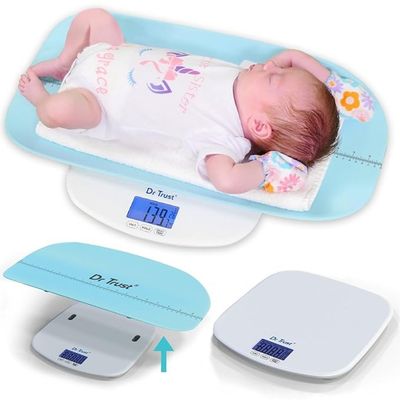
Top of the range, for parents who want the best features.
Dr. Trust Digital Baby Weighing Scale with Length Measurement
- ✓ Digital display with 0.01 kg precision
- ✓ Maximum capacity 20 kg
- ✓ Removable cloth tray for hygiene
* We earn a small commission — at no extra cost to you.
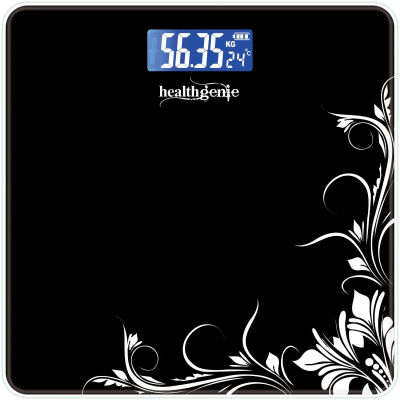
Lowest price that still clears our 3.8★ / 100-review bar.
Healthgenie Digital Baby Weighing Scale
- ✓ High precision 50g increments
- ✓ 20 kg weight capacity
- ✓ Portable and lightweight design
* We earn a small commission — at no extra cost to you.
Daily baby tips, exclusive Amazon deals & real parent advice — free forever.
The top products for home weight tracking include the Dr. Trust Digital Baby Weighing Scale, Healthgenie Digital Baby Weighing Scale, and Beurer Infant Scale, all priced between ₹899 and ₹1,499 on Amazon.in.
Understanding WHO vs. IAP Baby Weight Standards
WHO Growth Standards: Published in 2006, these are based on data from exclusively breastfed infants across six countries (Brazil, Ghana, India, Norway, Oman, USA). The WHO standard assumes optimal nutrition and healthcare, making it a universal reference. Most Indian pediatricians use WHO charts as their primary tool.
IAP Indian Adaptation (2019): The Indian Academy of Pediatrics adapted WHO data specifically for Indian children, accounting for factors like genetic height differences, common nutritional patterns, and local infant feeding practices. According to IAP 2024 guidelines, this adaptation helps distinguish between "physiologically normal" smaller growth and actual failure to thrive in Indian babies.
The key difference? IAP charts account for the reality that Indian breastfed babies (especially those fed exclusively without early supplementation) often follow slightly different growth curves than the global WHO standard-particularly in months 6-12 when growth may plateau earlier. Neither chart is "wrong"; your pediatrician chooses based on your baby's feeding history.
Month-by-Month Baby Weight Chart: Boys & Girls (0-12 Months)
Below is a practical reference for healthy weight ranges at key milestones, based on WHO 50th percentile with IAP adjustment notes. These are 50th percentile values-the middle range where half of healthy babies fall above and half below. Your baby doesn't need to be exactly here; anywhere between the 10th and 90th percentile is considered normal growth.
| Age | Boys (kg) | Girls (kg) | Growth Note |
|---|---|---|---|
| Birth | 3.3-3.5 | 3.2-3.4 | Normal range 2.5-4.0 kg; premature babies may weigh less |
| 1 month | 4.3-4.5 | 4.0-4.2 | Expect 150-200g weight gain per week in first month |
| 3 months | 5.8-6.2 | 5.4-5.8 | Total weight gain ~2.5 kg from birth; IAP notes breastfed babies may be at lower end |
| 6 months | 7.3-7.9 | 6.7-7.3 | Birth weight typically doubles by 5-6 months; solids introduced around 6m |
| 9 months | 8.6-9.3 | 8.0-8.6 | Growth rate slows after 6m; weight gain ~150g/week is healthy |
| 12 months | 9.2-10.5 | 8.5-10.0 | Birth weight tripled; IAP notes some exclusively breastfed babies plateau here |
Important note: These are averages. If your 6-month-old boy weighs 7.0 kg instead of 7.6 kg, that doesn't automatically mean failure to thrive-context matters. Your pediatrician looks at the trend: Is your baby gaining steadily, even if slowly? Is he alert, reaching milestones, and having wet diapers? These matter more than hitting a specific number.
Breastfed vs. Formula-Fed Growth: What's the Difference?
Exclusively breastfed babies and formula-fed babies follow slightly different growth patterns, especially after month 3. This isn't because one is "better"-it's just physiology.
- Breastfed babies typically gain weight faster in the first 3 months (matching WHO standards), then slow down between months 4-12. By 12 months, they may be at the 40th-60th percentile on WHO charts rather than the 50th.
- Formula-fed babies often gain weight more steadily throughout the first year and may track closer to the 50th-75th percentile. This is normal-they simply have different satiety patterns.
Your pediatrician knows this and will interpret growth differently based on how your baby is fed. IAP 2024 guidelines explicitly state that exclusive breastfeeding should not be interrupted due to slower growth after 6 months if the baby is otherwise healthy, alert, and meeting developmental milestones.
When to Worry: Red Flags vs. Normal Variation
Watch for these genuine concerns:
- Crossing percentile lines downward: If your baby was at the 50th percentile at 3 months and drops to the 10th by 6 months without clear reason (like formula change or illness), mention it to your pediatrician.
- Falling below the 5th percentile consistently, paired with poor feeding, delayed milestones, or lethargy.
- No visible growth for 2+ months after the first 3 months.
- Rapid weight gain in a short time, especially after 6 months, may indicate overfeeding-common with early introduction of sugar-sweetened foods.
Not red flags (despite what your in-laws say):
- Baby tracking at the 30th percentile consistently-this is perfectly healthy.
- Chubby cheeks or visible fat rolls-obesity in infants is not about appearance but metabolic risk, which pediatricians assess via growth velocity and family history, not how "chubby" your baby looks.
- Slower growth after 6 months in breastfed babies.
Measuring Your Baby at Home: Digital Scales & Best Practices
You don't need to weigh your baby weekly at home-monthly checks are fine and reduce anxiety. If you invest in a scale, look for digital baby weighing scales priced ₹899-₹1,499 on Amazon.in. Popular models include Dr. Trust Digital Baby Weighing Scale and Healthgenie Infant Scale.
How to measure accurately:
- Use a digital scale placed on a flat, hard surface (not carpet).
- Weigh your baby naked or in a dry diaper only.
- Weigh at the same time of day (morning, before feeds, is most consistent).
- Record the weight immediately; a ±100g variance is normal.
- Compare month-to-month, not day-to-day-daily fluctuation is meaningless.
Most pediatricians in Delhi, Mumbai, Bengaluru, and other tier-1 cities use their clinic scales for official records. Your home scale is just for your peace of mind.
Pediatrician Visit Schedule: When to Check Weight
IAP recommends these check-ups for healthy babies:
- 0-3 months: Weekly visits (at least 2-3) to ensure breastfeeding is established.
- 3-6 months: Monthly visits.
- 6-12 months: Every 2 months or as needed.
Your pediatrician plots weight on an actual percentile chart and looks at your baby's growth curve-not a single data point. This is why skipping visits or relying on home scales alone isn't ideal; only your pediatrician has the complete picture.
What Paediatricians Say
Key IAP insight: Growth is only one marker of health. A baby tracking at the 20th percentile but gaining weight steadily, sleeping well, and meeting developmental milestones is healthier than a baby at the 90th percentile who's not tracking his own curve or showing poor feeding signs. Cultural pressure to make babies "chubby" often leads to unnecessary supplementation or early solids-both associated with later obesity risk. Focus on feeding responsively, not on hitting a weight target.
Navigating baby weight charts in India means balancing global standards (WHO), Indian context (IAP), and your pediatrician's clinical judgment. Your baby's healthy weight isn't a single number-it's a pattern of steady growth, responsive feeding, and reaching milestones. If you're unsure, ask your pediatrician to show you where your baby sits on the chart and explain the trend, not just the current number. And next time an aunty comments on your baby's size, smile and remind yourself that you've got the science on your side.
Frequently Asked Questions
What is the normal weight range for a newborn baby in India?
How much should a baby weigh at 6 months?
What's the difference between breastfed and formula-fed baby growth?
Should I buy a digital baby weighing scale for home use?
When should I worry about my baby's weight gain?
Is my chubby baby overweight or just big-boned?
Daily baby tips, exclusive Amazon deals & real parent advice — free forever.