
Baby Sleep Schedule By Month Checklist: Wake Windows, Naps & Night Sleep Guide for Indian Parents
ℹ️ General information, not medical advice. If your baby seems unwell or anything worries you, talk to your paediatrician. Medical disclaimer
⚡ In a hurry? Our quick picks


I still remember those first few weeks with my daughter in our Bengaluru apartment-every time she'd fall asleep, I'd frantically google "how long will this nap last?" or "is she sleeping too much?" The internet threw American sleep schedules at me that didn't quite fit our reality. Our families had their own advice ("let her sleep on your chest, beta"), but I needed something more structured that still worked for our Indian home setup.
🏆 Quick comparison: our top picks
| Product | Award | Rating | Price | |
|---|---|---|---|---|
 Fancy Fluff Organic Sleeping Bag Fancy Fluff Organic Sleeping Bag
|
🏆 Editor's Choice | ★ 4.3 1,547 reviews |
₹1,299 | Check price → |
 Rabitat Breathable Crib Mattress Rabitat Breathable Crib Mattress
|
👑 Premium Pick | No ratings yet | ₹1,999 | Check price → |
🛒 Our Top Picks


Best-reviewed overall, 4.3★ across 1,547 ratings.
Fancy Fluff Organic Sleeping Bag
- ✓ 100% organic cotton
- ✓ Available in 1.0 and 2.5 TOG ratings
- ✓ Two-way zipper for easy changes
* We earn a small commission — at no extra cost to you.

Top of the range, for parents who want the best features.
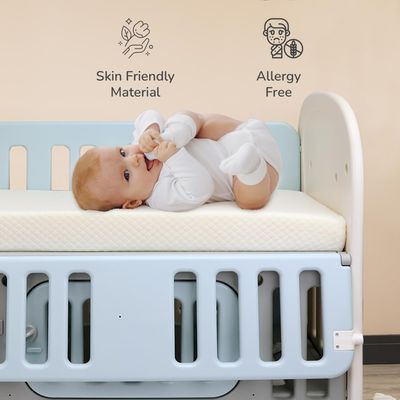
Rabitat Breathable Crib Mattress
- ✓ 3D breathable fabric
- ✓ Moisture-wicking technology
- ✓ Fits standard 60x120cm cribs
* We earn a small commission — at no extra cost to you.
Daily baby tips, exclusive Amazon deals & real parent advice — free forever.
Understanding your baby's sleep schedule by month isn't about forcing a rigid routine-it's about knowing what's developmentally normal so you can plan your day, recognize when something's off, and stop second-guessing every yawn. This checklist breaks down exactly what to expect from your baby's sleep patterns from birth to 12 months, with wake windows that actually help you time those naps, and room temperature guidelines that make sense for Delhi summers and Mumbai humidity, not just Western climates.
Whether you're transitioning from co-sleeping to a crib, dealing with dadi's well-meaning advice about oil massages before bed, or just trying to figure out if your 4-month-old should still be taking four naps, this guide gives you the month-by-month framework you need. I've included realistic expectations, not Instagram-perfect sleep stories, because most Indian babies don't sleep in silent, pitch-dark nurseries-they adapt to our bustling households, and that's completely fine.
Understanding Wake Windows and Why They Matter More Than Clock Times
Before we dive into the month-by-month checklist, let's talk about wake windows-the amount of time your baby can comfortably stay awake between sleep periods. This concept changed everything for me because I was obsessed with putting my son down at exact times (10 am nap, 2 pm nap), but he'd fight sleep or wake up cranky. Wake windows are more reliable than clock-based schedules, especially in those first six months.
A wake window includes everything from when your baby opens their eyes to when they're back asleep-feeding time, diaper changes, play, the works. When you keep your baby awake too long past their wake window, they get overtired and their cortisol levels spike. Ironically, an overtired baby actually sleeps worse. Miss that window by even 15-20 minutes with a young infant, and you might spend an extra 30 minutes trying to settle them. I learned this the hard way during a family visit to Pune when I kept my 2-month-old up too long entertaining relatives, and she screamed for an hour at bedtime.
In Indian homes, this gets tricky because we don't always have the luxury of a quiet room for every nap. The pressure cooker whistles, the doorbell rings, someone's always visiting. But babies are adaptable-the key is watching for sleepy cues within their wake window (rubbing eyes, pulling ears, that glazed stare, fussiness) rather than achieving perfect silence. My daughter learned to nap through my husband's work calls and my mother-in-law's pressure cooker lunch prep by 3 months. Consistency with wake windows matters more than environmental perfection.
The wake window also increases predictably with age, which is why month-by-month guidance helps. A newborn's 45-minute wake window feels impossibly short (you've barely finished feeding and changing them!), but by 6 months, those 2-2.5 hour windows give you actual breathing room to leave the house or get things done. Understanding this progression keeps you from expecting too much too soon or missing your baby's growing capacity to stay awake longer.
Month-By-Month Baby Sleep Schedule Checklist: 0-12 Months
Month 0-1: Newborn Sleep (Survival Mode)
Wake Windows: 45 minutes to 1 hour maximum
Number of Naps: 5-7+ naps (honestly, it's all one big blur)
Daytime Sleep: 7-9 hours across multiple naps
Night Sleep: 8-10 hours total (broken into 2-4 hour stretches)
Total Sleep: 14-17 hours in 24 hours
This is not about schedules-it's about survival and feeding your baby every 2-3 hours round the clock. Your newborn's sleep is dictated by their stomach size and feeding needs. In Indian homes, this is often when dadi or nani comes to stay, which can be a blessing (you can sleep!) or add pressure ("why isn't the baby sleeping?"). Your newborn will sleep anywhere-in your arms, in the cradle, during your chai break. Cluster feeding in the evening is completely normal. Room temperature matters now because newborns can't regulate body temperature well. Keep the room at 22-24°C-not too cold even during Mumbai or Chennai summers. Use a ceiling fan on low rather than AC directly on the baby if possible.
Month 2: Slightly Longer Wake Windows
Wake Windows: 1-1.5 hours
Number of Naps: 4-5 naps
Daytime Sleep: 5-7 hours
Night Sleep: 8-10 hours (still with 2-3 night feeds)
Total Sleep: 14-16 hours
You might start seeing a slightly longer stretch at night (maybe 4-5 hours if you're lucky). This is when I started tracking wake windows seriously because my son would get fussy, and I couldn't figure out why until I realized he'd been awake for 2 hours-way too long. Start watching for sleepy cues at the 1-hour mark. Many Indian families use oil massage (maalish) before bedtime around now, which is fine if it's part of your bedtime routine, but don't expect it to magically make your baby sleep through the night-that's not how infant sleep works. Co-sleeping is common and safe if you follow guidelines (firm mattress, no pillows near baby, no intoxication, mother's side only). WHO India recommends room-sharing for at least the first 6 months, which most Indian families naturally do anyway.
Month 3-4: The 4-Month Sleep Regression
Wake Windows: 1.5-2 hours
Number of Naps: 4 naps (starting to drop to 3 for some babies)
Daytime Sleep: 4-5 hours
Night Sleep: 10-11 hours (though regression disrupts this)
Total Sleep: 14-15 hours
Around 4 months, your baby's sleep cycles mature and they start transitioning between light and deep sleep like adults do-except they don't know how to connect those cycles yet. This means more night wakings even if your baby was sleeping well before. I was devastated when my daughter who'd been sleeping 6-hour stretches suddenly started waking every 90 minutes at 4 months. It felt like going backward. This is also when many babies refuse the fourth nap, leading to an overtired evening. The solution is an earlier bedtime (6:30-7 pm), which feels early by Indian household standards where everyone eats dinner late, but it genuinely helps. This phase lasts 2-6 weeks-you will survive it. A breathable crib mattress like the Rabitat Breathable Crib Mattress (Rs. 3,999) helped me feel better about safe sleep during this phase when she was moving around more in her sleep.
Month 5-6: Establishing Patterns
Wake Windows: 2-2.5 hours
Number of Naps: 3 naps (some babies transition to 2 late in month 6)
Daytime Sleep: 3-4 hours
Night Sleep: 11-12 hours (with 1-2 night feeds typically)
Total Sleep: 14-15 hours
This is when schedules start to make sense. You can somewhat predict nap times based on wake-up time. A typical day might look like: wake 7 am, nap 1 at 9:30 am (after 2.5 hour wake window), nap 2 around 12:30 pm, nap 3 around 3:30 pm (this becomes a catnap), bedtime 7-7:30 pm. Solid foods might start around 6 months per IAP guidelines, which can affect sleep-sometimes better, sometimes worse initially. I found keeping the room dark for naps helped now that my son was more aware of his environment. Blackout curtains aren't always possible in Indian homes where rooms serve multiple purposes, but even a dark bedsheet pinned over the window helped. This is a good age to introduce a sleep sack if you're not co-sleeping. The Fancy Fluff Organic Sleeping Bag (Rs. 1,299) worked well for us during Bengaluru's cooler nights-safer than loose blankets and helps signal sleep time.
Month 7-8: Two or Three Naps
Wake Windows: 2.5-3 hours
Number of Naps: 2-3 naps (many drop to 2 naps during this period)
Daytime Sleep: 2.5-3.5 hours
Night Sleep: 11-12 hours
Total Sleep: 13-14 hours
The third nap becomes a struggle-your baby might need it some days but refuse it others, leading to a very cranky evening. When the third nap becomes consistently difficult, it's time to drop it and move bedtime earlier temporarily (even 6 pm) until your baby adjusts. This transition took about two weeks for us. Separation anxiety often peaks around 8 months, causing new night wakings even in previously good sleepers. Your baby now understands object permanence-they know you exist even when you leave the room, and they want you back. This isn't a regression; it's normal development. Many Indian families find co-sleeping easier during this phase rather than fighting it. Crawling and pulling up also disrupts sleep as your baby practices these skills at night. Keep the room temperature consistent-AC set to 24°C in cities like Delhi, Jaipur, or Lucknow during summer, or just fans in more moderate climates.
Month 9-10: Solid Two-Nap Schedule
Wake Windows: 3-3.5 hours
Number of Naps: 2 naps
Daytime Sleep: 2-3 hours
Night Sleep: 11-12 hours
Total Sleep: 13-14 hours
Your baby's schedule becomes fairly predictable now. Wake around 7 am, first nap around 10-10:30 am (after 3-3.5 hours awake), second nap around 2-2:30 pm (after another 3-3.5 hours), bedtime around 7-7:30 pm (after 4 hours awake-the last wake window is usually slightly longer). Many babies drop night feeds entirely during this period, though some continue one feed, which is also normal. Standing and cruising furniture means more bumps and disruptions. I kept our room fairly minimal during this phase-fewer things to pull up on meant fewer scary tumbles at night.
Month 11-12: Approaching Toddlerhood
Wake Windows: 3-4 hours
Number of Naps: 2 naps (some babies show signs of wanting to drop to 1 nap, but it's early)
Daytime Sleep: 2-3 hours
Night Sleep: 11-12 hours
Total Sleep: 13-14 hours
Most babies still need two naps at 12 months, though the morning nap might shorten. A typical schedule: wake 7 am, nap 1 at 10:30 am (1-1.5 hours), nap 2 at 2:30 pm (1-1.5 hours), bedtime 7:30 pm. Walking usually starts during this period, which is exciting but exhausting for your baby-they might sleep better or worse depending on the day. Some parents start transitioning out of co-sleeping now as the baby gets bigger and more mobile. There's no right timeline for this-do what works for your family. Many Indian families continue room-sharing or co-sleeping well into toddlerhood, which is a valid choice if practiced safely. The key is that everyone (parents and baby) gets adequate rest.
Room Temperature Guidelines for Indian Climate and Safe Sleep
Room temperature affects sleep quality more than most parents realize, and advice from Western sources doesn't always translate to Indian conditions. The ideal sleep temperature for babies is 22-24°C according to safe sleep guidelines, but achieving and maintaining this varies dramatically between a Chennai summer (40°C+ outside) and a Delhi winter (5°C outside).
Summer months (March-September in most of India): Use AC if available, set to 24°C rather than lower. Many parents blast AC to 18-20°C thinking cooler is better, but this can dry out your baby's nasal passages and isn't necessary. If you don't have AC, ceiling fans work well-keep them on medium speed and not directly above the baby's sleeping spot. Cross-ventilation with windows open in early morning and late evening helps. Dress your baby in a single cotton layer. I used thin muslin swaddles or just a onesie for my son during Bengaluru summers. Check the back of your baby's neck-if it's sweaty, they're too hot. If AC isn't available overnight in cities like Jaipur or Lucknow where temperatures stay high, a cooler (desert cooler) helps, though keep humidity in check.
Monsoon months (June-September): Humidity is your enemy during Mumbai, Kolkata, or Chennai monsoons. Even if temperature feels moderate (28°C), high humidity makes it uncomfortable. AC set to 24-25°C with dehumidifier mode on helps. If using only fans, ensure good air circulation. Cotton clothing and breathable mattresses are crucial-moisture-wicking materials prevent that clammy feeling that disrupts sleep. We used the Rabitat Breathable Crib Mattress specifically because of its moisture-wicking properties during Bengaluru's monsoon humidity.
Winter months (November-February): Northern cities like Delhi, Chandigarh, and Jaipur get genuinely cold, while Bengaluru and Mumbai remain moderate. For cold climates, room heaters are fine but maintain 22-23°C, not higher. Over-bundling is a risk-babies sleep better slightly cool than too hot. Use layers: a full-sleeve onesie plus a sleep sack (TOG rating 1.0-2.5 depending on actual temperature). Never use loose blankets, quilts, or razai near your baby's face-suffocation risk. For moderate winter climates, a long-sleeve onesie and a light sleep sack suffice. The Fancy Fluff Organic Sleeping Bag comes in different TOG ratings-the 1.0 TOG worked perfectly for our winter in Bengaluru (minimum 15°C), while friends in Delhi needed the 2.5 TOG version.
Safe sleep checklist regardless of climate: Firm mattress with fitted sheet, nothing else in the sleep space (no pillows, toys, loose blankets), baby on their back to sleep every time, room-sharing without bed-sharing if possible (or safe co-sleeping practices if bed-sharing). BIS (Bureau of Indian Standards) has certified crib safety standards-look for BIS certification when buying cribs or mattresses in India.
Co-Sleeping Transitions: Balancing Culture and Safety
Co-sleeping is the norm for most Indian families, and there's often a disconnect between Western sleep advice ("never bed-share") and our cultural reality. Both my children started in our bed-it made night feeding easier, and honestly, it felt more natural than putting a tiny baby alone in a crib. But around 6-8 months, we needed our bed back for better sleep quality, and the transition wasn't always smooth.
First, let's acknowledge that safe co-sleeping is practiced across India and many parts of the world. The Indian Academy of Pediatrics and WHO India recommend room-sharing for at least 6 months, and acknowledge that many families will bed-share. If you're bed-sharing, follow safety protocols: firm mattress, baby sleeps on mother's side only (not between parents), no pillows or blankets near baby's face, no co-sleeping if anyone has consumed alcohol or is excessively tired, no co-sleeping on sofas or armchairs. These guidelines reduce risks significantly.
When you're ready to transition-whether that's at 3 months or 18 months-do it gradually if possible. We started with a side-car arrangement: the crib butted up against our bed with one side removed, giving our daughter her own space but still within arm's reach. This worked brilliantly for 3-4 months. Then we moved the crib a few feet away but still in our room. By 10 months, she moved to her own room (which she shared with her older brother). Some families keep children in the parents' room for years-there's no single right approach.
The pushback often comes from extended family. My mother-in-law was convinced our daughter would feel abandoned when we moved her to a crib. "Humne toh kabhi aisa nahi kiya," she'd say. I respected her experience but explained that we needed better sleep to be better parents. Having my husband present those conversations helped-sometimes grandparents accept it better from their own child. Explaining it as a gradual process rather than a sudden abandonment also helped: "She's still in our room, bas thoda side mein" was easier for family to accept than "she's sleeping alone in another room now."
The key is doing what actually works for your household. If co-sleeping means everyone sleeps well, continue it safely. If you're getting kicked all night and not sleeping, transition. If your baby sleeps better in their own space, that's fine. If they need you close, that's also fine. Indian parenting doesn't have to follow Western independent-sleep timelines, but it also doesn't have to ignore parents' sleep needs in the name of tradition.
Dr. Sharma, a paediatrician I spoke with in Bengaluru, emphasizes that sleep schedules are guidelines, not rules. "Parents come to me worried their 4-month-old isn't following some schedule they found online. I remind them that sleep consolidation happens at different rates for different babies. Some sleep through the night at 3 months, others at 18 months-both are within normal range." She notes that Indian babies often sleep later (9-10 pm bedtimes) because of household patterns, which isn't inherently problematic if the baby gets adequate total sleep.
Key points paediatricians want parents to know:
- Wake windows matter more than total sleep amount: An overtired baby won't make up for lost daytime sleep by sleeping longer at night-they'll usually sleep worse. Following age-appropriate wake windows prevents overtiredness.
- Night wakings are developmentally normal: Babies wake 2-6 times per night throughout the first year for various reasons-hunger, comfort, developmental leaps. This doesn't mean something is wrong or that you need sleep training.
- Room temperature and safe sleep reduce SIDS risk: While SIDS rates in India are lower than Western countries (possibly due to co-sleeping and room-sharing practices), following safe sleep guidelines-back sleeping, firm surface, no loose items, appropriate room temperature-reduces risk further. The IAP has adopted WHO safe sleep recommendations.
Realistic Expectations and When to Adjust the Schedule
The schedules above are frameworks, not prescriptions. Real life-especially in Indian joint families-doesn't always cooperate. Festival season means late nights and disrupted routines. Relatives visiting from another city means your baby's nap space gets converted to guest space. Teething, illness, developmental leaps, vaccinations-all these disrupt even the best sleepers temporarily.
I learned to distinguish between temporary disruptions and permanent schedule adjustments. When my daughter dropped a nap, it took 4-5 days of crankiness before the new rhythm settled. When we traveled to my in-laws' place in Pune, her sleep was weird for 3 days but normalized once she adjusted to the new environment. These temporary blips don't require changing your entire approach-just patience and flexibility.
Signs your baby is ready to drop a nap: consistently fighting that nap for a week or more, or taking that nap but then being awake until 10 pm. Signs your baby is overtired: short naps (30-45 minutes when they normally sleep longer), fussy all the time, difficult bedtimes, multiple night wakings. Overtired babies need earlier bedtimes or an extra nap reintroduced temporarily, not later bedtimes.
Adjust wake windows based on your individual baby. The times I've listed are averages-some babies need slightly shorter or longer wake windows. Watch your baby, not just the clock. If they're consistently cranky before the "right" wake window, shorten it. If they're not tired at the suggested nap time, extend the previous wake window by 15 minutes and see how it goes.
And here's something no one tells you: some babies are just terrible sleepers for the entire first year, despite doing everything "right." This doesn't mean you failed. It means you have a high-needs baby, which is exhausting but temporary. My friend's son didn't sleep longer than 3-hour stretches until he was 14 months old. She followed wake windows, had the right room temperature, tried everything-he just needed time to mature. She survived with support, tag-teaming with her husband, and lowering expectations for what else she could accomplish during that year.
Finally, if sleep deprivation is affecting your mental health-feeling rage at your baby, intrusive thoughts, inability to function-talk to your doctor. Postpartum depression and anxiety are real, common, and treatable. Sleep deprivation exacerbates these conditions. There's no award for suffering through alone. Getting help-whether that's a family member staying over, hiring night help if affordable, or speaking with a mental health professional-is not weakness. It's wisdom.
Frequently Asked Questions
What is the 2-3-4 nap schedule and when should I start it?
Should I wake my baby from naps to protect nighttime sleep?
Is co-sleeping bad for establishing a sleep schedule?
How do I manage my baby's sleep schedule during Indian festivals or family gatherings?
My baby wakes every 2 hours at night even at 8 months—is something wrong?
Daily baby tips, exclusive Amazon deals & real parent advice — free forever.