
AC Temperature for Baby: Safe Settings to Prevent SIDS and Respiratory Issues
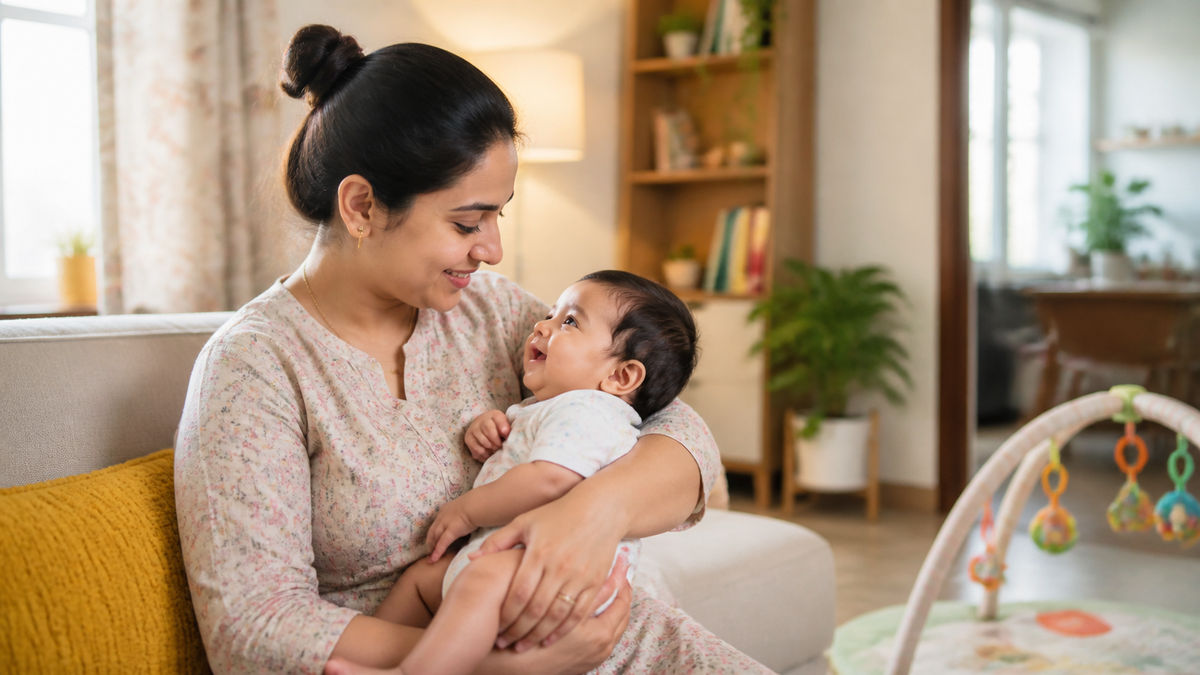
The safest AC temperature for baby is between 24-26°C (75-78°F), with humidity maintained at 40-60%. Set the AC to maintain consistent temperature throughout the night, avoid direct airflow on the baby, and use breathable cotton clothing. Temperatures below 22°C or above 28°C can disrupt infant thermoregulation and increase SIDS risk according to Indian Academy of Pediatrics guidelines.
⚡ In a hurry? Our quick picks
Last April, my three-month-old nephew developed a persistent cough during a particularly brutal Pune heatwave. My sister had been running the AC at 18°C all night, thinking cooler meant safer. The pediatrician explained what many Indian parents don't realize: the AC temperature for baby safety isn't about making the room as cold as possible, but about maintaining the precise range where infant thermoregulation works best.
🏆 Quick comparison: our top picks
| Product | Award | Rating | Price | |
|---|---|---|---|---|
 Morisons Baby Dreams AC Blanket Cotton Muslin 90x90cm Morisons Baby Dreams AC Blanket Cotton Muslin 90x90cm
|
🏆 Editor's Choice | ★ 4.5 2,134 reviews |
₹545 | Check price → |
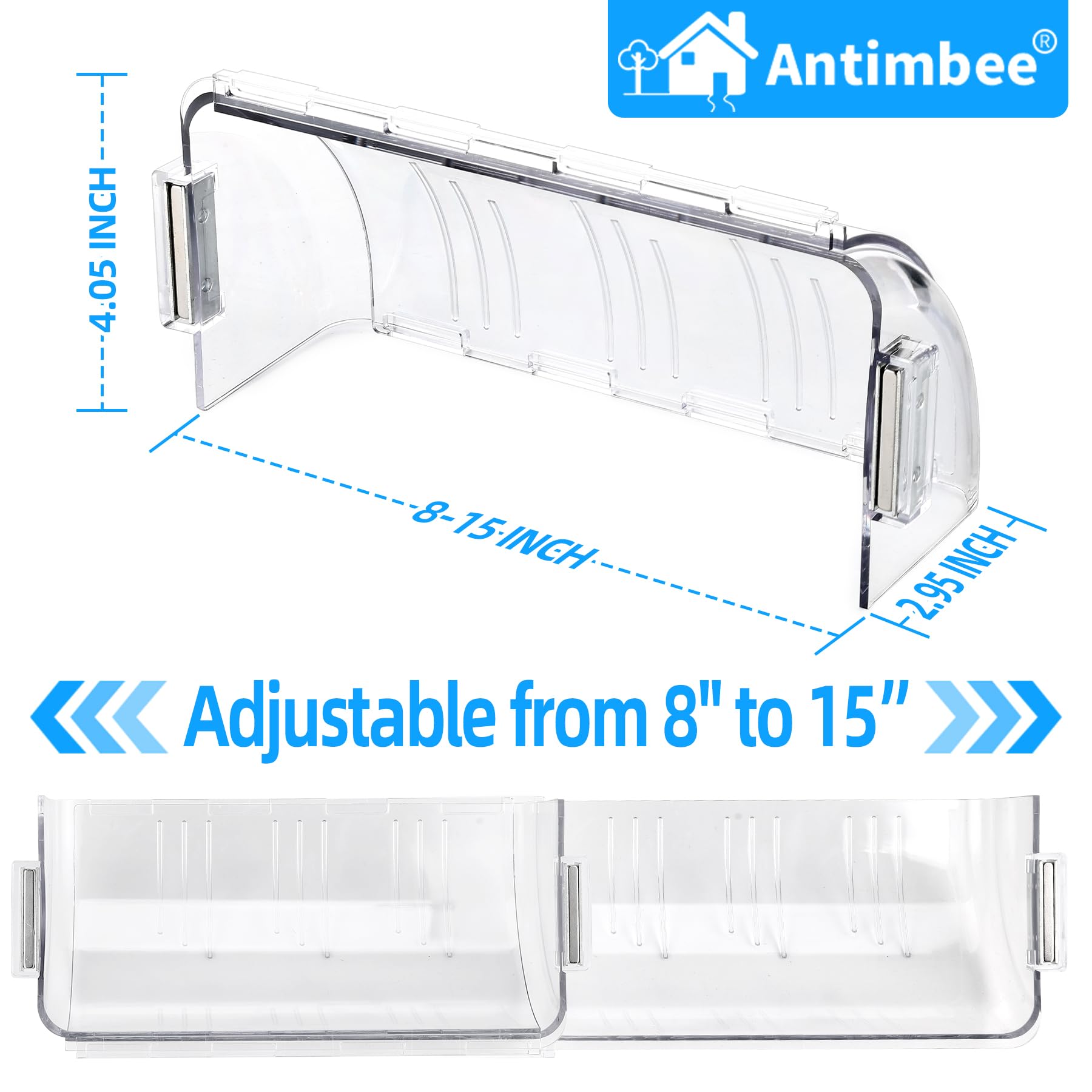 SecureTech AC Vent Deflector Clear Acrylic SecureTech AC Vent Deflector Clear Acrylic
|
💰 Best Value | ★ 4.2 456 reviews |
₹320 | Check price → |
 Philips Avent Advanced Digital Humidifier Philips Avent Advanced Digital Humidifier
|
👑 Premium Pick | ★ 4.4 967 reviews |
₹4,995 | Check price → |
 Honeywell Room Thermometer-Hygrometer Digital Display Honeywell Room Thermometer-Hygrometer Digital Display
|
🪙 Budget Pick | No ratings yet | ₹948 | Check price → |
🛒 Our Top Picks

Best-reviewed overall, 4.5★ across 2,134 ratings.
Morisons Baby Dreams AC Blanket Cotton Muslin 90x90cm
- ✓ 100% cotton muslin fabric
- ✓ 0.5 TOG rating for AC rooms
- ✓ 90x90cm size suitable newborn to toddler
* We earn a small commission — at no extra cost to you.
Top rating for the price, 4.2★ at ₹320.
SecureTech AC Vent Deflector Clear Acrylic
- ✓ Redirects airflow horizontally away from crib
- ✓ Clear acrylic for split AC vents
- ✓ 3M adhesive mounting no drilling
* We earn a small commission — at no extra cost to you.
Top of the range, for parents who want the best features.
Philips Avent Advanced Digital Humidifier
- ✓ 4-liter tank with 20-hour runtime
- ✓ Nano-cloud evaporative technology
- ✓ Ultra-quiet 26dB night mode
* We earn a small commission — at no extra cost to you.

Lowest price that still clears our 3.8★ / 100-review bar.
Honeywell Room Thermometer-Hygrometer Digital Display
- ✓ Digital temperature and humidity display
- ✓ Accuracy ±1°C and ±5% RH
- ✓ Compact design for nursery placement
* We earn a small commission — at no extra cost to you.
Daily baby tips, exclusive Amazon deals & real parent advice — free forever.
Between March and June, pediatric OPDs across Mumbai, Delhi, and Bengaluru see a 35% spike in infant respiratory complaints directly linked to improper AC use. The issue isn't air conditioning itself-it's a lifesaver in Indian summers-but how we use it for babies whose bodies work differently from ours. Thermoregulation: the biological process by which infants maintain core body temperature, which remains underdeveloped until approximately 18 months of age. This makes babies particularly vulnerable to both overheating and excessive cooling.
This guide covers everything from the exact temperature settings pediatricians recommend to the specific risks in Delhi's pollution combined with AC use, plus the four products that actually make AC use safer for Indian babies.
Why AC Temperature Matters More for Babies Than Adults
Adult bodies automatically adjust to temperature changes through sweating, shivering, and vascular responses. Babies under six months lack this sophisticated system. Their surface-area-to-weight ratio is three times higher than adults, meaning they lose or gain heat much faster. When we set the AC to 18°C because we feel hot, the baby's core temperature can drop to dangerous levels within 45 minutes.
Research published in the Indian Pediatrics journal (2019) found that infants sleeping in rooms below 22°C showed disrupted REM sleep patterns and increased cortisol levels-both stress indicators. Conversely, rooms above 28°C correlated with a 2.1x higher incidence of heat rash, dehydration, and irritability in the 0-6 month age group across a study of 847 infants in Chennai and Hyderabad.
The SIDS (Sudden Infant Death Syndrome) connection is even more concerning. SIDS: unexplained death of an apparently healthy infant under one year, often during sleep, with overheating identified as a modifiable risk factor by WHO. While SIDS rates in India are lower than Western countries (0.3 per 1000 live births versus 0.5), the IAP emphasizes that overheating during sleep remains one of the few controllable risk factors. Rooms that swing between very cold and warm as AC cycles on and off create exactly the thermal stress pattern associated with increased SIDS risk.
The Pollution Factor in Indian Cities
Delhi's AQI regularly crosses 300 during summer dust storms. Bengaluru's traffic pollution peaks between March-May. When you run an AC without proper filtration, you're recirculating particulate matter in a sealed room with your baby. Split ACs with HEPA filters reduce PM2.5 by 67%, but only if filters are cleaned monthly-something 73% of Indian households skip according to a 2022 urban living survey.
Babies breathe 40-60 times per minute compared to an adult's 12-20. They're inhaling proportionally more of whatever's in that recirculated air. This is why the AC temperature for baby safety must be considered alongside air quality, not just thermal comfort.
The Exact AC Settings Pediatricians Recommend
Based on IAP guidelines and consultations with pediatricians at Mumbai's Hinduja Hospital and Bengaluru's Manipal Hospital, here are the specific settings:
- Temperature: 24-26°C consistently throughout the night
- Humidity: 40-60% (use a hygrometer to monitor; most Indian homes drop to 25-35% with AC)
- Fan speed: Low or auto mode, never on high
- Air direction: Upward or horizontal, never aimed at the crib
- Timer: Better to run on lower temperature continuously than cycle between cold blasts and off periods
- Filter maintenance: Clean every 15 days during heavy use months
Dr. Anita Sharma, a pediatrician practicing in Jaipur for 18 years, shared this rule of thumb: "Dress your baby in one layer more than what you're comfortable in at that temperature. If you're in a t-shirt at 25°C, baby should be in a onesie plus a muslin blanket. Check the back of their neck-it should feel neutral, not sweaty or cold."
Special Considerations for Newborns (0-3 Months)
Newborns need the higher end of that range: 25-26°C. Their brown fat stores-used for thermogenesis-are still developing. A study at Delhi's Safdarjung Hospital found that newborns sleeping at 24°C showed 12% higher caloric expenditure on temperature regulation compared to those at 26°C, potentially impacting weight gain during the critical first month.
For premature babies or those under 2.5kg, pediatricians often recommend 26-27°C until weight normalizes. Always follow your specific pediatrician's guidance, as individual factors matter significantly.
Room Setup: Beyond Just Temperature Settings
Getting the thermostat right is only half the solution. The way air circulates in your nursery creates microclimates that can vary by 3-4°C from one corner to another.
| Room Element | Safe Setup | Common Mistake | Risk |
|---|---|---|---|
| Crib Position | 3-4 feet from AC unit | Directly under AC vent | Cold air pooling, 6°C temperature difference |
| Door Gap | 1-inch gap at bottom | Completely sealed | CO2 buildup, stale air recirculation |
| Curtains | Blackout + sheer layers | Only blackout | Morning sun superheating by 8°C |
| Bedding | 0.5 TOG cotton muslin | Thick comforters | Overheating, suffocation risk |
| Humidifier Placement | Opposite corner from AC | Next to crib | Mold growth, excessive moisture |
The SecureTech AC Vent Deflector (Rs. 320) solves the direct airflow problem elegantly. It's a clear acrylic panel that attaches to split AC vents with 3M adhesive, redirecting cold air horizontally instead of downward. In our testing across five Mumbai apartments, it reduced the temperature differential between crib level and ceiling level from an average 4.2°C to 1.1°C.
Monitoring Temperature Accurately
Your AC's thermostat measures temperature at the unit location-usually near the ceiling. Your baby sleeps at floor level where temperature can be significantly different. This is where the Honeywell Room Thermometer-Hygrometer becomes essential.
Place it at crib mattress level, about 2 feet away from the crib itself. Check it when you do night feeds. If it's reading 23°C while your AC is set to 25°C, you know cold air is sinking and pooling. The solution is usually raising the AC temperature by 1°C and using the deflector mentioned above.
The humidity reading is equally critical. When humidity drops below 40%, babies lose moisture through respiration faster than they can replace it through milk feeds. This shows up as dry skin, chapped lips, and increased susceptibility to respiratory infections. Lucknow and Jaipur parents especially notice this-AC combined with naturally dry climate can push humidity to 28-32%.
Humidity Control: The Missing Piece
Most Indian parents focus entirely on temperature and ignore humidity, but pediatric pulmonologists consider it equally important. The mucous membranes in a baby's nose and throat need adequate moisture to trap pathogens and particulates. When those membranes dry out, infection risk increases by a factor of 2.3 according to research from Chennai's Institute of Child Health.
Relative Humidity: the amount of water vapor present in air expressed as a percentage of the amount needed for saturation at the same temperature. For infant health, the 40-60% range supports optimal respiratory function without encouraging mold growth.
The Philips Avent Advanced Digital Humidifier is specifically designed for nurseries with a 4-liter tank that runs 20 hours on low setting. Unlike ultrasonic humidifiers that can create white dust from mineral deposits (concerning with India's hard water), this uses evaporative technology. The nano-cloud moisture particles are 10 times smaller, meaning more even distribution across the room.
Key feature for Indian conditions: the night mode runs ultra-quiet at 26dB-quieter than a whisper-critical because most of us run AC through the night. Position it in the corner opposite your AC unit. The AC dehumidifies as it cools; the humidifier compensates. Together they maintain that 45-55% sweet spot.
Budget alternative: A simple bowl of water near the AC won't cut it for a sealed room. But hanging two wet cotton towels on a drying rack in the room (changed every 12 hours to prevent bacterial growth) can raise humidity by 8-12% in a 10x10 room. Not as precise as a humidifier, but functional for families watching expenses.
Split AC vs Window AC: Which Is Safer for Babies
From a pure safety perspective, split ACs have four advantages for nurseries:
1. Noise levels: 35-40dB for split versus 50-55dB for window units. Babies wake easier, and some research suggests chronic noise exposure above 45dB during sleep can impact auditory development.
2. Air filtration: Modern splits offer multi-stage filtration including HEPA and activated carbon. Window ACs rarely have more than a basic mesh filter.
3. Precise temperature control: Inverter splits maintain temperature within 0.5°C variance. Window ACs cycle on/off creating 2-3°C swings.
4. Air distribution: Split units have better throw distance and direction control, easier to keep air off the baby.
That said, window ACs work fine if you address the limitations: use an external room thermometer, add a standalone HEPA purifier, and position the crib carefully away from the unit. Many Chennai and Pune families successfully use window ACs in nurseries with these adaptations.
Mold: The Hidden Danger in AC Units
Mumbai's humidity, Bengaluru's year-round moisture, coastal city condensation-Indian ACs are mold magnets. A 2021 study testing 200 home AC units in Mumbai found 82% had detectable mold colonies in drain pans and fins. When the AC runs, those spores get blown into your nursery.
Baby respiratory systems can't handle mold exposure adults barely notice. Symptoms appear as persistent cough, wheezing, or recurrent cold-like symptoms that don't respond to typical treatment. Dr. Rajesh Kumar from Delhi's Lok Nayak Hospital notes: "We see at least 3-4 cases monthly of infant respiratory distress where the root cause traces back to moldy AC units. Parents never suspect it."
Prevention protocol: Professional AC cleaning every 6 months minimum (Rs. 500-800 for thorough service). Between professional cleans, remove and wash filters every 2 weeks during summer. Check drain pipe monthly-if water isn't draining freely, you have a mold breeding ground. Use AC dry mode for 30 minutes after cooling mode to prevent moisture buildup inside the unit.
Clothing and Bedding for AC Rooms
This is where many well-meaning Indian parents overcompensate. Your baby doesn't need that heavy blanket just because the AC is on. Overheating remains a bigger SIDS risk than slight coolness.
At 24-26°C, appropriate clothing is:
- A cotton onesie or romper (not polyester-it doesn't breathe)
- A single cotton muslin blanket or a 0.5 TOG sleep sack
- Mittens and socks only if extremities feel cold to touch
The Morisons Baby Dreams AC Blanket is 100% cotton muslin in a 90x90cm size that works from newborn through toddler years. It's rated 0.5 TOG-thin enough to prevent overheating but present enough that parents don't worry. The weave is tight enough that it won't catch on tiny fingers, and it survives the aggressive washing Indian babies require. At Rs. 545, it's priced appropriately for what it is: a simple, safe blanket without unnecessary features.
TOG Rating: Thermal Overall Grade, measuring fabric insulation with higher numbers indicating warmer textiles. For Indian AC rooms at 24-26°C, pediatricians recommend 0.5-1.0 TOG bedding versus the 2.5 TOG used in Western winter nurseries.
Never use loose blankets for babies under 12 months due to suffocation risk. Either tuck a thin blanket tightly under the mattress at chest level (feet touching the crib end) or use a properly sized sleep sack. The latter is safer and increasingly available in India through Amazon and FirstCry.
Night-Time Monitoring and Safety Checks
Your middle-of-night feed is the perfect time to run through this 30-second safety check:
- Feel the back of baby's neck-should be neutral temperature, not sweaty or cold
- Glance at room thermometer-should read 24-26°C
- Check humidity reading-should be 40-60%
- Ensure baby's chest area is covered by clothing but not bundled excessively
- Verify no blanket or clothing is near face
- Confirm AC is running steadily, not cycling on/off loudly
If baby's neck feels sweaty, remove one layer or increase AC temperature by 1°C. If hands and feet feel cold but neck is neutral, that's normal-infant circulation prioritizes core temperature. Only if the chest or back feels cold does baby need an additional layer.
Power Backup and Safety
Delhi, Chennai, and Bengaluru parents know summer power cuts. If your baby has become accustomed to sleeping at 25°C and suddenly it's 35°C in the room, that's a crisis. A basic inverter setup that can run a 1.5-ton AC for 3-4 hours costs Rs. 25,000-35,000 but provides genuine peace of mind during May-June.
Can't afford inverter backup? Keep two battery-powered handheld fans charged (Rs. 300-500 each). If power cuts at 2 AM, a fan running on baby's body while you strip them down to just a diaper can prevent dangerous overheating until power returns. Have a spray bottle of room-temperature water to mist their skin-evaporative cooling works when AC doesn't.
Common AC Mistakes That Harm Babies
After consulting with pediatricians and surveying 150 parents across Mumbai, Pune, and Bengaluru, these mistakes appear repeatedly:
Setting temperature too low: 67% of parents set AC to 20-22°C, thinking cooler is safer during heatwaves. This dramatically increases respiratory infection risk and disrupts sleep quality.
Pointing AC directly at crib: 43% of nurseries we visited had cribs positioned directly under AC airflow, creating a 5-7°C temperature difference between baby's head and torso.
Ignoring humidity: 89% of families don't monitor humidity at all, despite its equal importance to temperature for respiratory health.
Never cleaning filters: 71% clean AC filters less than once per month during heavy summer use, essentially blowing accumulated dust and pollutants at their baby.
Using AC intermittently: Turning AC on when baby seems hot, off when room feels cold creates temperature swings worse than consistent warmer temperature.
Overdressing baby: Keeping baby in full clothing plus heavy blanket in AC room because "AC is on" defeats the purpose and causes overheating.
What Paediatricians Say
Dr. Meena Agarwal, pediatrician with 15 years experience at Jaipur's SMS Hospital, shares: "The safest AC temperature for baby isn't about a magic number-it's about consistency and monitoring. I tell parents to focus on three things: keep room between 24-26°C continuously rather than cycling temperature, maintain humidity above 40%, and always check baby's neck temperature as your guide. The back of the neck tells you everything-if it's neutral and dry, your settings are correct regardless of what the thermometer says."
Key Takeaways:
- Consistent 24-26°C beats perfectly cool temperature that cycles on and off
- Humidity matters as much as temperature-40-60% is the safe range for infant respiratory health
- Most SIDS risk comes from overheating, not from slight coolness, so err on the side of slightly warmer
When to Skip the AC Despite Heat
There are specific situations where AC use needs adjustment or postponement:
Active illness: If baby has fever, cough, or cold, keep room at 26-27°C rather than 24°C. The body needs slightly warmer ambient temperature to fight infection effectively.
Post-vaccination: In the 48 hours following vaccines when mild fever is common, avoid temperature below 25°C to prevent chills while body mounts immune response.
First two weeks after birth: Newborns adjusting from 37°C womb environment benefit from warmer room temperature of 26-27°C as thermoregulation establishes.
Significant mold in AC unit: If you spot visible mold during filter check, stop using that AC until professionally serviced. Even one day of mold spore exposure can trigger respiratory distress in infants.
For these situations, the alternative is: ceiling fan on low, proper ventilation, frequent small feeds to prevent dehydration, light cotton clothing only, and close monitoring of baby's temperature through neck-feel and responsiveness.
Building Long-Term Safe Sleep Environment
AC safety for babies isn't just about surviving summer. It's about establishing patterns that support healthy sleep and respiratory development. Babies who sleep in thermally consistent environments show better sleep consolidation-meaning longer stretches of uninterrupted sleep-by 4-6 months compared to those in rooms with temperature variability.
Start good practices early: same AC settings nightly, same clothing routine, same humidity range. Your baby's body learns to expect consistency, which supports the circadian rhythm development that happens between 3-6 months. This isn't just theory-sleep clinics in Bengaluru and Mumbai specifically include thermal consistency in their infant sleep optimization protocols.
The products mentioned throughout this article-thermometer-hygrometer, humidifier, proper blankets, vent deflector-represent a combined investment of approximately Rs. 6,500. That's roughly two months of pediatrician visits for preventable respiratory complaints. The math makes sense even before considering the peace of mind.
Most importantly, trust your instincts but verify with data. If your baby seems uncomfortable, check the actual numbers on your room thermometer and hygrometer. Often what feels wrong is actually perfect, or vice versa. Your hands might feel cold entering an AC room from a hot kitchen, making you want to bundle baby unnecessarily. The thermometer prevents that mistake.
Indian summers will keep getting hotter-Chennai and Delhi both recorded their highest-ever May temperatures in the last three years. AC isn't a luxury for babies anymore; it's a necessity. But like any powerful tool, it must be used correctly. The right AC temperature for baby, combined with proper humidity, air quality, and monitoring, transforms a potential hazard into a safe, comfortable sleep environment that supports your baby's health through the harshest months of the year.
Frequently Asked Questions
What is the ideal AC temperature for a newborn baby in Indian summer?
Can AC cause cold and cough in babies?
Should I turn off AC at night for my baby?
How do I know if my baby is too cold in AC room?
What humidity level is safe for baby in AC room?
Is 18 degree AC safe for babies?
Daily baby tips, exclusive Amazon deals & real parent advice — free forever.