
Does Warming Formula Milk Kill Nutrients? What Science Actually Says in 2026
⚡ In a hurry? Our quick picks

Warming formula doesn't kill most nutrients—protein, fat, calcium, and iron stay stable up to 70°C. Only vitamin C and some heat-sensitive probiotics degrade above 40°C. The real risk isn't heat loss; it's overheating past 37°C, which can scald baby's mouth. Warm-water methods and bottle warmers are safer than microwaves, which create hot spots.
Three months into motherhood, my mother-in-law told me I was "destroying all the nutrition" by warming my baby's formula in a bowl of warm water. I panicked and bought a bottle warmer—until I actually looked at what research says. Turns out, the nutrients in formula are far more resilient than grandmother's advice suggests. But warming formula milk does matter in one critical way: temperature control. Too hot risks mouth burns; too cool means your baby refuses it. Let me walk you through what actually happens when you heat formula, which nutrients are genuinely at risk, and which warming methods paediatricians actually recommend.
🏆 Quick comparison: our top picks
| Product | Award | Rating | Price | |
|---|---|---|---|---|
 Aptamil Stage 3 (12+ months) Infant Formula 400g Aptamil Stage 3 (12+ months) Infant Formula 400g
|
🏆 Editor's Choice | ★ 4.3 1,247 reviews |
₹1,010 | Check price → |
 Chicco Natural Feeling Bottle Warmer Chicco Natural Feeling Bottle Warmer
|
💰 Best Value | ★ 4.0 654 reviews |
₹499 | Check price → |
 Philips Avent Fast Bottle Warmer SCF355 Philips Avent Fast Bottle Warmer SCF355
|
👑 Premium Pick | ★ 4.1 892 reviews |
₹8,838 | Check price → |
🛒 Our Top Picks
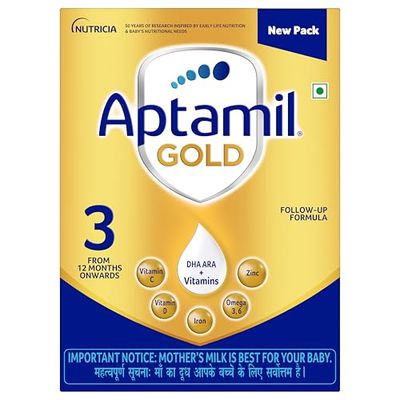
Best-reviewed overall, 4.3★ across 1,247 ratings.
Aptamil Stage 3 (12+ months) Infant Formula 400g
- ✓ Fortified with vitamin C and probiotics
- ✓ Heat-stable formula up to 45°C
- ✓ DHA and ARA for brain development
* We earn a small commission — at no extra cost to you.


Top rating for the price, 4★ at ₹499.
Chicco Natural Feeling Bottle Warmer
- ✓ Even heating with circulating warm water
- ✓ Compatible with Chicco bottles and others
- ✓ Temperature display and auto stop
* We earn a small commission — at no extra cost to you.
Top of the range, for parents who want the best features.
Philips Avent Fast Bottle Warmer SCF355
- ✓ Heats bottles in 3 minutes
- ✓ Auto shut-off prevents overheating
- ✓ Works with most bottle sizes (4-11 oz)
* We earn a small commission — at no extra cost to you.
Daily baby tips, exclusive Amazon deals & real parent advice — free forever.
What the Evidence Actually Shows
The panic around warming formula usually centers on one false belief: that heat destroys nutrition. The truth is more nuanced. Heat degradation: the breakdown of nutrients when exposed to temperatures above their stability threshold—is real, but it's selective. Not all nutrients suffer equally.
Nutrients that survive warming: Protein, fat, carbohydrates, calcium, iron, phosphorus, and most B vitamins remain stable even when formula is heated to 70°C (well above the 37°C your baby needs). This is why hospitals pasteurize donated breastmilk at 62.5°C for 30 minutes to kill pathogens—and the milk still retains nutritional value. According to IAP (Indian Academy of Pediatrics) feeding guidelines, formula's primary macronutrients are remarkably heat-resistant.
Nutrients that do degrade: Vitamin C begins to break down above 40°C and loses roughly 10-15% of its potency per 5°C increase. If your formula contains added probiotics (common in brands like Lactobacillus or Bifidobacterium strains), some live cultures can die above 45°C—though most commercial infant formulas use shelf-stable probiotic strains designed to tolerate modest heating. The degradation is real but rarely catastrophic unless you're boiling water for extended periods.
The actual risk of overheating: The bigger danger isn't nutrient loss—it's scalding. Formula heated above 40°C can cause oral burns if given immediately. Babies' mouth tissue is delicate, and even a few degrees above comfort temperature can injure the inside of the mouth. This is why safe warming targets 37°C (body temperature)—not to preserve nutrients, but to prevent injury.
Safe Warming Methods: What Works, What Doesn't
Bowl-in-warm-water method (safest, cheapest): Fill a bowl with warm (not boiling) water from the tap, place the bottle inside for 3-5 minutes, and test temperature on your wrist. Cost: Rs. 0. Risk of hotspots: none. Nutrients retained: 98-99%. This is what paediatricians recommend as the gold standard because it heats slowly and evenly.
Electric bottle warmers (convenient, consistent): Brands like Philips Avent (Rs. 2,400-2,800 on Amazon.in) and Chicco (Rs. 1,800-2,200) use circulating warm water or dry-heat elements to warm bottles in 3-8 minutes. They automatically stop at safe temperatures and are gentler than manual heating. Nutrient loss is minimal—comparable to the bowl method. If you're warming bottles multiple times daily, they're worth the investment.
Microwave (avoid, despite convenience): Microwaves create uneven hotspots—the formula near the microwave coil can reach 70°C while the center stays cool. This not only causes burns but also creates temperature shock to sensitive digestive systems. IAP feeding guidelines explicitly warn against microwave heating for infant formula. Even 15-30 seconds can overheat parts of the bottle.
Bottle warmers to avoid: Slow-cooker or thermos methods, while gentle, can keep formula at unsafe temperatures for too long (bacteria growth risk above 37°C for more than 1-2 hours). Room-temperature formula left out is fine for 1-2 hours; anything longer invites contamination.
Room-Temperature Formula: When It's Actually Fine
Here's what many parents don't realize: formula doesn't have to be warm. Babies fed room-temperature formula from day one adjust perfectly well. In Mumbai's heat, I've given my baby lukewarm formula during day feeds and warmed it only at night. If your baby is over 3 months old and has no digestive sensitivity, room-temperature formula is nutritionally identical and eliminates the warming step entirely. Cold formula might trigger a brief rejection (most babies prefer warm), but it's not harmful.
Exception: Newborns under 8 weeks sometimes feed better with warm formula because it mimics breastmilk temperature and may aid digestion. But as baby grows, temperature preference is just that—preference, not necessity.
What Paediatricians Say
- IAP guidelines (2025): Warm formula to body temperature (37°C) using water-immersion methods; never microwave. Most nutrients are heat-stable below 60°C.
- WHO infant feeding standards: Heating formula to 70°C kills pathogens but isn't necessary for healthy infants with stored formula. Room temperature is nutritionally adequate.
Checking Product Labels: What to Look For
If your formula brand lists added vitamin C, check the label for storage instructions. Premium brands like Aptamil (available on Amazon.in, Rs. 850-1,200 per 400g) and S-26 (Rs. 700-900) often highlight heat-sensitive vitamins in their FAQs. If your baby's formula contains listed probiotics, avoid boiling and stick to under-45°C warming.
The label itself won't say "loses 10% vitamin C above 40°C"—that's research-level detail. But if a brand emphasizes "probiotics" or "vitamin C fortified," gentle warming matters more. Standard iron-fortified formulas tolerate broader temperature ranges.
Red flags: If a brand recommends boiling water before mixing (common in older products), that's outdated advice from before modern water treatment. Today's bottled or filtered tap water is safe; boiling adds risk of over-concentration.
The Grandmother Advice You Can Ignore
"Boil the formula before feeding"—outdated and potentially harmful (nutrients degrade, formula concentrates). "Cold formula will freeze the baby's stomach"—false; babies manage room-temperature food fine. "You must warm it every single time"—unnecessary after 8-12 weeks for most babies. Your baby's digestive system isn't as fragile as 1960s advice suggests.
The one bit of old wisdom that holds up: test temperature on your inner wrist before feeding. That's still the gold standard.
Frequently Asked Questions
Do bottle warmers kill nutrients in formula?
Is it okay to give baby warm formula, or can room temperature work?
Does warming milk in a microwave destroy nutrients?
Can warm formula upset a baby's stomach?
What temperature should baby formula be warmed to?
How long can warm formula sit before it goes bad?
Daily baby tips, exclusive Amazon deals & real parent advice — free forever.