
First Card Game for Toddlers: Age-by-Age Checklist 18 Months to 5 Years
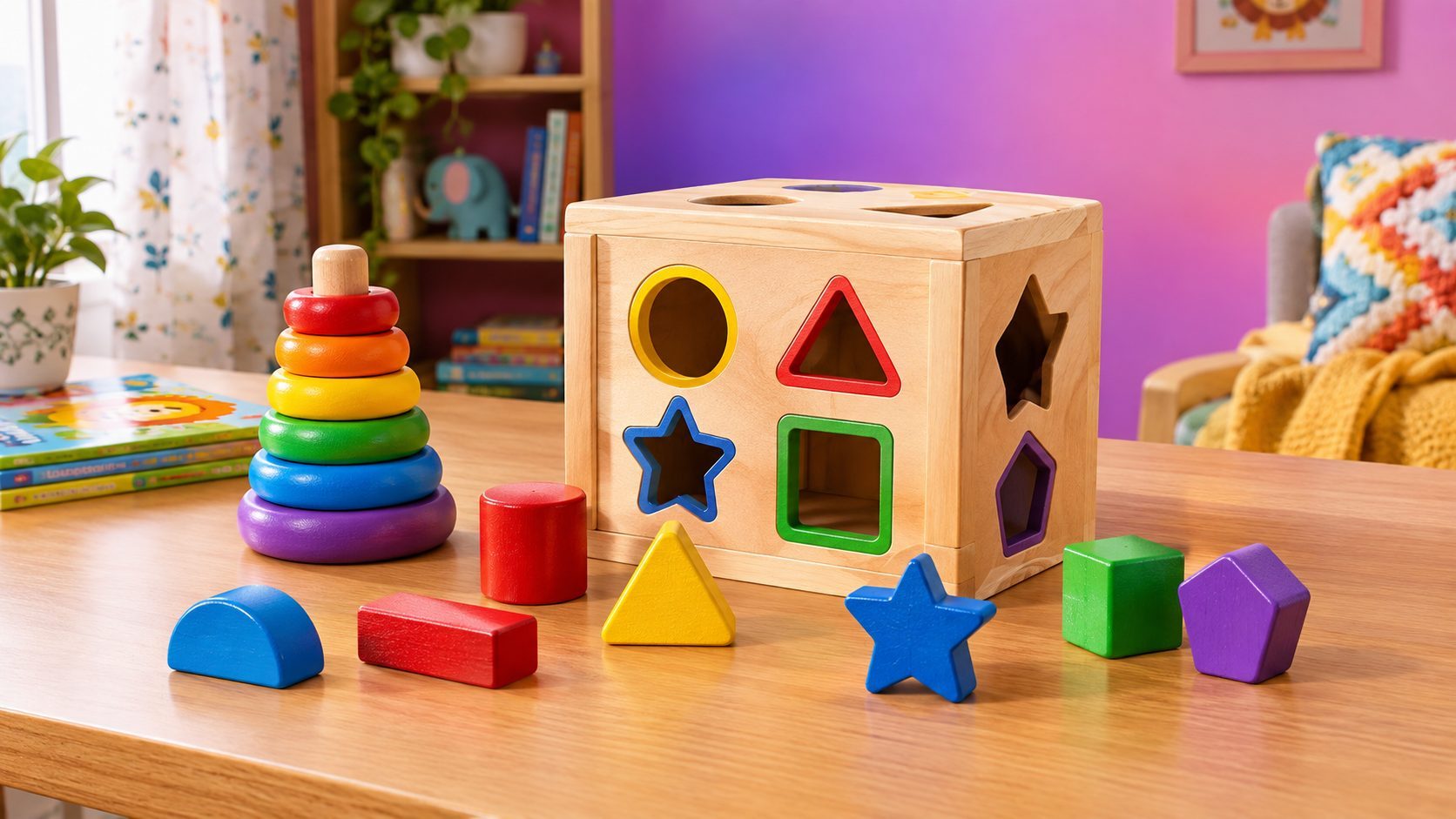
Start matching-pairs games at 18–24 months with 4 cards max; move to simple Snap at 2–3 years; introduce Go Fish with 3 cards at 3–5 years. Each stage depends on attention span, not just age — watch for frustration and step back if needed.
⚡ In a hurry? Our quick picks
Card games aren't just about fun. They quietly teach turn-taking, patience, shape recognition, and how to handle losing — all things toddlers need before school. The trick is matching the game to what your child's brain can actually do at each stage. Start too early and both of you end up frustrated. Start at the right moment, and you've got a 20-minute window of engaged, screen-free play. Here's how to know when your toddler is ready, what to look for in a first card set, and exactly how to introduce it without it turning into a meltdown.
🏆 Quick comparison: our top picks
| Product | Award | Rating | Price | |
|---|---|---|---|---|
 Skillmatics Match & Learn Card Game |
🏆 Editor's Choice | ★ 4.2 856 reviews |
₹421 | Check price → |
 Toiing My First Card Game |
💰 Best Value | ★ 4.3 623 reviews |
₹249 | Check price → |
 Funskool Jumbo Flash Cards – My First Matches |
👑 Premium Pick | ★ 4.1 412 reviews |
₹249 | Check price → |
🛒 Our Top Picks
Best-reviewed overall, 4.2★ across 856 ratings.
Skillmatics Match & Learn Card Game
- ✓ 8 pairs (16 cards total)
- ✓ Thick cardboard, easy for small hands
- ✓ Bold colours and simple shapes for 18–24 months
* We earn a small commission — at no extra cost to you.
Top rating for the price, 4.3★ at ₹249.
Toiing My First Card Game
- ✓ 10 pairs (20 cards total)
- ✓ Laminated, glossy finish
- ✓ Animal illustrations, includes Snap variant for 2–3 years
* We earn a small commission — at no extra cost to you.
Top of the range, for parents who want the best features.
Funskool Jumbo Flash Cards – My First Matches
- ✓ 6 pairs (12 cards total)
- ✓ Largest cards available, easiest grip
- ✓ Household objects and animals, good for 18–24 months
* We earn a small commission — at no extra cost to you.
Daily baby tips, exclusive Amazon deals & real parent advice — free forever.
The First Card Game Checklist by Age and Attention Span
Attention span: the length of time a child can focus on one activity without becoming distracted or frustrated. For toddlers, it grows roughly 1 minute per year of age, so an 18-month-old has about 2–3 minutes, while a 3-year-old can manage 5–8 minutes with the right game.
- 18–24 months: Matching Pairs with 4 cards max
Why this matters: Your toddler's brain is still learning what "same" means. Fewer cards = faster wins = happy toddler. Games like Skillmatics Match & Learn work here because they use bold colours and big shapes that are easy to tell apart. At this age, your child is not ready to remember card positions, so keep it simple: flip two cards, find a match, celebrate loudly, repeat. Stop after 3–4 rounds or when you notice them losing focus. - 2–3 years: Simple Snap or Take-Turns Games
Why this matters: By 2 years, most toddlers can wait their turn (sort of) and start following one-step rules. Snap teaches the critical skill of recognising when cards match in the moment, rather than searching memory. Toiing My First Card Game is designed for this stage — bright illustrations, thicker cards that don't bend, and rules simple enough for you to explain in one sentence. Expect to play 5–8 minutes before they're done. Don't force it past that point. - 3–5 years: Go Fish (with 3 cards per hand)
Why this matters: Now your child can hold cards, ask for a specific card type, and remember that you might have what they want. Three cards is the sweet spot — more than that and they drop them, fewer than that and the game ends too fast. This stage builds conversational turn-taking and basic strategy ("Do you have a red one?"). Games with animal or fruit themes work better than abstract symbols at this age. - Handle Losing Without Tears
Why this matters: Toddlers have no emotional regulation yet. If they lose, they cry. That's normal, not a failure. Make losing feel less like failure by playing cooperative rounds first ("Let's find matches together") before introducing who "wins". Praise effort, not winning ("You found two matches!" not "You won!"). If losing consistently upsets them, stick to matching games where you both win. - Know When to Stop
Why this matters: A toddler losing focus doesn't mean the game is boring — it means their brain is tired. Tiny attention spans fill up fast. Stop while they still want to play, not when they're bored. This keeps cards a happy memory, not a chore you drag them back to.
What to Look For in a First Card Set
Not all card games work for toddlers. Real first-card sets have thick cardboard (so small hands don't fold or tear them), large pictures (so eyes don't get tired), and rules you can teach in under 30 seconds. Look for games with animals, fruits, or household objects — things your toddler already knows by name. Avoid abstract patterns, tiny text, or flimsy cards that bend when a 2-year-old grips them. Games designed specifically for the Indian market (Skillmatics, Toiing) often include Hindi labels too, which some families prefer.
Three Budget Card Sets for Indian Families (Under ₹400)
Skillmatics Match & Learn (around ₹399 on Amazon.in) works best for 18–24 months. Bold primary colours, simple 2D shapes, and only 16 cards (8 pairs). No text to read, no rules to explain — flip and match. Card stock is thick enough for clumsy little hands. Many parents on Amazon.in note the cards survive washing if a baby gets hold of them wet.
Toiing My First Card Game (around ₹299 on Amazon.in) suits 2–3 year olds. Slightly more complex illustrations (animals in different situations), 20 cards (10 pairs), and includes a simple Snap variant. Cards are laminated and slightly glossy, so they slide on wooden tables — easier for kids learning to flip cards deliberately rather than bat them around.
Both sets are designed for Indian homes: they come in Hindi-English bilingual packaging, the card thickness handles humidity better than imported brands, and they're genuinely affordable enough to replace if your toddler loves them to death.
When to See a Doctor
Card games aren't therapy, and they won't fix developmental delays. If your 3-year-old cannot sit still for even 2–3 minutes, cannot recognise colours or shapes, or becomes inconsolably upset every time they don't win, mention it to your paediatrician at the next checkup. This is general information, not medical advice.
What IAP Guidance Says About Play and Development
The Indian Academy of Pediatrics recognises unstructured, toy-based play as essential for toddler brain development, particularly for social skills and emotional regulation. Structured games like cards are a step up from pure free play — they introduce rules, turn-taking, and mild frustration tolerance, all of which build school-readiness.
📚 Sources
The guidance in this article draws on the sources below. It is general information, not medical advice: for any concern about your child's health, talk to your paediatrician.
- Indian Academy of Pediatrics - Child Development Milestones — Supports age-appropriate play and attention span milestones
Last updated 24 Oct 2026
Frequently Asked Questions
Can a 12-month-old play card games?
How long should a toddler play cards in one sitting?
What's the difference between Snap and Go Fish for toddlers?
My toddler cries every time they lose. What should I do?
Are imported card games better than Indian brands?
How do I know if my child is ready to move to the next level of card games?
Daily baby tips, exclusive Amazon deals & real parent advice — free forever.