
How to Read Baby Skincare Labels in India: What Marketing Terms Really Mean
Most marketing terms on baby skincare—'mild', 'gentle', 'natural', 'pediatrician recommended'—have no legal definition in India. Instead, check ingredient order (first 5 ingredients matter most), preservative type, pH claims with numbers, and whether fragrance is disclosed. Use a simple 4-step checklist: read the ingredient list, verify the pH, check for banned ingredients, and do a patch test.
ℹ️ General information, not medical advice. If your baby seems unwell or anything worries you, talk to your paediatrician. Medical disclaimer
⚡ In a hurry? Our quick picks

If you've stood in a shop or scrolled through Amazon.in holding a baby lotion bottle, squinting at the label, you're not alone. Parents often tell me they feel lost between claims like 'dermatologist tested', 'hypoallergenic', and 'made with natural ingredients'—none of which are regulated in India the way they should be. I spent weeks looking at actual regulatory guidance from IAP (Indian Academy of Pediatrics) and BIS standards, and the truth is simpler than the labels make it sound. Most of these terms are marketing language with zero legal backing. What actually protects your baby's skin is learning to read three things: what's in the bottle, in what order, and what that order tells you about the formula.
🏆 Quick comparison: our top picks
| Product | Award | Rating | Price | |
|---|---|---|---|---|
 Sebamed Baby Wash 200ml |
🏆 Editor's Choice | ★ 4.4 3,127 reviews |
₹279 | Check price → |
 Himalaya Baby Lotion 200ml |
💰 Best Value | ★ 4.1 4,256 reviews |
₹316 | Check price → |
 Aveeno Baby Lotion 354ml |
👑 Premium Pick | ★ 4.2 2,445 reviews |
₹1,569 | Check price → |
 Cetaphil Baby Wash with Organic Calendula 230ml |
🪙 Budget Pick | ★ 4.3 2,891 reviews |
₹653 | Check price → |
🛒 Our Top Picks

Best-reviewed overall, 4.4★ across 3,127 ratings.
Sebamed Baby Wash 200ml
- ✓ pH 5.5 (skin-barrier friendly)
- ✓ Fragrance-free
- ✓ Soap-free, dermatologically tested
* We earn a small commission — at no extra cost to you.

Top rating for the price, 4.1★ at ₹316.
Himalaya Baby Lotion 200ml
- ✓ Herbal blend with olive oil and almond oil
- ✓ Paraben-free
- ✓ Budget-friendly
* We earn a small commission — at no extra cost to you.
Top of the range, for parents who want the best features.
Aveeno Baby Lotion 354ml
- ✓ Contains oatmeal extract
- ✓ Fragrance-free
- ✓ Hypoallergenic
* We earn a small commission — at no extra cost to you.
Lowest price that still clears our 3.8★ / 100-review bar.
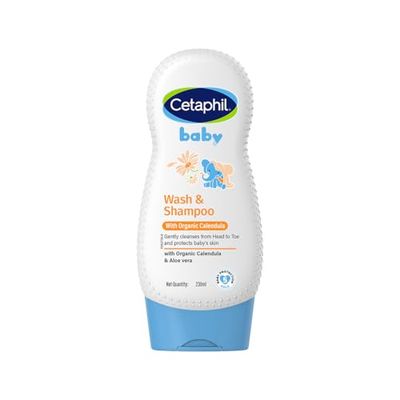
Cetaphil Baby Wash with Organic Calendula 230ml
- ✓ pH neutral, tear-free formula
- ✓ Hypoallergenic
- ✓ Suitable from birth
* We earn a small commission — at no extra cost to you.
Daily baby tips, exclusive Amazon deals & real parent advice — free forever.
The good news: you don't need a chemistry degree. This guide breaks down the 4-step framework that takes 60 seconds per product, plus the red flags that should make you put the bottle down.
Step 1: Understand the Ingredient Order Rule
Ingredients on every skincare label are listed in descending order by weight—the heaviest first, lightest last. This single fact changes everything about how you read a label. The first five ingredients make up roughly 80% of what your baby is putting on their skin, so they matter far more than ingredient #23 buried at the end.
- Water or aqua as ingredient #1 is normal: Most baby washes and lotions start with water because it's the carrier. This doesn't mean the product is mostly water in a bad way—it's the base everything else sits in.
- Look for what comes after water: If ingredient #2 is a gentle cleansing agent (like sodium lauryl glucoside or cocamidopropyl betaine) rather than a harsh sulphate, the formula leans gentle. If a fragrance or essential oil appears in the top 5, that product prioritises scent over simplicity.
- Preservatives tell a story: Preservatives are additives that prevent bacterial and mold growth in the bottle. Common ones in Indian baby products include phenoxyethanol, methylisothiazolinone, and sodium benzoate. These aren't inherently harmful—they keep the product safe for your baby. The brand must disclose them by law; if you see 'preservative-free', that's a red flag because it's either not true or the product won't stay safe once opened.
Why this matters: A lotion listing 'glycerin' as ingredient #2 (a humectant that draws moisture to skin) versus one listing 'dimethicone' as #2 (a silicone that sits on skin) serves very different purposes. Neither is wrong, but knowing the difference helps you match the product to your baby's skin type.
How to Identify Original Skincare Products and Reject Marketing Myths
Before you even get to the ingredients, the label itself tells you whether a brand is being honest. Here's what separates real claims from empty marketing in India's baby skincare market.
- 'Mild' and 'gentle' mean nothing: These words have no legal definition under Indian regulations. A brand can print 'mild' on any product without proving it. Instead, look for specific claims like 'pH 5.5–7.0' or 'hypoallergenic' paired with an actual ingredient list—those are measurable.
- 'Natural' doesn't mean safe for babies: Tea tree oil, lemon extract, and lavender are 'natural', but they're also common irritants for sensitive baby skin. IAP guidance suggests that for newborns and babies under 6 months, simpler formulas (fewer botanical extracts) are often safer. If a product says 'made with natural ingredients', check if those ingredients appear early in the list—if they do, the product prioritises them; if they're near the end, they're mostly marketing.
- 'Pediatrician recommended' is unverifiable: No regulatory body tracks which paediatricians recommend which products. This claim can't be checked and often appears on products with the same ingredients as non-recommended ones. What matters is whether the product meets safety standards, not whether an unnamed doctor endorses it.
- 'Hypoallergenic' is a promise, not a guarantee: It means the product is formulated to minimise allergic reactions, but every baby's skin is different. No product is truly allergy-proof. This term is useful as a signal of intent—the brand tried to keep allergens low—but always patch-test before use.
Why this matters: These terms are why parents buy products that don't actually suit their baby. A lotion calling itself 'gentle' might contain fragrance or essential oils that irritate your baby's skin, while a simpler, unbranded formula works better. The label language doesn't tell you what's actually inside; the ingredient list does.
Step 2: Check the pH Claim and What It Means
pH is a measure of acidity or alkalinity on a scale of 0–14; 7 is neutral, below 7 is acidic, above is alkaline. Baby skin is more acidic than adult skin (a pH of around 5–5.5), so products matched to this range are gentler and less likely to disrupt the natural skin barrier. If a brand lists a pH range on the label, they're being transparent about a testable property—and you can hold them to it.
- pH 5–7 is the safe range for baby wash and lotion. If the label says 'pH 5.5', that's a good sign the brand tested the product and cares about skin barrier health.
- If no pH is mentioned, it doesn't mean the product is unsafe— but it means the brand didn't prioritise this detail. Many Indian baby products don't list pH. In that case, look at other clues: ingredient order, absence of strong fragrance, and online reviews mentioning sensitivity.
- Extremely high pH (above 8) is a red flag: This suggests a harsh, soap-like formula that can dry out baby skin. If you see an unlabelled product used by your baby that causes dryness or redness, the pH might be too high.
Why this matters: A baby wash with pH 6 won't strip your baby's skin the way an alkaline bath soap will, even if both clean well. This single number can prevent eczema flare-ups in sensitive babies.
Step 3: Know the Red-Flag Ingredients and What's Actually Banned
Some ingredients are banned in the EU or US but still appear on shelves in India. Others are simply not recommended for babies under 6 months. Knowing the difference saves you from needless worry and from buying products that genuinely don't suit newborns.
- Parabens (methylparaben, propylparaben, butylparaben): Used as preservatives in many baby products sold in India. They're not banned in India, but some parents prefer to avoid them based on sensitivity concerns. The brand will list them if present. If a product says 'paraben-free', check what preservative it uses instead—there's always a preservative.
- Talc: Banned in baby powders in some markets but still appears in some Indian products. BIS standards allow talc in baby powder under certain limits. If you want to avoid it, look for products explicitly labelled 'talc-free' or using alternatives like rice powder or corn starch.
- Fragrance or 'parfum' (undisclosed fragrance): If the ingredient list says just 'fragrance' or 'parfum', the exact components aren't listed—they're protected as trade secrets. For babies under 6 months, fragrance-free is often safer. Older babies can usually tolerate mild scent, but check if it's listed as 'fragrance', 'essential oil', or a specific ingredient like 'lavender oil'.
- Formaldehyde releasers (imidazolidinyl urea, dmdm hydantoin): Preservatives that release small amounts of formaldehyde over time. Not banned in India but uncommon in baby ranges and disliked by parents with sensitive-skin babies. They'll be listed on the label.
- Dimethicone and silicones: Not harmful, but they sit on the skin rather than absorb. Some parents prefer lotions without them for newborns; others find them helpful for moisture lock. Neither is wrong—it's a formula choice, not a safety issue.
Why this matters: Most of these ingredients aren't dangerous at the levels used in baby products, but if your baby has eczema or very sensitive skin, knowing where to find them on the label helps you identify patterns. For example, if three products with dimethicone cause irritation and three without don't, you have a clue about your baby's skin preferences.
Step 4: The Patch Test and When to See a Doctor
Even the best label can't predict how your baby's unique skin will react. The final step—before use on the full body—is always a patch test. Apply a small amount to your baby's inner arm or behind the ear, wait 24 hours, and watch for redness, swelling, or rash. If nothing appears, it's usually safe to use on larger areas. This simple step prevents many bad reactions before they start.
Follow the product instructions for age recommendations. If the label says 'from 3 months', don't use it on a newborn, even if you think it's safe—the brand tested it for that age group, and younger skin may react differently.
Which Brands Are Best for Baby Skin Care in India?
Rather than naming favourites—which changes based on your baby's skin type and your budget—here's how to evaluate any brand you see on Amazon.in: Check if the brand publishes its full ingredient list online (on the official site, not just the product page), whether they list pH or safety standards, and what parents say in Amazon reviews about sensitivity reactions. Brands like Sebamed, Cetaphil, and Aveeno publish detailed ingredient information; Indian brands like Himalaya and Chicco have strong Amazon review volumes showing real parent feedback. None is universally 'best'—your baby's skin will tell you what works.
What IAP and WHO Guidance Says
IAP Guidelines on Baby Skin: The Indian Academy of Pediatrics recommends plain water or mild cleansers for babies under 6 months; fragrance-free formulas are preferred for newborns. After 6 months, a gentle baby wash with pH 5–7 is appropriate, and moisturising lotions should follow immediately after bathing while skin is still damp.
WHO on Baby Skincare: The World Health Organization notes that intact skin is the baby's first barrier against infection and allergens. Harsh cleansers or products that disrupt this barrier (high pH, strong fragrance) increase the risk of dermatitis and colonisation by harmful bacteria. Simple, minimal formulas protect this barrier better than complex ones.
Red Flags That Should Stop You From Buying
- No ingredient list visible on the label or online.
- Ingredient list that doesn't list preservatives (every product needs one to stay safe).
- Strong, artificial fragrance that persists after washing your hands.
- A price far below competitors with the same brand name (may indicate counterfeit).
- Labels with spelling errors or smudged printing (sign of low-quality manufacturing or counterfeiting).
When to See a Doctor
If your baby develops a rash, oozing, severe redness, or swelling within 24 hours of using a new product, stop using it and consult a paediatrician. If a rash persists for more than 3 days after stopping the product, see a doctor—it might be contact dermatitis, eczema, or another condition unrelated to the product. This is general information, not medical advice.
📚 Sources
The guidance in this article draws on the sources below. It is general information, not medical advice: for any concern about your child's health, talk to your paediatrician.
- Indian Academy of Pediatrics - Guidelines on Baby Skin Care — Supports guidance on pH recommendations and age-appropriate cleansers
- WHO - Skin Barrier and Infection Prevention in Infants — Supports information on skin barrier integrity and fragrance/irritant risks
- Bureau of Indian Standards - Baby Care Products Regulations — Supports information on talc limits and preservative standards in India
Last updated 29 Oct 2026
Frequently Asked Questions
How do I identify original skin care products on Amazon.in?
Is 'natural' baby skincare safer than chemical-based?
What does 'hypoallergenic' really mean on baby products?
Why isn't pH listed on every baby product label?
Are parabens and talc actually dangerous for babies?
What's the difference between a 'mild' and 'gentle' baby wash?
Daily baby tips, exclusive Amazon deals & real parent advice — free forever.