
Newborn Sleep Guide: Weeks 1–4 for Indian Homes & Joint Families
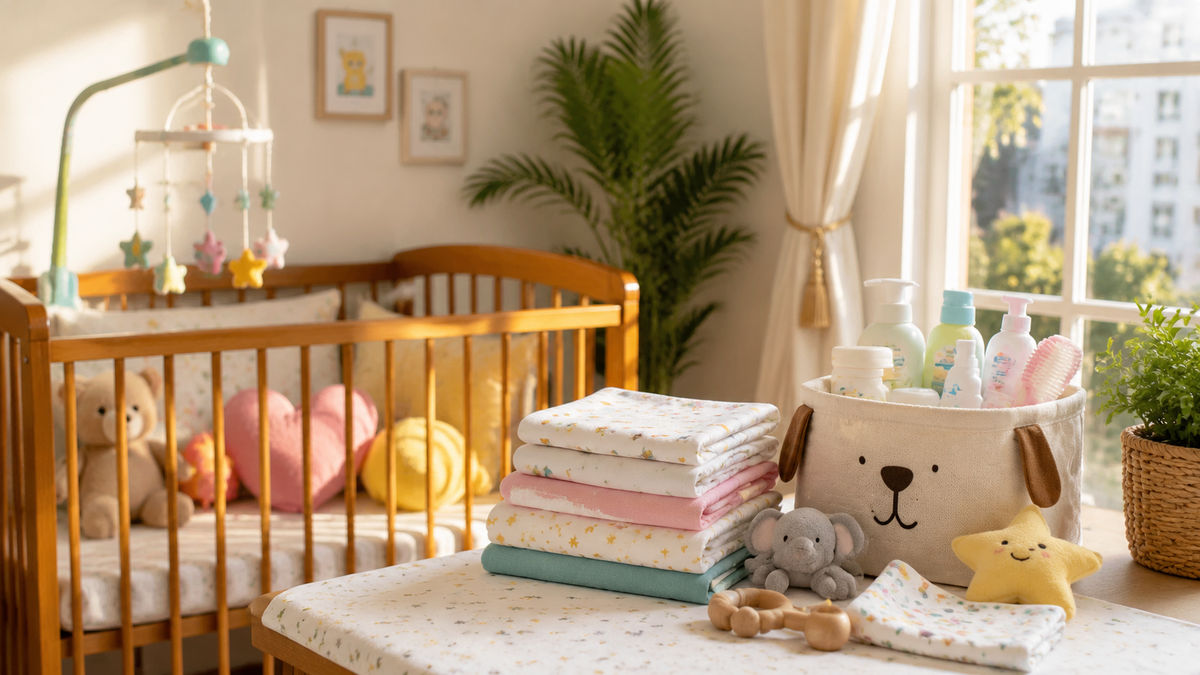
In the first month, newborns typically sleep 16–17 hours scattered across 7–8 short stretches, waking every 2–4 hours to feed. Safe sleep means room-sharing without bed-sharing (crib or co-sleeper in your room), on their back, on a firm surface, with no pillows or blankets—follow IAP 2026 guidelines even if grandparents suggest otherwise.
ℹ️ General information, not medical advice. If your baby seems unwell or anything worries you, talk to your paediatrician. Medical disclaimer
⚡ In a hurry? Our quick picks


The first month of your newborn's life is less about "sleep schedules" and more about understanding why their sleep looks like it does—and how to stay sane when it doesn't. If you're navigating this with parents, in-laws, and strong opinions about how baby "should" sleep, this guide translates IAP (Indian Academy of Pediatrics) safe sleep science into language that works in real Indian homes where three generations share space.
🏆 Quick comparison: our top picks
| Product | Award | Rating | Price | |
|---|---|---|---|---|
 R for Rabbit Bedside Co-Sleeper R for Rabbit Bedside Co-Sleeper
|
🏆 Editor's Choice | ★ 4.4 892 reviews |
₹10,748 | Check price → |
 Mee Mee Baby Sleep Sack (0-6 Months) Mee Mee Baby Sleep Sack (0-6 Months)
|
💰 Best Value | ★ 4.3 567 reviews |
₹499 | Check price → |
 LuvLap Portable Baby Bassinet LuvLap Portable Baby Bassinet
|
👑 Premium Pick | ★ 4.1 1,243 reviews |
₹499 | Check price → |
🛒 Our Top Picks

Best-reviewed overall, 4.4★ across 892 ratings.
R for Rabbit Bedside Co-Sleeper
- ✓ Attaches securely to adult bed
- ✓ Folds for storage and travel
- ✓ BIS safety certified
* We earn a small commission — at no extra cost to you.


Top rating for the price, 4.3★ at ₹499.
Mee Mee Baby Sleep Sack (0-6 Months)
- ✓ Lightweight cotton-polyester blend
- ✓ No zipper design for safety
- ✓ Prevents blanket entanglement
* We earn a small commission — at no extra cost to you.


Top of the range, for parents who want the best features.
LuvLap Portable Baby Bassinet
- ✓ Lightweight and portable
- ✓ Mesh sides for visibility
- ✓ Folds for storage
* We earn a small commission — at no extra cost to you.
Daily baby tips, exclusive Amazon deals & real parent advice — free forever.
We'll walk through the actual sleep patterns week by week, settle the co-sleeping debate with data instead of guilt, show you exactly how to set up room-sharing safely, and give you tactics to protect your baby's sleep from well-meaning visitors. Let's start with what's actually happening in your baby's brain and body.
How Newborn Sleep Actually Changes: Week by Week (Days 1–30)
Days 1–7 (The Blur Week): Your baby is likely sleeping 16–17 hours in 24 hours, but in fragments of 30 minutes to 2 hours, waking mainly to feed and pass stool. Expect no pattern yet—this is not lazy parenting, this is biology. Newborns have immature circadian rhythms; they cannot tell day from night. The "rule" here: respond to hunger cues, not a clock. Most newborns feed 8–12 times in 24 hours.
Days 8–14 (Cluster Feeding Starts): Around day 5–7, many babies enter cluster feeding: a phase where they feed every 30–60 minutes for 2–3 hours, then sleep longer. This is normal lactation boosting, not a sign your milk is insufficient. Sleep happens around feeding bursts—you might see one 3-hour stretch appear, but don't rely on it yet. Nights still look like days; your baby's melatonin hasn't kicked in.
Days 15–21 (First Rhythm Emerges): Some babies begin sleeping slightly longer at night (3–4 hours) and slightly shorter during the day. This is the first whisper of a circadian rhythm. Sleep might consolidate into 2–3 hour blocks. Daytime naps are still chaotic—avoid the pressure to make them "happen." IAP guidelines recommend watching your baby's own cues, not forcing a schedule at this age.
Days 22–30 (The One-Month Shift): By week 4, many babies show a loose preference for slightly longer night sleeps (4–5 hours if you're lucky) and recognize day vs. night better. However, every baby is different—some still wake every 2–3 hours, and that's within normal range. The key milestone: your baby can now be placed on their back consistently and will tolerate brief periods awake without immediate distress.
During all four weeks, sleep mostly follows feeding. Expect the pattern: baby feeds → baby sleeps 30 minutes to 3 hours → baby wakes → baby cries → you check diaper → baby feeds again. This is not broken sleep; it's newborn sleep.
Safe Sleep Setup: Room-Sharing Without Bed-Sharing
IAP 2026 and WHO both recommend room-sharing (baby sleeps in your room) without bed-sharing (baby sleeps in their own surface) for at least the first 6 months, ideally 12 months. This drops SIDS (Sudden Infant Death Syndrome) risk by 50%. In joint families, this can feel impossible—but here's how to navigate it:
Option 1: Bedside Co-Sleeper (Best for Shared Rooms)
A bedside co-sleeper attaches to your bed, giving baby their own firm surface but keeping them arm's reach away. The R for Rabbit Bedside Co-Sleeper (Rs. 6,999 on Amazon.in) is designed for Indian room sizes—compact, folds away, and doesn't monopolize space if grandparents need to enter. It meets BIS safety standards and allows you to feed without fully waking or lifting baby. Parents in Mumbai, Delhi, and Bengaluru report it's easier to defend with joint families because it's clearly a separate sleeping space, not co-sleeping in the cultural sense.
Option 2: Bassinet (Portable, Flexible)
The LuvLap Bassinet (Rs. 3,499) sits beside your bed but detaches completely. Useful if your room layout changes daily (visitors, joint family rotations) or if you move between rooms. Less secure than a bedside co-sleeper, but more flexible. Some parents use it during the day in the living room and move it to the bedroom at night.
Room-Sharing Setup Rules (IAP-Backed):
- Firm, flat surface: Crib, bassinet, or co-sleeper mattress must be firm (press your hand—it should not indent). No adult pillows, blankets, bumpers, or stuffed animals in baby's sleep space.
- Back sleeping always: Place baby on their back for all sleeps (naps and night), even if a grandparent insists side-sleeping is safer. It's not—back sleeping reduces SIDS risk by 70%.
- Room temperature: Keep the room between 20–24°C. If using AC, set it to 23°C minimum and dress baby in a sleep sack (not a blanket). If using a fan, point it away from baby and run it on low; never over the crib. IAP notes that overheating increases SIDS risk.
- Separate sleep surface: Baby's crib/co-sleeper should be within arm's reach but not touching your bed (prevents accidental rolling or smothering).
- No pacifiers yet: IAP recommends introducing pacifiers only after breastfeeding is established (if breastfeeding), usually after 4 weeks. If bottle-feeding from birth, pacifiers can be used after the first feeding is established (1–2 weeks).
What paediatricians say: According to IAP 2026, room-sharing without bed-sharing is the single strongest sleep safety intervention for infants under 6 months in India. Bed-sharing (parent and baby on the same sleep surface) dramatically increases SIDS, suffocation, and accidental injury risk, especially if parents are drowsy or if blankets/pillows are present.
Co-Sleeping vs. Crib: The Joint Family Conversation
If your baby's grandparents grew up with co-sleeping (baby in parent's bed) and you're proposing a crib, expect pushback. Here's how to frame it with data:
"We're room-sharing, not co-sleeping." Baby sleeps in the room with us—grandparents can hear every sound. But baby sleeps in their own crib/co-sleeper because that's what IAP and WHO now recommend to prevent SIDS. It's not about rejecting tradition; it's about what we know now that we didn't 40 years ago.
If bed-sharing feels unavoidable (space, family pressure, or breastfeeding ease), IAP's harm-reduction guidelines apply: remove all blankets and pillows from the bed, never co-sleep if you're drowsy or have taken alcohol/sedatives, keep baby skin-to-skin, avoid overheating, and consider a co-sleeper attachment as a compromise. But be clear: room-sharing in a separate crib is safer.
Managing Visitors & Protecting Baby's Sleep
In week 1–2, your baby will be a novelty. Relatives will want to hold, photograph, and comment on sleep. This wrecks any emerging rhythm and exhausts you. Set boundaries early:
- "We're feeding every 2–3 hours." Tell visitors the feeding schedule and that you'll hand baby back right after, or ask them not to visit during nap windows (even though baby naps randomly—they don't need to know that).
- "After 1 month." If visits are overwhelming, ask relatives to wait until week 5 when baby is slightly more predictable and you're less fragile.
- Hand-off rule: Whoever holds baby must not talk loudly, must sit (so no sudden standing/jostling), and must return baby awake or drowsy, not fully asleep. Waking a sleeping newborn teaches them they can't fall into deep sleep without being disturbed.
- Nap protection: Announce nap times (even approximate ones—"baby napped at 10 am, might nap again at 1 pm") and ask visitors to step outside or mute their phones. This sounds dramatic but 10 minutes of uninterrupted sleep can mean the difference between a settled baby and hours of fussiness.
Feed-Sleep Cycles & Why They Matter
In the first month, feed-sleep cycles (baby feeds → falls asleep → wakes hungry → feeds) are normal and healthy. Don't panic about "feeding to sleep." At this age, it's not a bad habit; it's biology. Babies are neurologically programmed to fall asleep after feeding because lactose triggers sleepiness.
By day 10–14, you might notice baby sleeps 45 minutes after a feed, then wakes fussy. This is not hunger—it's the sleep cycle ending. Resist re-feeding immediately; try rocking, skin contact, or white noise first. If baby is truly hungry, feed again. This distinction matters because it prevents overfeeding and teaches your baby that sleep and food are separate (a habit that helps later).
Track feeds loosely (time, duration, which breast/bottle) for the first 2 weeks, mainly to confirm baby is getting enough. By week 3, if your baby is gaining weight (should gain 15–30 grams daily) and has 6+ wet diapers daily, you can stop tracking obsessively.
Room Temperature & Sleep Safety
Overheating is a hidden SIDS risk. In Indian homes:
- AC rooms: Set to 23°C minimum. Dress baby in a lightweight sleep sack (not a blanket). This prevents overheating and the panic of "did I cover baby too much?"
- Fan in the room: Safe, but point it away from baby's crib. A fan circulates air and prevents pockets of warm, stale air—both good—but direct airflow on a newborn is unnecessary.
- Ceiling fan above the crib: Avoid. It's loud, baby can feel wind shifts, and dust falls. Keep the crib away from directly under the fan.
- Humid climates (Bangalore, Chennai, Kolkata): Mild humidity (40–60%) is fine. Above 70% can worsen reflux; use a dehumidifier if needed. Do not use mosquito repellent or vaporizer directly in baby's room—ventilate first.
Dress baby appropriately for room temperature: in AC at 23°C, a onesie plus a sleep sack is enough. Check baby's neck and chest (not hands/feet—they're always cool) to gauge warmth.
The hardest week for most parents is week 2–3, when cluster feeding is intense, you're sleep-deprived, and people suggest baby "isn't sleeping enough." Baby is sleeping the normal amount; you're just awake for most of it. Protect your own sleep by resting when baby rests, even if it means dishes pile up. And remember: by week 6–8, the nightmare blur does ease. Your baby will begin to have longer sleep stretches, and you will eventually sleep more than 90 minutes at a time.
Frequently Asked Questions
What is the 3-3-3 rule for newborns?
How much should a 1-month-old newborn sleep?
Can I let my newborn sleep 5 hours at night?
Is it safe to use a co-sleeper instead of bed-sharing with grandparents watching?
What temperature should a newborn sleep in with AC?
Why does my newborn wake up 30 minutes after falling asleep?
Daily baby tips, exclusive Amazon deals & real parent advice — free forever.