
Kitchen Mixer vs Baby Blender for Purees: When Your Mixer Works & When You Need an Upgrade
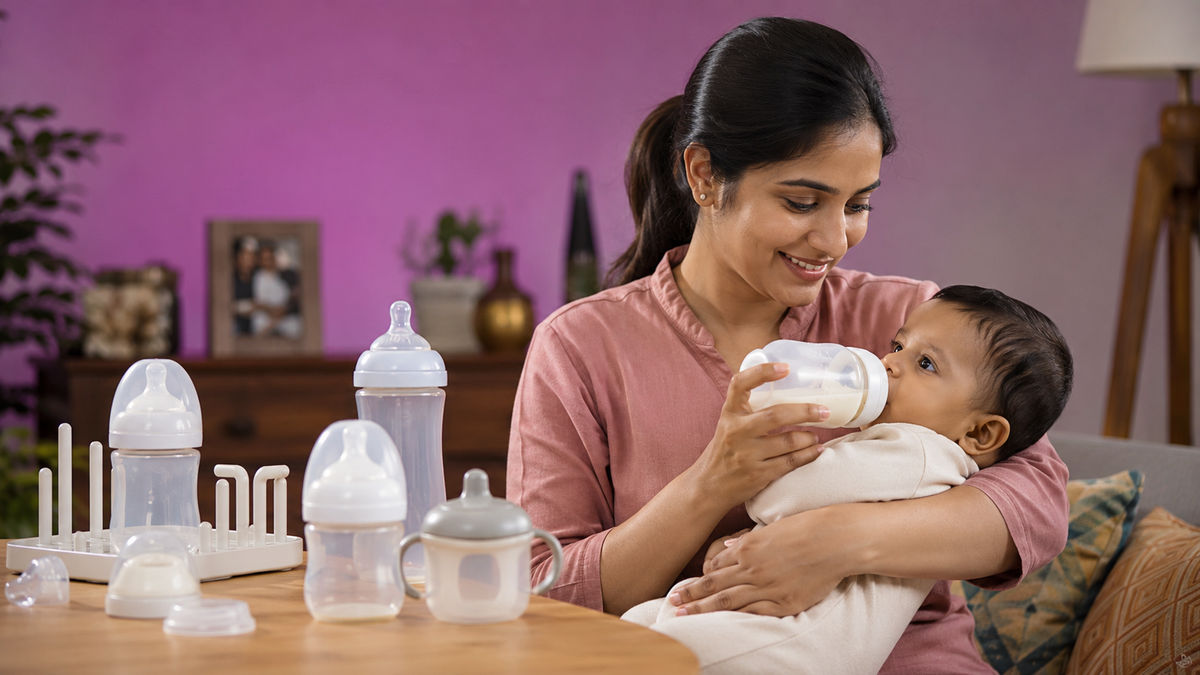
Yes, you can use a kitchen mixer-grinder for baby food if the jar is clean and free of spice residue. But small jar capacity (for single servings) and flat blades limit texture control. A dedicated steamer-blender (~Rs. 1,800–2,500) is worth the investment if you're batch-cooking, but a small Preethi or Bajaj jar (~Rs. 350–500) works fine for occasional use on soft foods like dal, khichdi, ragi and mashed fruit.
ℹ️ General information, not medical advice. If your baby seems unwell or anything worries you, talk to your paediatrician. Medical disclaimer
⚡ In a hurry? Our quick picks

When your baby reaches 6 months and weaning begins, one of the first decisions Indian parents face is how to turn whole grains, lentils and soft foods into smooth purees. Most of us already have a mixer-grinder in the kitchen—the workhorse that grinds spices, dal and ragi flour every week. It feels natural to use the same appliance for baby food. But does it make sense? And more importantly, is it safe and practical? Let me walk you through the real trade-offs.
🏆 Quick comparison: our top picks
| Product | Award | Price | |
|---|---|---|---|
 Philips AVENT Combined Steamer and Blender |
👑 Premium Pick | ₹5,999 | Check price → |
 Preethi Mixie Wet Grinder Jar (Small) |
🪙 Budget Pick | ₹299 | Check price → |
 Bajaj Small Jar Attachment for Mixer-Grinder |
₹299 | Check price → | |
 Nuby Baby Food Maker Steamer Blender |
₹5,898 | Check price → |
🛒 Our Top Picks

The highest-priced option in this guide.
Philips AVENT Combined Steamer and Blender
- ✓ Steam-cook and blend in one appliance
- ✓ 550 ml glass container
- ✓ Variable speed control
* We earn a small commission — at no extra cost to you.
The lowest-priced option in this guide.
Preethi Mixie Wet Grinder Jar (Small)
- ✓ 0.75 litre capacity
- ✓ Wet-grinding jar for dal, purees and pastes
- ✓ Compatible with Preethi mixers
* We earn a small commission — at no extra cost to you.
Bajaj Small Jar Attachment for Mixer-Grinder
- ✓ 0.5 litre capacity
- ✓ Dedicated wet-grinding jar
- ✓ Fits Bajaj mixer models
* We earn a small commission — at no extra cost to you.

Nuby Baby Food Maker Steamer Blender
- ✓ Combined steam and blend in one container
- ✓ 600 ml capacity
- ✓ BPA-free plastic
* We earn a small commission — at no extra cost to you.
Daily baby tips, exclusive Amazon deals & real parent advice — free forever.
A mixer for baby food covers everything from a full-size kitchen mixer-grinder to small-jar attachments to dedicated baby blenders. Each has different limits when it comes to texture, hygiene, ease of use and cost. Understanding when your kitchen mixer works and when it doesn't will save you money, time and frustration.
Can You Use a Kitchen Mixer-Grinder for Baby Food?
The short answer is yes, with conditions. A standard kitchen mixer-grinder—like a Preethi, Bajaj, or Havells—will absolutely pulverize soft cooked foods into smooth puree. The motor is powerful, the blades are sharp, and the jar seals tight. But there are three practical problems that catch most parents off guard: spice residue in the jar, inconsistent texture because the main jar is designed for grinding dry ingredients, and the sheer inconvenience of hauling out a heavy machine for a single serving of khichdi at 2 a.m.
If your mixer-grinder is brand new, used only for baby food, or you have a dedicated small-jar attachment that's never touched cumin or chilli powder, you have a workable solution. The issue arises when the same jar has ground turmeric, red chilli or other spices within the past week. Even vigorous washing leaves microscopic residue in the rubber seals and blade edges. For a baby with a sensitive stomach or early-stage weaning, this carryover can trigger discomfort.
What Textures Can a Kitchen Mixer Actually Produce?
Here's where the design differences matter. A texture in baby food means how smooth or chunky the puree is—stage 1 is silky-smooth (6–7 months), stage 2 is mashed with soft lumps (8–10 months), and stage 3 includes small pieces (10+ months).
Kitchen mixers with large jars and flat, wide blades are built to grind dry spices and grains. They excel at creating a fine powder or a very smooth wet puree. But controlling intermediate textures—where you want soft, thumb-sized lumps for a 9-month-old—is difficult because the blades work in one speed and the jar size means you're often making too much food at once. You either stop the machine too early (chunky but inconsistent) or let it run too long (back to smooth).
Soft foods that work well in a kitchen mixer: cooked dal (moong, masoor, toor), khichdi, ragi porridge, mashed banana, cooked pumpkin, stewed apple, curd with fruit. Foods that are tricky: leafy greens mixed into a puree (they separate and float), foods that need a specific lumpy texture for a toddler, anything requiring precise water control.
Hygiene and Rubber Seals: The Hidden Risk
This is the detail most articles skip, but Indian parents who've switched from a shared mixer to a baby-only one know it well. Every mixer-grinder has rubber gaskets and seals around the blade and lid. These are designed to keep spice dust and dry flour contained, not to seal in moisture from baby food. After you blend a dal puree, water and starch particles sit in those seals for days unless you disassemble the jar completely and dry every component.
Mould, bacterial growth and sour smells are not rare—they're almost guaranteed if you store a wet jar with seals still attached. The solution is to unscrew the seals after every use, wash them separately with a bottle brush, and air-dry them on a clean cloth. It's an extra step that makes the daily routine feel less convenient than it needs to be.
According to IAP (Indian Academy of Pediatrics) feeding guidelines, food utensils for babies under 12 months should be sterilised if possible, or at minimum washed immediately after use and stored dry in a clean, covered container. A shared kitchen mixer with residual moisture in the seals doesn't meet this standard.
Small Jar Attachments: A Practical Middle Ground
Many mixer brands—Preethi, Bajaj, and others—sell small wet-grinding jars as separate attachments, often around Rs. 350–500. These hold 0.5 to 1 litre and are designed specifically for grinding pastes, chutneys and wet ingredients. Some parents buy these mini jars just for baby food and keep them separate from the main spice-grinding operation.
This approach works if: (1) you have the extra attachment or buy one, (2) you dedicate it solely to baby food for at least the first year, and (3) you commit to proper seal care. The smaller jar fills up faster, so batch-cooking three days' worth of khichdi is realistic without waste. The trade-off is that you're still using the same motor and blade assembly, so texture control is still limited.
When a Dedicated Baby Blender Makes Sense
A dedicated steamer-blender—like the Nuby Baby Food Maker, Philips AVENT, or other models in the Rs. 1,800–2,500 range—is built from the ground up for baby food. The jar is small (400–800 ml), the blade is curved for better control of wet food, many models include a steam chamber to cook and blend in one container, and the whole thing is compact enough to live on a shelf, not buried under spice containers.
The real benefit isn't texture quality—a kitchen mixer makes equally smooth puree. It's convenience and hygiene. You can steam-cook a piece of pumpkin directly in the blender's inner chamber, add a little water or breast milk, blend it, and serve it all within five minutes. There's no cross-contamination risk. The jar is small enough that you're making one or two servings at a time, so freshness is built in. And if you're batch-cooking for the week ahead, you can prepare six days' worth of puree pots in the freezer with minimal effort.
Most steamer-blender models include a decision checklist on their packaging or Amazon.in page: if you're weaning one baby and have a limited budget, start with a small mixer attachment or a clean dedicated small jar for your existing mixer. If you're weaning twins, cooking multiple meals a day, or transitioning to toddler textures (where batch-cooking is essential), invest in the dedicated blender.
The Decision Checklist: Kitchen Mixer or Buy a Blender?
Use your kitchen mixer if:
- You already own a small-jar attachment or a second jar kept separate from spices
- Your baby is eating only soft, easy-to-puree foods (dal, khichdi, fruit)
- You're comfortable disassembling and drying all seals after every use
- You're batch-cooking only once or twice a week
- Budget is your primary concern
Invest in a steamer-blender if:
- You're cooking for your baby daily and want a dedicated, hassle-free appliance
- You want steam-cooking and blending in one step to save time
- You're worried about spice residue or cross-contamination from your shared mixer
- You're transitioning to toddler foods and need texture control
- You're weaning more than one child (past or present)
- You can stretch your budget to Rs. 1,800–2,500
Most parents in tier-1 and tier-2 cities who start with a small mixer attachment end up buying a dedicated steamer-blender within 3–4 months. The convenience of a purpose-built, hygienic, compact machine outweighs the initial cost. But if your kitchen mixer is truly used only for baby food and you're disciplined about seal care, it works fine as a short-term solution while your baby is eating only simple purees.
What IAP and WHO Guidance Says
IAP recommends exclusive breastfeeding until 6 months, then gradual introduction of semi-solid foods—soft, cooked, single-ingredient purees before mixing multiple foods. The focus is on food safety and texture appropriateness: utensils should be cleaned immediately and stored dry to prevent bacterial growth. WHO guidelines emphasize that complementary foods should be prepared with clean water and utensils to reduce infection risk in young children.
📚 Sources
The guidance in this article draws on the sources below. It is general information, not medical advice: for any concern about your child's health, talk to your paediatrician.
- Indian Academy of Pediatrics (IAP) Feeding Guidelines — Supports infant feeding milestones, food safety practices and utensil hygiene for babies under 12 months
- WHO Infant and Young Child Feeding Guidelines — Supports food preparation hygiene and the introduction timeline for complementary foods
Last updated 13 Nov 2026
Frequently Asked Questions
Can I use a regular kitchen blender to make baby food?
What food can I blend for my 6-month-old baby?
Which mixer is best for baby food?
How do I clean a mixer-grinder after blending baby food?
How many times a week should I make baby food?
Is a steamer-blender worth the cost?
Daily baby tips, exclusive Amazon deals & real parent advice — free forever.