
Manual or Mini Automatic Nasal Aspirator: What Should Parents Compare?
Sponsored by Nasobuddy · also contains affiliate links

ℹ️ General information, not medical advice. If your baby seems unwell or anything worries you, talk to your paediatrician. Medical disclaimer
Sponsored content disclosure: this article is a paid collaboration with Nasobuddy. Sponsorship pays for content and placement, not for a positive verdict. It includes Amazon affiliate links; Baby Junctions may earn a commission from qualifying purchases at no additional cost to you. This is general information, not medical advice.
A manual aspirator relies on the caregiver to create suction; a mini automatic one uses a motor. Neither is right for every family. Compare how calmly you can operate it, where the tip goes, what needs cleaning, what is in the pack and how your baby responds, and follow each device's own instructions.
Two approaches to one small task
When mucus blocks a baby's nose, a caregiver may consider a simple bulb, a manual tube-style aspirator or a powered aspirator. Nasobuddy's brief describes its manual aspirator as parent-powered suction, and its mini automatic product as a powered option with soft continuous suction. Those are manufacturer descriptions, not comparative test results.
The American Academy of Pediatrics notes that saline can loosen mucus and that gentle suction can help remove it. The right tool is the one a caregiver can use calmly and correctly, following its own instructions.
What changes between manual and powered?
Manual: the caregiver creates suction directly. Some parents value the hands-on control and simple operation; others may find the coordination awkward. The Nasobuddy listing pairs the manual aspirator with saline spray in one kit, the Aspirator + Saline Kit. Confirm what is included in the current pack and how each part is cleaned.
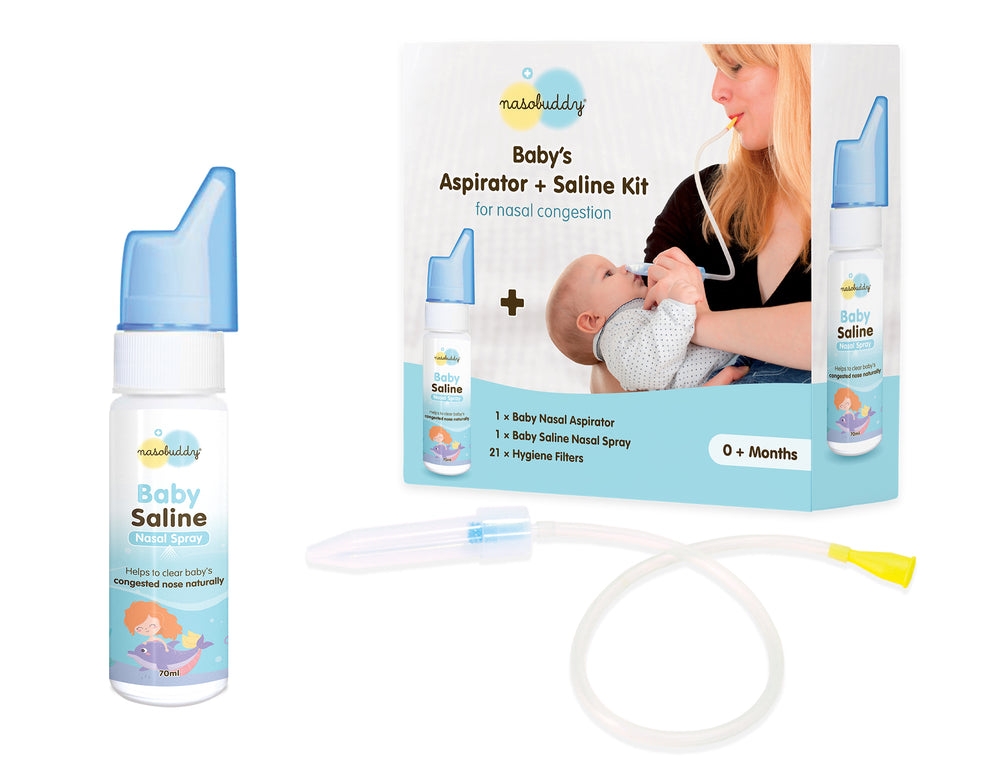
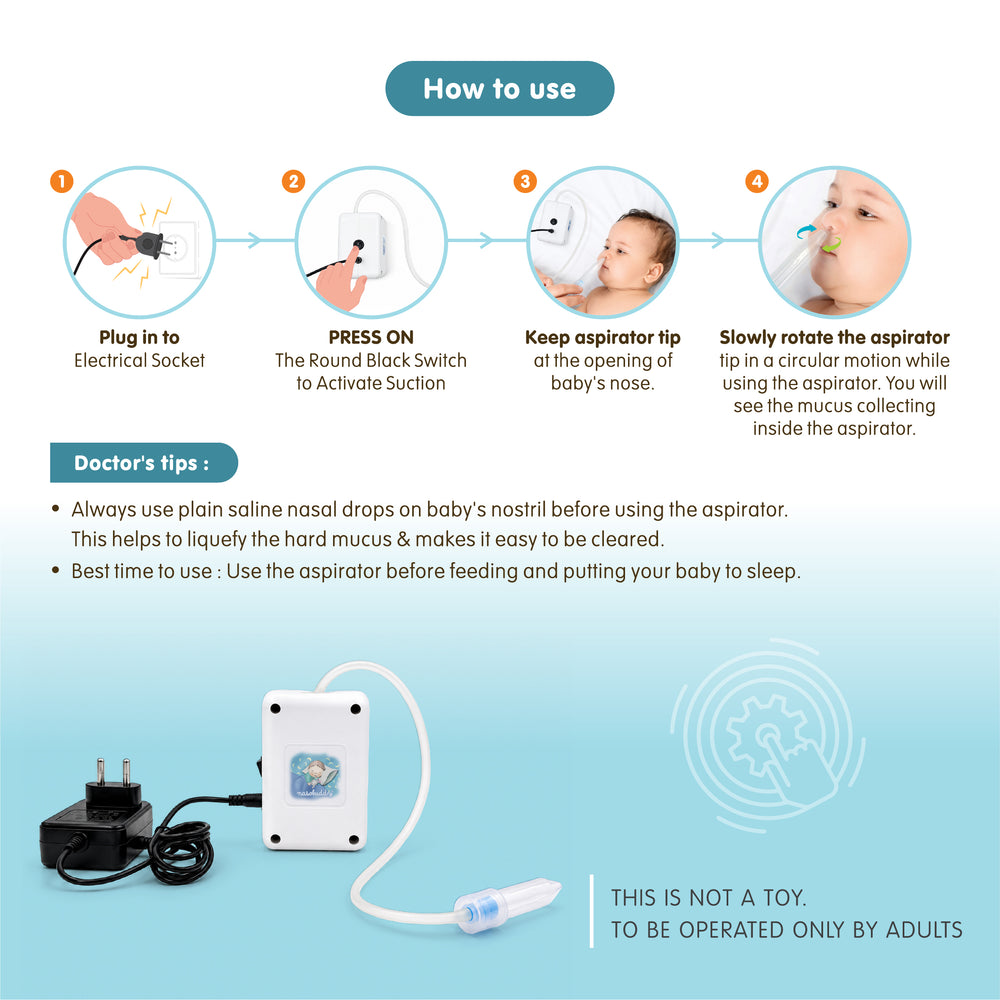
Powered: a motor produces suction. Nasobuddy's product page describes the Mini Automatic Aspirator as plug-in operation; its Amazon listing title says it includes saline spray. Verify the supplied power details, tip, cleaning method, age range and cautions on the current package.
Both are in the product boxes below; they are Amazon India affiliate links, and Baby Junctions may earn a commission if a purchase is made through them, at no extra cost to you.
Do not compare devices using unverified claims such as "stronger", "safer", "best" or "more effective". There is no independent head-to-head test in the material reviewed for this article. A powered motor also means a caregiver should check its instructions and keep it away from a child when not in use.
A parent's side-by-side checklist
- Can I operate it calmly? Read the steps before a congested moment. Consider whether manual suction feels manageable or whether a powered device feels easier to handle.
- Where does the tip go? Follow the device directions. The brand says its tips are placed at the opening of the nostril; do not push a tip into the nose unless a clinician and the product instructions specifically direct otherwise.
- What needs cleaning? Check which pieces detach, how they must be washed, and how they dry. Follow the actual leaflet rather than assuming two aspirators are cleaned the same way.
- What comes in the pack? Confirm whether saline, filters or replacement parts are included in the specific listing you are viewing. Pack contents can change.
- How does the baby respond? Keep the session brief and gentle. Boston Children's Hospital warns that excessive suction can irritate and swell nasal tissue. Stop if the baby becomes distressed and ask a clinician if you are unsure.
- Does it fit my household? Think about who will use it, where it will be stored, and whether any power requirements matter. Never leave a device or small parts within a child's reach.
Choose by fit, not by promises
A manual device may appeal to someone who wants direct control; an automatic device may appeal to someone who prefers powered operation. These are preference points, not a clinical ranking. Saline and gentle suction are only symptom-relief measures. They do not protect against ear infections, sinusitis or respiratory illness. For the routine itself, see our calm guide to relieving a baby's stuffy nose.
Sponsored by Nasobuddy
Nasobuddy says it began with a goal of making baby care easier for parents. This paid article is sponsored content; payment covers the article and placement, not a positive verdict or a sales result. Product details remain subject to the current manufacturer instructions.
Nasobuddy states in its product material that its saline spray is "Ministry of AYUSH approved". That is the manufacturer's claim, not a Baby Junctions finding.
🛒 Nasobuddy products in this guide


Nasobuddy Baby's Aspirator + Saline Kit (0-5 years)
- ✓ Manual aspirator with a saline spray
- ✓ Filter between tip and mouthpiece; 20+1 filters
- ✓ Listed for newborns to 5 years
* This article is a paid partnership with Nasobuddy. We also earn a small commission on Amazon, at no extra cost to you.

Nasobuddy Mini Automatic Baby Nasal Aspirator, with free saline spray (0-5 years)
- ✓ Plug-in, soft continuous suction
- ✓ Listing says a saline spray is included
- ✓ Listed for newborns to 5 years
* This article is a paid partnership with Nasobuddy. We also earn a small commission on Amazon, at no extra cost to you.
Daily baby tips, exclusive Amazon deals & real parent advice — free forever.
When to See a Doctor
If breathing looks laboured, the baby is not feeding as usual, symptoms are worsening, or something feels wrong, contact a paediatric clinician promptly. For urgent breathing difficulty, seek urgent medical care.
If your baby is under 3 months old and has a fever of 38°C (100.4°F) or higher, speak to a paediatrician the same day.
Saline and suction should not delay medical advice when a baby seems seriously unwell. Ask your child's clinician for age-specific guidance if you are unsure whether suction is appropriate.
Editorial notes and sources
Medical guidance informed the symptom-relief and safety wording. Manufacturer pages and the brief Nasobuddy supplied were used only for product identity and instructions. Unsupported infection claims are left out. Product photos were supplied by Nasobuddy.
- American Academy of Pediatrics / HealthyChildren.org, "Cough & Cold Survival Kit: Symptom-Relief Essentials for Families" (updated 10 Dec 2024).
- Boston Children's Hospital, "Using a Bulb Suction Aspirator on Your Baby".
Pack contents and instructions can change; check the current packaging and leaflet. This is a sponsored educational article. This is general information, not medical advice.
Frequently Asked Questions
Is a manual nasal aspirator hygienic?
Is an automatic aspirator stronger than a manual one?
Do I still need saline with an automatic aspirator?
Daily baby tips, exclusive Amazon deals & real parent advice — free forever.