
Gentle Relief for Your Baby's Stuffy Nose: A Calm and Careful Guide
Sponsored by Nasobuddy · also contains affiliate links

ℹ️ General information, not medical advice. If your baby seems unwell or anything worries you, talk to your paediatrician. Medical disclaimer
Sponsored content disclosure: this article is a paid collaboration with Nasobuddy. Sponsorship pays for content and placement, not for a positive verdict. It includes Amazon affiliate links; Baby Junctions may earn a commission from qualifying purchases at no additional cost to you. This is general information, not medical advice.
A baby cannot blow their nose. For a simple stuffy nose, saline drops or spray may loosen mucus, and a nasal aspirator uses gentle suction to draw it from the front of the nose. These are comfort measures for a while, not a treatment for the cold. Follow the device instructions, stop if the baby is distressed, and contact a paediatric clinician if breathing looks laboured or feeding changes.
When a small blocked nose feels like a big problem
A baby cannot blow their nose, so a little dried or sticky mucus can feel disruptive. Parents may notice noisy breathing through the nose, pauses during a feed, or a baby who is unsettled. Congestion is uncomfortable, but it does not automatically mean a serious illness. Start with the child's overall breathing, feeding and behaviour, not just the sound of the nose.
For a simple stuffy nose, saline drops or spray may loosen mucus. A nasal aspirator uses gentle suction to draw mucus from the front of the nose into a bulb, chamber or collection area, depending on the design. A manual model relies on a caregiver to create suction; a powered one uses a motor. Tips should be used only as directed and kept at the position specified by the device instructions.
The American Academy of Pediatrics describes saline and gentle suction as options for easing nasal congestion. They are comfort measures: they do not treat the cold, and they do not protect against infection.
A simple routine, guided by instructions
Wash your hands first. If you use saline, choose a product intended for the child's age and follow its label or a clinician's directions. Check the specific aspirator instructions before use: where the tip should rest, how much suction to apply, and how each part is cleaned can differ by model. A device should not be used beyond its stated directions.
Do not push a tip into the nose unless the product instructions and a clinician specifically advise it. Use suction only when mucus is blocking the nose or interfering with comfort. Boston Children's Hospital cautions that too much suction can irritate and swell the nose. Stop if the baby is distressed; clean and dry parts as directed.
There is no one approach that suits every family. Manual and powered devices work differently, but neither replaces careful technique, the product label or advice from the child's clinician. If you are weighing the two types, our guide to comparing manual and mini automatic aspirators walks through what to check.
Keep the goal modest
The goal is to make a blocked nose more comfortable for a while, not to promise better sleep, faster recovery or protection from sinus, ear or chest infections. Those outcomes depend on the cause of symptoms and the child. The sponsor's material includes broader health claims, but Baby Junctions has not found independent support for claims that an aspirator protects against sinusitis, ear infections or respiratory infections, so this article does not make them.
A Nasobuddy option to consider
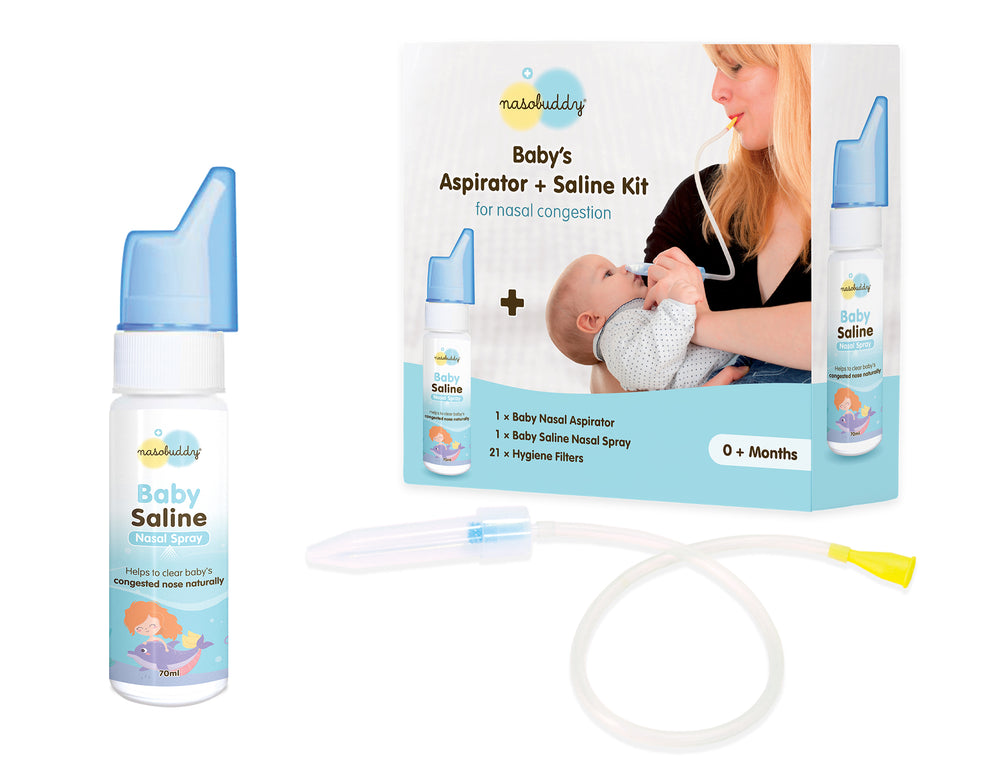
Nasobuddy offers a manual Aspirator + Saline Kit that pairs an aspirator with saline spray; its Mini Automatic Aspirator is another option. These product descriptions are from the brand, not an independent comparison. Both are listed on Amazon India in the product boxes below, for parents who want to check the current product details. These are affiliate links; Baby Junctions may earn a commission at no extra cost to you.
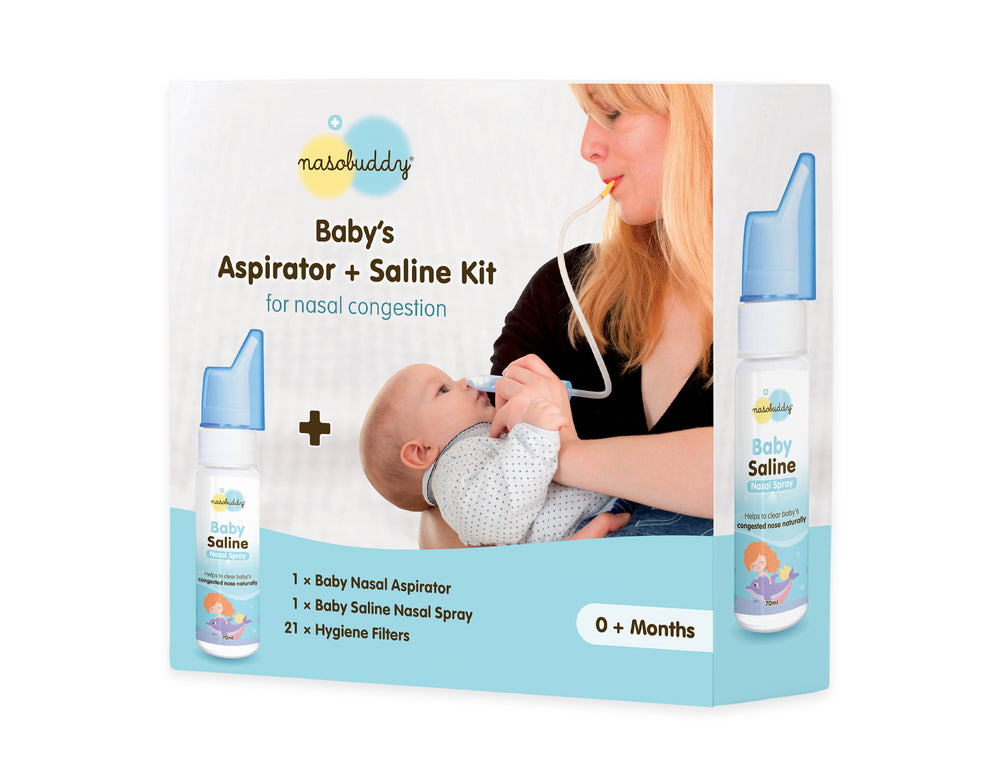
Nasobuddy states in its product material that its saline spray is "Ministry of AYUSH approved". That is the manufacturer's claim, not a Baby Junctions finding.
Check the age range, saline directions, cleaning steps, included parts and cautions against the current product packaging. Nasobuddy describes its brand as helping parents with practical baby-care products. This is sponsored content, not an independent positive verdict; sponsorship pays for content and placement only.
If families consider an aspirator, the important part is gentle use for a clear purpose and knowing when symptoms need medical advice.
🛒 Nasobuddy products in this guide


Nasobuddy Baby's Aspirator + Saline Kit (0-5 years)
- ✓ Manual aspirator with a saline spray
- ✓ Filter between tip and mouthpiece; 20+1 filters
- ✓ Listed for newborns to 5 years
* We earn a small commission — at no extra cost to you.

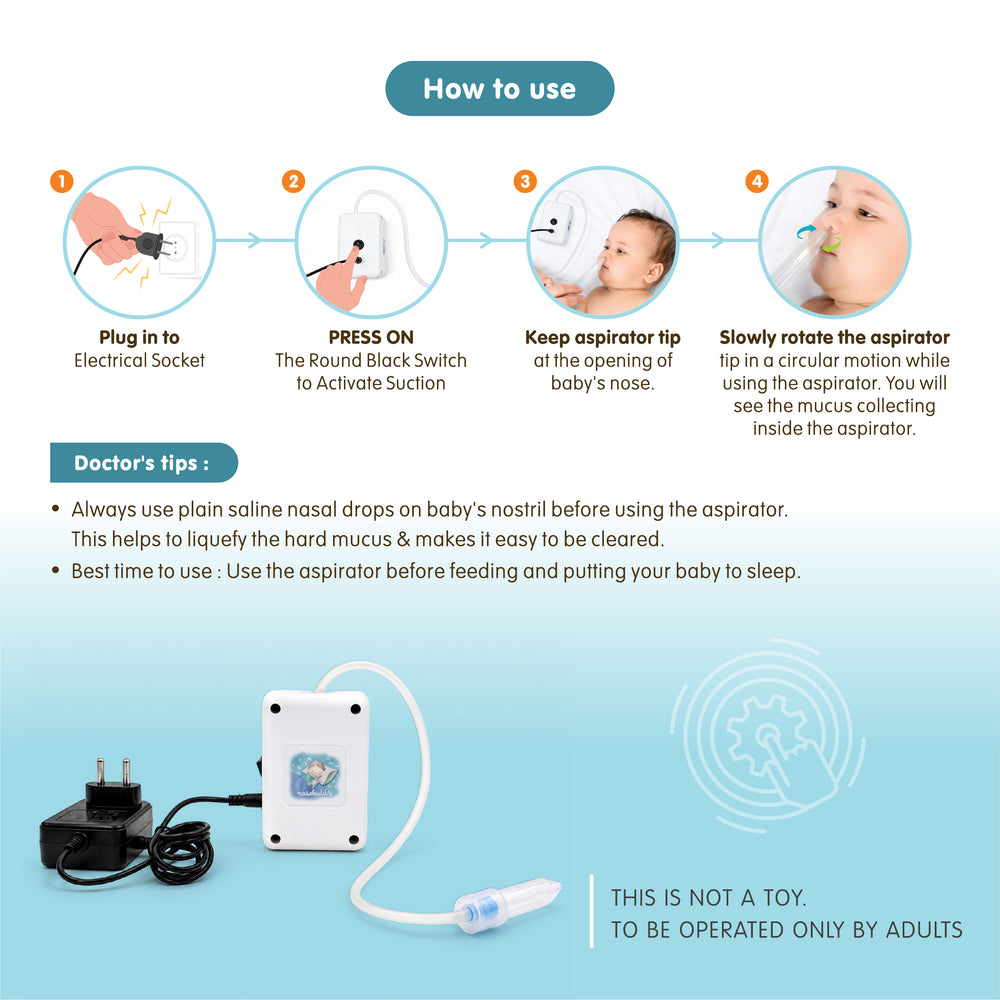
Nasobuddy Mini Automatic Baby Nasal Aspirator, with free saline spray (0-5 years)
- ✓ Plug-in, soft continuous suction
- ✓ Listing says a saline spray is included
- ✓ Listed for newborns to 5 years
* We earn a small commission — at no extra cost to you.
Daily baby tips, exclusive Amazon deals & real parent advice — free forever.
When to See a Doctor
If breathing looks laboured, the baby is not feeding as usual, symptoms are worsening, or something feels wrong, contact a paediatric clinician promptly. For urgent breathing difficulty, seek urgent medical care.
If your baby is under 3 months old and has a fever of 38°C (100.4°F) or higher, speak to a paediatrician the same day.
Saline and suction should not delay medical advice when a baby seems seriously unwell. Ask your child's clinician for age-specific guidance if you are unsure whether suction is appropriate.
Editorial notes and sources
Medical guidance informed the symptom-relief and safety wording. Manufacturer pages and the brief Nasobuddy supplied were used only for product identity and instructions. Unsupported infection claims are left out. Product photos were supplied by Nasobuddy.
- American Academy of Pediatrics / HealthyChildren.org, "Cough & Cold Survival Kit: Symptom-Relief Essentials for Families" (updated 10 Dec 2024).
- Boston Children's Hospital, "Using a Bulb Suction Aspirator on Your Baby".
Pack contents and instructions can change; check the current packaging and leaflet. This is a sponsored educational article. This is general information, not medical advice.
Frequently Asked Questions
How often can I use saline and an aspirator on my baby?
Can I use a nasal aspirator on a newborn?
Is saline the same as decongestant drops?
Daily baby tips, exclusive Amazon deals & real parent advice — free forever.