
Baby Proofing LPG Cylinder in India: 7-Step Kitchen Checklist for Crawlers
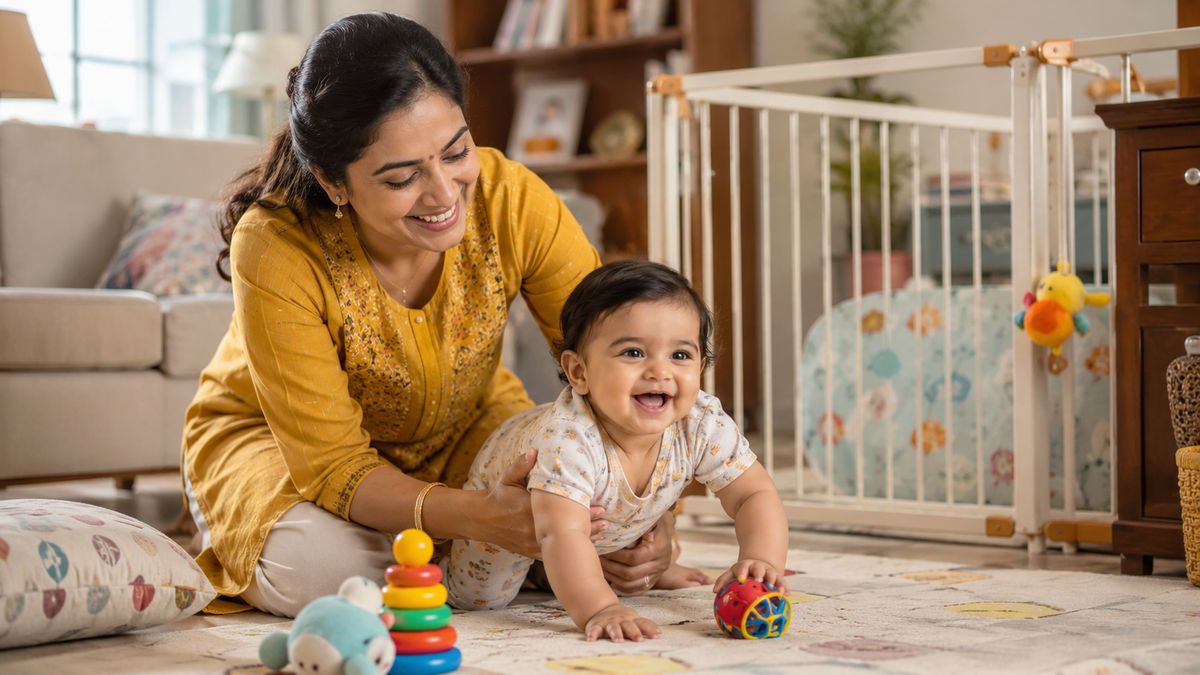
Secure your kitchen LPG cylinder with a sturdy cage lock (₹350), add a valve guard (₹120), store lighters above 4 feet, and check your regulator and pipe routing before your baby crawls at 8–10 months. These seven steps follow BIS safety standards for domestic gas appliances.
⚡ In a hurry? Our quick picks

Your kitchen LPG cylinder is one of the highest-risk hazards in an Indian home with a crawler. A toddler pulling at the regulator, turning valves, or knocking over an unsecured cylinder can cause a gas leak—or worse. Yet most parents don't think about it until their baby is already on hands and knees. This checklist is built around what you need to do *before* that happens, and it costs less than a single tin of premium baby formula.
🏆 Quick comparison: our top picks
| Product | Award | Rating | Price | |
|---|---|---|---|---|
 R for Rabbit Multi-Purpose Lock (Cabinet & Drawer) |
🏆 Editor's Choice | ★ 4.2 1,200 reviews |
₹187 | Check price → |
 Syga Baby Safety Gate (Pressure Fit & Hardware Mount Options) |
💰 Best Value | ★ 4.1 890 reviews |
₹1,499 | Check price → |
🛒 Our Top Picks
Best-reviewed overall, 4.2★ across 1,200 ratings.
R for Rabbit Multi-Purpose Lock (Cabinet & Drawer)
- ✓ Universal fit for cabinet doors and drawers
- ✓ No installation required
- ✓ Prevents access to cleaning supplies and lighters
* We earn a small commission — at no extra cost to you.

Top rating for the price, 4.1★ at ₹1,499.
Syga Baby Safety Gate (Pressure Fit & Hardware Mount Options)
- ✓ Fits doorways 73–100 cm wide
- ✓ Hardware-mounted or pressure-fit options
- ✓ Auto-close and hold-open features
* We earn a small commission — at no extra cost to you.
Daily baby tips, exclusive Amazon deals & real parent advice — free forever.
The 7-Step LPG Cylinder Baby-Proofing Checklist
This checklist follows the safety approach recommended by BIS (Bureau of Indian Standards) for domestic LPG appliances. Work through each step over a weekend; most items are available on Amazon.in or local hardware shops within 2–3 days.
- Install a cylinder cage lock. A sturdy metal cage or box with a keylock around your cylinder prevents your baby from accessing the valve, regulator, or any loose fittings. Cost: ₹300–₹400. Why this matters: A toddler's grip strength at 12 months is surprisingly strong, and curiosity often leads to grabbing bright metal objects.
- Add a valve guard or cap. A rubber or plastic guard that covers the cylinder's top valve makes it impossible to turn or grip. Cost: ₹80–₹150. Why this matters: The valve is the single most touchable part of the cylinder, and even partial turning can trigger a small gas leak.
- Store all lighters and matchboxes above 4 feet height. Use a wall-mounted cabinet, high shelf, or a lockable drawer on an upper shelf. Never leave lighters on countertops or in drawers at crawling height. Cost: ₹0–₹200 (if you need a cabinet). Why this matters: Crawlers and toddlers are drawn to small, clicky objects. A lighter in a baby's mouth is a burn and choking hazard.
- Mount a matchbox holder on the wall above adult eye level. If you use traditional matchboxes, screw a wall-mounted holder 5–6 feet up, out of reach of a standing toddler. Cost: ₹50–₹150. Why this matters: Matchbox drawers are small enough to pinch fingers and the contents are a fire hazard if unattended.
- Check that your regulator is not loose. Turn it gently by hand—it should not spin or wiggle. If it does, tighten the connection at the base using an adjustable wrench, or call your LPG supplier to service it. Cost: ₹0 (DIY) or ₹200–₹500 (technician). Why this matters: A loose regulator can leak gas slowly, and a baby pulling on it could loosen it further or cause injury.
- Route your gas pipe away from crawling height and secure it to the wall. Use pipe clips (₹20–₹50) to fasten the pipe along the wall, at least 5–6 feet up, or run it behind a cupboard. Never leave it loose where a baby can pull, bite, or trip on it. Cost: ₹50–₹200. Why this matters: A gas pipe at floor level is both a trip hazard and a choking/biting risk for an exploring baby.
- Install a safety gate at your kitchen entrance (optional but recommended). A pressure-fit or hardware-mounted baby gate keeps crawlers and toddlers out of the kitchen entirely when you're not supervising. Cost: ₹1,200–₹3,000. Why this matters: This is a redundant safeguard—if your baby cannot enter the kitchen unattended, the LPG cylinder becomes a secondary risk, not a primary one.
Two popular products for steps 1 and 7 are the Syga Baby Safety Gate (₹1,499 on Amazon.in, 4.1 stars from 890+ reviews) and the R for Rabbit Multi-Purpose Lock (₹249, 4.2 stars from 1,200+ reviews). The Syga gate is hardware-mounted for maximum stability; the R for Rabbit lock works on cabinet doors and drawers to store cleaning products or lighters. Neither replaces a proper cylinder cage, but they form part of a layered safety approach.
What Do's and Don'ts Apply When Using an LPG Cylinder?
Do's: Ensure the cylinder is always upright; have a trained technician service the regulator and connections annually; keep the valve closed when the stove is not in use; store the cylinder in a well-ventilated area outside or in a dedicated kitchen corner with airflow. Don'ts: Never leave the cylinder in direct sunlight or near heat sources; never transport it in a passenger car (against Indian road safety rules); never attempt to refill or repair the cylinder yourself; never store flammable items (cleaners, paints) near the cylinder; never allow a child unsupervised access to the kitchen where the cylinder is located.
What Is the Typical Capacity and Price of an LPG Cylinder in India?
The most common domestic LPG cylinder in India is 14.2 kg (often labeled as 14.2 L or simply called a "14 kg bottle"). A new cylinder costs ₹1,800–₹2,200, but most households don't buy—they lease from their supplier (Indane, Bharat Gas, HP Gas) and pay a refill fee of ₹700–₹900 per refill. The 5 kg portable cylinder (for camping or backup) costs ₹400–₹600 to refill and is sometimes used in small flats, but it is less common. Do not bring a portable cylinder indoors; store it in a well-ventilated outdoor space or in a dedicated ventilated gas storage box.
How to Safely Carry an LPG Cylinder in a Car?
If you must transport a cylinder (e.g., replacing a leased one), keep it upright, place it on the car floor (not the seat), open a window for ventilation, and never place it in the boot in a sealed space. The maximum distance for transport should be under 50 km, and you should do it during daytime hours only. Many LPG suppliers offer free delivery of replacement cylinders—use this service instead of transporting yourself, especially if you have a baby in the car. Transporting a pressurised cylinder is not recommended if children are present.
What BIS and IAP Guidance Says
BIS (Bureau of Indian Standards) publishes IS 4562 (Code of Practice for Safe Handling and Use of LPG in Domestic Installations), which requires cylinders to be in fixed, upright positions, regulators to be serviced annually, and flexible hoses to be inspected for cracks or damage every 6 months. IAP (Indian Academy of Pediatrics) recommends that kitchens with young children (under 5 years) should be gated or supervised at all times, and all gas appliances should be secured or out of reach. This is general information, not medical advice.
When to See a Doctor
If your baby inhales gas or has difficulty breathing, turns blue, or becomes drowsy after exposure to a suspected gas leak, call emergency (100 or your local hospital) immediately. Signs of gas exposure include dizziness, headache, nausea, or a rotten-egg smell in the kitchen. Evacuate the home, turn off the cylinder valve if safe to do so, open all windows, and do not use electrical switches (risk of sparks). Seek immediate medical advice.
📚 Sources
The guidance in this article draws on the sources below. It is general information, not medical advice: for any concern about your child's health, talk to your paediatrician.
- Bureau of Indian Standards (BIS) IS 4562: Code of Practice for Safe Handling and Use of LPG in Domestic Installations — Safety standards for cylinder handling, regulator maintenance, and pipe routing in Indian homes
- Indian Academy of Pediatrics (IAP) Guidelines on Child Safety in the Home Environment — Recommendations for gate use and kitchen supervision with young children under 5 years
Last updated 24 Oct 2026
Frequently Asked Questions
What are the do's and don'ts when using an LPG cylinder?
What is the price of an LPG gas safety device like a cage or valve guard?
What is the typical capacity of an LPG cylinder in India?
How should I carry an LPG cylinder in a car?
At what age do babies start crawling and need kitchen proofing?
Is a safety gate enough to protect my baby from the LPG cylinder?
Daily baby tips, exclusive Amazon deals & real parent advice — free forever.