Why pH 5.5 Baby Soap Matters: Sebamed vs Cetaphil vs Pears—What Labels Actually Say
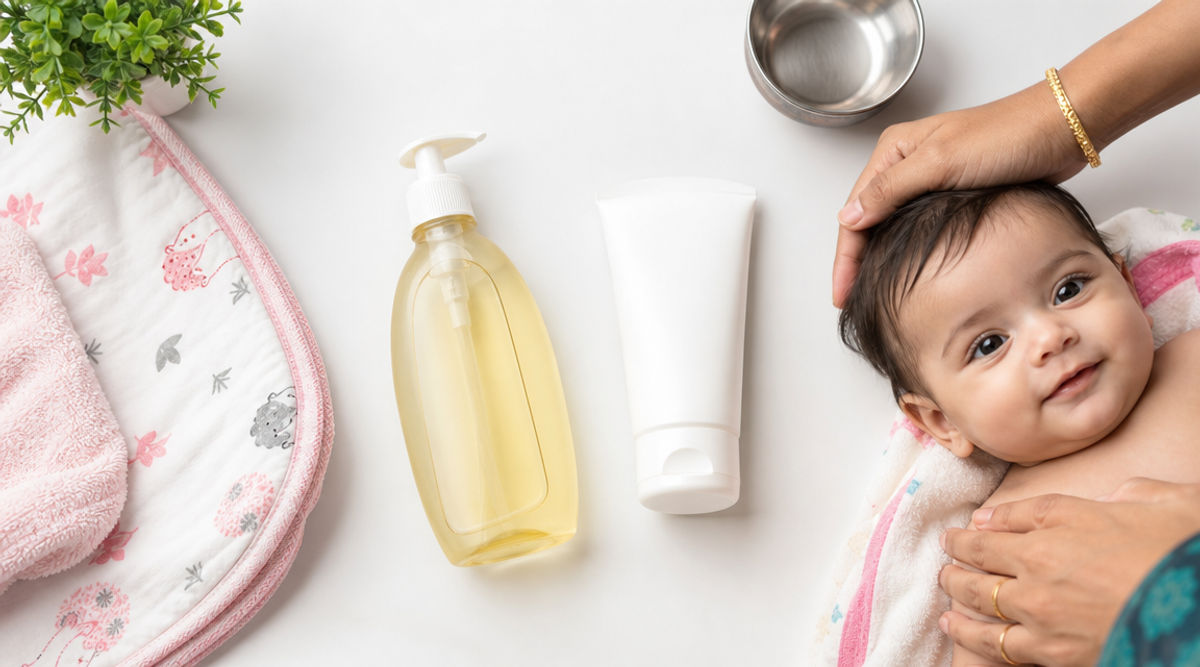
Newborn skin has a natural pH around 5.5 (acidic), which protects the skin barrier. Alkaline soaps (pH 9–10) strip this protective layer, causing dryness and irritation. Syndet bars labelled pH 5.5 mimic this natural acidity better than traditional soap. Sebamed Baby Bar (₹300–350), Cetaphil Pro Gentle Body Wash, and Pears soaps make label claims about pH, but you can test any bar at home with pH strips for ₹50–100.
ℹ️ General information, not medical advice. If your baby seems unwell or anything worries you, talk to your paediatrician. Medical disclaimer
⚡ In a hurry? Our quick picks
Every parent wants soft, healthy skin for their newborn. But walk into a pharmacy or scroll Amazon.in, and you'll see dozens of bars and washes claiming to be "gentle"—without explaining what that actually means. The confusion starts with a simple number: pH 5.5. This article unpacks what that number means, why it matters, and how to read the label to spot products that genuinely match your baby's skin chemistry.
🏆 Quick comparison: our top picks
| Product | Award | Price | |
|---|---|---|---|
 Sebamed Baby Cleansing Bar pH 5.5 |
👑 Premium Pick | ₹950 | Check price → |
 Pears Soft Care Baby Soap |
🪙 Budget Pick | ₹245 | Check price → |
 Cetaphil Pro Baby Wash (Liquid) |
₹648 | Check price → |
🛒 Our Top Picks
The highest-priced option in this guide.
Sebamed Baby Cleansing Bar pH 5.5
- ✓ pH 5.5 (labelled)
- ✓ Syndet bar formula
- ✓ 75g per bar
* We earn a small commission — at no extra cost to you.

The lowest-priced option in this guide.
Pears Soft Care Baby Soap
- ✓ 125g per bar
- ✓ Contains glycerin
- ✓ Traditional soap format
* We earn a small commission — at no extra cost to you.
Cetaphil Pro Baby Wash (Liquid)
- ✓ pH-balanced formula
- ✓ 400ml bottle
- ✓ Hypoallergenic
* We earn a small commission — at no extra cost to you.
Daily baby tips, exclusive Amazon deals & real parent advice — free forever.
What the Evidence Actually Shows About Baby Skin pH
pH is a measure of how acidic or alkaline a substance is, on a scale of 0 (very acidic) to 14 (very alkaline), with 7 being neutral. Newborn skin—especially in the first 2–4 weeks—is naturally acidic, with a pH between 4.5 and 5.5. This acidity is not a flaw; it is a feature. It creates what dermatologists call the "acid mantle," a protective layer of oils and natural acids that keeps bacteria and irritants out and moisture in.
When you use a traditional soap bar (pH 9–10), you temporarily raise your baby's skin pH into the alkaline range. The skin barrier weakens, moisture evaporates, and the natural protective bacteria get disrupted. For adults with hardy skin, this recovers in a few hours. For newborns—whose skin is thinner and still developing its barrier—this damage can last 12+ hours and lead to dryness, redness, and increased infection risk. This is why paediatricians, including those following IAP (Indian Academy of Pediatrics) standards, recommend using pH-balanced cleansers for infants rather than regular soaps.
A syndet bar (synthetic detergent bar) is a cleanser that looks and feels like soap but is formulated to stay close to skin pH, usually 5.0–6.0. Instead of traditional soap ingredients (which are naturally alkaline), syndets use synthetic detergents that clean without raising pH as much. Sebamed Baby Bar and Cetaphil Pro products are examples of syndet bars, not traditional soaps, even though the packaging sometimes uses the word "soap" casually.
Reading the Label: What Brands Actually Claim
Here's where most parents get confused. The label doesn't always say "pH 5.5." Instead, brands use phrases like "pH-balanced," "mild," or "tear-free." Let's see what three commonly available options actually state:
- Sebamed Baby Cleansing Bar: The brand explicitly states on Amazon.in and its official website that the product is formulated at pH 5.5 and is a syndet bar. The label lists sodium lauryl sulfate and other synthetic detergents, not traditional saponified oils. Typical price: ₹300–350 per bar (75g).
- Cetaphil Pro Baby Wash: Cetaphil's range is marketed as "dermatologist-recommended" and the label on Amazon.in indicates pH balance suitable for sensitive skin. However, Cetaphil lists this as a body wash, not a bar; it uses a liquid base with cleansing agents formulated for low pH. Price: ₹400–500 for 400ml.
- Pears Soft Care Baby Soap: Pears is a traditional soap bar, not a syndet. The brand does not claim pH 5.5 on the Indian product label; it lists it as a mild soap. Pears is alkaline-range (pH closer to 8–9) but is gentler than some alternatives because it includes glycerin, which adds moisture. Price: ₹30–50 per bar (125g). This is a budget option, but not pH-matched to baby skin.
The key takeaway: not all "gentle" or "for sensitive skin" claims mean pH 5.5. Always check the fine print on Amazon.in or the brand website. If the label doesn't state the pH or ingredient list, it may not be a syndet bar at all.
The Hard-Water Problem Nobody Talks About
Here's something most articles skip: even the best pH-balanced syndet bar performs differently depending on your water hardness. Hard water (high in calcium and magnesium) reacts with soap and syndet molecules, creating a film that sits on the skin and can feel sticky or cause buildup. This is why many Indian parents in cities like Mumbai, Delhi, and Jaipur notice their baby's skin feels dry or itchy despite using a "good" soap.
Syndet bars handle hard water slightly better than traditional soaps because their synthetic detergents don't react the same way. But they still leave residue. If your home has hard water (your municipality will tell you, or you can buy an inexpensive test kit for ₹150–200), you may need to:
- Rinse with distilled or filtered water after each wash.
- Switch to a liquid cleanser (which rinses more completely than bars).
- Use less product and longer rinse times.
This is not a flaw in pH 5.5 products; it is a water chemistry issue. But it matters for real results.
How to Test pH at Home with Strips
If you want certainty, buy pH test strips (₹50–100 on Amazon.in, pack of 100). The method is simple:
- Wet the bar or product with distilled water (not tap water, which has its own pH).
- Rub the wet bar onto the strip or dip the strip in the liquid product.
- Wait 30 seconds and compare the color to the chart on the pack.
- Repeat with water alone as a control (should be neutral, around 7).
This is not a lab test—home strips are ±0.5 pH accurate—but it gives you a realistic picture. Many parents are surprised to find that a bar claiming to be "gentle" is actually pH 8 or 9. Once you know, you can decide if the mild surfactants or moisturizers in the product outweigh the pH trade-off, or if you'd rather switch to a true pH 5.5 option like Sebamed.
Sebamed vs Cetaphil vs Pears: Label-by-Label Breakdown
| Product | Type | Claimed pH | Ingredient Class | Price (Approx.) | Best For |
|---|---|---|---|---|---|
| Sebamed Baby Bar | Syndet bar | 5.5 (on label) | Synthetic detergents | ₹300–350 | Newborns with dry or sensitive skin |
| Cetaphil Pro Baby Wash | Liquid wash | pH-balanced (not specified) | Synthetic detergents | ₹400–500 | Parents who prefer liquid cleansers |
| Pears Soft Care Baby | Traditional soap | Not stated; likely 8–9 | Saponified oils + glycerin | ₹30–50 | Budget option; less ideal for pH matching |
None of these products is "wrong," but they serve different needs. If your baby has eczema, severe dryness, or you live in a hard-water area, Sebamed or Cetaphil's explicit pH claim is worth the extra cost. If your baby's skin is resilient and you are price-conscious, Pears with longer rinses may be sufficient—but test it first with pH strips if you have concerns.
What IAP and WHO Guidance Says
IAP Recommendations: The Indian Academy of Pediatrics does not mandate a specific brand but recommends cleansing products formulated for sensitive or immature skin barriers in newborns. pH-balanced cleansers reduce the risk of barrier damage compared to alkaline soaps.
WHO Guidance: The World Health Organization emphasizes gentle cleansing for infant skin in its infant care guidelines, particularly in the first month when the acid mantle is still developing.
When to See a Doctor
If your baby develops redness, scaling, severe dryness, or signs of infection after using any cleanser, switch to water-only washing and consult a paediatrician. Do not assume a more expensive product will fix skin issues—sometimes the cause is water hardness, over-washing, or an underlying condition like eczema. This is general information, not medical advice.
📚 Sources
The guidance in this article draws on the sources below. It is general information, not medical advice: for any concern about your child's health, talk to your paediatrician.
- Indian Academy of Pediatrics (IAP) - Newborn Skin Care Guidelines — Supports IAP guidance on gentle cleansing and sensitive skin barrier in newborns
- WHO - Infant Care and Hygiene Standards — Supports WHO guidance on gentle cleansing during first month of life
Last updated 15 Nov 2026
Frequently Asked Questions
Is pH 5.5 soap good for baby skin?
What pH level is good for baby soap?
Is a syndet bar better than traditional soap for babies?
Can I use Pears soap on my newborn?
Does hard water affect how pH 5.5 soap works?
How do I know if a baby soap is really pH 5.5?
Daily baby tips, exclusive Amazon deals & real parent advice — free forever.