
Hard Water Effect on Baby Skin in India: Why It Happens & 4 Fixes That Work
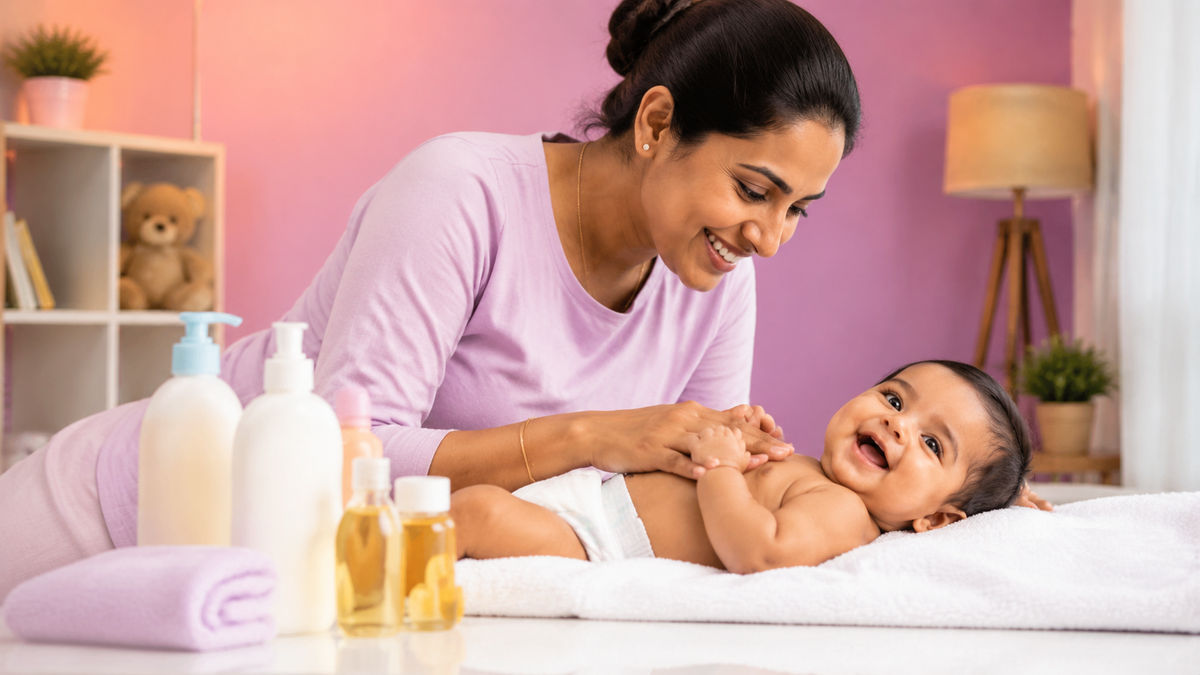
Hard water contains calcium and magnesium that react with baby soap, leaving a sticky residue on skin that locks out moisture. Fix it with a shower filter (₹400–₹1,500), a syndet baby wash, a final plain-water rinse, and moisturiser applied within 3 minutes of the bath.
ℹ️ General information, not medical advice. If your baby seems unwell or anything worries you, talk to your paediatrician. Medical disclaimer
⚡ In a hurry? Our quick picks

If your baby's skin feels tight, flaky or itchy after every bath—even though you're using a gentle wash—hard water is likely the culprit. In tier-1 and tier-2 Indian cities, water hardness (measured in Total Dissolved Solids, or TDS) often ranges from 200 to 500+ mg/L, well above the WHO guideline of 100 mg/L. This isn't just uncomfortable; it can strip the skin barrier that protects newborns and infants, making them prone to eczema-like patches and irritation.
🏆 Quick comparison: our top picks
| Product | Award | Price | |
|---|---|---|---|
 Kent Shower Filter with Activated Carbon |
👑 Premium Pick | ₹899 | Check price → |
 TDS Water Quality Meter Digital |
🪙 Budget Pick | ₹177 | Check price → |
 Sebamed Baby Wash (200ml) |
₹398 | Check price → | |
 Cetaphil Baby Wash (230ml) |
₹789 | Check price → | |
 Aveeno Baby Moisturising Lotion (200ml) |
₹825 | Check price → | |
|
Bucket Water Softening Filter (Non-Electric)
|
See on Amazon | Check price → |
🛒 Our Top Picks
The highest-priced option in this guide.
Kent Shower Filter with Activated Carbon
- ✓ Activated carbon filtration removes chlorine and minerals
- ✓ Fits standard Indian shower heads
- ✓ Filter cartridge lasts 3-4 months
* We earn a small commission — at no extra cost to you.
The lowest-priced option in this guide.
TDS Water Quality Meter Digital
- ✓ Measures TDS 0-999 mg/L (ppm)
- ✓ Portable, battery-operated handheld device
- ✓ LCD display, 5-second reading time
* We earn a small commission — at no extra cost to you.

Sebamed Baby Wash (200ml)
- ✓ Syndet formula, pH 5.5 (mild for baby skin)
- ✓ Rinses clean in hard water without residue
- ✓ No fragrance, dermatologist recommended
* We earn a small commission — at no extra cost to you.

Cetaphil Baby Wash (230ml)
- ✓ Syndet-based, hypoallergenic formula
- ✓ Works well in hard and soft water
- ✓ Tear-free, clinically tested for sensitive skin
* We earn a small commission — at no extra cost to you.

Aveeno Baby Moisturising Lotion (200ml)
- ✓ Colloidal oatmeal-based, fragrance-free
- ✓ Lightweight, absorbs quickly on damp skin
- ✓ Recommended for hard-water prone dryness
* We earn a small commission — at no extra cost to you.
Bucket Water Softening Filter (Non-Electric)
- ✓ Ion-exchange resin removes hardness minerals
- ✓ Fits standard 15-20L Indian bath buckets
- ✓ Cartridge replaceable, lasts 4-5 months
* We earn a small commission — at no extra cost to you.
Daily baby tips, exclusive Amazon deals & real parent advice — free forever.
The good news: hard water effect on baby skin is entirely fixable. You don't need expensive bottled water or constant dermatology visits. This guide walks you through why it happens, how to check your water hardness, and four practical fixes that parents in Delhi, Mumbai, Bengaluru and Pune already use successfully.
Why Hard Water Dries and Irritates Baby Skin
Hard water contains dissolved minerals—primarily calcium and magnesium ions—that interfere with how baby soap works. When you lather a soap-based wash on your baby's skin in hard water, the soap molecules bind to these minerals instead of binding to dirt and oil. The result is a waxy, insoluble film left behind on the skin. This isn't visible most of the time, but it's there: blocking moisture, trapping heat and sweat, and creating the tight, uncomfortable feeling parents describe.
Newborns and infants have a skin barrier that's still developing; it's thinner and more permeable than adult skin. According to IAP guidelines, this barrier reaches maturity around 2–3 weeks of age, but remains delicate throughout infancy. When hard-water residue sits on top of it, the skin can't regulate moisture loss properly. Water evaporates from the skin faster than it should, and the baby ends up with that itchy, flaky appearance—especially on the face, neck, and arm creases where soap lingers longest.
How to Check If Your Water Is Hard
Before you invest in a filter or change your routine, confirm that hard water is actually your problem. A TDS meter is a portable device that measures the dissolved minerals in water. You can buy one from Amazon.in for ₹200–₹400. Simply fill a glass of your tap water, dip the meter probe in, and wait 5 seconds. The reading tells you the TDS level in mg/L or ppm (parts per million). A TDS of 0–100 mg/L is soft; 100–300 is moderately hard; above 300 is hard. If your reading is above 200 mg/L, hard water is likely affecting your baby's skin.
Some urban areas publish water quality reports online—check your city's water supply authority website. In Delhi, the Delhi Jal Board publishes quarterly water quality data; similar agencies exist in Mumbai, Bengaluru, and Chennai. These reports also list calcium and magnesium levels directly if you want to skip the meter.
Fix 1: Install a Shower Filter or Bucket Softener (₹400–₹1,500)
A shower filter is the most straightforward hard-water solution. These attach directly to your shower head or fit inside your bucket and use activated carbon, resin beads, or ion-exchange technology to reduce calcium, magnesium and chlorine before the water touches your baby's skin. Popular options on Amazon.in range from ₹400 for basic carbon filters to ₹1,500 for dual-stage resin filters. Bucket softeners (non-electric filters you fill with your tap water) cost ₹600–₹1,200 and work well if you bathe your baby in a small bucket rather than a shower.
Filters need replacing every 3–6 months depending on how hard your water is and how often you use them. It's a small cost for consistent relief. Parents in hard-water areas report visible improvement within 2–3 baths: less flaking, easier rinsing, and babies who don't scratch their skin raw.
Fix 2: Switch to a Syndet Baby Wash
A syndet (synthetic detergent) wash is formulated differently from traditional soap bars. Instead of fatty acids that react with mineral ions, syndets use surfactants designed to work even in hard water. They lather well, rinse clean without residue, and are gentler on the skin barrier than soap-based washes. Many dermatologist-recommended baby washes—including Indian brands like Sebamed and Cetaphil—are syndets, not soaps.
Look for products that list ingredients like sodium lauryl sulfate, cocoamidopropyl betaine, or other non-soap surfactants. These don't form a film in hard water the way traditional soap does. Using a syndet wash alone (without a filter) won't completely solve hard-water problems, but it's a meaningful step and often makes the other fixes work better.
Fix 3: The Final Plain-Water Rinse
After shampooing and washing with soap or syndet, give your baby a final rinse with filtered or soft water (even a bucket of filtered water from your filter works). This removes any residual mineral buildup or soap film that the hard water couldn't rinse fully. It takes 30 seconds and makes a noticeable difference. Parents in Mumbai and Delhi report that this single step—combined with a good syndet wash—can reduce itching by half even without a full shower filter installed.
Fix 4: Moisturise Within 3 Minutes of the Bath
The window after a bath is critical. Baby skin is still warm and slightly damp; the pores are open. If you apply a moisturiser within 3 minutes—before the skin fully dries—the moisture locks in and the hard-water residue has less chance to cause irritation. Choose a moisturiser without fragrance (which can irritate over a damaged barrier); thick creams or oils work better than light lotions. Even coconut oil or ghee (common in Indian households) applied to damp skin helps seal in moisture and counteracts the drying effect of hard water.
If you wait too long after the bath—until the skin is fully dry—the hard-water film has already set and a moisturiser applied later is fighting an uphill battle. The 3-minute rule is simple but surprisingly effective.
What IAP and WHO Guidance Says
IAP (Indian Academy of Pediatrics) recommends that baby skin care prioritises a strong skin barrier, especially in the first 6 months. Mineral residue from hard water compromises this barrier and increases the risk of transepidermal water loss (TEWL).
WHO guidelines recommend water with a TDS below 100 mg/L as safe for infant bathing and formula preparation. For hard-water areas, using filtered or boiled water for baby bathing is encouraged.
When to See a Doctor
If your baby's skin remains flaky, itchy, or develops open sores even after you've fixed the hard-water problem for 2–3 weeks, see a paediatrician or dermatologist. Persistent itching and visible rash can signal eczema, fungal infection, or other conditions that need treatment beyond hard-water fixes. Red, weeping skin; signs of infection (pus or crusting); or severe discomfort are reasons to book an appointment quickly. This is general information, not medical advice.
📚 Sources
The guidance in this article draws on the sources below. It is general information, not medical advice: for any concern about your child's health, talk to your paediatrician.
- IAP (Indian Academy of Pediatrics) - Infant Skin Care Guidelines — Supports skin barrier development timeline and importance in hard-water contexts
- WHO - Guidelines for Drinking Water Quality — Recommends TDS below 100 mg/L for safe water; used to establish hard-water threshold
Last updated 16 Nov 2026
Frequently Asked Questions
What is TDS and how do I know if my water is hard?
Can hard water cause eczema in babies?
Is a shower filter worth it for hard water?
What's the difference between soap and syndet baby wash?
How soon should I moisturise after bathing my baby?
Can I use coconut oil or ghee on hard-water affected baby skin?
Daily baby tips, exclusive Amazon deals & real parent advice — free forever.