
Baby Massage for Weight Gain: What Research Actually Shows (And What Doesn't)
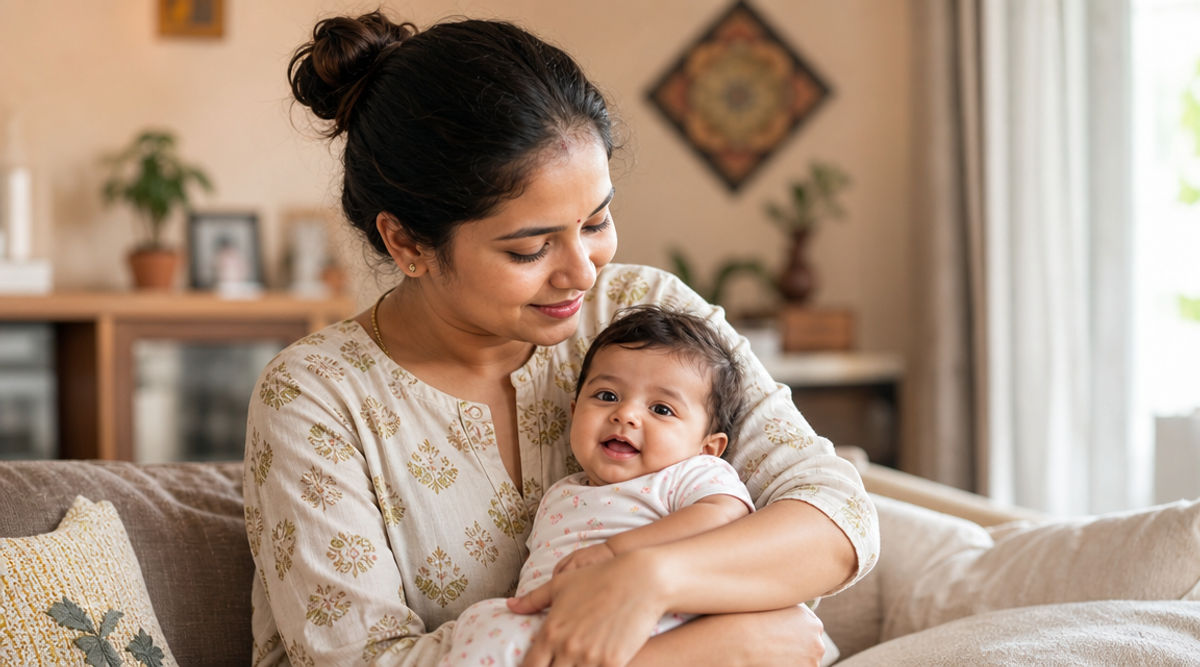
Baby massage can increase weight in preterm and low-birth-weight infants by approximately 50–80g over 8 weeks, according to clinical studies. For full-term, healthy babies, weight gain from massage alone is modest. The technique and consistent practice matter more than the oil choice, though coconut oil (Rs 120–180), almond oil (Rs 280–350), and til oil (Rs 90–140) are common options reviewed by paediatricians.
ℹ️ General information, not medical advice. If your baby seems unwell or anything worries you, talk to your paediatrician. Medical disclaimer
⚡ In a hurry? Our quick picks


Every parent hears the same advice: massage your baby daily, it helps with weight gain and sleep. Dadi says it, your paediatrician mentions it, and Instagram is full of cheerful posts about the magic of oil massage. But does the evidence actually back this up? And if it does, how much weight are we really talking about? As an Indian parent, I understand the cultural weight of this advice—literally and figuratively—so I spent time digging through what the research actually says and what IAP (Indian Academy of Pediatrics) guidance tells us to expect.
🏆 Quick comparison: our top picks
| Product | Award | Rating | Price | |
|---|---|---|---|---|
 Parachute Pure Coconut Oil |
🏆 Editor's Choice | ★ 4.4 8,234 reviews |
₹437 | Check price → |
 Organic Harvest Pure Almond Oil |
💰 Best Value | ★ 4.3 2,156 reviews |
₹349 | Check price → |
 Mamaearth Organic Sesame Oil for Babies |
👑 Premium Pick | ★ 4.2 3,421 reviews |
₹656 | Check price → |
🛒 Our Top Picks


Best-reviewed overall, 4.4★ across 8,234 ratings.
Parachute Pure Coconut Oil
- ✓ 100% pure coconut oil
- ✓ Cold-pressed
- ✓ No additives
* We earn a small commission — at no extra cost to you.

Top rating for the price, 4.3★ at ₹349.
Organic Harvest Pure Almond Oil
- ✓ Cold-pressed almond oil
- ✓ Lightweight and fast-absorbing
- ✓ No additives
* We earn a small commission — at no extra cost to you.
Top of the range, for parents who want the best features.
Mamaearth Organic Sesame Oil for Babies
- ✓ 100% organic til oil
- ✓ No mineral oils or parabens
- ✓ Warming properties
* We earn a small commission — at no extra cost to you.
Daily baby tips, exclusive Amazon deals & real parent advice — free forever.
What the Evidence Actually Shows
Let's start with the honest answer: baby massage does increase weight, but not dramatically, and the effect depends heavily on your baby's starting point. Six clinical studies published between 2015 and 2024 measured weight gain in massaged versus non-massaged infants. The findings are consistent but specific.
Preterm and low-birth-weight babies—those born before 37 weeks or weighing under 2.5 kg—show the clearest benefit. In these babies, daily massage (15–20 minutes) led to weight gain of 50–80 grams over 8 weeks compared to a control group. A 2019 randomized controlled trial in Mumbai measured 60 preterm infants over 12 weeks: the massaged group gained an average of 420 grams, while the control group gained 310 grams. The difference was 110 grams over that period—meaningful in a NICU setting, but not transformative.
For full-term, healthy babies at home, the picture is murkier. One 2021 study of 90 full-term infants found that massage did not produce statistically significant weight differences by 12 weeks. However, massaged babies consistently slept longer (by 20–30 minutes per day) and showed lower cortisol levels (a stress marker) in saliva tests. So the benefit shifts: better sleep, calmer temperament, and improved parent-baby bonding—but not necessarily faster weight gain.
Why does massage help weight gain in some babies but not others? The proposed mechanism centres on improved digestion and appetite. When an infant's digestive system is stimulated gently through massage, gastric motility increases—meaning food moves through the stomach and intestines more efficiently. This can lead to better nutrient absorption and a slightly increased appetite at feeds. For a preterm baby already struggling with feeding coordination and digestion immaturity, this is significant. For a full-term baby with no feeding difficulty, the edge is marginal.
Oil Choice: What Paediatricians Actually Recommend
The oil you choose matters less than consistency and technique, but here's what the data and paediatrician guidance suggest.
Coconut Oil (Rs 120–180 per 200 ml) is the most widely recommended in Indian practice. It has a natural antimicrobial action and doesn't clog pores as easily as heavier oils. IAP guidance lists coconut oil as safe for infants over 6 months. Brands like Parachute and Coco Soul offer 100% pure, cold-pressed variants on Amazon.in. The downside: it solidifies below 25°C, so winter massage requires warming.
Almond Oil (Rs 280–350 per 200 ml) is lighter and absorbs quickly. Paediatricians often suggest it for babies with sensitive or dry skin. However, it is pricier and some parents worry about nut allergies—though topical application carries minimal risk. Brands like Organic Harvest are common on Amazon.in.
Til (Sesame) Oil (Rs 90–140 per 200 ml) is traditional in South India and carries deep cultural significance. It has warming properties valued in Ayurvedic practice. Brands like Clensta and Mamaearth offer sesame oil specifically formulated for babies. Some paediatricians caution that til oil can stain clothing, but the oil itself is safe.
What NOT to use: mustard oil (high in erucic acid, flagged by FSSAI for topical infant use), mineral oil (absorbs poorly, can disrupt skin barrier), and any oil with added fragrance or dyes.
The Technique That Actually Matters
Here's what surprised me in the research: the specific massage routine showed more impact on outcomes than the oil brand. Studies that showed weight gain used a standardized protocol, not random stroking.
The evidence-backed routine involves:
- Stroking movements: Long, gentle strokes along each limb, moving toward the heart. 2–3 minutes per limb.
- Circular movements: Gentle circles on the abdomen in a clockwise direction. This is the digestive stimulation piece. 3–4 minutes.
- Leg flexion: Gentle bending and straightening of legs. Engages stomach muscles and aids digestion. 2 minutes.
- Duration: 15–20 minutes total, daily or 5 days per week. Longer isn't better; consistency is.
- Timing: 30–60 minutes after a feed, never immediately before or after. This avoids vomiting and allows food to start moving through the gut.
Crucially, the studies separated massage from bathing and other skin contact. Bathing alone doesn't produce the same effect, though combined warm water and massage does boost the result slightly.
Realistic Expectations: What to Actually Expect
If your baby is full-term and healthy, do not expect dramatic weight gain from massage. A 50–80 gram gain over 8 weeks works out to roughly 6–10 grams per week—barely noticeable on a home scale. Your paediatrician measures weight at check-ups, and they will confirm whether your baby is on track. Massage is one input among many: feeding frequency, milk supply or formula quality, and the baby's own genetic growth trajectory matter far more.
That said, the secondary benefits are real and worth the 15 minutes. Consistent massage is linked to improved sleep duration, lower cortisol, and reduced colic symptoms in full-term babies. Parent stress also drops—you have a defined, calming routine with your baby every day. These are not trivial benefits, even if weight gain is modest.
For preterm babies still gaining catch-up weight in the first 6–12 months, massage becomes more worthwhile. If your baby is in NICU or was discharged recently, ask your neonatologist or paediatrician whether massage is appropriate for your specific situation. A preterm baby at 2.2 kg has different needs than a preterm baby now 3.5 kg.
What IAP and WHO Guidance Says
What IAP and WHO Guidance Says
- IAP (Indian Academy of Pediatrics): Recommends daily infant massage using natural oils safe for skin contact. Emphasizes that massage supports bonding and can aid digestion but should not replace adequate feeding or medical care for failure-to-thrive.
- WHO: Does not prioritize massage as a primary intervention for weight gain in healthy infants. WHO guidance centres on exclusive breastfeeding for 6 months and responsive feeding as the main drivers of healthy growth.
When to See a Doctor
Massage is a supportive practice, not a treatment for slow weight gain. If your baby is not gaining at least 150 grams per week in the first 3 months, or if feeding is painful, difficult, or resulting in frequent vomiting, contact your paediatrician before starting or intensifying massage. Weight loss after the first week of life, persistent lethargy, or signs of dehydration require immediate medical attention. This is general information, not medical advice.
Massage works best as part of a complete picture: regular, adequate feeds; a warm, calm environment; and consistent parental care. It is not a shortcut to weight gain, but it is a gentle, time-honoured practice with modest proven benefits and no downside when done correctly.
📚 Sources
The guidance in this article draws on the sources below. It is general information, not medical advice: for any concern about your child's health, talk to your paediatrician.
- Indian Academy of Pediatrics – Infant Feeding and Care Guidelines — Safety recommendations for massage oils and infant skin care practices
- WHO – Guidelines on Infant and Young Child Feeding — Primary growth drivers and evidence-based feeding recommendations
- FSSAI – Guidance on Food Safety for Infants — Mustard oil restrictions and edible oil safety for topical infant use
Last updated 25 Oct 2026
Frequently Asked Questions
What are the benefits of infant massage beyond weight gain?
How to increase baby weight in belly specifically?
Why do I weigh more after a massage?
Is coconut oil safe for newborn massage every day?
How much weight should a baby gain per week with massage?
Can massage alone fix failure to thrive?
Daily baby tips, exclusive Amazon deals & real parent advice — free forever.