
Do Electronic Toys Delay Speech in Babies? What the Science Actually Shows
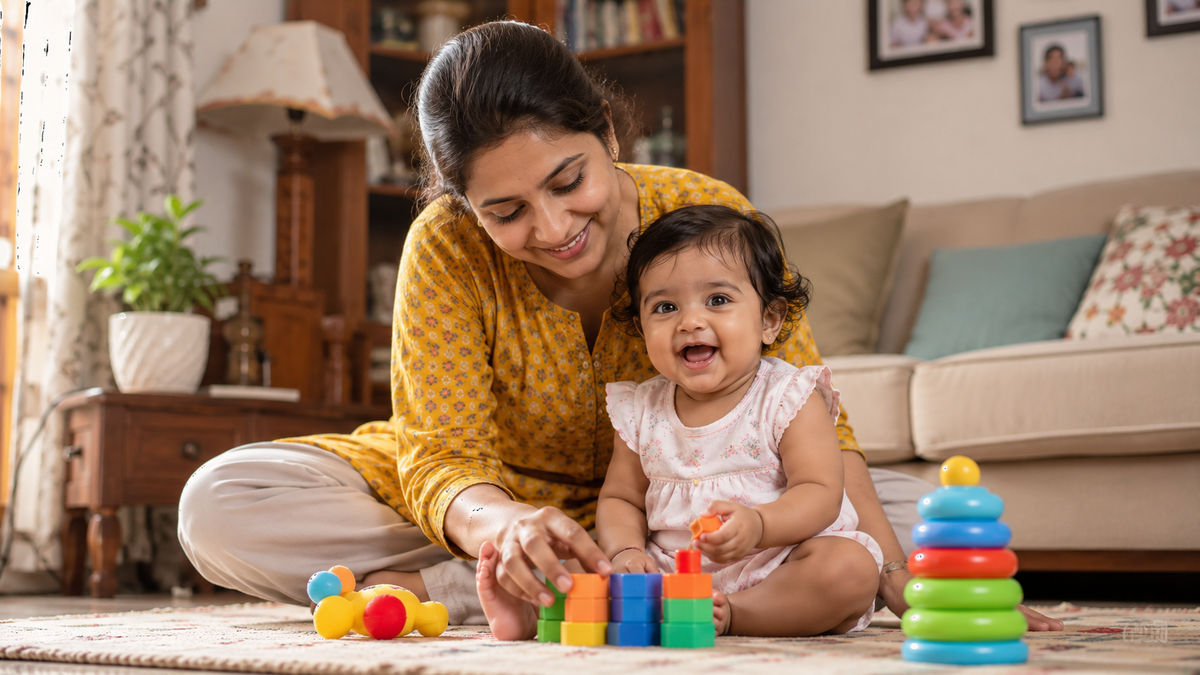
Electronic toys themselves don't cause speech delay. However, research shows that children use fewer words during play with battery-powered toys compared to simple toys. The difference isn't the toy—it's that noisy, self-entertaining electronics reduce the space for parent-child back-and-forth conversation, which builds language. Babies learn to talk through interaction with caregivers, not from the toy itself.
⚡ In a hurry? Our quick picks

Buying that singing, light-up toy doesn't make your baby stop talking. But if every play session is your baby alone with a beeping gadget instead of you describing what they're doing, you're missing language-building moments. This article cuts through the myth: what the evidence actually shows, when electronic toys are fine, and how simple toys and parent talk create the real difference.
🏆 Quick comparison: our top picks
| Product | Award | Price | |
|---|---|---|---|
 Funskool Wooden Baby Rattle |
👑 Premium Pick | ₹739 | Check price → |
 Mothercare India Wooden Shape Sorter Toy |
🪙 Budget Pick | ₹295 | Check price → |
 Funskool Wooden Stacking Cups Set |
₹495 | Check price → | |
 Imagimake Cloth Soft Book – Animals Edition |
₹349 | Check price → | |
 Funskool Soft Building Blocks – 12 Piece Set |
₹379 | See alternatives → | |
 Funskool Giggle Gang Electronic Music Toy |
₹483 | Check price → |
🛒 Our Top Picks


The highest-priced option in this guide.
Funskool Wooden Baby Rattle
- ✓ Solid wood rattle with natural finish
- ✓ BIS certified, non-toxic paint
- ✓ Lightweight for 4-month-old hands
* We earn a small commission — at no extra cost to you.

The lowest-priced option in this guide.
Mothercare India Wooden Shape Sorter Toy
- ✓ 6 wooden shapes, color-coded box sorter
- ✓ Develops hand-eye coordination, cause-and-effect learning
- ✓ 12+ months recommended for intentional play
* We earn a small commission — at no extra cost to you.
Funskool Wooden Stacking Cups Set
- ✓ 5 wooden cups, nested stacking design
- ✓ Natural wood finish, BIS certified
- ✓ Suitable from 6 months onwards
* We earn a small commission — at no extra cost to you.
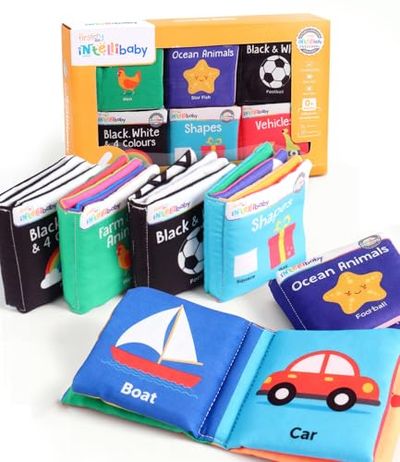
Imagimake Cloth Soft Book – Animals Edition
- ✓ Soft-page cloth book with textures
- ✓ 10 interactive pages with crinkle, rattle, and teething corners
- ✓ Wash-safe, 3+ months safe
* We earn a small commission — at no extra cost to you.
Funskool Soft Building Blocks – 12 Piece Set
- ✓ Plush-covered foam blocks in primary colors
- ✓ Safe for teething, lightweight for stacking
- ✓ Suitable from 6 months
* We earn a small commission — at no extra cost to you.

Funskool Giggle Gang Electronic Music Toy
- ✓ Button-activated music and lights
- ✓ 3 AA batteries included
- ✓ 12+ months, safe for supervised play
* We earn a small commission — at no extra cost to you.
Daily baby tips, exclusive Amazon deals & real parent advice — free forever.
What the Evidence Actually Shows
The concern about electronic toys and speech comes from how they change playtime interaction. When researchers have observed babies playing with battery-powered toys (music-box type, self-entertaining electronics) versus simple toys (wooden blocks, cloth books, rattles), the pattern is consistent: parents talk less, and babies vocalize less during electronic toy play. This isn't because the toy damages the brain—it's because a noisy toy that does everything by itself doesn't invite questions, descriptions, or back-and-forth chat the way a simple toy does.
What this means for your baby: A 30-minute play session with an electronic toy where you're scrolling nearby is not the same as 30 minutes of side-by-side play with a stacking cup where you're saying, "Red one! Now blue! You did it!" The toy isn't toxic, but the interaction is what matters.
Red Flags Checklist: When Electronic Toys Become a Problem
Electronic toys are fine. Electronic toys as a substitute for your presence are not. Use this checklist to know if you're in the safe zone:
- You play together: You're beside your baby, narrating, asking questions, and responding to their reactions. Electronic toys become background entertainment you're actively part of, not a babysitter.
- Battery toys are one of many: Your toy rotation includes wooden rattles (₹250), cloth books (₹300), stacking cups (₹250), and simple wooden toys alongside electronic picks. Electronic isn't the default; it's one option.
- No screens during play sessions: Screens (TV, YouTube) during toy time reduce parent talk even more than electronic toys alone. Electronic toys + your voice is different from electronic toys + screen silence.
- Rotation happens: Toys rotate every 2-3 weeks, and simple toys get equal time and enthusiasm. Babies talk more when discovering something "new" and familiar toys prompt more parental narration ("What are we building today?").
- Talk time is protected: At least one meal, one play session, and one bedtime routine per day happen with no electronic toys—just you, your baby, and simple objects. This is language-building time.
If all five are true, electronic toys are not a speech delay risk. If three or fewer are true, your baby isn't in danger, but you're missing opportunities for language growth.
Safer Alternatives and How to Choose Toys That Invite Talk
Simple toys aren't boring—they're language dense. Here's why and what to pick:
Wooden rattles (₹250–400): No sounds, just weight and texture. You describe them: "Shake! Hear the sound?" Your baby watches your mouth and learns words. Brands like Funskool and local wooden toy makers make these.
Cloth books (₹300–500): Pages to turn, textures to feel, pictures to point at. You narrate everything: "See the puppy? What does puppy say?" Funskool and Imagimake make India-friendly options.
Stacking cups (₹250–400): No instructions, infinite play. "Put big one down. Now small one. It's falling! Again?" Funskool makes sturdy sets.
Soft blocks (₹400–600): Similar language-building as stacking—you're narrating action, not the toy is performing. Funskool and Mothercare India have good options.
When electronic toys make sense: After 12 months, when your baby is already talking, short sessions (10–15 minutes) with cause-and-effect electronic toys (press button, lights flash) can teach that idea. But these should never replace daily simple-toy + parent-talk time. Use them as one tool, not the main tool.
Parent Talk-Prompts Checklist for 6–18 Months
Your words matter more than the toy. Print this and put it on your toy basket as a reminder:
- 6–9 months: Narrate everything your baby does. "You're shaking the rattle. Shake, shake! You picked it up!" Respond to babbles as if they're conversation. Say the word for objects: "Rattle. Red rattle."
- 9–12 months: Use single words and short phrases. Point and name: "Cup. You found the cup. Pick it up. Good job!" Pause after you speak to let them respond with a babble or gesture.
- 12–18 months: Add questions. "Where's the block?" "What does it do?" Expand their one-word answers: Baby says "Up." You say, "Yes, blocks go up. Stack them up high."
- Every age: Sing during play (even made-up songs). Respond to their sounds like they're talking to you. Never let a toy replace your voice.
What IAP and WHO Guidance Says
Indian Academy of Pediatrics (IAP) emphasizes that language development happens through responsive interaction—a parent or caregiver responding to a baby's sounds and gestures. The tool (toy) is secondary; the interaction is primary. WHO guidelines on early childhood development stress that daily parent-child talk, play, and responsiveness are the foundation of language and cognitive growth, not specific toy types.
Toy Rotation Strategy to Keep Language Growing
Babies stop talking as much to familiar toys because there's less novelty, less parental narration. Rotate every 2–3 weeks: put away half your simple toys, bring out different ones. Electronic toys can stay in rotation too, but never as the only "new" option. This keeps parent engagement high and gives your baby reason to ask questions.
When to See a Doctor
Speech delay is not caused by having electronic toys. But if your baby isn't doing these by these ages, ask your pediatrician, regardless of toys:
- By 6 months: Babbling (ba-ba, da-da sounds), turning to sounds, smiling at familiar faces.
- By 12 months: At least one or two recognizable words ("mama", "dada", or similar), pointing to things, understanding simple words like "no" or "bye".
- By 18 months: At least 10 words, following one-step instructions ("Give me the cup"), pointing to body parts when you name them.
This is general information, not medical advice. Speech delay has many causes—hearing, developmental variation, or reduced interaction—none of which are caused by electronic toys alone. If you're concerned, your pediatrician can refer you to an IAP-trained speech-language pathologist.
📚 Sources
The guidance in this article draws on the sources below. It is general information, not medical advice: for any concern about your child's health, talk to your paediatrician.
- Indian Academy of Pediatrics – Early Childhood Development and Language Milestones — Supports parent-child interaction as primary driver of language development
- WHO – Early Childhood Development — Emphasizes responsive caregiving and daily parent-child engagement for language growth
- American Academy of Pediatrics – Media and Young Minds — Documents reduced parent-child vocalization during solo toy and screen use
Last updated 12 Nov 2026
Frequently Asked Questions
Can too much screen time cause speech delay?
What toys are best for encouraging speech in babies?
How do electronic toys affect child development?
What is the most common cause of delayed speech in children?
How often should I rotate baby toys to encourage language?
Are wooden toys really better than plastic for speech development?
Daily baby tips, exclusive Amazon deals & real parent advice — free forever.