
Do Babies Need Woollen Caps Indoors? Winter Safety, Heat Loss & IAP Guidance for Indian Homes
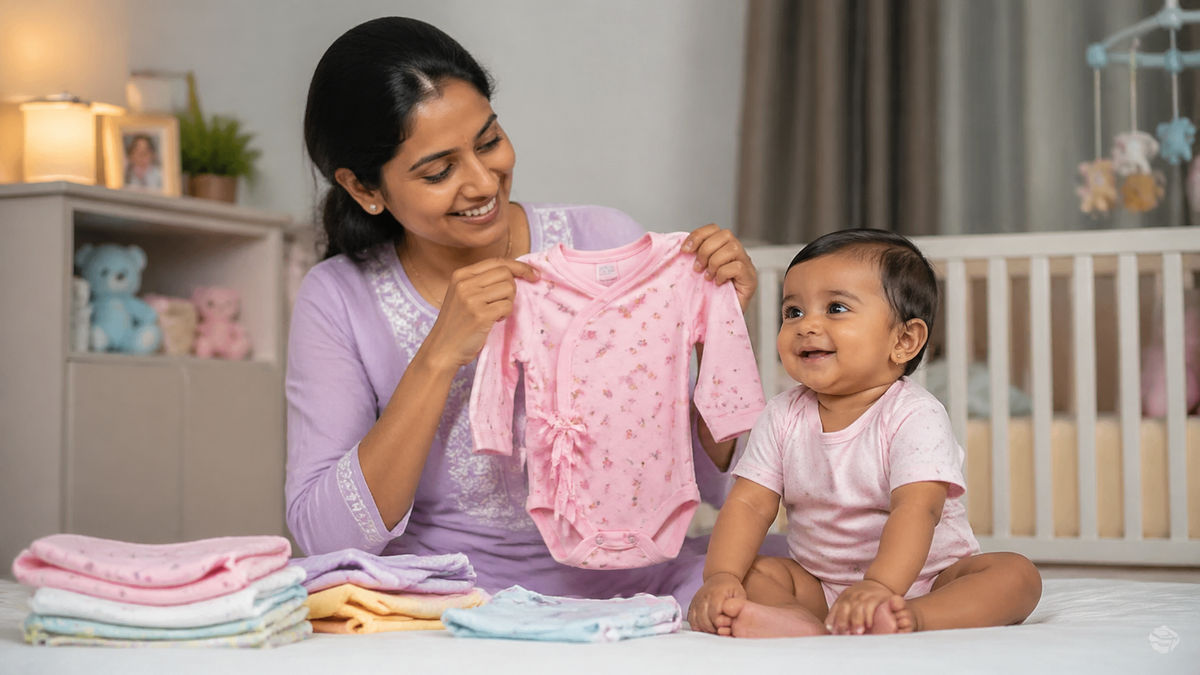
Babies do lose heat through their head, but overheating indoors is a bigger SIDS risk than cold. IAP guidance: keep babies at one layer more than adults in their sleeping area. Indoor woollen caps are rarely needed in heated Indian homes; soft cotton caps for transitional spaces or outdoor play are safer alternatives.
⚡ In a hurry? Our quick picks
When our first daughter was born in November, my mother-in-law arrived with a basket of woollen caps. Sar pe thand lag jayega, she warned. Our paediatrician said something different: overheating in sleep is actually the bigger danger. We were confused. Five winters later, I've learned what the evidence actually shows—and it's neither extreme. Here's what you need to know to make a real decision for your home, not just follow tradition.
🏆 Quick comparison: our top picks
| Product | Award | Price | |
|---|---|---|---|
 Burt's Bees Baby Organic Cotton Knit Cap |
👑 Premium Pick | ₹2,322 | See alternatives → |
 Mothercare Pure Cotton Baby Cap (0-3 Months) |
🪙 Budget Pick | ₹186 | Check price → |
 Babyhug Organic Cotton Baby Cap (Pack of 2) |
See on Amazon | See alternatives → |
🛒 Our Top Picks

The highest-priced option in this guide.
Burt's Bees Baby Organic Cotton Knit Cap
- ✓ Organic cotton blend
- ✓ Breathable knit
- ✓ One size fits 0-6 months
* We earn a small commission — at no extra cost to you.
The lowest-priced option in this guide.
Mothercare Pure Cotton Baby Cap (0-3 Months)
- ✓ 100% organic cotton
- ✓ Hypoallergenic
- ✓ Soft elastic band
* We earn a small commission — at no extra cost to you.
Babyhug Organic Cotton Baby Cap (Pack of 2)
- ✓ 100% organic cotton
- ✓ Pack of 2 caps
- ✓ Elastic closure
* We earn a small commission — at no extra cost to you.
Daily baby tips, exclusive Amazon deals & real parent advice — free forever.
The confusion starts with a half-truth. Yes, newborns lose heat through their heads. But in a heated Indian bedroom, that risk is small compared to the risk of a baby sleeping too warm. This article cuts through the myth and pairs grandmother wisdom with paediatrician logic, so you know when a cap helps and when it actually creates danger.
What the Evidence Actually Shows: Head Heat Loss vs. Overheating Risk
Here's the fact that changes everything: newborns do lose heat through their scalp, but not because the head is a special heat-loss zone. That's a myth from older paediatrics textbooks. Head heat loss is proportional—roughly 10-15% of total body heat loss, just like any uncovered body part. An uncovered arm, torso, or leg loses heat at the same rate.
The real issue? Overheating. WHO and IAP both flag overheating as a modifiable SIDS risk factor. A baby sleeping in a warm room with a woollen cap, bundled in a quilt, is at higher SIDS risk than a baby sleeping cool and lightly dressed. Studies from developed nations (where room heating is standard) show a clear link between excessive warmth during sleep and sudden infant death.
Indoor air temperature is the first control. IAP recommends keeping a baby's sleeping room between 20–22°C (or 68–72°F) in winter months. In most Indian tier-1 homes with heating, this is already the case by November night-time. A soft cotton cap or no cap at all, paired with appropriate clothing layers, keeps a baby safe.
Heat-loss facts for Indian homes (September–February):
- Rooms heated to 20–24°C: Your baby's primary risk is overheating, not cold. A woollen cap indoors is unnecessary and increases that risk.
- Unheated rooms or sleeping outdoors on a veranda: A soft cotton or wool cap helps, but layered clothing on the torso is more important.
- Transitional spaces (hallways, living rooms without direct heaters): A light cap provides comfort without overheating risk if the baby is awake and supervised.
The safer rule is simple: one layer more than you are wearing. If you're comfortable in a long-sleeve shirt indoors, your baby needs a long-sleeve bodysuit plus one lightweight blanket. Not a cap—a blanket. This is IAP guidance, and it works.
Why Woollen Caps Indoors Increase SIDS Risk (And What to Use Instead)
A woollen cap left on a sleeping baby creates two problems. First, it can shift over the baby's face during sleep, blocking the nose and mouth—a known SIDS trigger. Second, the trapped heat under the cap adds to the overall body temperature, especially if the room is already 22–24°C and the baby is dressed in multiple layers.
SIDS risk peaks between 1–4 months, exactly when well-meaning relatives pile on caps and quilts. IAP emphasizes: keep the baby's face uncovered during sleep. This means no cap, no loose cloth near the head, and no pillow.
If your baby has sensory needs—some babies are soothed by mild pressure on the scalp, or you notice your newborn pulls off a cap immediately—that's normal. Forcing a cap defeats its purpose. For outdoor play or pram time in November afternoon sun, a soft cotton cap (not wool) provides mild sun and wind protection without overheating risk indoors.
Safe cap alternatives for winter 2026:
| Use Case | Best Option | Material | Price Range (Rs.) |
|---|---|---|---|
| Sleeping indoors (no cap needed) | None—use layers instead | — | — |
| Awake indoors, transitional spaces | Soft cotton cap | 100% organic cotton | 150–250 |
| Outdoor play, morning sun | Cotton sun cap with brim | Organic cotton blend | 200–300 |
| Pram outings, 15–20 min in cool air | Lightweight cotton or bamboo | Cotton-bamboo blend | 180–280 |
Why cotton over wool indoors? Cotton breathes, wool traps heat. In a 22°C room, wool is overkill and increases overheating risk. Cotton lets a baby's scalp regulate temperature naturally.
Room Temperature and the Safe Layering Rule: How Many Clothes Does Your Baby Actually Need?
IAP's one-layer-more-than-an-adult rule is the decision tree that actually works. Here's how to apply it to Indian November nights:
If your bedroom is 20–22°C: You're wearing long sleeves and socks. Your baby wears a long-sleeve bodysuit, a lightweight full-length sleep sack (not a quilt), and warm socks. No cap. Room temperature is cool enough that overheating is unlikely, but a cap adds unnecessary heat.
If your bedroom is 22–24°C (common in homes with central heating or in warmer tier-2 cities): You're comfortable in a t-shirt. Your baby wears a lightweight long-sleeve bodysuit and a sleep sack. No additional layers, no cap. This is the most common winter scenario for Indian urban homes.
If your bedroom is 18–20°C (unheated, or open veranda sleep): You're wearing a cardigan. Your baby wears a long-sleeve bodysuit, thermal leggings, a sleep sack, and a soft cotton cap. This is where a cap makes sense—the room is genuinely cool.
The shift from autumn to winter in Delhi, Bangalore, Mumbai, and Pune typically means room temperatures of 20–23°C. A woollen cap is almost never needed in these conditions, assuming the baby is dressed in one warm layer below.
Signs Your Baby Is Too Hot or Too Cold: What to Actually Watch For
Forget the old trick of touching a baby's hands and feet. Hands and feet are always cool in newborns—that's normal circulation, not a sign of cold. Instead, check your baby's back and neck with your hand.
Too hot: Neck is sweating, baby's back is warm and damp, face is flushed, baby is restless or pulling at clothes, rapid breathing (above 40 breaths per minute at rest). These are SIDS red flags. Remove the cap immediately, reduce layers, and cool the room.
Too cold: Back feels cool (not cold, cool), baby is curled tightly, refusing feeds, lethargy or unusual sleepiness, bluish lips or fingernails. These are rare in heated Indian homes and require a doctor's visit if they persist.
In most cases, a baby dressed in one layer more than you wear, at a room temperature of 20–22°C, is in the safe zone. No cap needed.
Night-Time Rules: When to Use a Cap, When Absolutely Not To
During sleep (safe space, crib or bassinet): No cap. Ever. IAP is clear: babies sleep safest with faces completely uncovered. A cap can slip, creating an airway obstruction risk. Room temperature and body layers are your only tools for keeping a baby warm at night.
During supervised naps or awake time: A soft cotton cap is fine if you're present and can watch for overheating signs. Remove it the moment the baby goes into a deep sleep or is placed in a crib.
Pram time or outdoor play (15–30 minutes in cool morning/evening): A cotton cap provides mild sun and wind protection. No harm here, as long as the cap is not too tight and the baby's face remains fully uncovered and visible.
The night-time rule is so important that it bears repeating: the moment your baby is placed for sleep—whether in a crib, bassinet, or co-sleeping space—remove any cap. Pair this with appropriate room temperature (20–22°C) and one warm layer, and your baby is safer than bundled in wool.
What IAP and WHO Guidance Says
IAP (Indian Academy of Pediatrics): Recommends keeping sleeping babies at 20–22°C, clothed in one layer more than an adult caregiver, with faces fully uncovered. Overheating is a modifiable SIDS risk factor.
WHO: Emphasizes that soft objects, loose blankets, and head coverings increase SIDS risk. Firm sleep surfaces and appropriate layering (not caps) are the foundation of safe infant sleep.
When to See a Doctor
If your baby shows signs of extreme cold (persistent lethargy, refusal to feed, bluish lips at room temperatures above 20°C) or extreme heat (persistent sweating, rapid breathing, high fever), contact your paediatrician immediately. If your baby has a medical condition affecting temperature regulation (premature birth, low birth weight managed at home), ask your neonatologist for specific guidance—caps and layers may need adjustment based on medical history. This is general information, not medical advice.
The real wisdom comes from pairing grandmother's instinct—babies do need warmth—with paediatrician logic—overheating in sleep is more dangerous than mild cold. A soft cotton cap for daytime play, proper room temperature for sleep, and the one-layer-more rule will keep your baby safe through winter 2026.
📚 Sources
The guidance in this article draws on the sources below. It is general information, not medical advice: for any concern about your child's health, talk to your paediatrician.
- IAP Guidelines on Infant Sleep Safety and SIDS Prevention — Room temperature, layering, and face-uncovered sleep recommendations
- WHO Recommendations on Safe Sleep and Sudden Infant Death Syndrome — Overheating as modifiable SIDS risk, head coverings safety
- American Academy of Pediatrics (AAP) Safe Sleep Guidelines — Heat loss proportionality and overheating risk in sleep environments
Last updated 19 Nov 2026
Frequently Asked Questions
At what room temperature do babies actually need a woollen cap indoors?
Can a baby wear a cap while sleeping safely?
How do I know if my baby is too hot or too cold at night?
Is a soft cotton cap safer than a wool cap for indoor use?
What's the actual rule for how many layers a winter baby needs?
Do newborns lose more heat through their head than other body parts?
Daily baby tips, exclusive Amazon deals & real parent advice — free forever.