
Crib vs Floor Bed vs Co-Sleeper: Which Fits Your Indian Flat & Baby's Age
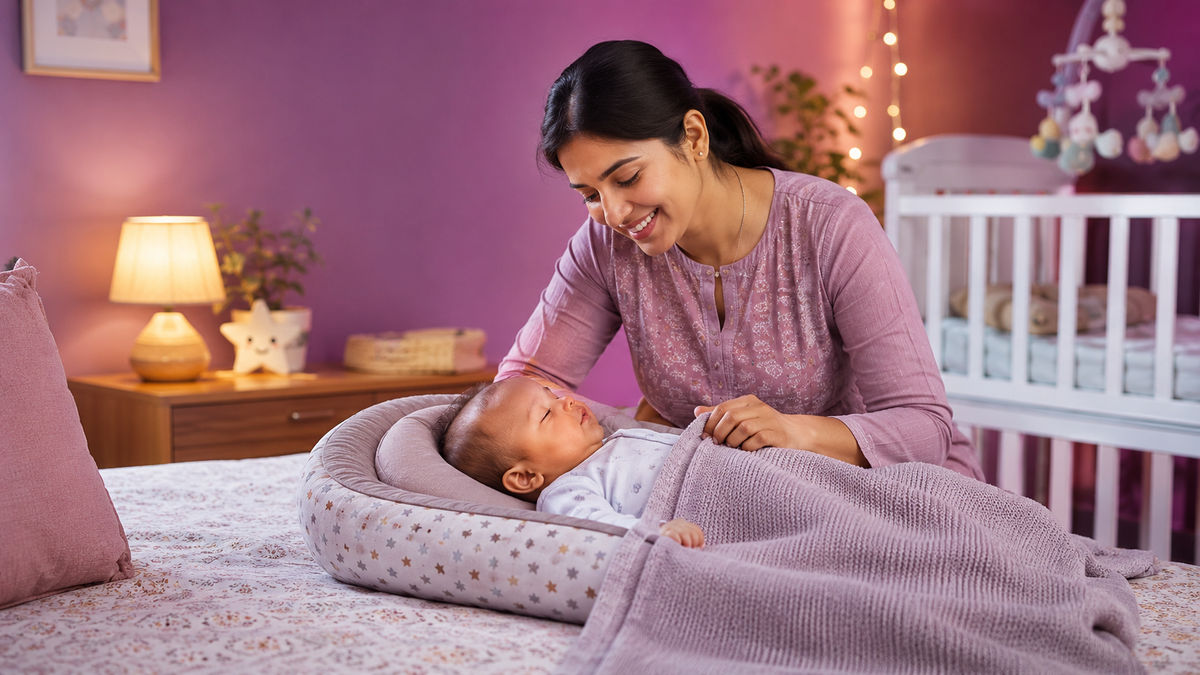
A crib is safest for solo sleepers in spacious rooms; floor beds suit small flats and active toddlers; side-sleeper cots bridge both. Choose based on your flat size, room layout, whether grandparents co-sleep, and your baby's age. All three meet safety standards if gaps, firmness and height are right.
ℹ️ General information, not medical advice. If your baby seems unwell or anything worries you, talk to your paediatrician. Medical disclaimer
⚡ In a hurry? Our quick picks


When your baby arrives, the first big decision isn't what brand—it's where they actually sleep. You've got a 1BHK flat in Bangalore, or maybe a joint-family setup in Mumbai where your mother-in-law sleeps in the same room. Your neighbour swears by a floor bed; your doctor says a crib is safest. Meanwhile, you're looking at your bedroom and wondering if a standard crib even fits.
🛒 Our Top Picks

Mee Mee Baby Wooden Crib with Swing Function
- ✓ Dimensions: 120×60 cm
- ✓ Certified firm mattress included
- ✓ Swing and static modes
* We earn a small commission — at no extra cost to you.

BabyGo Bedside Co-Sleeper Cot Attached
- ✓ Fits standard double beds
- ✓ Height adjustable to match parent bed
- ✓ Firm certified mattress
* We earn a small commission — at no extra cost to you.

Nilkamal Baby Floor Bed Mattress with Waterproof Cover
- ✓ Breathable, moisture-resistant foam core
- ✓ Fitted waterproof cover (non-removable)
- ✓ Size: 140×70 cm
* We earn a small commission — at no extra cost to you.

Amardeep Baby Crib with Detachable Rail
- ✓ Compact footprint for small rooms
- ✓ Certified firm mattress
- ✓ One rail detachable for co-sleeper use
* We earn a small commission — at no extra cost to you.
Daily baby tips, exclusive Amazon deals & real parent advice — free forever.
The good news: there's no single "right" answer. What works depends on three things—your flat layout, your baby's age, and your family's sleep style. This article breaks down crib vs floor bed vs co-sleeper on safety, space and cost, so you can decide without guilt or guesswork.
Decision Checklist: Pick Your Sleep Setup
- Measure your bedroom first. Grab a tape. A standard Indian crib is roughly 120×60 cm; a floor bed needs 150×80 cm clear space. If your bedroom is under 100 sq ft with a double bed, a floor bed may not fit comfortably. Why this matters: A cramped setup means you trip at night, skip safety checks, and feel resentful.
- Ask: Will multiple adults sleep in this room? If yes (joint family, night-time caregiving rotation), a side-sleeper or floor bed keeps everyone close without a full bed-in-bed risk. If just you and your spouse, a crib or floor bed both work. Why this matters: Co-sleeping safely with multiple people means consistent setup and no accidental rolling or gap hazards.
- Note your baby's age and mobility. Newborns (0–3 months) are safest in a close, firm-sided space—crib or side-sleeper. Crawlers (6–12 months) need bumper-free spaces to avoid entrapment; a floor bed is genuinely safer once they're mobile. Why this matters: A baby who can roll or crawl can trap limbs in crib rails or get stuck between mattress and wall.
- Climate: heat and humidity matter. In monsoon-heavy cities (Mumbai, Kochi), a raised crib reduces mold and mildew risk. In dry climates, floor beds are fine if the floor is sealed and clean. Why this matters: Damp mattresses breed fungal skin infections in infants; a raised bed adds airflow.
- Test mattress firmness before buying. Place your palm on the mattress and press. Your hand should not sink more than 2 cm. Lay the mattress in the crib or frame—it should not rock or shift. Measure gaps: the mattress edge and crib wall should have no gap larger than two fingers (roughly 6 mm). Why this matters: A soft or gappy mattress is a suffocation or entrapment risk.
- Budget: crib > side-sleeper > floor bed. A good safety-certified crib starts around ₹3,500–8,000; side-sleepers, ₹2,500–5,000; a floor bed, just the mattress and frame, ₹1,500–4,000. All can be safe if standards are met. Why this matters: Cost matters, but a cheap, gappy mattress is false economy.
How to Compare Cribs, Floor Beds & Side-Sleepers
| Feature | Crib | Floor Bed | Side-Sleeper Cot |
|---|---|---|---|
| Space needed (sq ft) | 12–15 sq ft | 18–20 sq ft | 10–12 sq ft |
| Best for flat size | 1BHK, any room | 2BHK+, dedicated baby space | 1BHK with adult bed nearby |
| Baby age range | 0–3 years | 6 months–2.5 years | 0–9 months |
| Multiple adults co-sleeping? | No (separate furniture) | Yes (all on same surface) | Yes (attached to adult bed) |
| Mobility risk (crawling/rolling)? | Moderate (rails can trap) | Low (open space) | Low (low walls) |
| Humidity/mold risk? | Low (raised off floor) | Higher (mattress on floor) | Low (raised frame) |
| Setup cost range | ₹3,500–8,000 | ₹1,500–4,000 | ₹2,500–5,000 |
Crib: Best for Separate-Room Sleep & Small Flats
A crib is a standalone, four-sided frame with a firm mattress. If your baby sleeps in their own room (or a corner of your room with clear separation), a crib is the most compact and easiest to keep safe. The raised frame keeps the mattress off humid floors, and the defined space means you're less likely to accidentally leave gaps or soft objects nearby.
The main catch: a crib's rails can trap a baby's limbs if the mattress sinks or shifts. Before buying, check on Amazon.in that the brand lists BIS (Bureau of Indian Standards) certification or mentions compliance with Indian safety norms. Brands like Mee Mee, BabyGo, and Amardeep List their standards on product pages. Once you have it, the mattress-gap test is non-negotiable—press and measure before the first night.
Cribs also take up fixed floor space; if you're in a 1BHK and the baby's crib dominates the bedroom, you'll feel the squeeze. But if you have a second room or a large master bedroom, a crib keeps the baby safely contained and you know exactly where they are.
Floor Bed: Best for Crawlers, Joint-Family Homes & Space Flexibility
A floor bed is a low-profile mattress (often with a wooden or foam frame) that sits directly on a sealed floor. Popular in Montessori homes and co-sleeping families, it's increasingly chosen by Indian parents in joint-family setups where multiple caregivers rotate nights or grandparents need to stay close.
The safety advantage is clear: no rails to trap limbs, no height to fall from once your baby crawls. The trade-off is humidity. If your flat is in Mumbai or Kochi, or if your floor is unsealed concrete, a floor bed mattress will absorb moisture and mold can grow. You need to seal the floor (simple varnish or PVC tiles), use a moisture-barrier mattress cover, and rotate or air the mattress weekly.
Floor beds also need consistent vigilance: toys, pillows, or blankets must be kept out entirely, and the space must be cordoned off so toddlers don't roll into walls or furniture. For a first-time parent in a 2BHK with a dedicated baby room and sealed flooring, this is liberating. In a crowded joint-family 1BHK, it adds complexity.
Side-Sleeper Cot: The Compromise for 1BHK Families
A side-sleeper (also called a co-sleeper or bedside cot) is attached to the parent's bed at the same height, with one side open to the adult mattress. It's the middle ground: your baby sleeps beside you without rolling into your bed, and you avoid the separate-crib isolation that some parents find stressful.
This works brilliantly in a 1BHK if your bedroom is tight. The cot takes up about 2–3 feet of extra floor space, and your baby is arm's reach away. It's also perfect if your mother-in-law or night nurse rotates in to help—everyone can see the baby from the bed.
The limits: side-sleepers are safe for newborns to roughly 9 months, until your baby can pull themselves up or kick hard enough to destabilize the setup. After that, you'll need to transition to a crib or floor bed. Also, attachment must be secure—check that the clamps grip your bed frame firmly and there are no gaps between the cot mattress and your mattress edge (that's an entrapment risk).
What IAP and WHO Guidance Says
What IAP and WHO Guidance Says
- Room-sharing without bed-sharing: The Indian Academy of Pediatrics (IAP) endorses room-sharing (baby sleeps in their own crib or cot in your room) for at least the first 6 months, ideally the first year, to reduce SIDS risk and allow responsive nighttime care.
- Mattress and surface safety: WHO emphasizes a firm, flat sleep surface with no gaps, pillows, blankets or bumpers—whether crib, floor bed or side-sleeper.
When to See a Doctor
If your baby shows signs of difficulty breathing, unusual sleep positioning, or skin rashes (especially mold-related), contact your pediatrician. This is general information, not medical advice. If you're unsure whether your mattress or setup meets safety standards, ask your child health nurse at your local clinic; most will do a quick home check for free.
Frequently Asked Questions
Q: Is a crib or floor bed safer for SIDS prevention?
Both are equally safe if the mattress is firm, gaps are sealed, and the baby sleeps on their back in a bare cot (no pillows or blankets). The IAP doesn't prefer one over the other; room-sharing is what matters most.Q: Can I use a regular mattress on the floor?
No. A regular mattress (even an adult foam mattress) may be too soft, absorb moisture, or have a cover with zipper or seams that can trap fingers. Use a certified baby floor-bed mattress with a fitted, non-removable cover.Q: How long can my baby use a side-sleeper?
Until roughly 6–9 months, when they can sit up, pull themselves, or kick hard enough to shift the attachment. At that point, transition to a crib or floor bed so they have space to move safely.Q: Does my 1BHK flat need separate rooms for baby sleep?
No. Room-sharing (baby sleeps in their crib or side-sleeper in your room) is actually recommended by IAP and WHO for the first 6–12 months. A separate room is not necessary or safer.Q: Should I buy a crib that converts to a toddler bed?
If budget allows and your room layout permits, yes—it extends the crib's life. But don't compromise on initial mattress fit and firmness just to get a convertible model. Safety comes first; convertibility is a bonus.Q: What's the best mattress for a humid climate?
A dense foam or coconut-coir certified baby mattress with a waterproof, breathable cover. Brands like Nilkamal and Mee Mee list breathable options on Amazon.in. Air the mattress weekly and use a dehumidifier in the room if humidity is above 60%.
📚 Sources
The guidance in this article draws on the sources below. It is general information, not medical advice: for any concern about your child's health, talk to your paediatrician.
- Indian Academy of Pediatrics – Safe Sleep Guidelines — Room-sharing recommendations and SIDS prevention for Indian infants
- WHO – Infant and Young Child Feeding Guidelines — Safe sleep surfaces and room-sharing guidance for infants 0–12 months
- Bureau of Indian Standards – BIS Safety Certification — Standards for baby cribs, mattresses and co-sleepers sold in India
Last updated 22 Nov 2026
Frequently Asked Questions
What's the safest sleep setup for a newborn in a 1BHK flat?
Can I use a floor bed for a newborn, or only for crawlers?
How do I know if my mattress has dangerous gaps?
Is a convertible crib worth buying if I'm on a budget?
My flat is very humid (Mumbai/Kochi climate). Should I avoid a floor bed?
When should I move my baby from a side-sleeper to a crib or floor bed?
Daily baby tips, exclusive Amazon deals & real parent advice — free forever.