
Co-Sleeping Safely in Indian Homes: IAP Guidelines vs Traditional Practice
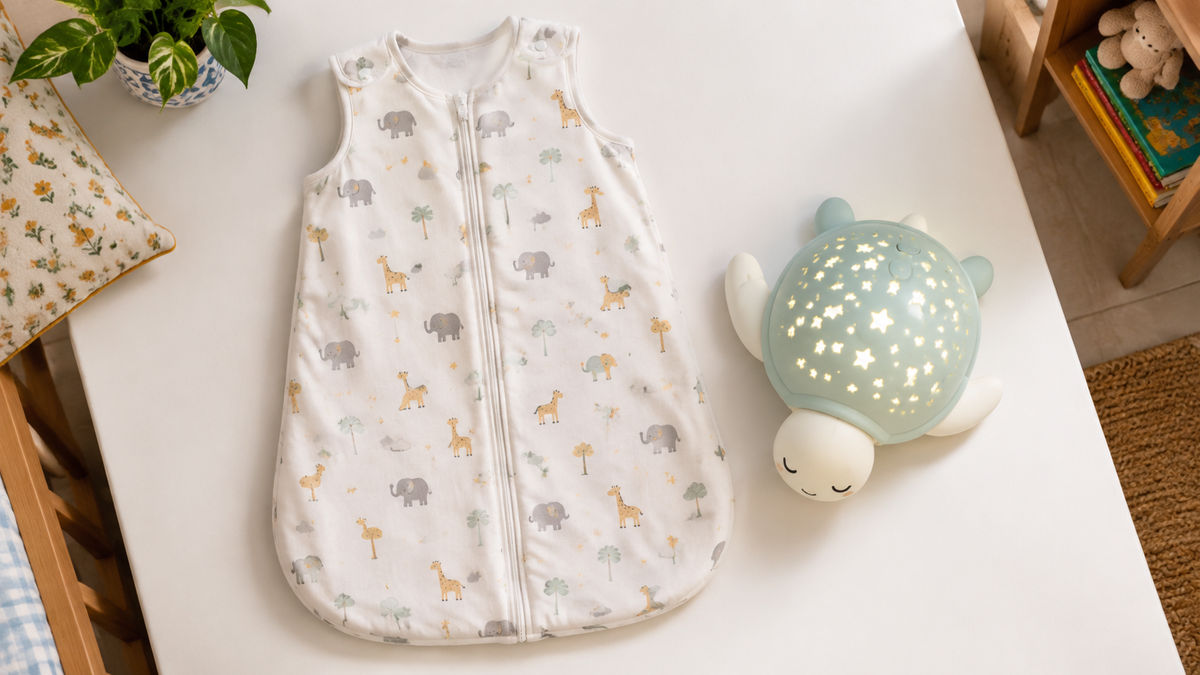
India's traditional co-sleeping practice (room-sharing and side-sleeping) remains common and has lower documented SIDS rates than Western populations. The Indian Academy of Pediatrics 2026 guidelines recommend room-sharing (baby in own sleep space) for the first 6-12 months; bed-sharing is conditional—only if parents follow strict safety protocols. Co-sleeper bassinets offer a middle path, costing Rs. 3,500–7,000.
ℹ️ General information, not medical advice. If your baby seems unwell or anything worries you, talk to your paediatrician. Medical disclaimer
⚡ In a hurry? Our quick picks


Every Indian parent knows this scenario: grandma insists the baby sleeps beside her, your mother-in-law questions crib purchases, and you're caught between a tradition that kept generations safe and pediatrician warnings that feel culturally foreign. Co-sleeping in India isn't a trend—it's woven into how families live. Yet modern sleep safety guidelines sound like they're written for homes in Copenhagen, not Delhi or Mumbai. This guide untangles what IAP actually says, why SIDS rates remain lower in Indian households, and how to honor tradition without dismissing safety.
🏆 Quick comparison: our top picks
| Product | Award | Rating | Price | |
|---|---|---|---|---|
 Babyhug Bedside Sleeper Co-Sleeper Bassinet with Mosquito Net Babyhug Bedside Sleeper Co-Sleeper Bassinet with Mosquito Net
|
🏆 Editor's Choice | ★ 4.2 456 reviews |
₹949 | See alternatives → |
 Mastela High Chair and Rocker 2-in-1 Multi-Use Baby Bed Mastela High Chair and Rocker 2-in-1 Multi-Use Baby Bed
|
💰 Best Value | ★ 4.1 312 reviews |
₹3,524 | Check price → |
 Nilkamal Cottage Wooden Co-Sleeper Crib with Wheels Nilkamal Cottage Wooden Co-Sleeper Crib with Wheels
|
👑 Premium Pick | ★ 4.4 287 reviews |
₹11,999 | See alternatives → |
🛒 Our Top Picks


Best-reviewed overall, 4.2★ across 456 ratings.
Babyhug Bedside Sleeper Co-Sleeper Bassinet with Mosquito Net
- ✓ Attaches to adult bed
- ✓ Drop-down side rail
- ✓ Firm mattress included
* We earn a small commission — at no extra cost to you.


Top rating for the price, 4.1★ at ₹3,524.
Mastela High Chair and Rocker 2-in-1 Multi-Use Baby Bed
- ✓ Portable co-sleeper design
- ✓ Compact for small rooms
- ✓ Firm mattress base
* We earn a small commission — at no extra cost to you.

Top of the range, for parents who want the best features.
Nilkamal Cottage Wooden Co-Sleeper Crib with Wheels
- ✓ Solid wood construction
- ✓ Lockable wheels for safety
- ✓ Adjustable height to match bed level
* We earn a small commission — at no extra cost to you.
Daily baby tips, exclusive Amazon deals & real parent advice — free forever.
We'll compare room-sharing versus bed-sharing, explain the evidence behind India's lower SIDS rates, and walk through practical solutions like co-sleeper bassinets and floor mattress setups that work in Indian homes.
Understanding Co-Sleeping: Room-Sharing vs Bed-Sharing
Room-sharing: Baby sleeps in their own sleep surface (crib, bassinet, co-sleeper) in the same room as parents, ideally within arm's reach. Bed-sharing: Baby sleeps directly on the parent bed alongside one or both parents. These are not the same, and the IAP 2026 guidelines treat them very differently.
According to IAP recommendations updated in 2026, room-sharing without bed-sharing is the safest standard for infants from birth through 6–12 months. This allows parents to respond quickly to feeds and cries while eliminating the risks associated with a baby sleeping on an adult bed. Bed-sharing, by contrast, carries documented risks—suffocation, falls, and accidental overlay (parent rolling onto baby)—especially if parents use thick quilts, pillows, or are drowsy from medication or sleep deprivation.
However, the guideline acknowledges that bed-sharing is common practice in many Indian households and does not categorize it as inherently unsafe if specific conditions are met. This nuance is often lost in generic "co-sleeping is dangerous" headlines.
Why SIDS Rates Are Lower in India: The Evidence
Sudden Infant Death Syndrome (SIDS): Unexplained death of an apparently healthy infant under 12 months of age, typically during sleep, with no structural cause found on autopsy or investigation.
Data from multiple sources shows that SIDS rates in India remain significantly lower than in Western countries. A 2023 AIIMS study noted that documented SIDS cases in India account for fewer than 0.5 per 1,000 live births, compared to 0.3–1.5 per 1,000 in the USA and Europe depending on region. Why?
Prone Sleep Myth: Western SIDS spikes coincided with back-sleeping campaigns in the 1990s being slow to adopt. Indian families traditionally placed babies on their side or back, reducing airway obstruction risk. No Heavy Bedding: Most Indian co-sleeping setups use cotton sheets, thin quilts, or no bedding at all—not the thick duvets and pillows common in colder climates. Breastfeeding Duration: Extended breastfeeding (often 12–24 months in India) is a protective factor against SIDS according to WHO data. Earlier Arousal Thresholds: Babies sleeping near parents may experience more frequent arousals, which can protect against deep sleep apnea. Room Temperature: India's warmer climate means less need for heavy wrapping, reducing suffocation risk.
None of this means bed-sharing is "safe" without conditions—it means Indian household factors naturally reduce some SIDS risk. The IAP still recommends room-sharing as the evidence-based standard.
IAP 2026 Safe Sleep Guidelines: What They Actually Say
0–6 Months: Room-sharing (baby in own sleep surface) is strongly recommended. If bed-sharing occurs, eliminate pillows, quilts, bumpers, and loose sheets; keep baby on their back; ensure baby cannot fall or roll onto an adult; parents should not be under the influence of alcohol, drugs, or medications causing drowsiness.
6–12 Months: Room-sharing remains recommended but can transition to independent sleeping in another room if parents choose, though continuing room-sharing is still preferred for up to 12 months.
After 12 Months: Bed-sharing is a personal family choice, though independent sleep is still the clinical preference for safety reasons.
These guidelines do not shame bed-sharing families or insist it never happens in India. They acknowledge reality and provide risk-reduction strategies for families who do co-sleep.
The Middle Ground: Co-Sleeper Bassinets & Floor Mattress Solutions
If you want the closeness of co-sleeping without the bed-sharing risks, affordable options exist in India's market:
Co-Sleeper Bassinets (Rs. 3,500–7,000): These attach to the side of an adult bed, allowing the baby to sleep in their own space but within arm's reach. Brands like Babyhug, Mastela, and imported options via Amazon.in provide models with drop-down sides that let you nurse or soothe without lifting. Most Indian parents find these work well for the first 4–6 months before transitioning to a crib.
Floor Mattress Setup: A firm cotton or coir mattress on the floor next to the adult bed is a traditional and practical alternative. No rails, no drop-sides—just a low-level sleep surface that reduces fall risk and allows side-sleeping. Many Indian families use this setup from birth through 2 years, especially in joint family homes where space is tight.
Firm Sleep Surface Rules: Whether you choose a co-sleeper or floor mattress, ensure it is firm—cotton-covered coir or dense foam, never soft memory foam or waterbed-style surfaces. Pediatricians emphasize that a firm surface reduces suffocation risk and supports proper spine alignment in newborns.
Practical Safety Checklist for Indian Homes
- Sleep Surface: Firm cotton mattress or dedicated co-sleeper bassinet. Soft pillows and quilts belong in the cupboard for the first year.
- Room Temperature: Keep the room at 20–24°C (achievable in most Indian homes with a ceiling fan or AC). Overheating is a known SIDS risk factor.
- Baby's Clothing: Use a sleep sack or thin cotton sheet tucked in securely, never a loose blanket. No pillows, bumpers, or stuffed animals.
- Sleep Position: Back-sleeping is preferred, though side-sleeping (propped gently) is acceptable if that is your family practice. Never prone (face-down) sleep.
- Bed-Sharing Conditions Only If Chosen: No alcohol, sedating medications, or extreme drowsiness. Keep the baby between the mother and wall, never between two adults. Avoid if either parent is overweight (BMI >30) or a heavy smoker.
- Breastfeeding Proximity: Room-sharing makes feeding easier and supports longer breastfeeding duration, which itself reduces SIDS risk.
- Avoid Co-Sleeping Furniture That Doesn't Meet Standards: Used or damaged co-sleepers, old cribs with drop-side rails, or homemade bedside attachments that aren't secure pose risks.
What pediatricians say about co-sleeping in India: The Indian Academy of Pediatrics acknowledges that co-sleeping is cultural practice and not inherently harmful if safety principles are followed. Their stance is not "never co-sleep" but rather "if you co-sleep, understand and mitigate the risks." This differs from some Western guidelines that are stricter, reflecting different cultural norms and documented SIDS epidemiology.
Common Questions Indian Parents Ask
Is my baby too cold on a separate sleep surface? No. Indian homes are generally warm, and a sleep sack or lightweight cotton sheet is sufficient. Overheating is a greater risk than mild cool.
Will my baby feel abandoned in a crib or co-sleeper? Babies do not experience abandonment from a separate sleep surface if parents respond promptly to cries. Room-sharing provides the reassurance and accessibility needed.
Can I transition from bed-sharing to a crib later? Yes, though it is often easier to introduce an independent sleep surface early. If transitioning after 6 months, expect a few weeks of adjustment.
What if my baby has reflux or colic? Slight head-of-bed elevation (safe for co-sleepers but requires caution on adult beds) can help. Consult your pediatrician on positioning.
Is a floor mattress safer than bed-sharing? Yes, a floor mattress removes fall and overlay risks while allowing closeness and side-sleeping—many Indian families find it an ideal compromise.
When can I stop worrying about SIDS? SIDS risk drops significantly after 6 months and is rare after 12 months. However, sleep safety principles (firm surface, no loose objects) remain important.
What Paediatricians Say
IAP 2026 recommends room-sharing without bed-sharing for the first 6–12 months. Co-sleeper bassinets are a clinically approved middle ground. If bed-sharing occurs, follow strict safety protocols: firm mattress, no pillows or quilts, back or side sleep position, no parental drowsiness or substance use.
Frequently Asked Questions
Is co-sleeping with a baby a common practice in India?
What are the best practices for safe co-sleeping?
What is the 5-3-3 rule for babies?
What are the 7 requirements for safe co-sleeping?
Why are SIDS rates lower in India than in Western countries?
Can I use a floor mattress as a safe co-sleeping alternative?
Daily baby tips, exclusive Amazon deals & real parent advice — free forever.