
How to Clean a Baby Nasal Aspirator: Step-by-Step Daily & Weekly Care
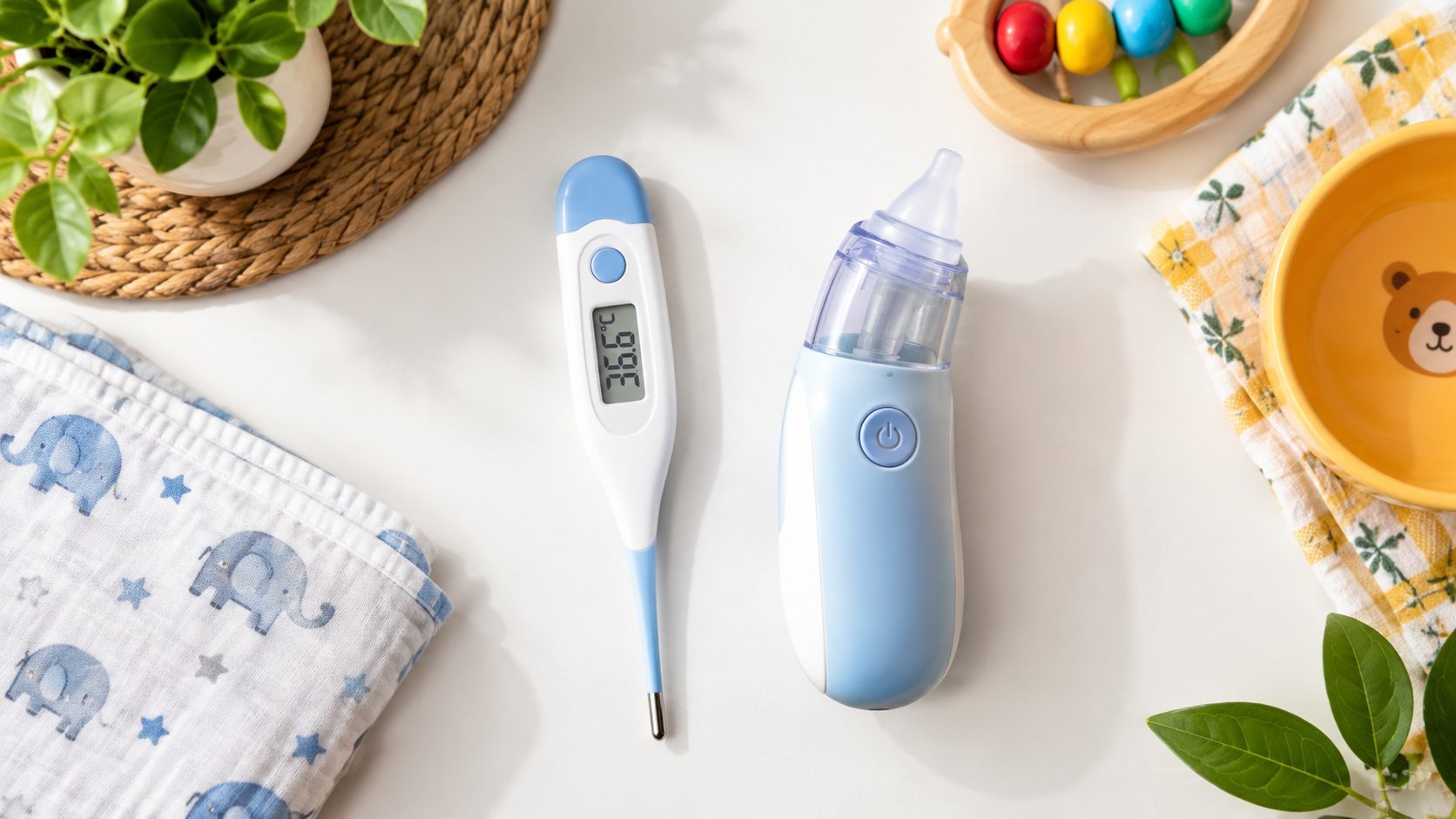
Rinse with warm soapy water after each use, soak in 1:1 water-vinegar solution weekly for 15 minutes, sterilize by boiling for 5 minutes or using a steam sterilizer every 3 days. Replace when you notice discoloration, cracks, or loss of suction.
ℹ️ General information, not medical advice. If your baby seems unwell or anything worries you, talk to your paediatrician. Medical disclaimer
⚡ In a hurry? Our quick picks
A nasal aspirator is one of those parenting tools that saves you at 2 a.m. when your baby can't breathe through congestion — but it only stays effective if you keep it clean. Between your baby's sniffles and the moisture trapped inside, these little devices can harbour bacteria or lose their suction power quickly if not maintained properly. Whether you own a manual bulb aspirator or an electric pump, proper cleaning takes about five minutes and makes a huge difference in how well it works.
🏆 Quick comparison: our top picks
| Product | Award | Rating | Price | |
|---|---|---|---|---|
 Pigeon Nasal Aspirator Electric with Gentle Suction |
🏆 Editor's Choice | ★ 4.3 1,247 reviews |
₹2,399 | Check price → |
 LuvLap Nasal Aspirator Manual Bulb Type |
💰 Best Value | ★ 4.1 892 reviews |
₹199 | Check price → |
🛒 Our Top Picks

Best-reviewed overall, 4.3★ across 1,247 ratings.
Pigeon Nasal Aspirator Electric with Gentle Suction
- ✓ Electric with adjustable gentle suction levels
- ✓ Detachable collection chamber for easy cleaning
- ✓ Battery-powered, whisper-quiet operation
* We earn a small commission — at no extra cost to you.
Top rating for the price, 4.1★ at ₹199.
LuvLap Nasal Aspirator Manual Bulb Type
- ✓ Manual bulb design with soft silicone tip
- ✓ Easy to clean and sterilize
- ✓ Includes cleaning brush
* We earn a small commission — at no extra cost to you.
Daily baby tips, exclusive Amazon deals & real parent advice — free forever.
The top options parents choose are the LuvLap Nasal Aspirator (manual, around Rs. 249 on Amazon.in) and the Pigeon Electric Aspirator (battery-powered, around Rs. 1,599), each with their own cleaning rhythm. Let's walk through exactly how to maintain either one so it stays hygienic and functional for as long as you need it.
Daily Cleaning After Each Use
The most important step happens right after you use your aspirator, while any mucus inside is still damp. Dried secretions harden and become nearly impossible to remove without damaging the device. Rinse the tip, collection chamber, and any detachable parts immediately with warm running water, then use a soft brush or pipe cleaner — many manual aspirators come with a small brush — to gently clean inside the tube where mucus collects. For manual bulb aspirators, squeeze warm soapy water (use a gentle baby wash) in and out through the tube several times. For electric aspirators, check the manufacturer's guide first: most allow you to detach the collection cup and rinse it, but not all allow the motor unit to get wet.
After rinsing, shake out excess water and stand all pieces upright on a clean cloth to air-dry completely before storing. Moisture left inside creates an environment where bacteria can grow, so never pack away a damp aspirator in a closed container. If your baby is under 3 months old, speak to your paediatrician before using a nasal aspirator at all — they can advise on whether it's safe for your newborn and the best technique.
Weekly Vinegar Soak for Deeper Cleaning
Once a week, typically when your baby first gets a cold or is showing heavy congestion, soak all removable parts (tip, chamber, tubing if detachable) in a 1:1 solution of white vinegar and warm water for 15 minutes. Vinegar cuts through any biofilm or stubborn residue without harsh chemicals. While the parts soak, use a thin brush to gently scrub inside the tubing. Rinse thoroughly under running water afterward to remove all vinegar smell, then air-dry completely. This weekly soak keeps the device fresher and helps maintain suction power, especially on manual bulb aspirators where the rubber can lose elasticity faster if bacteria or mineral deposits build up.
Sterilization Every 3 Days During Cold Season
During the season when your baby is catching colds or you're actively using the aspirator, sterilize it every third day. Boiling works for manual aspirators and most electric ones (check the instruction leaflet first). Place all disassembled parts in a pot of water, bring to a rolling boil, and keep them there for 5 minutes. Let them cool on a clean cloth before reassembling. Alternatively, if you own a steam sterilizer for bottles, you can run the aspirator parts on a cycle — it's gentler and takes 8-12 minutes. Never put electronic motor units in water; sterilize only the detachable collection chambers and tips. After sterilization, ensure everything is completely dry before storing, as any trapped moisture can damage the motor or create mould.
Manual vs. Electric Aspirators: Cleaning Differences
Manual bulb aspirators (like the LuvLap model) are simpler to clean because there are fewer parts and no electronics to protect. You can soak the entire device, boil it, or run it through a steam sterilizer without worry. The trade-off is that you rely on hand strength to create suction, and rubber deteriorates over time with repeated squeezing and moisture exposure.
Electric aspirators (like the Pigeon) require more caution because the motor unit cannot go in water. You clean only the detachable cup and tip, then wipe the motor housing with a dry cloth. This makes daily cleaning faster, but you must never submerge the main unit. Read your specific model's manual carefully — some allow the cup to go in a steam sterilizer, others ask you to hand-wash only. Electric models maintain consistent suction longer, but improper cleaning can damage the battery or motor.
Signs Your Aspirator Needs Replacing
Even with perfect cleaning, nasal aspirators wear out. Replace yours if you notice any of these signs: visible cracks or splits in rubber or plastic (bacteria can hide inside and water may leak in), permanent discoloration or cloudiness on the tip that doesn't come off with cleaning, loss of suction that doesn't return after sterilization, or a persistent smell even after vinegar soaks. A manual bulb that has lost its springiness or an electric aspirator that won't turn on despite fresh batteries are also signs of end-of-life. Most manual aspirators last 6-12 months with regular use; electric ones can last 2-3 years if the motor stays protected.
Safe Storage Between Colds
Store your cleaned and fully dried aspirator in a clean, dry container — a sealed zip-lock bag or a drawer that doesn't collect dust works well. Never store it damp or in a closed container while moist, as mould can grow inside tubing within 24-48 hours. If you live in a very humid climate (common in coastal or monsoon areas), consider storing it in the same space where you keep baby bottles: cool and dry. Check your stored aspirator before each use, even if just weeks have passed. If it looks discoloured, smells off, or shows any signs of mould inside the tube, discard it and purchase a new one — it's not worth risking an infection in your baby's nasal passages.
What IAP and WHO Guidance Says
Infection prevention: The Indian Academy of Pediatrics emphasizes that any device entering a baby's nose should be cleaned thoroughly after each use to prevent secondary bacterial infection during a viral cold.
Saline first: WHO recommends using saline rinses before suctioning to loosen secretions, making the aspirator's job easier and reducing the need for aggressive suction.
When to See a Doctor
Contact your paediatrician if your baby shows trouble breathing or turning blue around the lips, refuses feeds due to nasal congestion, has a fever (especially if under 3 months old), or if congestion or discharge lasts more than 7-10 days. These can signal an infection that needs medical attention, not just home care. This is general information, not medical advice.
📚 Sources
The guidance in this article draws on the sources below. It is general information, not medical advice: for any concern about your child's health, talk to your paediatrician.
- Indian Academy of Pediatrics (IAP) - Infection Control in Newborns — Guidance on preventing secondary bacterial infections during viral illness in infants
- World Health Organization (WHO) - Infant Respiratory Care — Recommendations on saline irrigation and safe nasal suctioning technique for infants
Last updated 25 Oct 2026
Frequently Asked Questions
How to properly clean a nasal aspirator?
Is it safe to use a nasal aspirator on a baby while sleeping?
How to use a nose aspirator to get boogers out of a newborn?
Can a Pigeon Electric Nasal Aspirator be sterilized?
How often should you replace a nasal aspirator?
What's the difference between a manual and electric nasal aspirator for cleaning?
Daily baby tips, exclusive Amazon deals & real parent advice — free forever.