
Best Baby Bathtubs in India 2026 - Safe Picks for Newborns to Toddlers
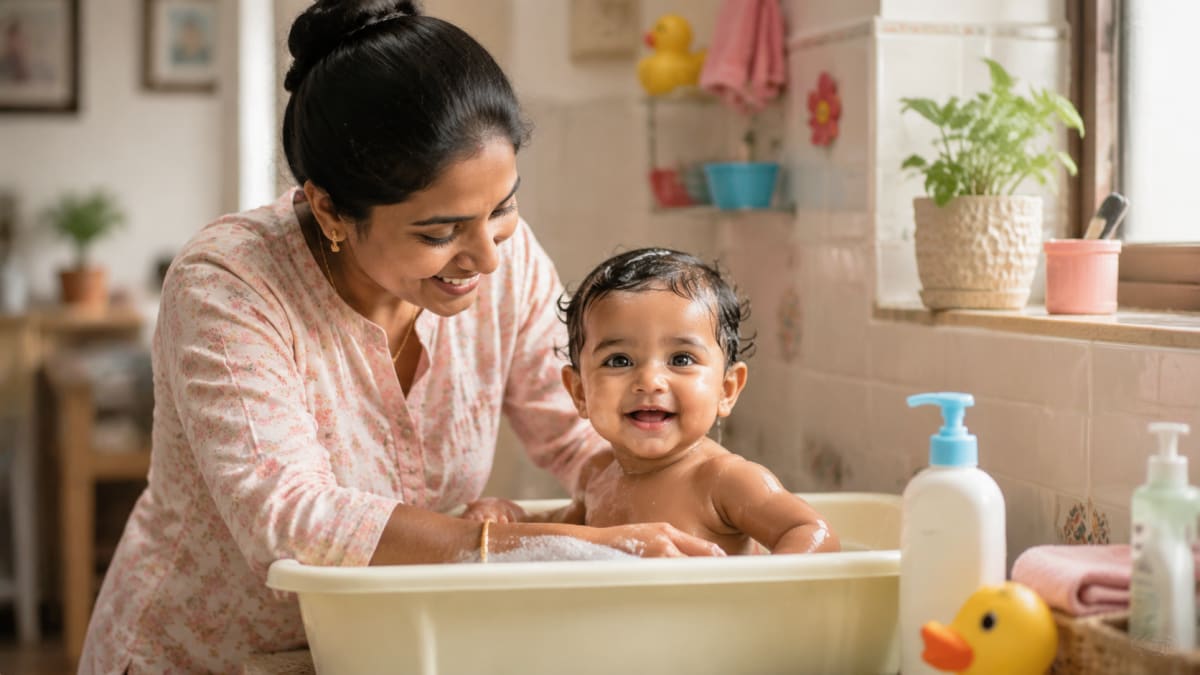
Choosing the right bathtub for your baby in India is harder than it looks. Indian bathrooms are smaller, water pressure is unpredictable, and most parents are dealing with shared family bathrooms where storage is at a premium. Add in monsoon humidity that makes plastic mildew faster, and the basic "any tub will do" advice from Western parenting blogs falls apart fast.
We've spent the last few weeks looking at what actually works in Indian homes - what stays clean, what folds away, what's safe for a slippery 4-month-old, and what survives a Mumbai monsoon without turning green. Here's what we learned, organized by what kind of bathtub fits your situation best.
Daily baby tips, exclusive Amazon deals & real parent advice — free forever.
Quick answer: which type of baby bathtub should you buy?
| Your situation | Best choice | Typical price |
|---|---|---|
| Small flat, no storage space | Foldable tub | ₹900-₹1,800 |
| Newborn (0-4 months) | Sink insert OR small anti-slip tub | ₹600-₹1,500 |
| Want one tub from newborn → toddler | Convertible tub with seat | ₹1,800-₹3,500 |
| Joint family / shared bathroom | Standalone tub with stand | ₹2,500-₹4,500 |
| Frequent travel / grandparents' house | Inflatable or fold-flat tub | ₹700-₹1,500 |
1. Foldable Baby Bathtubs - best for small Indian flats
If you're in a 1BHK or 2BHK with a single bathroom shared with in-laws, this is the type to start with. Foldable tubs collapse to about 4 inches thick and tuck behind the door or under the cot. Most have a non-slip base, a wide rim that doesn't scratch the floor, and drain plugs so you don't have to lift a full tub of water onto your knees.
What to look for: a drain plug at the bottom (you'll thank yourself), thick walls that don't bow when filled, and a temperature-indicator strip on the base (most ₹1,200+ models include one).
Skip if: you have hard water - the folding creases collect mineral deposits and are a pain to scrub clean.
🛒 Find Foldable Baby Bathtubs on Amazon →
2. Anti-Slip Bathtubs with Stand - best for new parents' confidence
Bathing a soapy 5-month-old while bending over the floor is a back injury waiting to happen. A bathtub on a stand lets you stand upright, has a built-in non-slip mesh sling (called a "baby cradle"), and usually includes a small built-in soap dish. This is the type pediatricians most often recommend for first-time parents.
What to look for: a stand height of 28-32 inches (matches most kitchen counter heights for easy water filling), a removable mesh cradle, and rubberized stand feet so it doesn't slide on wet tiles.
Skip if: you have very little storage - these don't fold and the stand is bulky.
🛒 Find Anti-Slip Bathtubs with Stand →
3. Inflatable Bathtubs - best for travel and grandparents' visits
If your baby splits time between your home and the grandparents' place - which is half the parenting story in India - an inflatable tub is the cheapest second tub you can keep there. They deflate to the size of a yoga mat and inflate in 2 minutes with a foot pump.
What to look for: a built-in floor cushion (not just side walls - the cushion protects baby from the hard floor underneath), 3+ separate air chambers so a leak in one doesn't sink the whole tub, and PVC-free or BPA-free certification.
Skip if: you have a pet at home who might puncture it.
4. Sink-Insert Bathtubs - best for newborns (0-3 months only)
For the first few weeks, your newborn is still wobbly and you only need 2-3 inches of water. A small bathtub designed to sit inside your kitchen sink (with a non-slip mesh sling) is the easiest setup - water from the tap, drain when done, no lifting required. They're cheap (₹600-₹1,000) and you'll graduate from them by month 4 anyway.
What to look for: universal sink fit (most Indian kitchen sinks are 38-46 cm - confirm before buying), and a head-rest cushion so baby's head stays above water.
Skip if: your kitchen sink is too small or already cluttered - go with a small standalone tub instead.
5. Convertible Bathtubs (Newborn → Toddler) - best long-term value
If you'd rather buy one tub that lasts till your child is 2.5 years old, look for convertible models. They have a removable infant cradle insert for the newborn stage, which lifts out to reveal a larger toddler-sized tub underneath with a built-in non-slip seat. Cost more upfront (₹2,000-₹3,500) but you skip the "second tub" purchase entirely.
What to look for: two clearly defined modes (cradle for newborn, seat for sit-up baby), at least one drain plug, and a "max water line" indicator molded into the wall.
Skip if: your budget is tight and you'd rather buy a foldable tub now + a baby chair for the toddler stage later.
6. Smart / Spa Bathtubs - for the "all-in-one" parent
The premium end of the market - these include a thermometer, music, LED lights, and sometimes water-jet massage. Honestly, your baby doesn't care. But if you want the convenience of a temperature reading built in (so you stop dipping your elbow every time), the entry-level smart tubs at ₹3,500-₹4,500 are worth the upgrade.
What to look for: a digital temperature display (not just a colour-changing strip - those fade over time), a clean drain port that doesn't trap soap, and brand support (look for an India-registered brand for warranty claims).
What to look for in any baby bathtub - the safety checklist
- Non-slip base: textured or rubberized - never smooth plastic. A soapy baby slips fast.
- Rounded edges: no sharp seams where the mold halves joined. Run your finger along every edge before first use.
- BPA-free certification: look for the explicit label. Hot water + plastic + months of use = leaching is real.
- Drain plug: seriously, don't skip this. Pouring out a 10-litre tub onto a slippery bathroom floor with a wet baby in your arms is dangerous.
- Right size: too big and baby slides under water; too small and they outgrow it in 3 months. Newborn-only tubs ≤ 65 cm long; convertible tubs 80-95 cm.
- Water-line indicator: moulded into the wall so you don't overfill. 2-3 inches is plenty for any baby under 6 months.
- Drain quickly: ideally under 30 seconds. Anything slower means you'll dread cleanup.
How to bathe your baby safely - quick steps
- Bath time: 5-10 minutes for newborns, never more. Indian water temperatures are cooler than your skin perceives - too long = baby gets chilled even in summer.
- Water temperature: 37-38 °C (warm to the touch, never hot). Test with the inside of your wrist or elbow, not your hand.
- Fill the tub first, then place baby. Never pour water over a baby already in a dry tub - the temperature shock is real.
- One hand on baby at all times. Not "most of the time." All of the time. Drowning in baby tubs happens in under 60 seconds.
- Skip the shampoo until 3 months. Plain warm water + a soft cotton cloth is all a newborn needs.
- Dry inside the tub. Wrap baby in a hooded towel before lifting them out - fewer cold draughts, fewer wet-floor slips.
Cleaning & maintenance - for Indian humidity
Indian bathrooms after monsoon = mildew central. After every bath, dry the tub completely with a microfibre cloth (the cheap ₹50 ones from any supermarket). Once a week, wipe with diluted white vinegar (50:50 with water) - kills bacteria without leaving residue. Avoid bleach near anything your baby touches.
If your tub has folding creases, open them flat for the wipe-down - that's where mildew starts. Store the tub upside-down on its rim so any leftover water drains out completely.
When to upgrade to a regular bathtub or shower
Around 18-24 months, most kids start refusing the baby tub - they want to stand. That's your cue to either:
- Move to a non-slip mat in your regular family bathtub (if you have one - rare in Indian homes)
- Use a "bath stool" - a small non-slip seat that fits in your bathroom and lets a toddler sit while you shower-wash them
- Switch to a standing shower with a non-slip mat once they can balance reliably (usually 2.5-3 years)
Bottom line
For most Indian parents starting out, the safest first purchase is a foldable tub with a drain plug (₹900-₹1,500) for the first 6 months, followed by a convertible tub with a stand (₹2,000-₹3,000) for the standing-up phase. That two-tub setup totals under ₹4,500 and covers you until your child is 2.5 years old - when bathing changes anyway.
If you only have budget for one, get the convertible one upfront and add a small newborn cradle insert separately. You'll use it daily for two years, which makes it the most-used baby product in your home.
Whichever direction you go, the safety checklist above matters more than the brand or the price. A ₹600 tub with a non-slip base and a drain plug will keep your baby safer than a ₹4,500 tub without one.
Frequently Asked Questions
What age can a baby start using a bathtub?
How long should a baby bath be in India?
What temperature should baby bath water be?
Are foldable bathtubs safe?
How often should I clean the baby bathtub?
Can I bathe my baby in a regular bucket or pail instead?
What is the best baby bathtub under ₹1,000 in India?
When should I stop using a baby bathtub?
Daily baby tips, exclusive Amazon deals & real parent advice — free forever.