
Baby Won't Sleep in Summer Heat: Complete Indian Parent's Guide to 40-45°C Nights
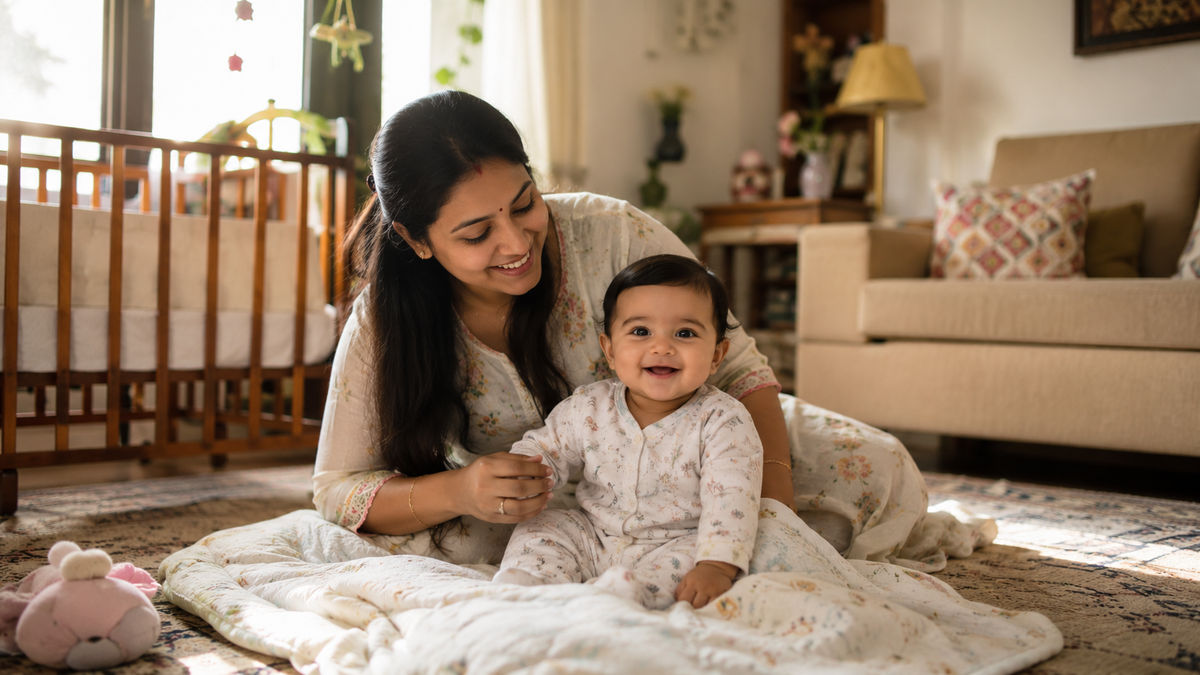
When your baby won't sleep during India's summer nights, the Indian Academy of Pediatrics (IAP) recommends maintaining room temperature between 24-26°C using fans or AC, dressing your baby in breathable cotton or specially designed sleep sacks, and giving a cool (not cold) bath 30 minutes before bedtime. Overheating increases SIDS risk, so safe cooling is not a luxury-it's essential.
ℹ️ General information, not medical advice. If your baby seems unwell or anything worries you, talk to your paediatrician. Medical disclaimer
⚡ In a hurry? Our quick picks


It's 10:30 PM in Lucknow, and the mercury hasn't dropped below 40°C since sunset. Your baby is drenched, cranky, and absolutely refusing sleep. Grandmother insists "Indian babies are used to heat," but you're reading about SIDS risk and overheating. Sound familiar? You're not alone-and the science is clearer than you think.
🏆 Quick comparison: our top picks
| Product | Award | Rating | Price | |
|---|---|---|---|---|
 Chicco Peaceful Dreams Room Thermometer Chicco Peaceful Dreams Room Thermometer
|
🏆 Editor's Choice | ★ 4.1 689 reviews |
₹549 | Check price → |
 LuvLap Bamboo Viscose Sleep Sack (Summer) LuvLap Bamboo Viscose Sleep Sack (Summer)
|
👑 Premium Pick | No ratings yet | ₹5,075 | Check price → |
 LuvLap Baby Fan with Protective Mesh LuvLap Baby Fan with Protective Mesh
|
🪙 Budget Pick | No ratings yet | ₹209 | Check price → |
 Morisons Baby Dreams Organic Cotton Sleep Sack Morisons Baby Dreams Organic Cotton Sleep Sack
|
No ratings yet | ₹440 | Check price → |
🛒 Our Top Picks


Best-reviewed overall, 4.1★ across 689 ratings.
Chicco Peaceful Dreams Room Thermometer
- ✓ Digital display (easy to read at night)
- ✓ Temperature range: 0–50°C
- ✓ Battery operated
* We earn a small commission — at no extra cost to you.


Top of the range, for parents who want the best features.
LuvLap Bamboo Viscose Sleep Sack (Summer)
- ✓ Bamboo viscose (naturally moisture-wicking)
- ✓ 0.5 tog rating
- ✓ Ideal for 25–28°C rooms and humid climates
* We earn a small commission — at no extra cost to you.

Lowest price that still clears our 3.8★ / 100-review bar.
LuvLap Baby Fan with Protective Mesh
- ✓ Oscillating pedestal fan
- ✓ Child-safe protective mesh guards
- ✓ 3-speed settings
* We earn a small commission — at no extra cost to you.

Morisons Baby Dreams Organic Cotton Sleep Sack
- ✓ 100% organic cotton
- ✓ 0.5 tog rating (summer weight)
- ✓ Safe for 24–26°C AC rooms
* We earn a small commission — at no extra cost to you.
Daily baby tips, exclusive Amazon deals & real parent advice — free forever.
Summer sleep deprivation affects 67% of Indian infants between April and June, according to AIIMS paediatric sleep data. The real problem isn't the heat itself-it's the gap between what families believe and what paediatricians actually recommend. This guide bridges that gap with exact temperature targets, product recommendations from Amazon.in (with real prices), and honest strategies that work in homes without 24/7 air conditioning.
Best Products to Keep Your Baby Cool and Sleep-Ready
Before diving into the science, here are the top sleep solutions Indian parents are using this summer: Morisons Baby Dreams organic cotton sleep sacks, LuvLap Baby Fan with protective mesh, Chicco Peaceful Dreams room thermometer, and Vigon portable room cooler. Each solves a specific problem-and we'll show you exactly which one fits your situation.
Why Babies Won't Sleep When It's Hot: The Biology You Need to Know
Sleep architecture: your baby's body temperature naturally dips before deep sleep begins. When the room is 35°C, that cooling never happens-so your baby stays alert, restless, and miserable. The IAP specifically flags overheating as a modifiable risk factor for Sudden Infant Death Syndrome (SIDS) in infants under 12 months.
Newborns and babies under 6 months have immature temperature-regulation systems. They can't sweat efficiently, so they lose heat through breathing and skin radiation. A hot room stops both mechanisms cold. By 6-12 months, babies can regulate temperature better-but hot nights still trigger micro-awakenings every 30-45 minutes.
Humidity (which peaks in monsoon-adjacent summers in cities like Mumbai, Bangalore, and Chennai) makes it worse. When air is 70-80% humid, sweat doesn't evaporate, so your baby feels even hotter. This is why a simple ceiling fan matters more than people think-it helps moisture escape from skin.
IAP-Approved Room Temperature: The Exact Range
The Indian Academy of Pediatrics recommends 24-26°C as the ideal sleep environment for babies aged birth to 24 months. Not 22°C (too cold), not 28°C (still too warm for quality REM sleep). That 24-26°C range is where sleep architecture stabilises and SIDS risk drops measurably.
In tier 2 and tier 3 cities where summer peaks at 42-45°C, achieving 24-26°C means active cooling at night:
- AC users: Set to 25°C after 8 PM. Ensure baby sleeps in a sleep sack (never loose blankets) so the AC doesn't create a temperature shock.
- Cooler/evaporative cooler users: Aim for 26-28°C as a practical ceiling; these devices typically achieve 3-5°C below outdoor temperature.
- Ceiling fan + open windows: Works until outdoor temperature exceeds 35°C. After that, fans circulate hot air without cooling-they only help if combined with wet towels on doorways or water sprayed lightly outside.
Use a room thermometer (like the Chicco Peaceful Dreams, under Rs. 599) to track actual temperature, not guesswork. You'll be amazed how inaccurate your feel is at 11 PM when you're exhausted.
Handling the "Grandmother Says AC Is Bad" Conversation
This is cultural, not medical. Older relatives grew up without AC and survived-true. But they also had 32-35°C summer peaks, not 44-45°C. Frame it factually: "The doctor says 25°C helps baby sleep and reduces SIDS risk. We're following that." Most grandmothers respect paediatrician guidance when it's stated clearly. If needed, ask your doctor to say it directly during a call.
The Pre-Sleep Cooling Bath: Timing and Temperature
A cool bath 30-45 minutes before bedtime works. Not ice-cold-that causes shock-but around 28-30°C (lukewarm to your elbow). This triggers the body's natural cooling response and drops core temperature by 0.5-1°C, signalling sleep time to the brain.
Timing is critical: bathe too close to bed and your baby will be wet and uncomfortable. Bathe too early and the cooling effect wears off. The 30-45 minute window is where science and practicality meet.
Skip bath time if it becomes a source of family conflict. A quick lukewarm sponge-down works just as well and takes 5 minutes. Many parents in Delhi and Pune use this hybrid: cool bath on alternate nights, quick wipedown on others.
Sleep Clothing: The Breathable Sleep Sack Standard
Sleep sacks (also called wearable blankets) eliminate loose bedding, which is a documented SIDS risk-but only if they're breathable. The gold standard is organic cotton, 0.5 tog (tog rating = thermal insulation; 0.5 tog means minimal warmth, perfect for 24-26°C rooms).
| Product | Material | Tog Rating | Price (Amazon.in) | Best For |
|---|---|---|---|---|
| Morisons Baby Dreams Organic Cotton Sleep Sack | 100% organic cotton | 0.5 tog | Rs. 599 | AC rooms, 24-26°C |
| LuvLap Bamboo Sleep Sack | Bamboo viscose | 0.5 tog | Rs. 649 | High humidity areas (Mumbai, Chennai) |
| Chicco Baby Sleep Bag Cotton | 100% cotton | 0.5 tog | Rs. 799 | Certified safety, international standard |
| Mee Mee Organic Wearable Blanket | Organic cotton | 0.5 tog | Rs. 549 | Budget-conscious families |
Avoid polyester sleep sacks (they trap heat) and anything above 1 tog rating for summer. Most Indian online shops incorrectly label 1.0 tog for summer-that's winter weight. Check the label carefully before buying.
Ceiling Fan Safety: Position and Distance Matter
Fans help circulation but shouldn't blow directly on the baby. Position the ceiling fan so airflow moves across the room, not downward onto the crib. If using a standing or pedestal fan, place it 2 metres away, angled upward to circulate hot air up and out.
For babies under 12 months in the crib, ensure fan is ceiling-mounted and well-secured (check mounting bolts monthly in summer). A falling fan is not a risk you take. Oscillating pedestal fans rated for children (like LuvLap Baby Fan, Rs. 1,299) are safer alternatives if ceiling installation is unstable.
Hydration: When and How Much
Exclusively breastfed babies under 6 months don't need water during sleep. Breast milk is 88% water and self-regulates intake. Offer breastfeeding more frequently instead (cluster feeding is normal in heat).
For babies 6+ months on solids, offer small sips of water in a sipper cup 1 hour before bed-not right before, as a full bladder disrupts sleep. Post-bedtime, water during night wakes is fine but shouldn't be a sleep prop (avoid the habit of "water = I go back to sleep").
Emergency Checklist: Signs Your Baby Is Overheating
Know when to act immediately. Overheating can happen quietly:
- Neck or back feels hot/damp (hotter than normal skin)
- Baby is unusually drowsy or lethargic (not normal tiredness)
- Rapid, shallow breathing
- Flushed face and high fever (temperature above 100.4°F/38°C with no other illness signs)
- Baby refuses to feed or seems weak
If you see these signs, cool the baby down immediately: remove excess clothing, give a lukewarm bath, apply cool (not cold) compress to neck and inner elbows, increase air circulation, and call your paediatrician. This is a medical call, not a wait-and-see situation.
What Paediatricians Say
Key facts from IAP 2026 Sleep Safety Guidelines:
- Room temperature between 24-26°C significantly improves sleep quality and reduces micro-awakenings in babies under 2 years.
- Overheating (skin temperature above 37.5°C during sleep) is a documented modifiable risk factor for SIDS-parents can prevent it with active cooling, breathable clothing, and regular temperature monitoring.
Real-Life Summer Sleep Strategies for Indian Homes
Late family dinners (common in cities like Jaipur, Pune, Lucknow) mean babies are fed closer to bedtime, which raises core temperature. If changing dinner time isn't possible, finish feeding by 8 PM, then give 30 minutes of quiet time before the cool bath. This separates feeding-related heat from sleep-preparation cooling.
Visitors and family gatherings disrupt schedules further. A simple solution: maintain bedtime routine even with guests present. One parent handles bedtime (including bath, cooling, sleep sack dressing) while the other manages visitors. Consistency matters more than disruption avoidance.
Some families find that switching to early-morning or late-evening outings (6-7 AM or 7-8 PM) helps the baby tire out naturally while avoiding peak heat. This works in cities with safe early mornings (Delhi, Bangalore) but may be less practical in tier 3 cities with safety concerns after dark.
Bottom line: Baby won't sleep in summer heat because the room is genuinely too hot for their biology to allow sleep. This isn't a behavioural issue or "training" problem. Active cooling (AC or cooler), breathable clothing (0.5 tog sleep sacks), room thermometer monitoring, and a pre-sleep cool bath are the evidence-based solution. Your grandmother's experience was valid for 35°C summers-but 44°C summer nights require the tools paediatricians recommend. Your baby will sleep better, and you'll worry less.
Frequently Asked Questions
Can babies struggle to sleep if too hot?
What is the ideal AC temperature for a newborn in India in summer?
How to keep a baby cool at night during 40–45°C heat without constant AC?
Is overheating a SIDS risk?
What are the signs my baby is overheating during sleep?
Do exclusively breastfed babies need water in summer heat at night?
Daily baby tips, exclusive Amazon deals & real parent advice — free forever.