
Baby Immunisation Schedule India: Government vs Private Hospital 2026
India's government UIP vaccine schedule (free at Anganwadi) covers 9 diseases. Private hospitals add 4–6 optional vaccines like PCV13, rotavirus, and typhoid conjugate at ₹800–₹4,000 per dose. IAP recommends both schedules; your choice depends on budget and health priorities.
ℹ️ General information, not medical advice. If your baby seems unwell or anything worries you, talk to your paediatrician. Medical disclaimer
Choosing a vaccination path for your baby is one of the biggest health decisions you'll make as a parent in India. The government's Universal Immunisation Programme (UIP) is free and widely available, but private pediatricians often recommend additional vaccines—sometimes called the IAP (Indian Academy of Pediatrics) schedule—that aren't part of the free tier. Both are safe and effective, but the difference in cost, coverage, and convenience can shape your family's health strategy for the next five years.
🛒 Our Top Picks


Dr. Morepen Flexi Waterproof Digital Thermometer
- ✓ Flexible tip for safe use with infants
- ✓ Quick 10-second reading
- ✓ Waterproof design for bath or wipe cleaning
* We earn a small commission — at no extra cost to you.
Daily baby tips, exclusive Amazon deals & real parent advice — free forever.
In 2026, understanding this split isn't about deciding which is "better"—it's about knowing exactly what your baby is getting (or missing) and whether the extra ₹800 to ₹4,000 per dose fits your plan. This guide walks you through both schedules side by side, explains which vaccines are truly optional, and gives you the real-world tips that help parents navigate clinics, track records, and handle common side effects at home.
What Is the Difference Between UIP and Private Vaccination Schedules?
The UIP (free, government schedule) covers 9 vaccine-preventable diseases: polio, diphtheria, pertussis, tetanus, tuberculosis, hepatitis B, measles, rubella, and Japanese encephalitis in endemic areas. The IAP (private, often recommended) adds vaccines against pneumococcal disease (PCV13), rotavirus, typhoid conjugate, varicella (chickenpox), and sometimes hepatitis A. According to IAP guidelines published in 2025, both schedules follow WHO recommendations, but the private additions target diseases that cause significant childhood illness in India, even if they're not as immediately life-threatening as polio or measles.
The key difference isn't safety—both use licensed vaccines approved by India's drug regulator. It's disease coverage and cost. UIP is funded by the government and delivered free through Anganwadi centres and immunisation clinics. Private schedules are paid out-of-pocket or through health insurance, and they start earlier (some at birth) and add extra doses for broader protection.
UIP Schedule vs IAP Private Schedule: Side-by-Side Comparison
| Age | UIP (Free) | IAP Private Additions | Private Cost Per Dose (Approx) |
|---|---|---|---|
| Birth | BCG, HepB-0 | HepB (birth dose confirmed) | ₹500–₹800 |
| 6 weeks | DPT-1, Polio-1, Rotavirus-1, PCV-1 | Hexavalent (covers 6 diseases in 1 shot) | ₹1,200–₹1,800 |
| 10 weeks | DPT-2, Polio-2, Rotavirus-2, PCV-2 | Hexavalent-2, Rotavirus variants | ₹1,200–₹1,800 |
| 14 weeks | DPT-3, Polio-3, Rotavirus-3, PCV-3 | Hexavalent-3, PCV booster timing | ₹1,200–₹1,800 |
| 6 months | Polio booster, Typhoid-1 | Typhoid conjugate (earlier/additional) | ₹1,000–₹1,500 |
| 12 months | Measles, MMR-1, JE (endemic areas) | PCV booster, Varicella-1 | ₹800–₹1,200 |
| 15–18 months | DPT booster, Polio booster | MMR-2, Varicella-2, DPT booster | ₹1,200–₹2,000 |
| 2–5 years | DPT booster-2, Polio booster-2 | Typhoid booster, Varicella booster | ₹1,000–₹4,000 |
Note: UIP rotavirus and PCV vaccines were added to India's free schedule in phases; availability varies by state. Private options often include newer, faster-acting variants (e.g., PCV13 vs older PCV7). Prices are indicative; hospital chains in Mumbai, Delhi, and Bangalore may charge 10–20% more.
Which Private Vaccines Are Actually Worth the Cost?
Not every private vaccine is essential, and the decision depends on your family's health history, travel plans, and budget. Here's what pediatricians and parents weigh most:
- PCV13 (pneumococcal conjugate): Covers 13 strains of pneumococcus, which causes pneumonia, meningitis, and ear infections. UIP now includes PCV, but private PCV13 is broader. Cost: ₹1,200–₹1,800 per dose (3–4 doses). Worth it if: Your baby has chronic illness, attends daycare, or you live in high-pollution areas.
- Rotavirus (private variants): UIP includes 1 rotavirus strain; private schedules offer 2–3 strain protection. Cost: ₹800–₹1,200 per dose (3 doses). Worth it if: Diarrheal disease runs in your family or you're in areas with poor water sanitation.
- Typhoid conjugate (TCV): Newer than older typhoid vaccines; now partially added to UIP in endemic zones. Private TCV is available earlier. Cost: ₹1,000–₹1,500 per dose. Worth it if: You live in or travel to high-typhoid areas (older cities, some tier-2 towns).
- Varicella (chickenpox): Not in UIP; prevents severe chickenpox. Cost: ₹800–₹1,200 per dose (2 doses). Worth it if: You prefer to avoid chickenpox illness during school years.
- Hepatitis A: Not in UIP; protects against hepatitis A. Cost: ₹1,200–₹1,800 per dose (2 doses). Worth it if: You travel internationally or live in areas with hepatitis A outbreaks.
How to Carry and Track Your Baby's Vaccination Card
India requires an official immunisation card (yellow card issued at Anganwadi or hospital) to track all shots. This card is essential for school admission, travel, and emergency care. Keep it in a waterproof pouch in your bag, and photograph the front and back of it on your phone—many parents have lost originals to water damage or misplacement during travel. Some states now offer digital vaccination certificates through the NDHM (National Digital Health Mission) portal; ask your clinic if yours supports it.
Write down the vaccine batch number, date, and clinic stamp immediately after each shot. Private hospitals provide detailed records; government clinics sometimes issue hand-written notes. If there's a gap between scheduled and actual dates, your pediatrician can advise catch-up doses—don't delay or restart from zero.
Managing Fever and Common Side Effects After Shots
Low-grade fever (up to 38°C) within 24–48 hours of vaccination is normal and doesn't require antibiotics. Many parents panic, but IAP guidelines state this is the immune system's expected response. Use a digital thermometer (see product below) to monitor accurately, and give infant paracetamol (dose based on weight, as advised by your pediatrician) if your baby seems uncomfortable. Don't restrict feeds, and avoid applying ice directly to the injection site.
A small, firm lump at the injection site may appear and fade over weeks—this is normal. Seek medical attention if fever exceeds 39°C, your baby has a rash, unusual crying, or difficulty breathing.
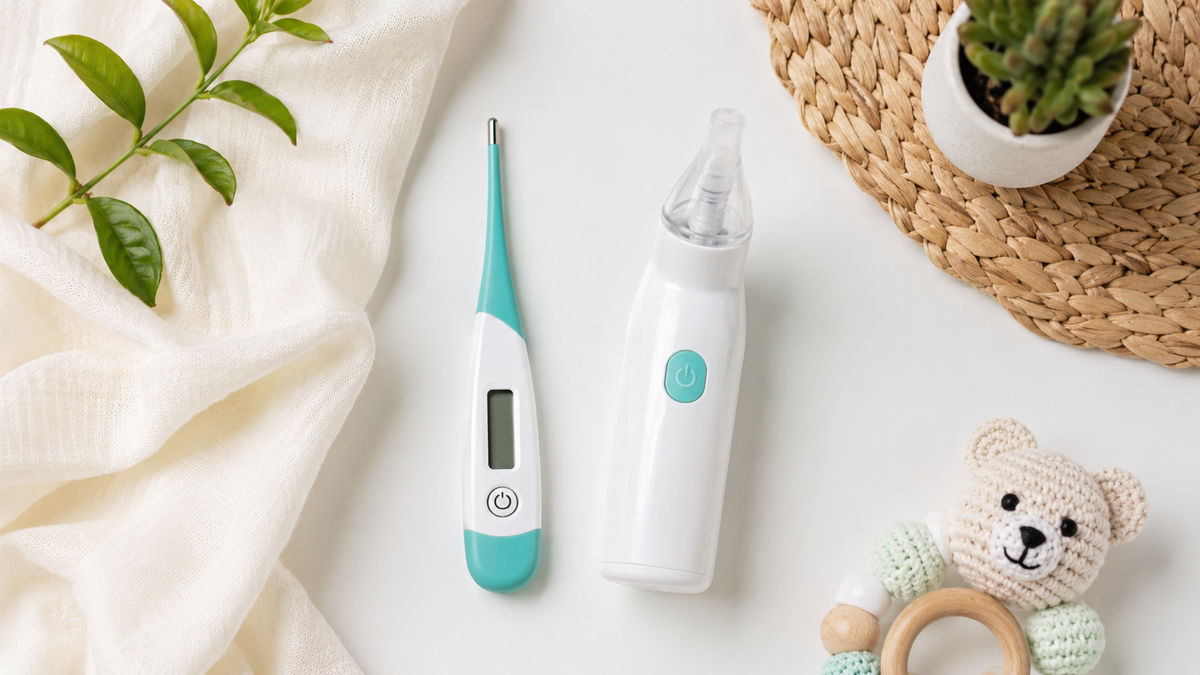
For fever monitoring at home, a reliable digital thermometer is essential. The Dr. Morepen Flexi Waterproof Digital Thermometer (available on Amazon.in) costs around ₹300 and has a flexible tip, quick reading (10 seconds), and waterproof design—practical for use with fussy babies. Many tier-1 city parents keep two: one for quick axillary (underarm) readings and one for rectal readings (the gold standard for babies under 6 months, per WHO guidance).
Anganwadi Camp Tips and What to Bring
Government vaccination camps at Anganwadi centres are free and typically held on fixed weekdays. Arrive early (before 10 am) to avoid queues, and bring your immunisation card, baby's birth certificate copy, and your ID proof. Wear loose clothing to make vaccination access easy. Many Anganwadi workers now record data digitally; confirming your mobile number helps you receive appointment reminders.
Bring a clean cloth or soft toy to comfort your baby before the shot. After vaccination, stay at the centre for 15–20 minutes to check for any immediate allergic reaction (extremely rare, but clinics have emergency medications on hand). Feed your baby within an hour if possible—breast milk or formula soothes them and reduces discomfort.
If your state has vaccine supply gaps (rotavirus or PCV delays), ask the Anganwadi worker or ASHA (Accredited Social Health Activist) for catch-up dates; don't assume you've been skipped. Some rural areas receive vaccines in batches, so scheduling may shift.
When to See a Doctor
Contact your pediatrician immediately if your baby shows fever above 39°C within 72 hours of vaccination, unusual crying lasting over 3 hours, difficulty breathing, rash, swelling of face or lips, or loss of consciousness. These are not typical vaccination reactions but require urgent evaluation. This is general information, not medical advice.
What IAP and WHO Guidance Says
IAP 2026 Position: India's vaccination schedules—both UIP and private—align with WHO recommendations for childhood immunisation. PCV13, rotavirus, and typhoid conjugate are regarded as highly protective; their addition reduces hospitalisation rates by 30–50% in private cohorts, though data in UIP populations is still emerging.
WHO Standards: Exclusive reliance on a single vaccine schedule is safe; supplementing with private vaccines is a parental choice based on disease burden, travel, and health priorities, not a medical necessity.
Vaccination is one of India's greatest public health wins. Whether you choose UIP alone, add select private vaccines, or go full IAP schedule, your baby receives protection against life-threatening diseases. Stay informed, keep records safe, and don't hesitate to ask your pediatrician why a specific vaccine is (or isn't) right for your child.
📚 Sources
The guidance in this article draws on the sources below. It is general information, not medical advice: for any concern about your child's health, talk to your paediatrician.
- Indian Academy of Pediatrics (IAP) Guidelines on Immunisation — Supports IAP schedule recommendations and vaccine additions beyond UIP
- Universal Immunisation Programme (UIP) – Ministry of Health & Family Welfare — Official UIP schedule, vaccines covered, and state-wise implementation
- WHO Guidelines on Childhood Immunisation — International standards referenced by both UIP and IAP in India
Last updated 09 Nov 2026
Frequently Asked Questions
Are government vaccines (UIP) safe compared to private vaccines?
How much does a 1-year-old baby vaccine cost in a private hospital?
What are the 7 types of vaccines every Indian baby gets?
Is fever normal after baby vaccination, and how do I manage it?
Who decides the pediatric vaccination schedule in India?
Can I carry my baby's vaccination card while traveling outside India?
Daily baby tips, exclusive Amazon deals & real parent advice — free forever.