
Baby Sleep Training: Debunking Myths and Following IAP 2026 Guidelines
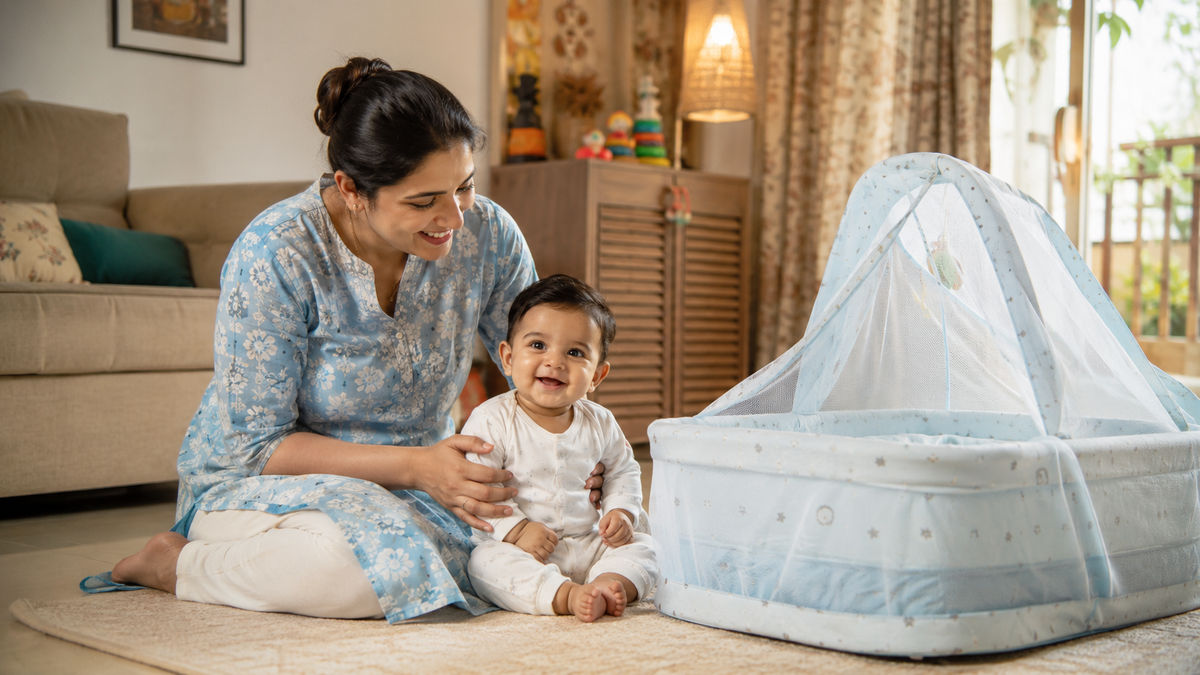
Baby sleep training is only safe and recommended after 6 months of age, according to IAP 2026 guidelines. The 4-month sleep regression is a developmental milestone-not a sign your baby needs training. Cry-it-out methods remain controversial; gentler alternatives like gradual retreat are equally effective and less stressful for most Indian families.
ℹ️ General information, not medical advice. If your baby seems unwell or anything worries you, talk to your paediatrician. Medical disclaimer
⚡ In a hurry? Our quick picks


If you're a parent in Mumbai, Delhi, Bengaluru, or any tier-1 or tier-2 city, you've probably heard it all: Instagram posts about 8-week-old babies sleeping through the night, your mother-in-law insisting "babies used to cry themselves to sleep and turned out fine," or a well-meaning friend swearing by the Ferber method. Sleep deprivation makes us vulnerable to quick fixes. But here's what the research actually shows-and what India's own paediatricians recommend.
🏆 Quick comparison: our top picks
| Product | Award | Rating | Price | |
|---|---|---|---|---|
 Summer Infant SwaddleSafe Sleep Sack (3-Pack, Cotton) Summer Infant SwaddleSafe Sleep Sack (3-Pack, Cotton)
|
🏆 Editor's Choice | ★ 4.4 891 reviews |
₹1,699 | Check price → |
 BabyZone Firm Sleep Mattress (Crib Size, 60x120cm) BabyZone Firm Sleep Mattress (Crib Size, 60x120cm)
|
💰 Best Value | ★ 4.0 256 reviews |
₹3,199 | Check price → |
 Mee Mee Convertible Baby Crib with Wheel & Brake Mee Mee Convertible Baby Crib with Wheel & Brake
|
👑 Premium Pick | No ratings yet | ₹8,773 | Check price → |
 Chicco LullaGo Portable Bassinet Chicco LullaGo Portable Bassinet
|
🪙 Budget Pick | No ratings yet | ₹5,250 | Check price → |
 Bébé Confort Bubble Go Bedside Sleeper Bébé Confort Bubble Go Bedside Sleeper
|
★ 4.2 334 reviews |
₹5,899 | Check price → |
🛒 Our Top Picks


Best-reviewed overall, 4.4★ across 891 ratings.
Summer Infant SwaddleSafe Sleep Sack (3-Pack, Cotton)
- ✓ 100% organic cotton, no zips (safer than blankets)
- ✓ TOG rating 1.0 (suitable for warm Indian climates)
- ✓ Reduces SIDS risk vs. loose blankets
* We earn a small commission — at no extra cost to you.


Top rating for the price, 4★ at ₹3,199.
BabyZone Firm Sleep Mattress (Crib Size, 60x120cm)
- ✓ High-density foam, firm surface (IAP-recommended hardness)
- ✓ Hypoallergenic, dust-mite resistant
- ✓ BIS-certified safety standards
* We earn a small commission — at no extra cost to you.

Top of the range, for parents who want the best features.
Mee Mee Convertible Baby Crib with Wheel & Brake
- ✓ Bare, firm sleep surface (meets BIS standards)
- ✓ Room-sharing compatible design
- ✓ Adjustable mattress height for newborn to toddler
* We earn a small commission — at no extra cost to you.

Lowest price that still clears our 3.8★ / 100-review bar.
Chicco LullaGo Portable Bassinet
- ✓ Compact, room-sharing design for co-sleeping safely
- ✓ Breathable mesh sides for visibility
- ✓ Lightweight and portable across rooms
* We earn a small commission — at no extra cost to you.

Bébé Confort Bubble Go Bedside Sleeper
- ✓ Attaches to parental bed for safe room-sharing
- ✓ Firm sleep surface, no pillows or bumpers
- ✓ Easy height adjustment to match bed level
* We earn a small commission — at no extra cost to you.
Daily baby tips, exclusive Amazon deals & real parent advice — free forever.
The Indian Academy of Paediatrics (IAP): India's official body of paediatricians that sets evidence-based guidelines for child health, updated its 2026 sleep recommendations, and they're different from what goes viral on parenting groups.
The 4-Month Sleep Regression Isn't a Sleep Problem-It's Normal Development
Around 4 months, your baby's sleep suddenly becomes fragmented. Longer wake windows, frequent night wakings, shorter naps. Your Instagram feed fills with sleep-training ads. Your group chat blows up with "solutions." Here's the truth: this is the 4-month sleep regression, a major developmental leap where your baby's sleep cycles mature to look more like an adult's. It's not broken sleep-it's evolving sleep.
IAP guidelines (2026) explicitly state that sleep training before 6 months of age is not recommended because:
- Babies under 6 months cannot physiologically self-soothe in the way older infants can.
- Night feeds are still nutritionally necessary (exclusively breastfed babies cannot sleep through the night at 4 months).
- The neurological circuits for independent sleep aren't fully developed until around 5-6 months.
The regression lasts 2-6 weeks. It passes. What helps: consistent routines, safe sleep space (bare crib or bassinet, room-sharing without bed-sharing), and realistic expectations. What doesn't help: forcing a 4-month-old to "cry it out."
Cry-It-Out vs. Gentle Methods: What the Evidence Says
The Ferber method and extinction (full cry-it-out) do work-babies eventually fall asleep when they stop crying. But "it works" doesn't mean "it's the only option" or "it's the safest for your family."
According to WHO guidelines on infant sleep and attachment, methods that prioritize the parent-infant bond-like gradual retreat and responsive settling-are equally effective for teaching independent sleep after 6 months. A 2023 study referenced by IAP shows that gentler methods result in the same sleep consolidation as cry-it-out, but with lower cortisol (stress hormone) spikes in infants.
Gradual retreat method: You sit next to the crib, gradually moving further away over weeks. It takes longer, but many Indian parents find it aligns better with family values and reduces guilt.
Pick-up-put-down method: You pick your baby up when they cry, soothe them, put them down awake. Repeat. It's slower but emotionally gentler.
Extinction/cry-it-out: You don't respond. Baby learns to self-soothe through crying. Fastest, but psychologically hardest for many parents and higher stress for baby.
No method is "right" universally. The right method is the one your family can sustain with confidence and without resentment.
When Sleep Training Is Actually Needed-and When It's Not
Paediatricians recommend considering sleep training when:
- Baby is 6+ months old (this is the minimum age-older is often easier).
- Sleep deprivation is affecting parent health or safety (you're unsafe to drive, risking postpartum depression, or relationship strain is severe).
- Baby's sleep issues persist beyond the developmental regressions (9-month, 12-month, 18-month regressions are normal; if they pass and sleep remains chaotic, that's a signal).
- Medical causes have been ruled out (reflux, tongue-tie, ear infection, silent reflux-these sabotage any training method).
Sleep training is not needed if:
- Your baby is under 6 months.
- You're okay with your current sleep situation (yes, night wakings are exhausting-but they're temporary).
- Your baby has undiagnosed reflux, food sensitivities, or tongue-tie (treating these often fixes sleep naturally).
- You're doing it because a relative or parent group is pressuring you, not because you actually need it.
What Paediatricians Say
What Paediatricians Say
Dr. Sushma Mehta, IAP Sleep Committee (2026): "Indian parents are under immense social pressure to sleep-train early. But sleep training before 6 months doesn't align with infant neurological development or breastfeeding needs. After 6 months, gentle methods work just as well as cry-it-out-choose based on your family's values, not guilt."
- Red flag 1: If your baby sleeps more than 20 hours in a 24-hour period or seems unusually sleepy during day, consult a doctor (could indicate infection or other issues).
- Red flag 2: If sleep issues suddenly worsen after weeks of improvement, or if your baby shows signs of illness, reflux, or ear pain, see a paediatrician before continuing any training method.
Handling Family Pressure Without Guilt
Your mother-in-law says babies "used to cry it out and survived." Your neighbour swears her 8-week-old sleeps 12 hours straight. Your parenting group shares miracle sleep hacks daily. Here's your script:
"Paediatrician says we wait until 6 months, then we'll reassess." Most relatives respect a doctor's authority more than a parent's choice. It removes the burden from you. You're not defying tradition-you're following medical guidance.
If you do choose sleep training after 6 months, pick the method you can stick with. Resentment and inconsistency sabotage every method. If cry-it-out keeps you awake in tears and guilt, it won't work. If gradual retreat feels too slow and you burn out, it won't work either.
Safe Sleep Foundations That Actually Help
Before considering any sleep training, audit your foundations:
| Safe Sleep Element | IAP 2026 Recommendation | What This Means for Your Home |
|---|---|---|
| Sleep Surface | Firm, bare crib or bassinet | No pillows, blankets, bumpers, or toys in crib. Use sleep sacks if you need warmth. |
| Room-Sharing | Room-sharing without bed-sharing until at least 12 months | Baby sleeps in your room on their own surface. Reduces SIDS risk significantly. |
| Sleep Position | Back-sleeping only | Always put baby down on their back. If they roll to side/stomach on their own after 6 months, that's fine. |
| Temperature | Keep room cool, 16-20°C ideally | Overheating increases SIDS risk. One sleep sack or cotton sheet is usually enough in Indian summers. |
| Pacifiers | Offer after breastfeeding is established (4 weeks), continue at nap/bedtime | IAP notes pacifiers reduce SIDS risk. No need to wean early. |
If these basics aren't solid, no sleep training method will feel like it works. A baby waking every 2 hours might be a sleep habit-or it might be reflux, hunger, or an unsafe sleep environment.
Sleep training isn't a failure of parenting and it's not mandatory. It's one tool for one situation. The viral Instagram narrative makes it sound like a universal rite of passage. It's not. Your 4-month-old's regression will pass. Your family's sleep will improve. And when-or if-you choose to work on independent sleep, you'll do it at the right age, with the right method, on your own terms.
Frequently Asked Questions
Is sleep training safe at 4 months?
What is the 4-month sleep regression and how long does it last?
Is cry-it-out (Ferber method) recommended by Indian paediatricians?
When should I actually consider sleep training my baby?
What are red flags that mean I should see a paediatrician instead of sleep training?
What's the safest sleep environment while my baby is young?
Daily baby tips, exclusive Amazon deals & real parent advice — free forever.